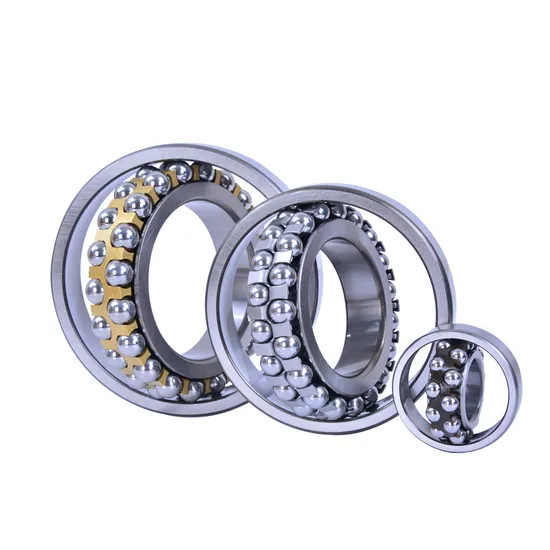
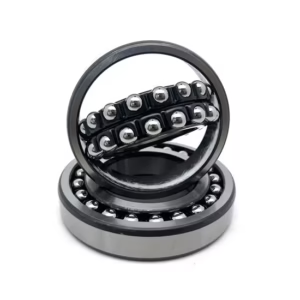
Self-Aligning Ball Bearing
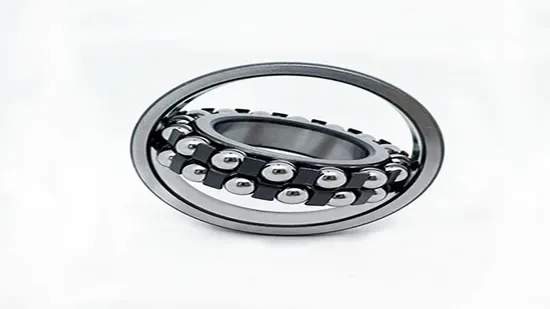
1315 1311 1313 1312 1310 K 1311 K 1315 K 1316 K 13 Self-Aligning Ball Bearing — featuring a self-aligning outer ring to compensate for angular misalignment.
Multi-Brand Authorization — Consolidate mixed SKF, FAG, and X&S stainless steel self-aligning ball bearing requirements into a single traceable shipment without juggling multiple vendors.
| Parameter | Value |
|---|---|
| Designation | 1315 1311 1313 1312 1310 K 1311 K 1315 K 1316 K 13 |
| Product Type | Self-Aligning Ball Bearing |
| Load Direction | Radial Bearing |
| Bore Type | Cylindrical or Tapered 1:12 (K suffix) |
| Material Option | Stainless Steel |
| Lubrication | Grease or Oil |
| Feature | High Speed |
| Origin | Shandong, China |
| Industry | Typical Applications |
|---|---|
| Material Handling | Conveyor drive pulley shafts subject to structural deflection |
| Textile Manufacturing | High-speed spinning frame rollers requiring corrosion resistance |
| Agriculture | Harvester auger bearings exposed to moisture and crop dust |
| Food & Beverage | Washdown pump motor shafts requiring stainless steel variants |
Matching the base number is never enough when thermal expansion and shaft misalignment are in play.
I have seen entire production lines halted because a purchasing manager approved a cross-reference based solely on the basic designation, completely overlooking the internal clearance and cage material suffixes. When a standard clearance bearing is forced into a high-speed textile roller, the thermal expansion eliminates the internal play, leading to catastrophic cage failure within hours [NEED_CITE: rolling bearing failure mode classification per ISO 15243]. Sourcing the correct X&S stainless steel self-aligning ball bearing 1310 K 1315 requires strict alignment of the bore type, clearance class, and material specifications to prevent these costly field failures.
Selecting the right X&S stainless steel self-aligning ball bearing 1310 K 1315 for your specific machinery means looking beyond the catalog number. Our engineering review ensures that the selected variant handles the exact radial loads and misalignment angles present in your conveyor or pump systems. By verifying the application parameters against the bearing’s internal geometry, we prevent the premature fatigue that plagues incorrectly specified components.
In washdown environments or outdoor agricultural settings, standard bearing steel rapidly degrades, making stainless steel options essential for maintaining structural integrity. The self-aligning design inherently compensates for shaft deflection and housing machining errors, protecting the rolling elements from edge-loading stresses [NEED_CITE: misalignment effects on bearing fatigue life per ISO 281]. Furthermore, high-speed applications demand careful consideration of lubrication intervals and cage friction to avoid thermal runaway during continuous operation.
The presence of the K suffix in models like 1310 K and 1315 K indicates a 1:12 tapered bore, a critical feature for achieving precise interference fits on adapter sleeves. This tapered design allows maintenance teams to dial in the exact radial internal clearance during mounting, which is vital for high-speed applications where thermal expansion is significant. Without the correct adapter sleeve and lock nut assembly, the tapered bore cannot transmit torque effectively, leading to fretting corrosion on the shaft journal.
Deploying a standard carbon steel bearing in a humid or chemically active environment inevitably leads to raceway pitting and spalling. According to ISO 15243 frameworks, surface distress from corrosion drastically reduces the calculated L10 life, resulting in unplanned downtime and secondary damage to adjacent seals and housings [NEED_CITE: surface distress and corrosion fatigue mechanisms]. Specifying the appropriate stainless steel variant from the outset eliminates these hidden maintenance costs and preserves the reliability of the entire drive train.
We do not just ship boxes; we validate the internal design against your equipment’s actual operating profile. While others might swap a brass cage for a stamped steel cage to cut costs, we ensure the cage material matches the vibration and speed requirements of your specific application. Every X&S stainless steel self-aligning ball bearing 1310 K 1315 order is cross-checked for clearance and precision suffixes, ensuring that what you install is exactly what the OEM engineer originally specified.
To ensure precise selection, please provide the exact radial and axial load profiles, operating speeds, and ambient temperature ranges for your application. If you are replacing an existing unit, sharing the OEM equipment number or the full designation printed on the original nameplate allows us to perform a comprehensive cross-reference check. Our technical team will then verify the internal clearance and cage suitability before finalizing the specification.
Q: Why does a cross-reference fail if the base number matches but the suffix differs?
A: The base number only defines the boundary dimensions. Suffixes dictate internal clearance, cage material, and precision. Installing a standard clearance bearing in a high-speed application causes thermal binding, while a wrong cage material fails under high vibration. We verify all suffixes to ensure exact functional equivalence, not just physical fit.
Q: What is the operational difference between cylindrical and K suffix tapered bores?
A: Cylindrical bores rely on tight shaft tolerances for interference fits, which can be difficult to achieve in field repairs. The K suffix indicates a 1:12 tapered bore designed for adapter sleeves, allowing maintenance crews to mechanically drive the bearing up the taper to precisely set the internal radial clearance during mounting.
Q: How do stainless steel variants compare to standard bearing steel in load capacity?
A: Stainless steel provides substantially higher corrosion resistance for washdown or humid environments but generally exhibits lower dynamic load ratings and speed limits compared to high-carbon chromium bearing steel. We evaluate your specific load and environmental exposure to determine if the corrosion protection outweighs the slight reduction in load capacity.
Q: How can I verify the authenticity of the delivered self-aligning ball bearings?
A: Every shipment includes batch traceability documentation and a Certificate of Conformity. You can scan the QR codes on the packaging using the manufacturer’s official mobile application to verify the production lot, origin, and authenticity, effectively filtering out counterfeit products with soft inner rings and cloned labels.
Our engineers will respond within 12 hours with a tailored solution.
Request Quote| Bearing Type | Self-Aligning Ball Bearing |
| Brand | SKF |
| Quality Standard | ISO 9001 / TS 16949 |
| Precision Grade | P0 / P5 / P6 (custom) |
| Material | Chrome Steel / Stainless |
| Cage Material | Steel / Brass / Polyamide |
| Lubrication | Grease / Oil (specify) |
| Operating Temp. | -40°C to +200°C |
| Min. Order Qty | 1 pc (samples available) |
| Prototype Lead Time | 7 Working Days |
| Load Capacity | Contact for C0/Cr values |
| Speed Rating | Contact for ndm limit |
| Vibration Level | Z1 / Z2 / Z3 (custom) |
| Noise Level | V1 / V2 / V3 (custom) |
| Fatigue Life | L10h per ISO 281 |
| Sealing Options | Open / Z / 2Z / RS / 2RS |
Our engineering team can modify bearing dimensions, materials, seals, and clearances to meet your specific operating requirements. Submit your drawing or spec sheet for a tailored proposal.
Main shaft bearings, gearbox bearings, and generator bearings for onshore and offshore wind turbines.
Heavy-duty bearings for crushers, conveyors, and rotary equipment in extreme dust and shock-load environments.
High-temperature bearings for rolling mills, continuous casting, and furnace applications.
Wheel hub bearings, transmission bearings, and e-motor bearings for passenger and commercial vehicles.
Axle box bearings, traction motor bearings, and gearbox bearings meeting EN/UIC railway standards.
High-precision spindle bearings, angular contact bearings, and super-precision bearings for CNC and robotics.
Our engineers analyze your operating conditions -- load, speed, temperature, environment -- and select or design the optimal bearing solution to maximize service life and reduce total cost of ownership.
Need non-standard dimensions, special materials, or modified clearances? We can modify standard SKF bearings or manufacture fully custom solutions with a 7-day prototype turnaround.
When bearings fail prematurely, our team conducts root-cause analysis using advanced diagnostic tools to identify the failure mode and recommend corrective action.
We deploy vibration monitoring, thermal imaging, and oil analysis programs that detect bearing deterioration early -- reducing unplanned downtime by up to 40%.
Proper installation is critical to bearing performance. Our certified technicians provide on-site installation support, alignment verification, and operator training worldwide.
From initial selection through end-of-life, our dedicated account managers provide scheduled maintenance plans, re-lubrication programs, and replacement forecasting for enterprise clients.
NDA protected · Free samples for orders > $50K · Reply within 12 hours