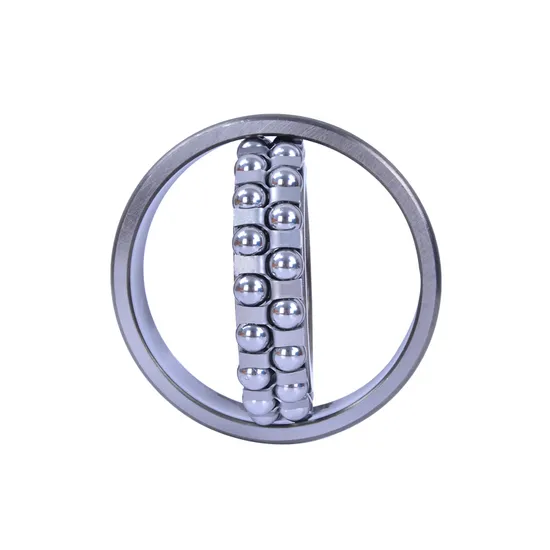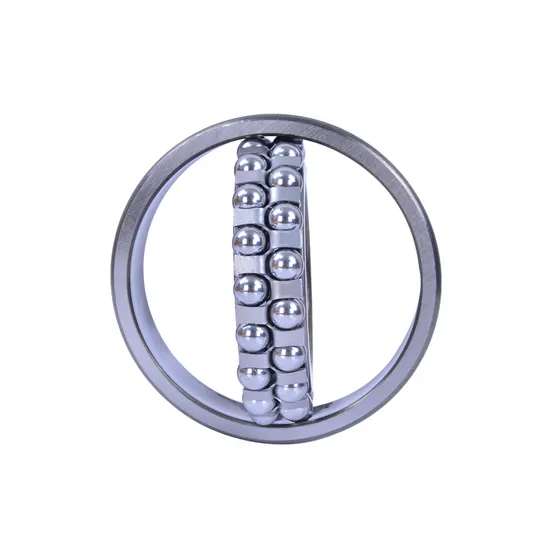
Self-Aligning Ball Bearing

X&S 1310K 2313 2313K 2312K 2312 1309K 1309 1308 1308K Self-Aligning Ball Bearing — High-speed radial load capacity with flexible grease or oil lubrication.
Authorized Multi-Brand Coverage — Sourcing mixed designations like 1310K and 2313 in a single shipment eliminates multi-vendor coordination delays.
| Parameter | Value |
|---|---|
| Designation | 1310K 2313 2313K 2312K 2312 1309K 1309 1308 1308K |
| Product Type | Self-Aligning Ball Bearing |
| Load Direction | Radial Bearing |
| Bore Type | Tapered 1:12 (K variants) / Cylindrical (non-K variants) |
| Lubrication | Grease or Oil |
| Feature | High Speed |
| Origin | Shandong, China |
| HS Code | 8482109000 |
| Industry | Typical Applications |
|---|---|
| Agricultural Equipment | Combine harvester threshing drum shafts, tractor PTO driveline supports |
| Material Handling | Belt conveyor idler pulleys, bucket elevator drive shafts |
| Industrial Gearboxes | Input/output shaft supports subject to minor misalignment |
A missing K suffix turns a simple replacement into a catastrophic thermal binding event.
In agricultural repair shops, it is common to see a 1310 pressed onto a tapered shaft without the correct adapter sleeve, or a cylindrical bore forced into a setup demanding a 1:12 taper. I have seen harvesting equipment shut down mid-season because the cross-reference matched the base digits but completely ignored the bore geometry and internal clearance. When thermal expansion is restricted by the wrong bore type or a standard clearance is used where a C3 was required, the internal components bind rapidly under field loads [NEED_CITE: rolling bearing failure mode classification per ISO 15243].
Selecting the right X&S 1310K self-aligning ball bearing requires looking past the basic dimension series. The outer ring features a spherical raceway that accommodates static misalignment, which is critical for agricultural frames that flex under heavy crop loads. Ensuring the tapered bore matches the adapter sleeve assembly prevents inner ring creep, a frequent cause of shaft scoring in heavy-duty material handling applications.
These bearings primarily handle radial loads while accommodating minor axial displacement. In high-speed gearbox or harvester applications, friction generates significant heat, making the correct internal clearance vital to prevent preload buildup. Proper lubrication selection between grease and oil depends on the sealing arrangement and operating temperature, ensuring the rolling elements remain protected from abrasive crop dust and moisture ingress [NEED_CITE: bearing lubrication and contamination impact per ISO 281].
The distinction between the K variants and standard cylindrical models dictates the entire mounting strategy. The K suffix indicates a tapered bore with a 1:12 ratio, requiring an adapter sleeve to secure the inner ring and establish the precise radial internal clearance during installation. Conversely, the non-K cylindrical models rely on tight shaft tolerances and are typically mounted using induction heating to expand the inner ring without damaging the raceway. Choosing the correct bore type ensures the bearing can handle the specific shaft geometry and thermal expansion characteristics of the equipment.
Installing a cylindrical bore bearing on a tapered shaft adapter, or ignoring the required clearance class, leads to premature fatigue and cage failure. The resulting unplanned downtime during critical harvesting windows causes severe operational losses. Furthermore, catastrophic seizure can destroy the adjacent shaft and housing, voiding equipment warranties and necessitating complete assembly replacements rather than a simple bearing swap [NEED_CITE: consequences of improper mounting and clearance selection per ISO 15243].
We supply authorized X&S inventory with complete batch traceability, ensuring you receive genuine components. Our technical team verifies cross-references down to the bore suffix and clearance class, preventing the common error of supplying a standard bore when a K variant is specified. We provide exact interchange matching for mixed-brand requirements, ensuring the internal geometry aligns perfectly with your OEM specifications without relying on superficial base-number matching.
Share your specific radial and axial load profiles, operating speeds, and ambient temperature ranges so we can verify the L10 life and optimal clearance class. Provide the exact OEM equipment numbers or existing shaft dimensions to ensure the cross-reference aligns with the required K or cylindrical bore configuration. This data allows our engineering team to confirm the precise suffix combination needed for your application.
Q: What is the functional difference between the K suffix and standard cylindrical bores?
A: The K suffix designates a tapered bore with a 1:12 ratio, requiring an adapter sleeve for mounting and allowing precise adjustment of internal clearance. Standard cylindrical bores rely on tight shaft fits and are typically mounted via induction heating, making the correct selection critical for shaft compatibility.
Q: How can I verify the authenticity of the X&S bearings I receive?
A: Every shipment includes batch traceability and a Certificate of Conformity. You can verify authenticity by scanning the QR codes on the packaging using the official brand application, ensuring the internal components match the manufacturer’s original production records.
Q: What cross-reference checks are necessary beyond the base designation number?
A: A reliable cross-reference must verify the bore type suffix, internal clearance class, and cage material. Matching only the base number often results in installing a standard clearance or incorrect bore type, leading to thermal binding or mounting failures in the field.
Q: How do I choose between grease and oil lubrication for these bearings?
A: Grease is generally preferred for sealed or shielded variants operating in dusty agricultural environments to block contamination. Oil lubrication is better suited for high-speed, open-type applications in gearboxes where heat dissipation and continuous flow are required to maintain optimal operating temperatures.
Q: Why is internal clearance critical for agricultural equipment?
A: Agricultural machinery often operates under heavy loads that generate significant friction heat. If a standard clearance is used instead of a C3 or C4 where required, thermal expansion will eliminate the internal gap, causing the bearing to bind, overheat, and fail prematurely during continuous field operations.
Our engineers will respond within 12 hours with a tailored solution.
Request Quote| Bearing Type | Self-Aligning Ball Bearing |
| Brand | SKF |
| Quality Standard | ISO 9001 / TS 16949 |
| Precision Grade | P0 / P5 / P6 (custom) |
| Material | Chrome Steel / Stainless |
| Cage Material | Steel / Brass / Polyamide |
| Lubrication | Grease / Oil (specify) |
| Operating Temp. | -40°C to +200°C |
| Min. Order Qty | 1 pc (samples available) |
| Prototype Lead Time | 7 Working Days |
| Load Capacity | Contact for C0/Cr values |
| Speed Rating | Contact for ndm limit |
| Vibration Level | Z1 / Z2 / Z3 (custom) |
| Noise Level | V1 / V2 / V3 (custom) |
| Fatigue Life | L10h per ISO 281 |
| Sealing Options | Open / Z / 2Z / RS / 2RS |
Our engineering team can modify bearing dimensions, materials, seals, and clearances to meet your specific operating requirements. Submit your drawing or spec sheet for a tailored proposal.
Main shaft bearings, gearbox bearings, and generator bearings for onshore and offshore wind turbines.
Heavy-duty bearings for crushers, conveyors, and rotary equipment in extreme dust and shock-load environments.
High-temperature bearings for rolling mills, continuous casting, and furnace applications.
Wheel hub bearings, transmission bearings, and e-motor bearings for passenger and commercial vehicles.
Axle box bearings, traction motor bearings, and gearbox bearings meeting EN/UIC railway standards.
High-precision spindle bearings, angular contact bearings, and super-precision bearings for CNC and robotics.
Our engineers analyze your operating conditions -- load, speed, temperature, environment -- and select or design the optimal bearing solution to maximize service life and reduce total cost of ownership.
Need non-standard dimensions, special materials, or modified clearances? We can modify standard SKF bearings or manufacture fully custom solutions with a 7-day prototype turnaround.
When bearings fail prematurely, our team conducts root-cause analysis using advanced diagnostic tools to identify the failure mode and recommend corrective action.
We deploy vibration monitoring, thermal imaging, and oil analysis programs that detect bearing deterioration early -- reducing unplanned downtime by up to 40%.
Proper installation is critical to bearing performance. Our certified technicians provide on-site installation support, alignment verification, and operator training worldwide.
From initial selection through end-of-life, our dedicated account managers provide scheduled maintenance plans, re-lubrication programs, and replacement forecasting for enterprise clients.
NDA protected · Free samples for orders > $50K · Reply within 12 hours