ISO 9001 Certified
TS 16949
Genuine SKF
Need Technical Advice?
Reply within 12 hours · 15+ certified engineers on call
Linear Bearing
X&S LM16OPUU LM20OPUU LM25OPUU Dust Proof Flange Linear Bearing with Sealing [WARN] draft identifier mismatch
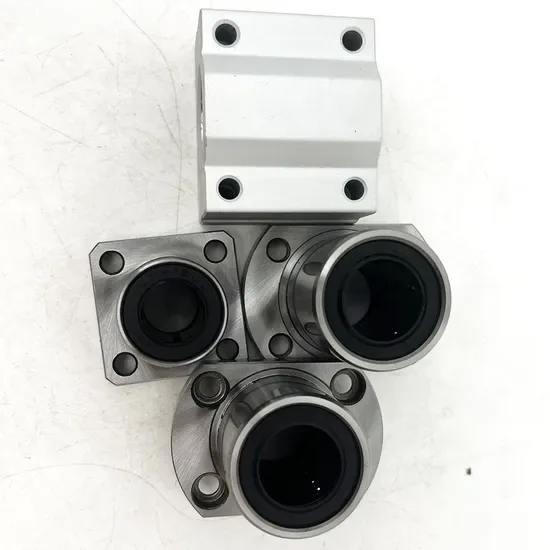
X&S LM16OPUU LM20OPUU LM25OPUU Linear Bearing — circular flange design ensures stable mounting, while HRC58-62 raceway hardness supports high-speed operations with dust-proof sealing.
- Cross-reference checks strictly align flange shape, sealing configuration, and cage material to prevent field failures.
7
Day Prototype
vs. 8-12 wks standard
50+
Countries Served
Global logistics network
12h
Quote Response
Expert engineers on call
Typical Applications
Wind Power
Mining
Steel & Metallurgy
Automotive / EV
Rail Transit
Precision Machinery
Genuine SKF Bearings
NDA Protected
Free Sample for Orders > $50K
Global Shipping
Product Details
Multi-brand authorized supply — Consolidate mixed OEM linear motion requirements into a single traceable shipment without juggling multiple regional suppliers.
Technical Specifications
| Parameter | Value |
|---|---|
| Designation | LM16OPUU LM20OPUU LM25OPUU |
| Product Type | Linear Bearing |
| Bearing Type | Circular Flange Linear Bearing |
| Series | LM |
| Flange Shape | Circular |
| Shape | Straight |
| Material Options | Bearing steel or other specialized alloys |
| Cage Options | Steel cage, brass cage, or nylon cage |
| Lubrication | Grease or oil |
| Seal Type | Double-sided sealing (UU suffix) |
| Hardness | HRC58-62 [NEED_CITE: standard raceway hardness for linear motion shafting] |
| Feature Options | Vacuum, magnetically resistant, low temperature, corrosion resistant, high temperature, high speed |
| Certification | CE |
| Origin | Shandong, China |
Note: Exact catalog definitions for the LM, 16, OP, and UU suffixes require direct manufacturer verification.
Application Suitability
| Industry | Typical Applications |
|---|---|
| Machine Tool Manufacturing | Precision spindle traverse mechanisms and automated tool changer linear guides |
| Automation Machinery | Multi-axis robotic gantry systems and high-speed pick-and-place linear modules |
| Material Handling | Automated storage and retrieval system (AS/RS) shuttle transfer carriages |
| Precision Equipment | Optical inspection stage positioning slides and cleanroom wafer handling actuators |
Why Standard Linear Bushings Fail in Abrasive Environments
Dust ingress destroys recirculating ball paths long before the steel itself fatigues.
Field inspections across Middle Eastern industrial zones consistently reveal that standard open-type linear bearings seize prematurely when exposed to airborne particulates. When procurement teams focus solely on basic dimensional cross-referencing and ignore sealing suffixes, microscopic silica and metallic dust penetrate the ball retainer. This contamination disrupts the smooth recirculation of the rolling elements, leading to severe scoring on the shaft and catastrophic carriage lock-up. The resulting unplanned downtime on critical automation lines far outweighs the initial savings of omitting sealed variants [NEED_CITE: contamination as a primary failure mode in linear motion systems].
Matching Sealed Linear Bearings to Target Operating Conditions
Specifying the correct X&S LM16OPUU linear bearing requires aligning the sealing architecture with the specific contamination level of the workspace. In environments where fine abrasive dust is prevalent, the double-sided contact seals integrated into these circular flange units prevent particulate ingress while maintaining smooth carriage translation. Our technical review process ensures that the selected flange geometry and sealing configuration precisely match the OEM equipment requirements, preventing the costly installation errors that occur when base dimensions align but internal protective features differ.
Environmental Challenges and Performance Demands
Linear motion systems in heavy automation face complex tribological challenges beyond simple radial loading. High-speed traverse operations generate friction heat, which can degrade standard lubricants and compromise the dimensional stability of the carriage. Furthermore, exposure to washdown chemicals or high-humidity environments demands corrosion-resistant material variants to prevent raceway pitting. The contact friction inherent in double-sided sealing must be carefully balanced against the required operating speed, ensuring that the grease or oil lubrication maintains an adequate film thickness without causing thermal binding during continuous duty cycles [NEED_CITE: friction and thermal dynamics in sealed linear guides].
Decoding Core Specifications and Material Options
The circular flange design provides a rigid, perpendicular mounting interface that minimizes deflection under moment loads. The raceway hardness reaches HRC58-62, ensuring the shaft and carriage ball tracks resist brinelling under heavy static loads. Depending on the specific application environment, these bearings are available in bearing steel or other specialized alloys, including stainless variants for corrosive settings or magnetically resistant options for sensitive inspection equipment. The internal cage can be configured with steel, brass, or nylon materials, allowing engineers to optimize the balance between high-speed capability, vibration damping, and temperature tolerance.
The Hidden Costs of Incorrect Interchange Selection
Substituting an open or single-sealed linear bearing in a dusty environment inevitably leads to premature carriage seizure and severe shaft scoring. According to failure analysis frameworks outlined in ISO 15243, abrasive contamination is a leading cause of surface fatigue and wear in recirculating systems. When cross-referencing ignores the critical UU sealing suffix, the resulting particulate ingress voids equipment warranties and triggers cascading mechanical failures. The financial impact of halted production lines and emergency shaft replacements drastically eclipses the minor upfront cost difference of specifying fully sealed units [NEED_CITE: rolling bearing failure mode classification per ISO 15243].
Procurement Advantages for Linear Motion Components
Sourcing linear bearings involves significant risks regarding counterfeit components with soft inner rings that fail under load. We provide authorized coverage across all major international brands, allowing you to consolidate mixed-brand requirements into a single, verified order. Every shipment includes batch traceability to the manufacturer, enabling QR verification through official brand applications to guarantee authenticity. Our cross-reference process strictly aligns the flange shape, sealing suffix, and internal cage material, rather than just matching the base designation. This meticulous technical review prevents the thermal binding and cage failures that occur when internal designs do not match the equipment’s actual operating parameters.
Documentation & Authenticity
- Certificate of Conformity validating the CE standard for linear motion components.
- Batch and lot traceability linking the specific carriage to the manufacturer’s production run.
- QR verification support via official brand apps to confirm genuine origin.
- Material test report confirming the metallurgical composition of the bearing steel or specialized alloys.
- Dimensional and running accuracy inspection report verifying flange perpendicularity and bore tolerances.
Storage, Handling & Mounting
- Retain the original vacuum packaging until installation to prevent moisture ingress into the UU sealed carriage.
- Use clean, lint-free gloves when handling the exposed shaft and flange to avoid skin acid corrosion on the HRC58-62 raceways.
- Align the circular flange mounting holes precisely to avoid inducing binding friction within the straight shape linear guide.
- Apply the specified grease or oil lubrication to the shaft surface prior to sliding the sealed carriage into position.
- Avoid using carbon steel tools near stainless or magnetically resistant variants to prevent cross-contamination and surface rust.
Engineering Review and Selection Support
To ensure optimal performance and longevity, please provide detailed operating parameters including traverse speed, applied moment loads, and ambient temperature ranges. Sharing the specific environmental conditions, such as dust concentration or chemical exposure, allows our engineering team to recommend the most appropriate material and cage options. If replacing existing components, supplying the exact OEM equipment model numbers enables a comprehensive cross-reference review to verify the flange geometry and sealing requirements.
Frequently Asked Questions
Q: Why does a basic dimensional match fail during linear bearing installation?
A: Matching only the base bore and outer diameter ignores critical internal differences. If the flange shape, sealing suffix, or cage material differs from the original equipment specification, the carriage may physically fit but will suffer from misalignment, inadequate dust protection, or thermal binding under operational loads, leading to rapid mechanical failure.
Q: How do UU double-sided seals compare to open types in dusty environments?
A: Open linear bearings allow airborne particulates to freely enter the ball recirculation path, causing rapid abrasive wear and carriage seizure. The UU double-sided contact seals physically block dust and debris ingress, significantly extending maintenance intervals and preserving the smooth translation required for precision automation machinery.
Q: Which cage material is best for high-speed linear motion applications?
A: Nylon cages offer excellent vibration damping and low friction, making them ideal for high-speed, low-load automation. Brass cages provide superior stability and heat dissipation for heavier loads, while steel cages are selected for maximum structural rigidity in demanding industrial environments where extreme temperatures might degrade polymer materials.
Q: What dictates the choice between grease and oil lubrication in linear guides?
A: Grease is typically preferred for standard automation applications due to its retention properties and extended relubrication intervals. Oil lubrication is selected for high-speed traverse systems or cleanroom environments where grease particle shedding is unacceptable, requiring continuous or automated external lubrication delivery to maintain the protective film.
Q: How can I verify the authenticity of the linear bearings before installation?
A: Authenticity is verified through comprehensive batch traceability documentation and by scanning the manufacturer’s QR code using official brand applications. This digital verification confirms the production origin and ensures the internal components meet the specified metallurgical and hardness standards, protecting against counterfeit products.
Product Summary
- Product Name
- X&S LM16OPUU LM20OPUU LM25OPUU Dust Proof Flange Linear Bearing with Sealing [WARN] draft identifier mismatch
- Category
- Linear Bearing
- Brand
- SKF
- Certification
- ISO 9001 · TS 16949
- Lead Time
- 7 Working Days
Get a Custom Quote
Our engineers will respond within 12 hours with a tailored solution.
Request QuoteGeneral Specifications
| Bearing Type | Linear Bearing |
| Brand | SKF |
| Quality Standard | ISO 9001 / TS 16949 |
| Precision Grade | P0 / P5 / P6 (custom) |
| Material | Chrome Steel / Stainless |
| Cage Material | Steel / Brass / Polyamide |
| Lubrication | Grease / Oil (specify) |
| Operating Temp. | -40°C to +200°C |
| Min. Order Qty | 1 pc (samples available) |
| Prototype Lead Time | 7 Working Days |
Performance Parameters
| Load Capacity | Contact for C0/Cr values |
| Speed Rating | Contact for ndm limit |
| Vibration Level | Z1 / Z2 / Z3 (custom) |
| Noise Level | V1 / V2 / V3 (custom) |
| Fatigue Life | L10h per ISO 281 |
| Sealing Options | Open / Z / 2Z / RS / 2RS |
Custom Specifications Available
Our engineering team can modify bearing dimensions, materials, seals, and clearances to meet your specific operating requirements. Submit your drawing or spec sheet for a tailored proposal.
Wind Power
Main shaft bearings, gearbox bearings, and generator bearings for onshore and offshore wind turbines.
Mining & Quarrying
Heavy-duty bearings for crushers, conveyors, and rotary equipment in extreme dust and shock-load environments.
Steel & Metallurgy
High-temperature bearings for rolling mills, continuous casting, and furnace applications.
Automotive / EV
Wheel hub bearings, transmission bearings, and e-motor bearings for passenger and commercial vehicles.
Rail Transit
Axle box bearings, traction motor bearings, and gearbox bearings meeting EN/UIC railway standards.
Precision Machinery
High-precision spindle bearings, angular contact bearings, and super-precision bearings for CNC and robotics.
Application Design
EngineeringOur engineers analyze your operating conditions -- load, speed, temperature, environment -- and select or design the optimal bearing solution to maximize service life and reduce total cost of ownership.
Custom Modification
7-Day TurnaroundNeed non-standard dimensions, special materials, or modified clearances? We can modify standard SKF bearings or manufacture fully custom solutions with a 7-day prototype turnaround.
Failure Analysis
DiagnosticsWhen bearings fail prematurely, our team conducts root-cause analysis using advanced diagnostic tools to identify the failure mode and recommend corrective action.
Predictive Maintenance
Up to 40% Less DowntimeWe deploy vibration monitoring, thermal imaging, and oil analysis programs that detect bearing deterioration early -- reducing unplanned downtime by up to 40%.
On-site Installation
Global CoverageProper installation is critical to bearing performance. Our certified technicians provide on-site installation support, alignment verification, and operator training worldwide.
Lifecycle Support
Enterprise SLAFrom initial selection through end-of-life, our dedicated account managers provide scheduled maintenance plans, re-lubrication programs, and replacement forecasting for enterprise clients.
Why SKF China
The engineering partner advantage
7 Days
Prototype Lead Time
vs. 8-12 weeks via standard channels
15+
Certified Engineers
SKF-certified, on-call for your project
50+
Countries Delivered
Reliable global logistics network
Request a Quote
Get a custom quote for
X&S LM16OPUU LM20OPUU LM25OPUU Dust Proof Flange Linear Bearing with Sealing [WARN] draft identifier mismatch
NDA protected · Free samples for orders > $50K · Reply within 12 hours
Related Products