ISO 9001 Certified
TS 16949
Genuine SKF
Need Technical Advice?
Reply within 12 hours · 15+ certified engineers on call
Linear Bearing
X&S LME30UU LME40UU LME50UU Linear Bearing Wholesale [WARN] draft identifier mismatch
X&S LME30UU LME40UU LME50UU Linear Bearing
- Crafted from bearing steel with HRC58-62 hardness for wear resistance in automation and CNC applications.
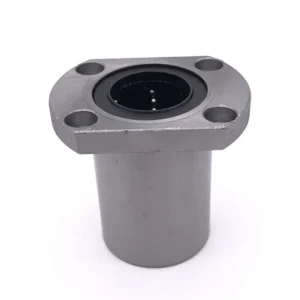
- CE certified straight-shaped units with circular flanges ensure smooth motion and reliable structural stability.
- Every order ships with a complete documentation package, including material test reports and dimensional inspection records.
7
Day Prototype
vs. 8-12 wks standard
50+
Countries Served
Global logistics network
12h
Quote Response
Expert engineers on call
Typical Applications
Wind Power
Mining
Steel & Metallurgy
Automotive / EV
Rail Transit
Precision Machinery
Genuine SKF Bearings
NDA Protected
Free Sample for Orders > $50K
Global Shipping
Product Details
Cross-Reference Alignment Verified — We match inner diameter, seal configuration, and retainer material exactly, rather than relying solely on the base designation, to ensure seamless integration into your linear motion systems.
Technical Specifications
| Parameter | Value |
|---|---|
| Designation | LME30UU LME40UU LME50UU |
| Bearing Type | Linear Bearing |
| Shape | Straight |
| Flange Shape | Circular |
| Series | LM |
| Material | Bearing Steel or Others |
| Lubrication | Grease or Oil |
| Cage Material | Steel, Brass, or Nylon Cage |
| Hardness | HRC58-62 |
| Certification | CE |
| Origin | Shandong, China |
Note: Suffixes LM, E, and UU require manufacturer catalog confirmation for exact internal design definitions.
Application Suitability
| Industry | Typical Applications |
|---|---|
| Machine Tools | CNC machine spindle traversing axes |
| Material Handling | Automation equipment linear guide carriages |
| General Manufacturing | Packaging machinery reciprocating conveyors |
| Textile Production | Textile machines yarn guiding mechanisms |
Why Base Numbers Fail in Dusty Automation Lines
Selecting the correct X&S LME30UU LME40UU LME50UU linear bearing requires looking far beyond the basic outer diameter and length dimensions.
Dust ingress through mismatched seals causes carriage jamming long before the bearing steel actually fatigues.
Working extensively with automated assembly lines in the Pearl River Delta, I have witnessed entire production floors halt because a basic part number matched while the critical seal suffix was completely ignored. Fine metallic particulate matter easily bypasses inadequate wipers, scoring the precision shaft and destroying the recirculating balls [NEED_CITE: linear bearing failure modes in contaminated environments]. Procurement teams frequently overlook these vital suffix differences during cross-referencing, leading to severe and costly operational disruptions.
Matching Retainer and Seal Options to Your Operating Environment
Every X&S LME30UU LME40UU LME50UU linear bearing must be evaluated against the specific contamination level and speed requirements of the host machine. Our technical review process ensures that the chosen cage material and seal type align perfectly with your application parameters, preventing premature wear in demanding automated setups.
Navigating Contamination and Lubrication Challenges
Linear motion systems in packaging and textile machinery face constant exposure to airborne fibers and abrasive dust. The choice between contact seals for maximum protection and non-contact shields for reduced friction directly impacts the carriage’s thermal behavior and smooth travel. Proper lubrication intervals must be established based on the selected seal type, as inadequate grease replenishment in high-speed CNC traversing axes accelerates track degradation [NEED_CITE: lubrication starvation effects on linear bearings].
Decoding the Internal Engineering and Material Hardness
The core reliability of these units stems from the bearing steel construction, heat-treated to a hardness of HRC58-62 to resist brinelling under heavy static loads [NEED_CITE: standard hardness requirements for linear bearing shafts and carriages]. Available cage options include steel, brass, or nylon variants, each serving distinct operational profiles; nylon retainers offer quieter operation and lower friction for high-speed automation, while metal cages provide structural stability under heavier radial loads. The straight cylindrical shape with a circular flange ensures rigid mounting and precise alignment within the carriage housing.
The Hidden Costs of Ignoring Suffix Details
Overlooking the specific seal or retainer designation during replacement sourcing inevitably leads to unplanned downtime and catastrophic damage to the mating linear shaft. According to failure analysis frameworks, contamination is a primary driver of premature linear motion failure, often voiding equipment warranties and necessitating complete axis rebuilds rather than simple cartridge swaps [NEED_CITE: rolling bearing failure mode classification per ISO 15243].
Why Our Technical Verification Matters
We provide authorized distribution coverage that allows you to consolidate mixed-brand requirements into a single, fully traceable order. When cross-referencing linear bearings, we verify the internal recirculation design and exact seal geometry, not just the outer dimensions, preventing the installation of incompatible units. Our application-based selection review evaluates your specific load, speed, and temperature conditions to recommend the optimal cage and seal combination. Furthermore, we supply complete batch traceability and authenticity verification, eliminating the risk of counterfeit components with soft inner rings that fail under load.
Documentation & Authenticity
- Certificate of Conformity verifying CE compliance for automated machinery integration.
- Batch and lot traceability linking each carriage to its specific production run.
- QR verification via official apps to confirm authenticity and prevent counterfeit installation.
- Material test report confirming the HRC58-62 hardness of the bearing steel components.
- Dimensional and running accuracy inspection report ensuring precise linear travel.
- Country-of-origin documentation supporting international customs and procurement compliance.
Storage, Handling & Mounting
- Keep units in original packaging until installation to protect the HRC58-62 bearing steel from ambient humidity and corrosion.
- Use clean lint-free gloves when handling to prevent skin oils from degrading the factory-applied grease or oil lubrication.
- Verify the circular flange mounting surface is perfectly flat to avoid distorting the straight cylindrical outer ring.
- Ensure the mating linear shaft hardness matches the carriage to prevent uneven wear on the recirculating ball tracks.
- Do not force the carriage onto the shaft; misalignment will damage the internal steel, brass, or nylon cage retainers.
Guiding Your Technical Inquiry
To ensure precise selection and cross-reference validation, please provide the radial and axial load parameters, operating speeds, and environmental contamination levels of your application. Sharing the original OEM equipment number allows our engineering team to verify the exact seal and cage requirements, ensuring you receive a linear motion solution optimized for your specific machinery.
Frequently Asked Questions
Q: What must be verified when cross-referencing these linear bearings?
A: Beyond matching the basic outer diameter and length, you must strictly align the seal configuration and internal retainer material. A mismatch in the wiper seal design will allow dust ingress, while an incorrect cage material can lead to friction spikes or structural failure under load. We verify all three parameters to ensure exact functional equivalence.
Q: How do I choose between nylon and metal cages?
A: Nylon retainers are generally preferred for high-speed, low-noise applications like 3D printers and semiconductor equipment due to their low friction and self-lubricating properties. Metal cages, such as steel or brass, are selected for heavier load capacities or environments where elevated temperatures might exceed the thermal limits of polymer materials.
Q: What is the difference in seal selection for dusty versus clean environments?
A: In dusty environments like textile or packaging machinery, heavy-duty contact wiper seals are essential to scrape particulate matter off the shaft before it enters the carriage. For cleanroom or semiconductor applications, low-friction non-contact shields or specialized scrapers are used to minimize particle generation and reduce operating temperatures.
Q: How should lubrication be managed for these carriages?
A: Lubrication depends on the seal type and operating speed. Carriages with heavy contact seals may require less frequent re-lubrication but demand higher initial grease volumes to overcome seal friction. Open or lightly shielded units in high-speed CNC applications require strict, automated oil or grease replenishment schedules to prevent track scoring and premature fatigue.
Product Summary
- Product Name
- X&S LME30UU LME40UU LME50UU Linear Bearing Wholesale [WARN] draft identifier mismatch
- Category
- Linear Bearing
- Brand
- SKF
- Certification
- ISO 9001 · TS 16949
- Lead Time
- 7 Working Days
Get a Custom Quote
Our engineers will respond within 12 hours with a tailored solution.
Request QuoteGeneral Specifications
| Bearing Type | Linear Bearing |
| Brand | SKF |
| Quality Standard | ISO 9001 / TS 16949 |
| Precision Grade | P0 / P5 / P6 (custom) |
| Material | Chrome Steel / Stainless |
| Cage Material | Steel / Brass / Polyamide |
| Lubrication | Grease / Oil (specify) |
| Operating Temp. | -40°C to +200°C |
| Min. Order Qty | 1 pc (samples available) |
| Prototype Lead Time | 7 Working Days |
Performance Parameters
| Load Capacity | Contact for C0/Cr values |
| Speed Rating | Contact for ndm limit |
| Vibration Level | Z1 / Z2 / Z3 (custom) |
| Noise Level | V1 / V2 / V3 (custom) |
| Fatigue Life | L10h per ISO 281 |
| Sealing Options | Open / Z / 2Z / RS / 2RS |
Custom Specifications Available
Our engineering team can modify bearing dimensions, materials, seals, and clearances to meet your specific operating requirements. Submit your drawing or spec sheet for a tailored proposal.
Wind Power
Main shaft bearings, gearbox bearings, and generator bearings for onshore and offshore wind turbines.
Mining & Quarrying
Heavy-duty bearings for crushers, conveyors, and rotary equipment in extreme dust and shock-load environments.
Steel & Metallurgy
High-temperature bearings for rolling mills, continuous casting, and furnace applications.
Automotive / EV
Wheel hub bearings, transmission bearings, and e-motor bearings for passenger and commercial vehicles.
Rail Transit
Axle box bearings, traction motor bearings, and gearbox bearings meeting EN/UIC railway standards.
Precision Machinery
High-precision spindle bearings, angular contact bearings, and super-precision bearings for CNC and robotics.
Application Design
EngineeringOur engineers analyze your operating conditions -- load, speed, temperature, environment -- and select or design the optimal bearing solution to maximize service life and reduce total cost of ownership.
Custom Modification
7-Day TurnaroundNeed non-standard dimensions, special materials, or modified clearances? We can modify standard SKF bearings or manufacture fully custom solutions with a 7-day prototype turnaround.
Failure Analysis
DiagnosticsWhen bearings fail prematurely, our team conducts root-cause analysis using advanced diagnostic tools to identify the failure mode and recommend corrective action.
Predictive Maintenance
Up to 40% Less DowntimeWe deploy vibration monitoring, thermal imaging, and oil analysis programs that detect bearing deterioration early -- reducing unplanned downtime by up to 40%.
On-site Installation
Global CoverageProper installation is critical to bearing performance. Our certified technicians provide on-site installation support, alignment verification, and operator training worldwide.
Lifecycle Support
Enterprise SLAFrom initial selection through end-of-life, our dedicated account managers provide scheduled maintenance plans, re-lubrication programs, and replacement forecasting for enterprise clients.
Why SKF China
The engineering partner advantage
7 Days
Prototype Lead Time
vs. 8-12 weeks via standard channels
15+
Certified Engineers
SKF-certified, on-call for your project
50+
Countries Delivered
Reliable global logistics network
Request a Quote
Get a custom quote for
X&S LME30UU LME40UU LME50UU Linear Bearing Wholesale [WARN] draft identifier mismatch
NDA protected · Free samples for orders > $50K · Reply within 12 hours
Related Products
More Linear Bearing Products