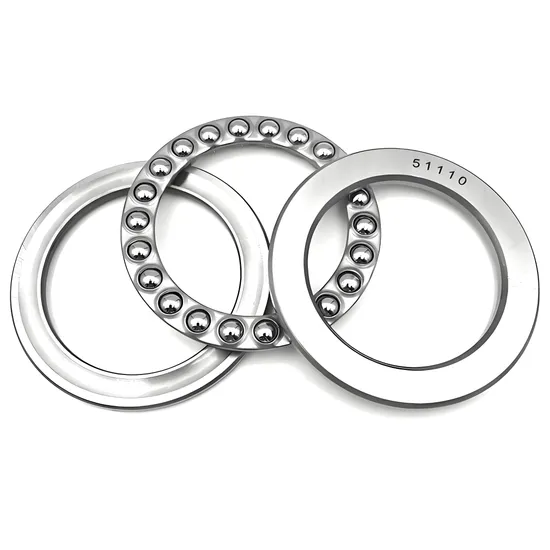
Thrust Ball Bearing
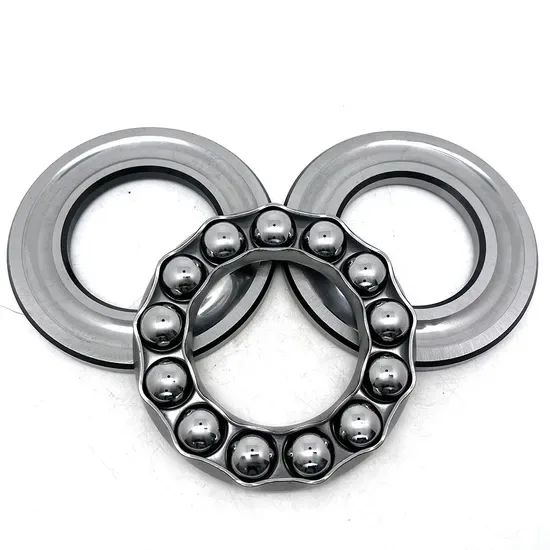
X&S 51407 53407 53407U 51108 51208 53208 53208U 51308 Thrust Ball Bearing P0–P4 — available in multiple precision grades to match axial positioning tolerances across low-speed reducer and automotive assemblies.
Each shipment includes original factory batch traceability with manufacturer verification documentation.
Full Cross-Reference Alignment — We verify base numbers, precision classes, and internal design suffixes to prevent thermal binding in low-speed reducers.
| Parameter | Value |
|---|---|
| Designation | 51407 53407 53407U 51108 51208 53208 53208U 51308 |
| Bearing Type | Thrust Ball Bearing |
| Precision Class | P0, P6, P5, P4 |
| Lubrication | Grease or Oil |
| Separated | Unseparated |
| Origin | Shandong, China |
| HS Code | 8482104090 |
Note: The "U" suffix in 53407U and 53208U is an unverified designation requiring manufacturer catalog confirmation before final procurement.
| Industry | Typical Applications |
|---|---|
| Low Speed Reducers | Vertical mixer drive shafts, heavy-duty conveyor gearboxes |
| Automotive | Steering column axial support, manual transmission main shafts |
| Mining | Crusher adjustment mechanisms, vibrating screen drive assemblies |
| Aviation | Landing gear actuator screw jacks, flight control surface hinges |
Matching the base designation is never enough to guarantee operational reliability. A X&S 51407 53407 53407U thrust ball bearing must align perfectly with the equipment’s internal design requirements to prevent catastrophic axial drift.
In heavy industrial environments, installing a standard precision variant where a higher tolerance is required leads to rapid thermal expansion and cage failure. We frequently see maintenance teams replacing units repeatedly because the cross-reference ignored critical internal geometries [NEED_CITE: rolling bearing failure mode classification per ISO 15243]. Ensuring exact alignment of precision and lubrication parameters eliminates these hidden operational bottlenecks.
Selecting the correct X&S 51407 53407 53407U thrust ball bearing requires analyzing the specific axial loads and rotational speeds within the gearbox. Our technical review process evaluates the exact thrust forces and housing constraints to recommend the optimal precision class. This prevents the common issue of over-specifying or under-specifying components for low-speed, high-torque applications.
Low-speed reducers generate significant localized heat under heavy axial loads, demanding careful lubrication selection. Grease is often preferred for sealed environments, while oil circulation is necessary for continuous heavy-duty operations to dissipate thermal buildup. Temperature fluctuations directly impact internal clearance, making the correct precision class vital to avoid binding during thermal expansion cycles [NEED_CITE: thermal expansion effects on bearing clearance per ISO 281].
The availability of P0 through P4 precision classes allows engineers to match the exact axial positioning tolerances required by the machinery. Higher precision variants minimize axial runout, which is critical for maintaining gear mesh accuracy in sensitive reducer assemblies. The unseparated design configuration simplifies handling and mounting, particularly when working within confined gearbox housings where component retention is challenging.
Overlooking internal design variations often results in unplanned downtime and premature failure of the entire drive train. When a replacement unit lacks the correct internal geometry for the specific load profile, the rolling elements skid, causing rapid raceway degradation. This leads to catastrophic damage to adjacent gears and shafts, voiding equipment warranties and inflating maintenance budgets [NEED_CITE: economic impact of premature bearing failure per ISO 15243].
Mixed-brand orders are consolidated seamlessly, ensuring all reducer components arrive with uniform documentation and traceability. Batch traceability is maintained for every unit, allowing maintenance teams to verify the origin through official brand applications. Cross-reference matching goes beyond basic numbers, strictly verifying that precision and lubrication types align with the original equipment manufacturer’s specifications. Application-based selection reviews cover load, speed, and temperature conditions to prevent field failures.
To ensure accurate selection and cross-reference verification, please provide the specific axial and radial loads, operating speeds, and thermal conditions of your reducer. Sharing the original equipment manufacturer’s part numbers allows our engineering team to perform a comprehensive alignment check. This technical review guarantees that the supplied components meet the exact operational demands of your machinery.
Q: What does the "U" suffix indicate in 53407U and 53208U?
A: The "U" suffix in these specific designations is currently unverified and requires direct confirmation from the manufacturer’s official catalog. Procurement engineers must validate this suffix against the equipment manual to ensure the internal design and clearance match the reducer’s exact operational requirements before installation.
Q: How do I choose between grease and oil lubrication for these bearings?
A: Grease is typically selected for low-speed reducers where sealing against contaminants is the priority and relubrication intervals are manageable. Oil lubrication is preferred for continuous heavy-duty operations or when the bearing needs to dissipate significant thermal buildup generated by heavy axial loads in the gearbox.
Q: Why is cross-referencing more than just the base number important?
A: Matching only the base number often overlooks critical differences in precision classes and internal geometries. Installing a standard P0 variant in a high-precision spindle or ignoring specific clearance requirements can cause thermal binding. Comprehensive cross-referencing ensures the replacement perfectly matches the original equipment’s axial load and speed parameters.
Q: What is the difference between P0 and P4 precision in thrust applications?
A: P0 is the standard precision class suitable for general industrial gearboxes where minor axial runout is acceptable. P4 precision offers significantly tighter tolerances, minimizing axial play and vibration, which is essential for high-performance automotive steering columns or sensitive aviation actuator mechanisms requiring exact positioning.
Our engineers will respond within 12 hours with a tailored solution.
Request Quote| Bearing Type | Thrust Ball Bearing |
| Brand | SKF |
| Quality Standard | ISO 9001 / TS 16949 |
| Precision Grade | P0 / P5 / P6 (custom) |
| Material | Chrome Steel / Stainless |
| Cage Material | Steel / Brass / Polyamide |
| Lubrication | Grease / Oil (specify) |
| Operating Temp. | -40°C to +200°C |
| Min. Order Qty | 1 pc (samples available) |
| Prototype Lead Time | 7 Working Days |
| Load Capacity | Contact for C0/Cr values |
| Speed Rating | Contact for ndm limit |
| Vibration Level | Z1 / Z2 / Z3 (custom) |
| Noise Level | V1 / V2 / V3 (custom) |
| Fatigue Life | L10h per ISO 281 |
| Sealing Options | Open / Z / 2Z / RS / 2RS |
Our engineering team can modify bearing dimensions, materials, seals, and clearances to meet your specific operating requirements. Submit your drawing or spec sheet for a tailored proposal.
Main shaft bearings, gearbox bearings, and generator bearings for onshore and offshore wind turbines.
Heavy-duty bearings for crushers, conveyors, and rotary equipment in extreme dust and shock-load environments.
High-temperature bearings for rolling mills, continuous casting, and furnace applications.
Wheel hub bearings, transmission bearings, and e-motor bearings for passenger and commercial vehicles.
Axle box bearings, traction motor bearings, and gearbox bearings meeting EN/UIC railway standards.
High-precision spindle bearings, angular contact bearings, and super-precision bearings for CNC and robotics.
Our engineers analyze your operating conditions -- load, speed, temperature, environment -- and select or design the optimal bearing solution to maximize service life and reduce total cost of ownership.
Need non-standard dimensions, special materials, or modified clearances? We can modify standard SKF bearings or manufacture fully custom solutions with a 7-day prototype turnaround.
When bearings fail prematurely, our team conducts root-cause analysis using advanced diagnostic tools to identify the failure mode and recommend corrective action.
We deploy vibration monitoring, thermal imaging, and oil analysis programs that detect bearing deterioration early -- reducing unplanned downtime by up to 40%.
Proper installation is critical to bearing performance. Our certified technicians provide on-site installation support, alignment verification, and operator training worldwide.
From initial selection through end-of-life, our dedicated account managers provide scheduled maintenance plans, re-lubrication programs, and replacement forecasting for enterprise clients.
NDA protected · Free samples for orders > $50K · Reply within 12 hours