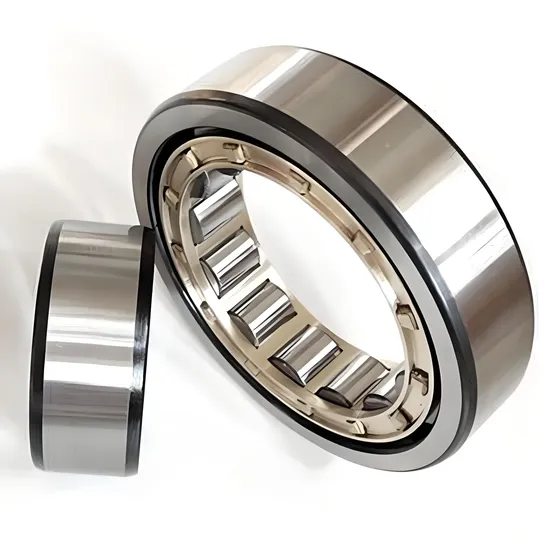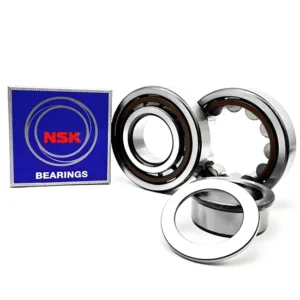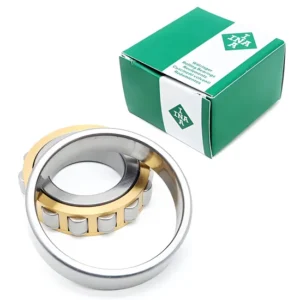

Cylindrical Roller Bearing
![X&S NU202 NJ203 Cylindrical Roller Bearing for Gearboxes [WARN] draft identifier mismatch](https://skfip.com/wp-content/uploads/2026/09/xs-nu202-nj203-cylindrical-roller-bearing-for-gearboxes-warn-draft-identifier-mismatch-aac154.avif)
X&S NU202 NJ202 NU203 NJ203 NUP203 NU2203 NJ2203 Cylindrical Roller Bearing — Separable construction simplifies gearbox maintenance, while distinct NU, NJ, and NUP flange designs manage specific axial displacement and locating requirements.
Batch Traceability Assurance — Every X&S cylindrical roller unit ships with verifiable lot documentation, ensuring full material and origin transparency for critical gearbox assemblies.
| Parameter | Value |
|---|---|
| Designation | NU202 NJ202 NU203 NJ203 NUP203 NU2203 NJ2203 |
| Bearing Type | Cylindrical Roller Bearing |
| Number of Rows | Single |
| Load Direction | Radial |
| Separable | Yes |
| Cage Material | Steel Cage and Nylon Cage |
| Vibration Level | V1, V2, V3 |
| Noise Level | Z1, Z2, Z3 |
| Precision Class | P0, P6, P5 |
| Hardness | 59-62 HRC [NEED_CITE:] |
| Outer Dimension Range | Small and Medium-Sized (60-115mm) |
| Certification | ISO, CE |
| Origin | Shandong, China |
| Industry | Typical Applications |
|---|---|
| Industrial Gearboxes | High-speed input shafts, intermediate reduction stages, output drive couplings |
| Electric Motors | Rotor support journals, cooling fan drive shafts, high-torque starter mechanisms |
| Material Handling | Conveyor drive drum bearings, bucket elevator head shafts, stacker reclaimer slew drives |
| General MRO | Pump drive shafts, compressor crankpins, industrial agitator gear reducers |
Matching only the core designation while ignoring internal flange geometry and clearance suffixes is a primary cause of thermal binding in enclosed drives.
Procurement teams often source replacements based solely on the stamped base number, assuming dimensional equivalence guarantees functional interchangeability. However, a NU203 and an NJ203 share identical outer dimensions but possess fundamentally different internal flange configurations, dictating entirely distinct axial load capacities and locating behaviors. When cross-reference errors overlook these structural nuances, or when standard CN clearance is installed in applications demanding C3 for thermal expansion, the rolling elements experience severe preload. [NEED_CITE: bearing failure mode classification per ISO 15243]. This misalignment rapidly escalates operating temperatures, degrades the lubricant film, and ultimately forces catastrophic cage failure long before the calculated L10 life is reached.
Selecting the correct X&S NU202 NJ203 cylindrical roller bearing supplier involves mapping the specific axial and radial load profile of the gearbox shaft. The separable design of these single-row units simplifies mounting, but the internal architecture must match the shaft’s locating requirements. NU variants, featuring an outer ring with two integral flanges and a flangeless inner ring, accommodate axial displacement in both directions, making them ideal for non-locating positions where thermal shaft expansion occurs. Conversely, NJ designs incorporate one inner ring flange to locate the shaft axially in a single direction. NUP configurations add a loose flange ring to the inner ring, enabling bidirectional axial locating. Misapplying these variants disrupts the entire shaft locating arrangement, inducing parasitic axial loads that the bearing was never engineered to sustain.
Gearbox environments subject bearings to fluctuating thermal gradients and rigorous lubrication demands. As operating temperatures rise, the inner ring expands, progressively reducing internal radial clearance. If the initial clearance class is insufficient to absorb this thermal growth, the bearing operates under extreme internal preload, generating excessive friction and heat. Lubrication strategy further complicates this dynamic; oil bath or splash lubrication systems require cages that can withstand continuous fluid churning without cavitation or degradation, while grease-lubricated sealed housings demand designs that minimize friction to prevent grease breakdown. Inadequate sealing in contaminated MRO environments allows particulate ingress, accelerating raceway wear and disrupting the precise running accuracy required for smooth power transmission. [NEED_CITE: rolling bearing failure mode classification per ISO 15243].
The absence of explicit clearance, cage, or precision suffixes in base designations like NU202 or NJ2203 necessitates rigorous technical verification before procurement. Cage material selection directly dictates the operational envelope: steel cages offer superior structural rigidity and thermal stability for high-load, high-temperature zones, whereas nylon cages provide lower friction, reduced noise, and better performance in marginal lubrication conditions. Vibration (V1-V3) and noise (Z1-Z3) grading parameters are critical for electric motor applications where acoustic emissions and rotational smoothness are strictly regulated. Furthermore, confirming the precision class—whether standard P0 or elevated P6/P5—is essential for high-speed spindle drives where microscopic dimensional deviations translate into unacceptable vibration amplitudes. Assuming default specifications without reviewing the manufacturer’s exact suffix execution invites premature field failures.
Deploying a cylindrical roller bearing with incorrect internal geometry or inadequate clearance in a heavy-duty gearbox triggers a cascade of mechanical deterioration. The immediate symptom is often elevated operating temperature, followed by abnormal acoustic signatures as the rolling elements skid rather than roll. This friction rapidly destroys the lubricant film, leading to metal-to-metal contact, severe raceway smearing, and eventual cage disintegration. Such unplanned downtime not only halts production but frequently causes secondary damage to adjacent gears, seals, and housings, exponentially increasing repair costs. [NEED_CITE: rolling bearing failure mode classification per ISO 15243]. Relying on unverified cross-references voids equipment warranties and shifts the liability for catastrophic drive failures entirely onto the maintenance team.
Our technical review process specifically targets the flange configuration and clearance alignment that generic suppliers routinely overlook during order fulfillment. We verify that the internal design of NU, NJ, and NUP variants precisely matches the OEM shaft locating strategy, preventing destructive axial binding. By offering both steel and nylon cage options mapped to your specific gearbox speed and thermal profile, we eliminate the friction-induced degradation common in mismatched assemblies. Every shipment is backed by strict vibration and noise grading, ensuring smooth operation in precision electric motor drives. Furthermore, our batch traceability protocols guarantee that the declared P5 or P6 precision class is physically verified, not merely assumed from the base designation.
To ensure optimal performance and longevity, provide our engineering team with detailed operational parameters, including radial and axial load profiles, operating speeds, and thermal gradients. Supplying the specific OEM equipment number or existing housing dimensions allows us to execute a precise cross-reference review, confirming that the internal flange design and clearance class perfectly match your application. This technical validation process eliminates specification mismatches and guarantees that the selected bearing integrates seamlessly into your drive system.
Q: What are the structural differences between NU, NJ, and NUP cylindrical roller bearings?
A: NU bearings feature two outer ring flanges and a flangeless inner ring, allowing axial displacement in both directions. NJ bearings have one inner ring flange to locate the shaft axially in one direction. NUP bearings include one integral inner ring flange plus a loose flange ring, enabling bidirectional axial locating. Selecting the correct variant is critical for gearbox shaft locating arrangements.
Q: How to correctly cross-reference cylindrical roller bearings to avoid cage and clearance mismatches?
A: Accurate cross-referencing requires verifying the internal flange design, cage material, and specific clearance class, rather than just matching the base designation. A generic number match might overlook a required C3 clearance for thermal expansion or a specific cage type needed for high-speed operation, leading to thermal binding or premature cage failure in the field.
Q: Steel cage vs. nylon cage: Which is better for my gearbox operating temperature?
A: Steel cages provide superior structural rigidity and thermal stability, making them ideal for high-load, high-temperature gearbox environments. Nylon cages offer lower friction, reduced weight, and better performance in marginal lubrication conditions, but they have lower thermal limits. The choice depends on the specific operating temperature and load profile of your application.
Q: How do you verify the authenticity and batch traceability of the supplied bearings?
A: We provide comprehensive documentation, including a Certificate of Conformity and material test reports. Each bearing features a unique QR code that can be scanned using the manufacturer’s official mobile application to instantly verify authenticity, confirm the production batch, and ensure full traceability from the factory to your facility.
Q: What clearance class is required for thermal expansion in high-speed gearboxes?
A: High-speed gearboxes generate significant heat, causing the inner ring to expand and reduce internal clearance. Standard CN clearance is often insufficient, leading to thermal binding. A C3 or C4 clearance class is typically required to accommodate this thermal growth, ensuring the bearing operates with the correct internal preload under operating temperatures.
Our engineers will respond within 12 hours with a tailored solution.
Request Quote| Bearing Type | Cylindrical Roller Bearing |
| Brand | SKF |
| Quality Standard | ISO 9001 / TS 16949 |
| Precision Grade | P0 / P5 / P6 (custom) |
| Material | Chrome Steel / Stainless |
| Cage Material | Steel / Brass / Polyamide |
| Lubrication | Grease / Oil (specify) |
| Operating Temp. | -40°C to +200°C |
| Min. Order Qty | 1 pc (samples available) |
| Prototype Lead Time | 7 Working Days |
| Load Capacity | Contact for C0/Cr values |
| Speed Rating | Contact for ndm limit |
| Vibration Level | Z1 / Z2 / Z3 (custom) |
| Noise Level | V1 / V2 / V3 (custom) |
| Fatigue Life | L10h per ISO 281 |
| Sealing Options | Open / Z / 2Z / RS / 2RS |
Our engineering team can modify bearing dimensions, materials, seals, and clearances to meet your specific operating requirements. Submit your drawing or spec sheet for a tailored proposal.
Main shaft bearings, gearbox bearings, and generator bearings for onshore and offshore wind turbines.
Heavy-duty bearings for crushers, conveyors, and rotary equipment in extreme dust and shock-load environments.
High-temperature bearings for rolling mills, continuous casting, and furnace applications.
Wheel hub bearings, transmission bearings, and e-motor bearings for passenger and commercial vehicles.
Axle box bearings, traction motor bearings, and gearbox bearings meeting EN/UIC railway standards.
High-precision spindle bearings, angular contact bearings, and super-precision bearings for CNC and robotics.
Our engineers analyze your operating conditions -- load, speed, temperature, environment -- and select or design the optimal bearing solution to maximize service life and reduce total cost of ownership.
Need non-standard dimensions, special materials, or modified clearances? We can modify standard SKF bearings or manufacture fully custom solutions with a 7-day prototype turnaround.
When bearings fail prematurely, our team conducts root-cause analysis using advanced diagnostic tools to identify the failure mode and recommend corrective action.
We deploy vibration monitoring, thermal imaging, and oil analysis programs that detect bearing deterioration early -- reducing unplanned downtime by up to 40%.
Proper installation is critical to bearing performance. Our certified technicians provide on-site installation support, alignment verification, and operator training worldwide.
From initial selection through end-of-life, our dedicated account managers provide scheduled maintenance plans, re-lubrication programs, and replacement forecasting for enterprise clients.
NDA protected · Free samples for orders > $50K · Reply within 12 hours