
ISO 9001 Certified
TS 16949
Genuine SKF
Need Technical Advice?
Reply within 12 hours · 15+ certified engineers on call
Sliding Block Guide
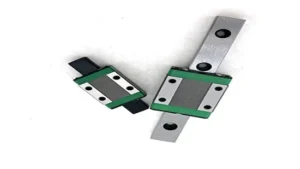
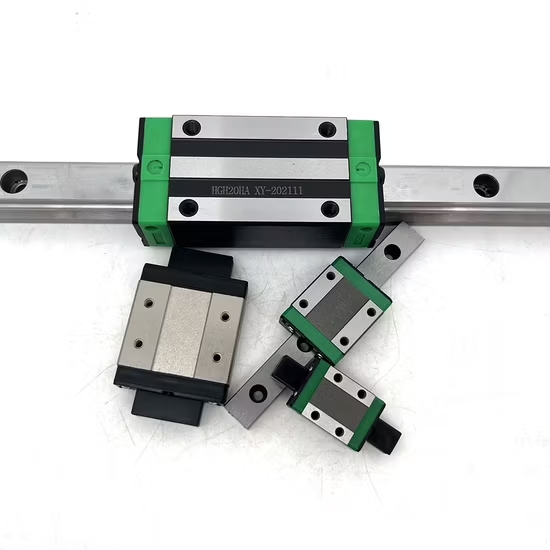
X&S MGWR7R MGWR12R Linear Guide Slide Block Bearing for Dusty Environment [WARN] draft identifier mismatch
X&S MGWR7R MGWR12R Linear Guide Slide Block Bearing — optimized for dusty environments with high corrosion resistance and polished bearing steel construction.
- HRC58-62 hardness ensures stable motion and extended service life under continuous operation.
- Grease or oil lubrication options prevent particle ingress and maintain low noise.
Strict cross-reference alignment on block style, rail profile, and accuracy class guarantees exact equipment compatibility.
7
Day Prototype
vs. 8-12 wks standard
50+
Countries Served
Global logistics network
12h
Quote Response
Expert engineers on call
Typical Applications
Wind Power
Mining
Steel & Metallurgy
Automotive / EV
Rail Transit
Precision Machinery
Genuine SKF Bearings
NDA Protected
Free Sample for Orders > $50K
Global Shipping
Product Details
Cross-reference alignment verified — We match the MGWR7R and MGWR12R base designations alongside specific block styles, rail lengths, and environmental sealing configurations to prevent field mismatch.
Technical Specifications
| Parameter | Value |
|---|---|
| Designation | MGWR7R MGWR12R |
| Product Type | Linear Guide Slide Block Bearing |
| Material Options | Bearing Steel or Stainless Steel Variants |
| Hardness | HRC58-62 [NEED_CITE: standard hardness range for bearing steel linear guides] |
| Surface Treatment | Polished |
| Profile Type | Solid Profile |
| Lubrication | Grease or Oil |
| Corrosion Resistance | High Corrosion Resistance |
| Length | Standard or Customized |
| Carrying Capacity | Special Weight Level |
| Certification | CE |
| Origin | Shandong, China |
Note: The ‘R’ suffix in MGWR7R and MGWR12R is an unverified suffix requiring manufacturer catalog confirmation for exact block style or flange type definition.
Application Suitability
| Industry | Typical Applications |
|---|---|
| Industrial Automation | Assembly line gantry systems in dusty manufacturing floors |
| Packaging Machinery | Sealing and cutting carriages exposed to particulate debris |
| Electronics Manufacturing | Cleanroom-adjacent conveyance and component placement axes |
| Food Processing | Washdown-area transport slides requiring high corrosion resistance |
Preventing Premature X&S MGWR7R MGWR12R Linear Guide Slide Block Bearing Failure in Particulate Environments
Seal and lubrication matching is the primary defense against abrasive wear.
In my years covering Southeast Asian industrial hubs, I have witnessed countless linear motion systems fail months ahead of schedule simply because an open block structure was substituted for a dust-shielded design. When microscopic silica or metallic dust breaches the carriage, it acts as a lapping compound, rapidly causing raceway spalling and catastrophic jamming. Selecting the correct X&S MGWR7R MGWR12R linear guide slide block bearing requires looking past the basic size dimensions and verifying that the internal scraper seals and lubricant viscosity are explicitly rated for the ambient particulate load [NEED_CITE: linear guide failure modes in contaminated environments per ISO 15243].
Aligning Block Geometry with Automation Constraints
Deploying the correct X&S MGWR7R MGWR12R linear guide slide block bearing hinges on understanding the exact spatial and dynamic constraints of your automation equipment. Our technical team reviews your carriage footprint and moment load requirements to ensure the selected block style distributes forces evenly across the rail. This prevents localized edge loading that typically accelerates wear in high-cycle pick-and-place operations.
Navigating Dust, Moisture, and Friction Challenges
Harsh environments demand a careful balance between sealing friction and contamination exclusion. In heavily polluted settings, contact seals are mandatory to wipe debris from the rail, though they introduce slight drag that must be accounted for in motor sizing. Lubrication selection is equally critical; grease retains its film strength under heavy loads but can trap hard particles if the seal fails, whereas oil circulation continuously flushes contaminants away but requires a more complex delivery system. Furthermore, high corrosion resistance treatments are essential when equipment faces frequent washdowns or humid atmospheric conditions [NEED_CITE: impact of surface treatments on linear guide corrosion resistance].
Decoding Material and Profile Specifications
The solid profile construction of these carriages provides the necessary rigidity to resist deflection under multi-directional automation loads. While standard bearing steel offers excellent core strength and reaches the requisite HRC58-62 surface hardness, stainless steel variants are available for applications demanding superior chemical resistance. The polished surface treatment minimizes friction at the seal-lip interface, reducing heat generation during high-speed traverses. Customizable lengths allow engineers to optimize the carriage footprint, ensuring adequate load distribution without adding unnecessary moving mass to the system.
The Hidden Toll of Incorrect Carriage Selection
Substituting a standard block for a dust-rated variant inevitably leads to unplanned downtime and severe secondary damage. Once abrasive particles infiltrate the recirculation zone, they cause micro-pitting that quickly escalates into macroscopic raceway spalling. This not only destroys the carriage but also scores the mating rail, forcing a complete system replacement rather than a simple component swap. Such premature failures routinely void equipment warranties and disrupt tightly scheduled production outputs [NEED_CITE: economic impact of unplanned downtime in automated manufacturing].
Securing Traceability and Technical Accuracy
Our procurement process eliminates the guesswork that plagues standard distribution channels. We verify the exact block style and sealing configuration, ensuring the ‘R’ suffix matches your specific OEM requirement rather than shipping a visually similar but functionally inadequate substitute. Every shipment includes batch traceability to the manufacturer, protecting your facility from counterfeit carriages that utilize soft, improperly hardened steel. We also provide cross-reference alignment to equivalent models from major global brands, ensuring seamless integration into your existing maintenance inventory.
Documentation & Authenticity
- Certificate of Conformity confirming CE compliance for automated machinery directives.
- Batch and lot traceability linking the carriage directly to the manufacturer’s production run.
- Official app QR verification for instant authenticity validation on the shop floor.
- Material test report validating the metallurgical composition and corrosion-resistant properties.
- Dimensional and running accuracy inspection report confirming profile tolerances before dispatch.
- Country-of-origin documentation for seamless customs clearance and import compliance.
Storage, Handling & Mounting Protocols
- Retain the factory packaging until installation to protect the polished rail-contact surfaces from ambient humidity and dust.
- Store carriages in a climate-controlled environment to prevent condensation from compromising the high corrosion resistance treatment.
- Wear lint-free gloves during handling to prevent acidic skin oils from etching the bearing steel raceways.
- Align the block carefully onto the rail to avoid chipping the critical contact seals at the carriage entry points.
- Apply the specified grease or oil immediately after mounting if the blocks were shipped with temporary preservative coatings.
- Avoid using carbon steel tools on stainless steel variants to prevent cross-contamination and localized rusting.
Engineering Support and Selection Guidance
To ensure optimal system longevity, please provide your specific radial and axial load profiles, travel speeds, and detailed environmental contamination levels. Sharing the original OEM equipment numbers allows our engineering team to perform precise cross-reference checks and verify the exact block style required. This technical review guarantees that the selected carriage geometry and sealing arrangement perfectly match your operational demands.
Frequently Asked Questions
Q: How do I determine the exact block style and rail length for my automation equipment?
A: Provide your equipment’s load dynamics, speed requirements, and spatial constraints. Our engineering team will analyze these parameters alongside the OEM part number to identify the precise block geometry and rail length needed, ensuring optimal load distribution and preventing edge-loading failures in your specific automation setup.
Q: What are the common failure modes of linear guides in dusty environments?
A: In dusty conditions, inadequate sealing allows abrasive particles to infiltrate the recirculation zone, acting as a lapping compound that causes rapid raceway spalling and jamming. Preventing this requires selecting carriages with robust contact seals and matching the lubrication type to effectively flush or trap contaminants without increasing friction excessively.
Q: When should I choose stainless steel over standard bearing steel for these carriages?
A: Standard bearing steel is ideal for general automation, but stainless steel variants are necessary when the equipment faces frequent chemical washdowns, high humidity, or corrosive food processing environments. The stainless option provides substantially higher corrosion resistance, preventing surface degradation that could otherwise compromise the seal interface and smooth motion.
Q: How do I manage lubrication cycles for grease versus oil in high-dust applications?
A: Grease requires periodic manual re-lubrication to replenish the film and purge trapped debris, making it suitable for accessible, lower-speed axes. Oil systems offer continuous flushing of contaminants and better heat dissipation for high-speed applications, but they demand a centralized delivery system and more rigorous maintenance to prevent leakage and environmental contamination.
Q: How can I source replacement guides if the original OEM parts are discontinued?
A: Share the original equipment designation and operational parameters with our technical team. We utilize comprehensive cross-reference databases to identify functionally equivalent alternatives from authorized global brands, ensuring the replacement matches the original clearance, sealing, and load capacity requirements without causing system incompatibility.
Product Summary
- Product Name
- X&S MGWR7R MGWR12R Linear Guide Slide Block Bearing for Dusty Environment [WARN] draft identifier mismatch
- Category
- Sliding Block Guide
- Brand
- SKF
- Certification
- ISO 9001 · TS 16949
- Lead Time
- 7 Working Days
Get a Custom Quote
Our engineers will respond within 12 hours with a tailored solution.
Request QuoteGeneral Specifications
| Bearing Type | Sliding Block Guide |
| Brand | SKF |
| Quality Standard | ISO 9001 / TS 16949 |
| Precision Grade | P0 / P5 / P6 (custom) |
| Material | Chrome Steel / Stainless |
| Cage Material | Steel / Brass / Polyamide |
| Lubrication | Grease / Oil (specify) |
| Operating Temp. | -40°C to +200°C |
| Min. Order Qty | 1 pc (samples available) |
| Prototype Lead Time | 7 Working Days |
Performance Parameters
| Load Capacity | Contact for C0/Cr values |
| Speed Rating | Contact for ndm limit |
| Vibration Level | Z1 / Z2 / Z3 (custom) |
| Noise Level | V1 / V2 / V3 (custom) |
| Fatigue Life | L10h per ISO 281 |
| Sealing Options | Open / Z / 2Z / RS / 2RS |
Custom Specifications Available
Our engineering team can modify bearing dimensions, materials, seals, and clearances to meet your specific operating requirements. Submit your drawing or spec sheet for a tailored proposal.
Wind Power
Main shaft bearings, gearbox bearings, and generator bearings for onshore and offshore wind turbines.
Mining & Quarrying
Heavy-duty bearings for crushers, conveyors, and rotary equipment in extreme dust and shock-load environments.
Steel & Metallurgy
High-temperature bearings for rolling mills, continuous casting, and furnace applications.
Automotive / EV
Wheel hub bearings, transmission bearings, and e-motor bearings for passenger and commercial vehicles.
Rail Transit
Axle box bearings, traction motor bearings, and gearbox bearings meeting EN/UIC railway standards.
Precision Machinery
High-precision spindle bearings, angular contact bearings, and super-precision bearings for CNC and robotics.
Application Design
EngineeringOur engineers analyze your operating conditions -- load, speed, temperature, environment -- and select or design the optimal bearing solution to maximize service life and reduce total cost of ownership.
Custom Modification
7-Day TurnaroundNeed non-standard dimensions, special materials, or modified clearances? We can modify standard SKF bearings or manufacture fully custom solutions with a 7-day prototype turnaround.
Failure Analysis
DiagnosticsWhen bearings fail prematurely, our team conducts root-cause analysis using advanced diagnostic tools to identify the failure mode and recommend corrective action.
Predictive Maintenance
Up to 40% Less DowntimeWe deploy vibration monitoring, thermal imaging, and oil analysis programs that detect bearing deterioration early -- reducing unplanned downtime by up to 40%.
On-site Installation
Global CoverageProper installation is critical to bearing performance. Our certified technicians provide on-site installation support, alignment verification, and operator training worldwide.
Lifecycle Support
Enterprise SLAFrom initial selection through end-of-life, our dedicated account managers provide scheduled maintenance plans, re-lubrication programs, and replacement forecasting for enterprise clients.
Why SKF China
The engineering partner advantage
7 Days
Prototype Lead Time
vs. 8-12 weeks via standard channels
15+
Certified Engineers
SKF-certified, on-call for your project
50+
Countries Delivered
Reliable global logistics network
Request a Quote
Get a custom quote for
X&S MGWR7R MGWR12R Linear Guide Slide Block Bearing for Dusty Environment [WARN] draft identifier mismatch
NDA protected · Free samples for orders > $50K · Reply within 12 hours
Related Products
More Sliding Block Guide Products

Sliding Block Guide
X&S HGH30HA HGH45HA HGH55HA HGH65HA Linear Guide Bearing Slide Block
Sliding Block Guide