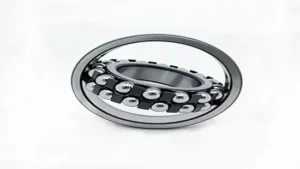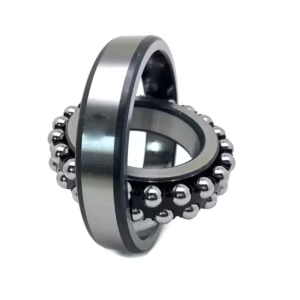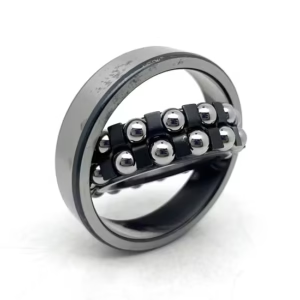
Self-Aligning Ball Bearing
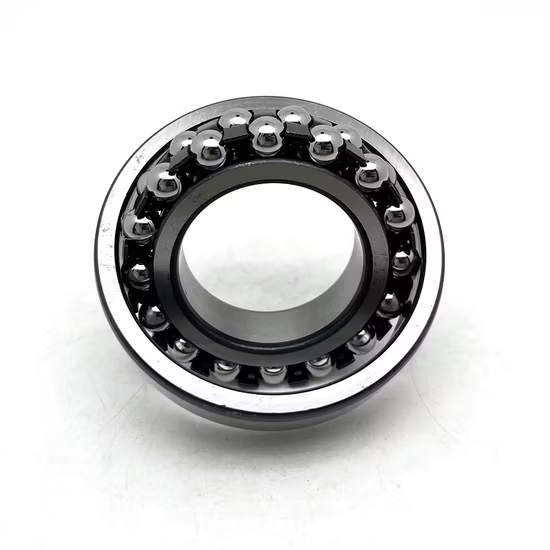
2204-2RS 2205 2206TN 2205K 2205KTN 2205-2RS 2206 Self-Aligning Ball Bearing
Three-way cross-reference alignment — verifying bore type, internal clearance, and cage material ensures the replacement matches the OEM specification exactly.
| Parameter | Value |
|---|---|
| Designation | 2204-2RS 2205 2206TN 2205K 2205KTN 2205-2RS 2206 |
| Bearing Type | Self-Aligning Ball Bearing |
| Material | Chrome Steel |
| Hardness | HRC58-62 [NEED_CITE:] |
| Bore Type | Cylindrical and Tapered (1:12) |
| Seal or Shield Type | Double-sided contact seals (2RS suffix) |
| Cage Material | Steel Cage, Brass Cage, Nylon Cage |
| Clearance Class | C2, C0, C3, C4, C5 |
| Limiting Speed | 5600-18000 r/Min |
| Vibration Level | V1, V2, V3, V4 |
| Lubrication | Grease or Oil |
| Origin | Shandong, China |
| Industry | Typical Applications |
|---|---|
| Automotive | Steering column intermediate shafts and transmission linkages |
| Agricultural & Tractor | PTO driveline joints and front axle pivot assemblies |
| Construction Machinery | Conveyor idler rollers and light material handling joints |
| HVAC & Small Blowers | Exhaust fan shafts and industrial ventilation impeller mounts |
Base designation matching is never enough when internal geometry dictates operational survival. Procurement teams frequently approve replacements based solely on the core number, overlooking critical suffix variations that alter the bearing’s physical behavior under load. During my years handling small blower repair cases around Shenzhen, I repeatedly traced catastrophic cage fractures back to a simple suffix mix-up. Replacing a tapered bore variant with a standard cylindrical one, or ignoring the sealing configuration, strips away the self-aligning capability and triggers rapid thermal binding [NEED_CITE: rolling bearing failure mode classification per ISO 15243].
Exact suffix verification prevents immediate field failure.
When an X&S 2204-2RS 2205 2206TN 2205K 2205KTN 2205-2RS 2206 self-aligning ball bearing is installed without confirming the bore profile or seal type, the shaft experiences severe misalignment stress. The resulting friction generates excess heat, degrading the lubricant and ultimately snapping the cage.
Selecting the correct variant from the X&S 2204-2RS 2205 2206TN 2205K 2205KTN 2205-2RS 2206 self-aligning ball bearing range requires aligning the suffix with the specific mounting and environmental conditions. For small blowers exposed to dust and moisture, the double-sided contact seals are mandatory to retain grease and block particulate ingress. In tractor PTO drivelines where shaft deflection is constant, verifying the exact clearance class ensures the bearing accommodates thermal expansion without binding. Our technical review process validates these application parameters before any order is released, ensuring the selected configuration handles the actual operational stress rather than just fitting the housing.
Small blower shafts and agricultural linkages operate in environments characterized by constant vibration and significant shaft deflection. The self-aligning capability compensates for these angular misalignments, but only if the internal clearance is correctly matched to the operating temperature. If a standard clearance is used in a high-speed blower application, thermal expansion will eliminate the internal gap, leading to severe friction. Furthermore, contaminated environments demand robust sealing; while open bearings rely on external housing seals, integrated contact seals provide a tighter defense against fine agricultural dust, though they introduce slightly higher friction limits [NEED_CITE: sealing friction and contamination ingress in dynamic applications].
The K suffix indicates a 1:12 tapered bore, designed for tight interference fits on adapter sleeves, which is critical for securing the bearing on shafts subject to heavy vibration. Conversely, the standard cylindrical bore requires precise shaft tolerances to prevent creeping. Cage material selection directly impacts the speed and load capacity; steel cages offer high structural rigidity for heavy shock loads, while nylon cages reduce weight and operate quieter at higher speeds in small blower applications. Brass cages provide superior durability under marginal lubrication conditions. Understanding these distinctions ensures the bearing survives the specific mechanical stresses of the equipment.
Substituting a cylindrical bore bearing into a tapered sleeve assembly, or ignoring the required C3 clearance for a high-speed application, leads directly to unplanned downtime. The initial symptom is often elevated operating noise, which rapidly escalates to catastrophic shaft scoring and housing destruction. According to failure analysis frameworks like ISO 15243, these issues are classified as mounting and selection errors rather than material fatigue. The financial impact extends far beyond the replacement part, encompassing lost production time, secondary component damage, and voided equipment warranties due to improper maintenance practices [NEED_CITE: economic impact of unplanned downtime in rotating equipment].
Sourcing genuine components requires more than just matching the part number on a label. We provide comprehensive cross-reference validation that checks the bore type, clearance, and cage material against your OEM requirements, preventing the installation of visually identical but internally incompatible parts. Every X&S 2204-2RS 2205 2206TN 2205K 2205KTN 2205-2RS 2206 self-aligning ball bearing we supply includes batch traceability to the manufacturer, allowing you to verify authenticity via official apps. This strict documentation protocol eliminates the risk of receiving counterfeits with soft inner rings that pass casual visual inspections but fail under operational load.
To ensure optimal performance and longevity, please provide your specific operational parameters, including radial and axial loads, operating speeds, and ambient temperatures. Supplying the original OEM equipment number allows our engineering team to perform a precise cross-reference check, verifying that the bore type, clearance class, and seal configuration perfectly match your application requirements. This technical validation ensures you receive a component engineered for your exact operating conditions.
Q: Why is matching the base designation insufficient when replacing these bearings?
A: The base number only defines the outer dimensions. Suffixes dictate the internal clearance, bore profile, and sealing. Installing a standard clearance bearing in a high-speed blower causes thermal binding, while ignoring a tapered bore requirement leads to shaft slipping. We verify all suffixes to ensure exact functional equivalence.
Q: How do I determine if I need a C3 clearance instead of standard C0?
A: C3 clearance is necessary when the inner ring operates at a significantly higher temperature than the outer ring, or when tight interference fits reduce the internal gap. In small blowers running at high speeds, thermal expansion demands this extra clearance to prevent the rolling elements from skidding and generating excess heat.
Q: What does the K suffix mean for the installation process?
A: The K suffix indicates a 1:12 tapered bore, meaning the bearing must be mounted on a matching tapered shaft or an adapter sleeve. During installation, the bearing is driven axially to achieve a specific radial internal clearance reduction. Incorrect drive-up distances will either cause a loose fit or crack the inner ring.
Q: Are the TN and KTN suffixes standard polyamide cage designations?
A: While TN9 typically denotes a glass fiber-reinforced polyamide cage in standard industry tables, the TN suffix alone on these specific designations is unverified and requires manufacturer catalog confirmation. We always verify the exact cage material against the official specification sheet before dispatch to ensure it meets your speed and temperature limits.
Q: How can I verify the authenticity of the supplied bearings?
A: Every bearing we supply features a unique batch code and QR label. You can scan this code using the brand’s official mobile application to instantly verify the manufacturing origin and batch details. This digital traceability protects your equipment from the severe risks associated with counterfeit components.
Our engineers will respond within 12 hours with a tailored solution.
Request Quote| Bearing Type | Self-Aligning Ball Bearing |
| Brand | SKF |
| Quality Standard | ISO 9001 / TS 16949 |
| Precision Grade | P0 / P5 / P6 (custom) |
| Material | Chrome Steel / Stainless |
| Cage Material | Steel / Brass / Polyamide |
| Lubrication | Grease / Oil (specify) |
| Operating Temp. | -40°C to +200°C |
| Min. Order Qty | 1 pc (samples available) |
| Prototype Lead Time | 7 Working Days |
| Load Capacity | Contact for C0/Cr values |
| Speed Rating | Contact for ndm limit |
| Vibration Level | Z1 / Z2 / Z3 (custom) |
| Noise Level | V1 / V2 / V3 (custom) |
| Fatigue Life | L10h per ISO 281 |
| Sealing Options | Open / Z / 2Z / RS / 2RS |
Our engineering team can modify bearing dimensions, materials, seals, and clearances to meet your specific operating requirements. Submit your drawing or spec sheet for a tailored proposal.
Main shaft bearings, gearbox bearings, and generator bearings for onshore and offshore wind turbines.
Heavy-duty bearings for crushers, conveyors, and rotary equipment in extreme dust and shock-load environments.
High-temperature bearings for rolling mills, continuous casting, and furnace applications.
Wheel hub bearings, transmission bearings, and e-motor bearings for passenger and commercial vehicles.
Axle box bearings, traction motor bearings, and gearbox bearings meeting EN/UIC railway standards.
High-precision spindle bearings, angular contact bearings, and super-precision bearings for CNC and robotics.
Our engineers analyze your operating conditions -- load, speed, temperature, environment -- and select or design the optimal bearing solution to maximize service life and reduce total cost of ownership.
Need non-standard dimensions, special materials, or modified clearances? We can modify standard SKF bearings or manufacture fully custom solutions with a 7-day prototype turnaround.
When bearings fail prematurely, our team conducts root-cause analysis using advanced diagnostic tools to identify the failure mode and recommend corrective action.
We deploy vibration monitoring, thermal imaging, and oil analysis programs that detect bearing deterioration early -- reducing unplanned downtime by up to 40%.
Proper installation is critical to bearing performance. Our certified technicians provide on-site installation support, alignment verification, and operator training worldwide.
From initial selection through end-of-life, our dedicated account managers provide scheduled maintenance plans, re-lubrication programs, and replacement forecasting for enterprise clients.
NDA protected · Free samples for orders > $50K · Reply within 12 hours