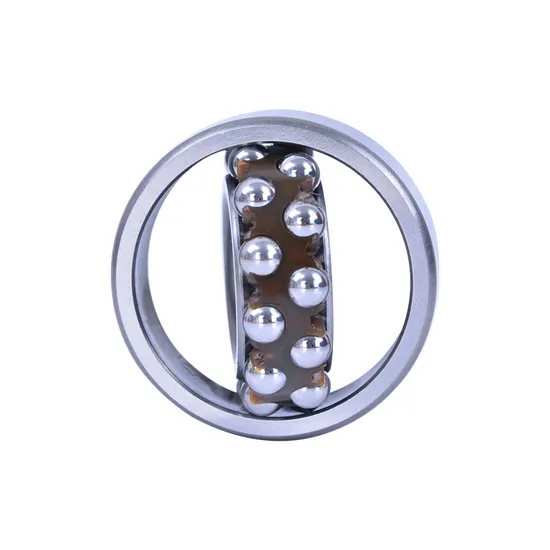
Angular Contact Ball Bearing
![X&S B707E.T.P4S B708C.T.P4S Angular Contact Ball Bearing for Packaging Machine Drives [WARN] draft identifier mismatch](https://skfip.com/wp-content/uploads/2026/09/xs-b707e-t-p4s-b708c-t-p4s-angular-contact-ball-bearing-for-packaging-machine-drives-warn-draft-identifier-mismatch-e0b661.webp)
B707E. T. P4S B708C. T. P4S B708E. T. P4S 7212C 72 Angular Contact Ball Bearing P4S — Stainless steel construction supports packaging machine drives.
Full-Line Authorized Coverage — Sourcing mixed-designation orders like the B707E. T. P4S alongside other precision grades eliminates multi-vendor coordination and ensures uniform documentation across your entire packaging line rebuild.
| Parameter | Value |
|---|---|
| Designation | B707E. T. P4S B708C. T. P4S B708E. T. P4S 7212C 72 |
| Bearing Type | Angular Contact Ball Bearing |
| Precision Class | P4S (Super Precision) |
| Contact Angle | 15° (C suffix) / 25° (E suffix) |
| Row Arrangement | Single Row |
| Material Options | Available in stainless steel or standard bearing steel variants |
| Lubrication | Grease or Oil |
| Seal or Shield Options | Open, Z, ZZ, RS, or 2RS configurations |
| Operating Temperature | Standard limits for precision spindle applications |
| Origin | Shandong, China |
Note: The ‘T’ suffix appears in the designation string but remains unverified against the specific manufacturer catalog; please confirm its exact cage or design meaning during the technical review phase.
| Industry | Typical Applications |
|---|---|
| Packaging Machinery | High-speed wrapper drives, form-fill-seal rotary sealing jaws, and servo-driven indexing tables |
| Precision Machining | High-frequency motor spindles, precision grinding headstocks, and CNC rotary axes |
| Fluid Handling | High-speed centrifugal pump shafts and vacuum blower rotor supports |
A base-number match that ignores the P4S precision suffix guarantees thermal binding in high-speed packaging drives.
Procurement teams often approve cross-references that align on the 7000-series base number but overlook the precision class. When a standard P5 or P0 bearing is installed in a high-speed wrapper drive designed for super precision, the wider dimensional tolerances cause excessive internal friction. This generates heat *ure cage failure [NEED_CITE: rolling bearing failure mode classification per ISO 15243]. In automated packaging environments where line stoppages cascade into massive throughput losses, specifying the exact X&S B707E. T. P4S angular contact ball bearing is not just a technical preference; it is a critical operational safeguard.
High-speed packaging drives require bearings that maintain strict running accuracy under continuous rotational stress. The X&S B707E. T. P4S angular contact ball bearing delivers the tight dimensional tolerances necessary to prevent shaft runout in servo-driven indexing tables. By supplying verified super precision components, we ensure that the dynamic characteristics of your packaging machinery remain intact, preventing the vibration that typically degrades seal integrity and product fill accuracy.
Form-fill-seal rotary jaws and high-speed wrappers subject bearings to combined radial and axial loads while generating significant friction heat. Selecting the correct contact angle is vital: the 15° angle (C suffix) minimizes friction for ultra-high-speed, light-axial-load spindles, while the 25° angle (E suffix) provides greater axial rigidity for drives experiencing thrust from sealing pressures. Furthermore, the choice between grease and oil lubrication must align with the machine’s cooling capacity and maintenance intervals [NEED_CITE: thermal limits and lubrication selection in high-speed spindle applications]. Inadequate sealing in these environments allows packaging dust to infiltrate the raceway, accelerating wear.
The designation string dictates the exact internal geometry and tolerance stack-up. The P4S class indicates super precision, offering tighter running accuracy than standard ABEC7 or P4 grades, which is essential for minimizing vibration in precision equipment. The contact angle suffixes—C for 15° and E for 25°—determine how the bearing distributes combined loads; substituting an E for a C in a high-speed spindle will increase friction and operating temperature. Additionally, the availability of stainless steel variants provides necessary corrosion resistance for packaging machines that undergo frequent washdowns or operate in humid environments, whereas standard bearing steel suits dry, controlled settings.
Installing a bearing that matches the bore and outside diameter but lacks the required P4S precision class leads to unplanned downtime and catastrophic damage to adjacent spindle components. The slight increase in internal clearance from a lower precision grade causes shaft deflection under load, ruining the product seal quality on packaging lines. According to ISO 281 framework principles, operating a precision bearing outside its designed tolerance envelope drastically reduces its calculated fatigue life [NEED_CITE: bearing life calculation and reliability factors per ISO 281]. This specification drift ultimately voids equipment warranties and forces costly emergency rebuilds.
Sourcing precision components requires more than just matching a part number; it demands verification of the internal geometry. We provide authorized coverage across major brands, ensuring that cross-references for the B708C. T. P4S or B708E. T. P4S match not just the base designation, but the exact contact angle and precision suffix. Our technical selection review evaluates your specific load, speed, and temperature parameters to prevent the common error of installing a 25° contact angle bearing where a 15° was specified. Every shipment includes batch traceability, ensuring the metallurgical and dimensional integrity of the bearings matches the manufacturer’s original production facilities.
To ensure the selected designation perfectly matches your packaging drive or spindle, provide our engineering team with your exact radial and axial load profiles, operating speeds, and thermal conditions. If you are replacing an existing component, share the OEM equipment number and the full designation string from the original nameplate. This data allows us to perform a comprehensive cross-reference review, verifying that the contact angle, precision class, and material options align precisely with your application’s demands.
Q: What is the practical difference between the C and E contact angle suffixes?
A: The C suffix indicates a 15° contact angle, optimized for ultra-high-speed applications with lighter axial loads, minimizing friction heat. The E suffix denotes a 25° contact angle, providing higher axial rigidity for drives experiencing moderate thrust loads. Selecting the wrong angle causes either thermal binding or excessive shaft deflection.
Q: How does P4S precision compare to standard P4 or ABEC7 classes?
A: P4S represents a super precision classification that enforces tighter running accuracy and dimensional tolerances than standard P4 or ABEC7 grades. This strict control is critical for high-speed packaging spindles, as even microscopic deviations in running accuracy generate vibration that degrades seal quality and accelerates lubricant breakdown.
Q: What details must align when cross-referencing these bearings for packaging machines?
A: A valid cross-reference must match the base designation, the exact contact angle suffix (C or E), and the P4S precision class. Overlooking the precision suffix or substituting a 25° angle for a 15° angle will alter the internal load distribution, leading to premature thermal failure in high-speed wrapper drives.
Q: How can we verify the authenticity of the supplied precision bearings?
A: Every bearing shipment includes batch traceability documentation and a Certificate of Conformity. You can verify the authenticity and production origin by scanning the provided QR codes through the brand’s official mobile application, ensuring the components meet the strict P4S manufacturing standards.
Q: When should we choose grease versus oil lubrication for these high-speed spindles?
A: Grease is typically selected for sealed, maintenance-free packaging drives operating at moderate speeds, offering excellent contamination protection. Oil lubrication, often delivered via air-oil or jet systems, is required for ultra-high-speed spindles where friction heat must be actively dissipated to maintain the P4S precision tolerances.
Our engineers will respond within 12 hours with a tailored solution.
Request Quote| Bearing Type | Angular Contact Ball Bearing |
| Brand | SKF |
| Quality Standard | ISO 9001 / TS 16949 |
| Precision Grade | P0 / P5 / P6 (custom) |
| Material | Chrome Steel / Stainless |
| Cage Material | Steel / Brass / Polyamide |
| Lubrication | Grease / Oil (specify) |
| Operating Temp. | -40°C to +200°C |
| Min. Order Qty | 1 pc (samples available) |
| Prototype Lead Time | 7 Working Days |
| Load Capacity | Contact for C0/Cr values |
| Speed Rating | Contact for ndm limit |
| Vibration Level | Z1 / Z2 / Z3 (custom) |
| Noise Level | V1 / V2 / V3 (custom) |
| Fatigue Life | L10h per ISO 281 |
| Sealing Options | Open / Z / 2Z / RS / 2RS |
Our engineering team can modify bearing dimensions, materials, seals, and clearances to meet your specific operating requirements. Submit your drawing or spec sheet for a tailored proposal.
Main shaft bearings, gearbox bearings, and generator bearings for onshore and offshore wind turbines.
Heavy-duty bearings for crushers, conveyors, and rotary equipment in extreme dust and shock-load environments.
High-temperature bearings for rolling mills, continuous casting, and furnace applications.
Wheel hub bearings, transmission bearings, and e-motor bearings for passenger and commercial vehicles.
Axle box bearings, traction motor bearings, and gearbox bearings meeting EN/UIC railway standards.
High-precision spindle bearings, angular contact bearings, and super-precision bearings for CNC and robotics.
Our engineers analyze your operating conditions -- load, speed, temperature, environment -- and select or design the optimal bearing solution to maximize service life and reduce total cost of ownership.
Need non-standard dimensions, special materials, or modified clearances? We can modify standard SKF bearings or manufacture fully custom solutions with a 7-day prototype turnaround.
When bearings fail prematurely, our team conducts root-cause analysis using advanced diagnostic tools to identify the failure mode and recommend corrective action.
We deploy vibration monitoring, thermal imaging, and oil analysis programs that detect bearing deterioration early -- reducing unplanned downtime by up to 40%.
Proper installation is critical to bearing performance. Our certified technicians provide on-site installation support, alignment verification, and operator training worldwide.
From initial selection through end-of-life, our dedicated account managers provide scheduled maintenance plans, re-lubrication programs, and replacement forecasting for enterprise clients.
NDA protected · Free samples for orders > $50K · Reply within 12 hours