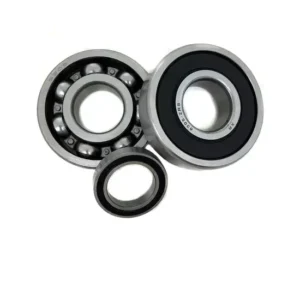

Deep Groove Ball Bearing
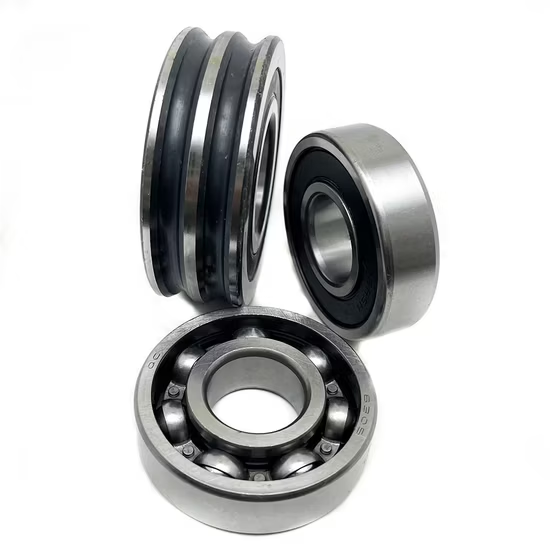
X&S 6408 16007 60907 Deep Groove Ball Bearing — offered in Open, Zz shielded, or 2RS sealed configurations to match textile loom environments.
Unified Multi-Brand Sourcing — A single purchase order covers mixed-brand requirements without coordinating multiple suppliers, ensuring every X&S 6408 16007 60907 deep groove ball bearing arrives with fully traceable documentation.
| Parameter | Value |
|---|---|
| Designation | 6408 16007 60907 |
| Bearing Type | Deep Groove Ball Bearing |
| Precision Class | P0, P6, P5, P4 |
| Material | Bearing Steel |
| Vibration Level | Z1V1, Z2V2, Z3V3, Z4V4 |
| Seal or Shield Type | Zz, 2RS, Open |
| Lubrication | Grease or Oil |
| Origin | Shandong Province, China |
| HS Code | 8482102000 |
| Customization | Available |
| Industry | Typical Applications |
|---|---|
| Textile Manufacturing | Loom auxiliary components, yarn tensioners, high-speed spinning frames |
| General Industrial | Electric motor rotors, industrial pump shafts, conveyor drive pulleys |
| Power Transmission | Light-duty industrial gearboxes, agricultural machinery PTO shafts |
Matching the base designation is only the first step; ignoring thermal expansion clearance leads directly to catastrophic cage failure.
I have spent years on workshop floors in Ningbo, watching textile mills suffer repeated unplanned downtime because standard clearance bearings were forced into high-speed loom applications. When a textile loom auxiliary component runs at elevated speeds, internal friction generates significant heat. If the installed bearing lacks the necessary C3 clearance for thermal expansion, the internal gap vanishes, causing severe thermal binding. This is a frequent oversight when procurement teams focus solely on the base number. Sourcing the correct X&S 6408 16007 60907 deep groove ball bearing requires strict attention to these suffix details to prevent the inner ring from seizing onto the shaft [NEED_CITE: thermal binding failure modes in high-speed rotating equipment].
Textile machinery demands exceptional rotational stability to maintain uniform yarn tension and prevent fabric defects. The X&S 6408 16007 60907 deep groove ball bearing series supports this by offering precision classes ranging from standard P0 up to P4. When upgrading a high-speed spinning frame, selecting a P5 or P4 precision variant minimizes radial runout, ensuring the auxiliary components operate smoothly without introducing destructive micro-vibrations into the sensitive weaving mechanism.
Loom environments are notoriously harsh, filled with airborne cotton dust, synthetic fibers, and sizing chemicals that easily infiltrate unprotected bearings. Choosing between Zz metal shields and 2RS rubber seals dictates the maintenance cycle. While 2RS seals provide superior exclusion of fine textile dust, they generate higher friction torque, which can elevate operating temperatures in high-speed applications. Conversely, Zz shields offer lower friction but require a cleaner operating environment. Lubrication selection—grease for sealed units or oil for open, high-speed setups—must align with the chosen seal type to prevent premature lubricant starvation [NEED_CITE: seal friction and contamination ingress in textile environments].
The vibration and noise classifications, from Z1V1 up to Z4V4, are critical for electric motors driving textile equipment. A Z3V3 or Z4V4 rating indicates stringent control over raceway waviness and ball sphericity, directly translating to quieter operation and reduced structural resonance in the loom frame. Furthermore, understanding the exact suffix combination prevents costly mismatches; an open bearing requires external oil mist lubrication systems, whereas a 2RS variant is pre-lubricated and sealed for life. Verifying these specific designations ensures the internal geometry and sealing friction perfectly match the equipment’s original engineering parameters.
Installing a P0 grade bearing in a precision spindle application, or using a standard CN clearance where C3 is mandated, inevitably triggers a cascade of mechanical failures. According to failure analysis frameworks like ISO 15243, these misalignments typically manifest as smearing on the raceways, rapid cage wear, and eventual seizure. The resulting unplanned downtime halts the entire production line, voids equipment warranties, and causes catastrophic damage to adjacent shafts and housings, costing far more than the initial price difference of the correct bearing [NEED_CITE: rolling bearing failure mode classification per ISO 15243].
Our distribution network provides authorized coverage across all major brands, allowing you to consolidate mixed-brand orders into a single, manageable shipment. We specialize in cross-referencing that aligns clearance, cage material, and precision suffixes, preventing the common trap of matching only the base designation. For high-speed textile applications, we conduct application-based selection reviews covering load, speed, and temperature to ensure the chosen variant survives the specific loom environment. Every batch is backed by strict traceability, so you can verify the exact manufacturing origin before installation.
To ensure optimal performance in your specific machinery, please provide detailed operating parameters including radial and axial loads, rotational speeds, and ambient temperature ranges. This data allows our engineering team to perform accurate L10 life calculations and verify the required clearance class. Additionally, sharing the OEM equipment number or existing part drawings enables precise cross-reference matching, ensuring the replacement bearing integrates flawlessly into your current maintenance protocol.
Q: Why must cross-referencing include clearance and seal suffixes, not just the base number?
A: Base numbers only define the physical envelope dimensions. In high-speed textile looms, ignoring the clearance suffix leads to thermal binding as the bearing heats up, while mismatching the seal type causes either rapid contamination ingress or excessive friction torque. Exact suffix alignment ensures the internal geometry matches the application’s thermal and environmental demands.
Q: How do I choose between Zz shields and 2RS seals for loom environments?
A: 2RS rubber seals offer superior protection against fine cotton dust and sizing chemicals but generate higher friction, which can increase operating temperatures. Zz metal shields provide lower friction for high-speed applications but require a relatively clean environment. The choice depends on balancing contamination severity with the acceptable thermal limits of your specific auxiliary drive.
Q: What is the practical difference between Z1V1 and Z4V4 vibration ratings?
A: Higher ratings like Z4V4 indicate stricter manufacturing controls on raceway waviness and ball sphericity, resulting in significantly lower noise and vibration. In electric motors driving sensitive textile equipment, specifying Z3V3 or Z4V4 minimizes structural resonance, reduces acoustic emissions, and prevents micro-vibrations from transferring into the weaving mechanism.
Q: When should I upgrade from P0 to P5 or P4 precision classes?
A: Standard P0 precision is sufficient for general conveyors or low-speed gearboxes. However, for high-speed spinning frames, machine tool spindles, or precision textile drives where minimal radial runout is critical, upgrading to P5 or P4 ensures tighter dimensional tolerances. This reduces vibration, extends lubricant life, and maintains exact rotational accuracy under dynamic loads.
Our engineers will respond within 12 hours with a tailored solution.
Request Quote| Bearing Type | Deep Groove Ball Bearing |
| Brand | SKF |
| Quality Standard | ISO 9001 / TS 16949 |
| Precision Grade | P0 / P5 / P6 (custom) |
| Material | Chrome Steel / Stainless |
| Cage Material | Steel / Brass / Polyamide |
| Lubrication | Grease / Oil (specify) |
| Operating Temp. | -40°C to +200°C |
| Min. Order Qty | 1 pc (samples available) |
| Prototype Lead Time | 7 Working Days |
| Load Capacity | Contact for C0/Cr values |
| Speed Rating | Contact for ndm limit |
| Vibration Level | Z1 / Z2 / Z3 (custom) |
| Noise Level | V1 / V2 / V3 (custom) |
| Fatigue Life | L10h per ISO 281 |
| Sealing Options | Open / Z / 2Z / RS / 2RS |
Our engineering team can modify bearing dimensions, materials, seals, and clearances to meet your specific operating requirements. Submit your drawing or spec sheet for a tailored proposal.
Main shaft bearings, gearbox bearings, and generator bearings for onshore and offshore wind turbines.
Heavy-duty bearings for crushers, conveyors, and rotary equipment in extreme dust and shock-load environments.
High-temperature bearings for rolling mills, continuous casting, and furnace applications.
Wheel hub bearings, transmission bearings, and e-motor bearings for passenger and commercial vehicles.
Axle box bearings, traction motor bearings, and gearbox bearings meeting EN/UIC railway standards.
High-precision spindle bearings, angular contact bearings, and super-precision bearings for CNC and robotics.
Our engineers analyze your operating conditions -- load, speed, temperature, environment -- and select or design the optimal bearing solution to maximize service life and reduce total cost of ownership.
Need non-standard dimensions, special materials, or modified clearances? We can modify standard SKF bearings or manufacture fully custom solutions with a 7-day prototype turnaround.
When bearings fail prematurely, our team conducts root-cause analysis using advanced diagnostic tools to identify the failure mode and recommend corrective action.
We deploy vibration monitoring, thermal imaging, and oil analysis programs that detect bearing deterioration early -- reducing unplanned downtime by up to 40%.
Proper installation is critical to bearing performance. Our certified technicians provide on-site installation support, alignment verification, and operator training worldwide.
From initial selection through end-of-life, our dedicated account managers provide scheduled maintenance plans, re-lubrication programs, and replacement forecasting for enterprise clients.
NDA protected · Free samples for orders > $50K · Reply within 12 hours