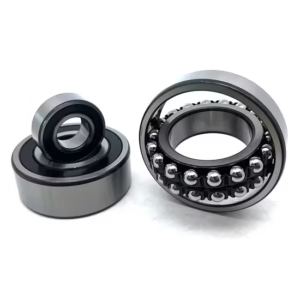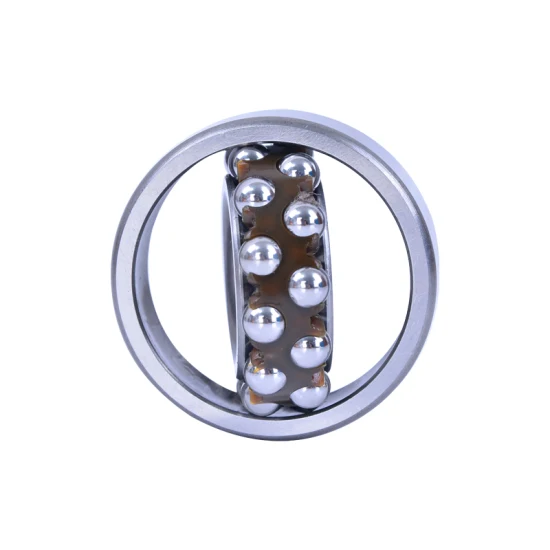
Self-Aligning Ball Bearing

X&S 2206K 2207 Self-Aligning Ball Bearing — featuring a 1:12 tapered bore for secure adapter sleeve mounting and precise radial internal clearance adjustment.
Every shipment includes a complete documentation package with material test reports and dimensional inspection records for full batch traceability.
Batch Traceability — every X&S 2206K 2207 self-aligning ball bearing ships with verifiable lot documentation to confirm material origin and manufacturing date.
| Parameter | Value |
|---|---|
| Designation | 2206K, 2206KTN, 2206TN, 2206-2RS, 2207, 2207TN |
| Product Type | Self-Aligning Ball Bearing |
| Bore Type | Cylindrical or Tapered (1:12 taper for K suffix) |
| Cage Material | Steel Cage, Brass Cage, Nylon Cage |
| Clearance Class | C2, C0, C3, C4, C5 |
| Limiting Speed | 5600-18000 r/Min |
| Vibration Level | V1, V2, V3, V4 |
| Hardness | HRC58-62 [NEED_CITE: standard bearing steel hardness range] |
| Lubrication | Grease or Oil |
| Origin | Shandong, China |
Note: The ‘TN’ and ‘2RS’ suffixes listed in the identifier are unverified designations and require manufacturer catalog confirmation before final procurement.
| Industry | Typical Applications |
|---|---|
| Automotive Repair | Steering column intermediate shafts, alternator pulley assemblies, and transmission support journals. |
| Heavy Vehicle Maintenance | Drive axle pivot points, suspension linkage joints, and steering gear mounting brackets. |
| Construction Machinery | Tractor PTO shaft supports, excavator cab slew mechanisms, and loader articulation hinges. |
Matching the base number while ignoring the bore profile or cage material is a frequent cause of field failure in heavy vehicle drivetrains. We see procurement teams order standard cylindrical bore units when the equipment explicitly demands a tapered interface, leading to immediate mounting looseness and severe vibration.
In the Pearl River Delta auto parts sector, I once inspected a batch of tractor steering columns where standard 2206 bearings were forced onto tapered adapter sleeves. The missing 1:12 taper caused the inner ring to crack under axial clamping pressure, resulting in catastrophic shaft damage within weeks. Ensuring exact suffix alignment for the X&S 2206K 2207 self-aligning ball bearing prevents these costly installation errors [NEED_CITE: bearing mounting failures due to incorrect bore profiles].
The internal cage design dictates how well the assembly handles the erratic vibration profiles typical of construction machinery and automotive axles. Selecting the correct X&S 2206K 2207 self-aligning ball bearing requires matching the cage material to the specific rotational speed and shock load environment of the target application.
Steel cages offer reliable performance for standard radial loads, while brass cages provide superior durability under heavy shock conditions and high vibration levels. Nylon cages are utilized where lower friction and higher limiting speeds are required, ensuring the cross-reference review covers not just the base number but the exact internal structural demands.
Automotive and tractor environments subject bearings to significant temperature fluctuations that directly impact internal operating clearance. A standard C0 clearance might suffice for ambient temperature steering linkages, but transmission supports exposed to continuous heat generation require C3 or C4 clearances to prevent thermal binding.
When the inner ring expands due to heat, insufficient clearance forces the rolling elements against the raceway, generating excessive friction and accelerating fatigue. Selecting the appropriate clearance class ensures the bearing accommodates thermal growth while maintaining the precise radial play needed for smooth misalignment compensation [NEED_CITE: thermal expansion effects on bearing internal clearance].
The K suffix indicates a tapered bore with a 1:12 taper, a critical feature for applications utilizing adapter sleeves for secure mounting and precise radial internal clearance adjustment. This design allows maintenance technicians to drive the bearing onto the shaft and dial in the exact residual clearance required for the specific automotive or construction load profile.
Attempting to mount a cylindrical bore bearing on a tapered shaft, or vice versa, compromises the interference fit and leads to inner ring creep. The availability of multiple cage options alongside the K taper ensures that the X&S 2206K 2207 self-aligning ball bearing can be configured for both secure mechanical locking and optimal high-speed performance.
Substituting a bearing based solely on dimensional equivalence without verifying the internal geometry often results in unplanned downtime and premature failure. A mismatched cage material might fracture under resonant vibration, while an incorrect clearance class can cause the bearing to seize during peak operating temperatures.
These failures rarely occur during initial testing; they manifest weeks later in the field, leading to warranty voidance and catastrophic damage to surrounding shaft and housing components. Adhering to failure mode classification frameworks like ISO 15243 highlights that a significant share of premature failures stem directly from specification mismatches rather than manufacturing defects [NEED_CITE: rolling bearing failure mode classification per ISO 15243].
Procuring the correct X&S 2206K 2207 self-aligning ball bearing requires a technical review that goes deeper than matching the outer dimensions. We specialize in identifying where standard cross-references fail, particularly when OEM equipment requires specific clearance classes or cage materials that generic equivalents overlook.
Our technical team reviews the application parameters to ensure the selected suffix combination perfectly matches the thermal and mechanical demands of your automotive or construction machinery. This rigorous validation process eliminates the risk of receiving units with soft inner rings or incorrect internal geometries that pass casual visual inspection but fail under operational stress.
To ensure the selected X&S 2206K 2207 self-aligning ball bearing perfectly matches your equipment, please provide the specific radial and axial load profiles, operating speeds, and ambient temperature ranges. Sharing the OEM equipment number or the exact dimensional constraints of the housing allows our engineering team to perform a comprehensive cross-reference review and L10 life calculation. This technical validation guarantees that the bore type, cage material, and clearance class are precisely aligned with your operational requirements.
Q: Why is matching the exact clearance class critical for these bearings in automotive applications?
A: Automotive transmissions and axles generate significant heat during operation. If a standard C0 clearance is used instead of the required C3 or C4, thermal expansion will eliminate the internal play, causing the rolling elements to bind against the raceway. This generates excessive friction, accelerates fatigue, and leads to premature seizure under high-temperature conditions.
Q: How do I choose between steel, brass, and nylon cages for construction machinery?
A: The choice depends on the specific vibration and speed conditions of the equipment. Brass cages offer superior durability and shock load resistance for heavy, erratic vibration environments like tractor PTO shafts. Nylon cages are preferred for higher-speed, lower-friction applications, while steel cages provide a reliable, cost-effective solution for standard radial loads and moderate speeds.
Q: What is the difference in mounting procedures for cylindrical versus tapered bore variants?
A: Cylindrical bore bearings are typically pressed directly onto the shaft or heated for interference fits. Tapered bore variants, indicated by the K suffix, are mounted on adapter sleeves. This requires driving the bearing axially onto the tapered sleeve to expand the inner ring, allowing technicians to precisely dial in the required residual radial internal clearance before locking the nut.
Q: How can I verify the authenticity and trace the manufacturing batch of these bearings?
A: Every unit ships with comprehensive batch and lot traceability documentation. You can verify the authenticity by scanning the QR codes using the brand’s official mobile applications. This process confirms the material origin, manufacturing date, and ensures you are not receiving counterfeits with compromised inner ring hardness or cloned visual markers.
Q: What lubrication intervals and grease types are recommended for heavy vehicle steering linkages?
A: Lubrication intervals depend heavily on the operating environment and exposure to contaminants. For heavy vehicle steering linkages exposed to dust and moisture, a high-viscosity lithium-complex grease with extreme pressure additives is typically recommended. Regular re-lubrication purges contaminants, though sealed variants require monitoring for grease degradation rather than routine re-greasing.
Our engineers will respond within 12 hours with a tailored solution.
Request Quote| Bearing Type | Self-Aligning Ball Bearing |
| Brand | SKF |
| Quality Standard | ISO 9001 / TS 16949 |
| Precision Grade | P0 / P5 / P6 (custom) |
| Material | Chrome Steel / Stainless |
| Cage Material | Steel / Brass / Polyamide |
| Lubrication | Grease / Oil (specify) |
| Operating Temp. | -40°C to +200°C |
| Min. Order Qty | 1 pc (samples available) |
| Prototype Lead Time | 7 Working Days |
| Load Capacity | Contact for C0/Cr values |
| Speed Rating | Contact for ndm limit |
| Vibration Level | Z1 / Z2 / Z3 (custom) |
| Noise Level | V1 / V2 / V3 (custom) |
| Fatigue Life | L10h per ISO 281 |
| Sealing Options | Open / Z / 2Z / RS / 2RS |
Our engineering team can modify bearing dimensions, materials, seals, and clearances to meet your specific operating requirements. Submit your drawing or spec sheet for a tailored proposal.
Main shaft bearings, gearbox bearings, and generator bearings for onshore and offshore wind turbines.
Heavy-duty bearings for crushers, conveyors, and rotary equipment in extreme dust and shock-load environments.
High-temperature bearings for rolling mills, continuous casting, and furnace applications.
Wheel hub bearings, transmission bearings, and e-motor bearings for passenger and commercial vehicles.
Axle box bearings, traction motor bearings, and gearbox bearings meeting EN/UIC railway standards.
High-precision spindle bearings, angular contact bearings, and super-precision bearings for CNC and robotics.
Our engineers analyze your operating conditions -- load, speed, temperature, environment -- and select or design the optimal bearing solution to maximize service life and reduce total cost of ownership.
Need non-standard dimensions, special materials, or modified clearances? We can modify standard SKF bearings or manufacture fully custom solutions with a 7-day prototype turnaround.
When bearings fail prematurely, our team conducts root-cause analysis using advanced diagnostic tools to identify the failure mode and recommend corrective action.
We deploy vibration monitoring, thermal imaging, and oil analysis programs that detect bearing deterioration early -- reducing unplanned downtime by up to 40%.
Proper installation is critical to bearing performance. Our certified technicians provide on-site installation support, alignment verification, and operator training worldwide.
From initial selection through end-of-life, our dedicated account managers provide scheduled maintenance plans, re-lubrication programs, and replacement forecasting for enterprise clients.
NDA protected · Free samples for orders > $50K · Reply within 12 hours