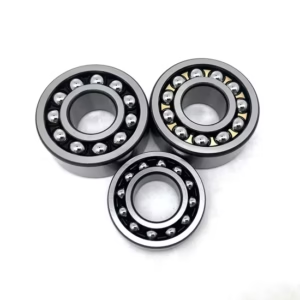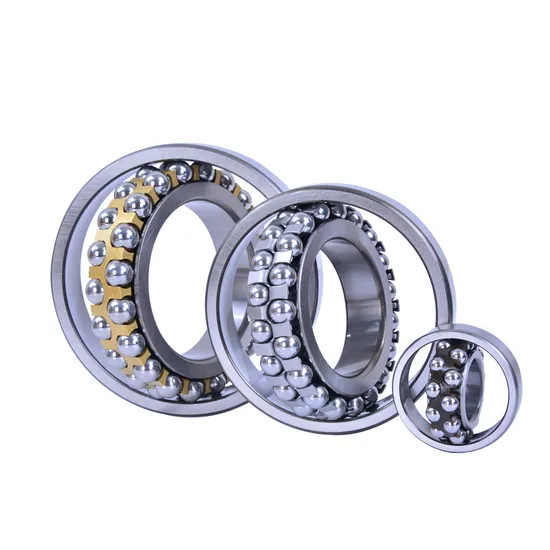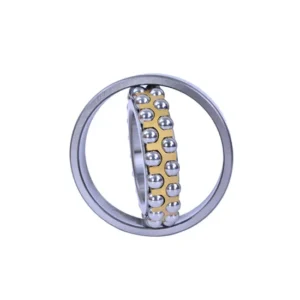
Self-Aligning Ball Bearing
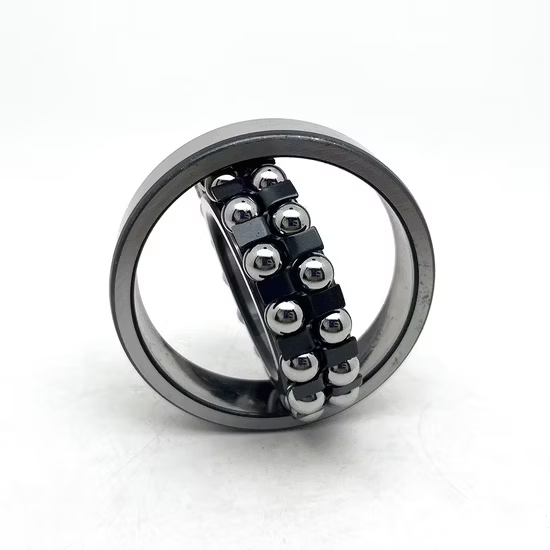
X&S 1219 1219K 1220 1220K 1221 1221K 1222 1222K Self-Aligning Ball Bearings
Cross-reference alignment verified — We match base designations with exact clearance and cage suffixes to prevent thermal binding in crane applications.
| Parameter | Value |
|---|---|
| Designation | 1219 1219K 1220 1220K 1221 1221K 1222 1222K |
| Bearing Type | Self-Aligning Ball Bearing |
| Bore Type | Cylindrical / Tapered (1:12) |
| Cage Material | Steel Cage, Brass Cage, Nylon Cage |
| Limiting Speed | 5600-18000 r/Min |
| Vibration Level | V1, V2, V3, V4 |
| Clearance Class | C2, C0, C3, C4, C5 |
| Hardness | HRC58-62 [NEED_CITE: standard bearing steel hardness range] |
| Lubrication | Grease or Oil |
| Origin | Shandong, China |
| Industry | Typical Applications |
|---|---|
| Construction & Lifting | Small crane slewing mechanisms and hoist drum shafts |
| Automotive & Agriculture | Tractor steering columns and heavy vehicle repair assemblies |
| General Machinery | Conveyor idler rolls and construction machinery articulation joints |
Matching the bore and clearance suffix is the only way to prevent field seizures.
Procurement teams often source the X&S 1219 1220 1221 1222 self-aligning ball bearing by basic number alone, assuming the internal design is universal. In small crane operations, shafts expand under heavy solar exposure and friction. Installing a standard CN clearance where a C3 was required eliminates the thermal expansion gap, leading to rapid heat buildup and catastrophic cage failure. I have seen equipment lock up completely on site because the cross-reference matched the outer dimensions but ignored the critical internal suffixes [NEED_CITE: thermal binding failure modes in lifting equipment].
Every X&S 1219 1220 1221 1222 self-aligning ball bearing we dispatch undergoes a strict suffix verification process. We do not just check the 12xx double-row self-aligning designation; we confirm the K taper bore ratio and the exact cage material against your specific crane model. This prevents the all-too-common scenario where a nylon cage is supplied for a high-temperature hoist application that strictly demands a machined brass cage for structural stability under shock loads.
Construction sites expose rotating assemblies to severe misalignment, heavy radial loads, and abrasive dust. The self-aligning capability compensates for shaft deflection, but the internal clearance must accommodate temperature fluctuations from continuous operation. Lubrication intervals are often stretched in the field, meaning the cage material must withstand boundary lubrication conditions without galling. Furthermore, tapered bore variants require precise locknut tightening to achieve the correct residual clearance, making the initial specification of the K suffix absolutely critical for the maintenance crew [NEED_CITE: residual clearance reduction during tapered bore mounting].
The 12xx series identifies a double-row self-aligning ball bearing, engineered to handle moderate radial loads and light axial loads while tolerating angular misalignment. The K suffix denotes a 1:12 tapered bore, designed for tight interference fits on tapered shafts or adapter sleeves. Selecting between steel, brass, or nylon cages depends entirely on the operating speed and vibration profile; brass cages offer superior durability in high-vibration crane slewing rings, while steel cages suit standard conveyor speeds. The clearance class, ranging from C2 to C5, dictates the internal play, with C3 or C4 being mandatory for applications experiencing significant thermal shaft expansion.
Substituting a cylindrical bore for a tapered one, or ignoring the required clearance class, leads to unplanned downtime and premature failure. When internal play is exhausted due to thermal expansion, the rolling elements skid rather than roll, causing catastrophic damage to the raceways. This not only voids the equipment warranty but also forces emergency replacements that halt entire lifting operations. Following ISO 15243 failure mode classifications, these seizures are entirely preventable through accurate initial specification [NEED_CITE: rolling bearing failure mode classification per ISO 15243].
We eliminate cross-reference errors by verifying the base designation, clearance class, and cage material simultaneously. Batch traceability is provided for every shipment, ensuring you know exactly which production run your bearings came from. Our technical team reviews your application parameters to confirm that a C3 clearance is not mistakenly swapped for a C0. We supply exact dimensional and running accuracy inspection reports before dispatch. This rigorous approach ensures that mixed-brand requirements are fulfilled with zero suffix discrepancies.
Share your specific radial and axial load data, operating speeds, and ambient temperature ranges so we can verify the L10 life and confirm the optimal clearance class. If you are replacing an existing unit, provide the OEM equipment number or the exact suffix string from the old bearing for a precise cross-reference check. Our engineering team will review these parameters to ensure the selected cage material and bore type perfectly match your installation environment.
Q: Why must clearance, cage material, and precision suffixes be matched together during cross-referencing?
A: Matching only the base number ignores the internal geometry required for your specific thermal and load conditions. A standard clearance with a steel cage might fail under the high-temperature shock loads of a crane, whereas a C3 clearance with a brass cage provides the necessary thermal expansion gap and structural rigidity to prevent thermal binding and premature cage collapse.
Q: What is the difference between standard cylindrical bore and K (1:12 tapered) bore in self-aligning ball bearings?
A: The standard cylindrical bore is pressed directly onto a straight shaft, while the K suffix indicates a 1:12 tapered bore designed to be mounted on a tapered shaft or adapter sleeve. The tapered design allows the maintenance crew to precisely adjust the internal radial clearance during installation by controlling the locknut drive-up distance.
Q: How to choose the correct cage material for construction machinery applications?
A: Steel cages are suitable for standard speeds and moderate vibrations, while machined brass cages provide superior strength and durability under the heavy shock loads and high vibrations typical of crane slewing mechanisms. Nylon cages offer low friction and quiet operation but must be avoided in high-temperature environments where polymer degradation could occur.
Q: What are the official app QR verification steps to avoid counterfeit bearings?
A: Scan the QR code on the packaging using the brand’s official mobile application, not a generic scanner. The app will verify the unique batch number against the manufacturer’s database, confirming the authenticity of the bearing and revealing if the inner ring material and hardness match the genuine specifications.
Q: How do C0, C3, and C4 clearance classes affect performance under thermal expansion in crane operations?
A: C0 is the standard clearance for normal temperatures, but in crane operations where friction and solar heat cause the shaft to expand, a C0 bearing will lose its internal play and seize. C3 and C4 provide larger initial internal gaps, accommodating this thermal expansion and ensuring the rolling elements continue to roll smoothly without generating destructive heat.
Our engineers will respond within 12 hours with a tailored solution.
Request Quote| Bearing Type | Self-Aligning Ball Bearing |
| Brand | SKF |
| Quality Standard | ISO 9001 / TS 16949 |
| Precision Grade | P0 / P5 / P6 (custom) |
| Material | Chrome Steel / Stainless |
| Cage Material | Steel / Brass / Polyamide |
| Lubrication | Grease / Oil (specify) |
| Operating Temp. | -40°C to +200°C |
| Min. Order Qty | 1 pc (samples available) |
| Prototype Lead Time | 7 Working Days |
| Load Capacity | Contact for C0/Cr values |
| Speed Rating | Contact for ndm limit |
| Vibration Level | Z1 / Z2 / Z3 (custom) |
| Noise Level | V1 / V2 / V3 (custom) |
| Fatigue Life | L10h per ISO 281 |
| Sealing Options | Open / Z / 2Z / RS / 2RS |
Our engineering team can modify bearing dimensions, materials, seals, and clearances to meet your specific operating requirements. Submit your drawing or spec sheet for a tailored proposal.
Main shaft bearings, gearbox bearings, and generator bearings for onshore and offshore wind turbines.
Heavy-duty bearings for crushers, conveyors, and rotary equipment in extreme dust and shock-load environments.
High-temperature bearings for rolling mills, continuous casting, and furnace applications.
Wheel hub bearings, transmission bearings, and e-motor bearings for passenger and commercial vehicles.
Axle box bearings, traction motor bearings, and gearbox bearings meeting EN/UIC railway standards.
High-precision spindle bearings, angular contact bearings, and super-precision bearings for CNC and robotics.
Our engineers analyze your operating conditions -- load, speed, temperature, environment -- and select or design the optimal bearing solution to maximize service life and reduce total cost of ownership.
Need non-standard dimensions, special materials, or modified clearances? We can modify standard SKF bearings or manufacture fully custom solutions with a 7-day prototype turnaround.
When bearings fail prematurely, our team conducts root-cause analysis using advanced diagnostic tools to identify the failure mode and recommend corrective action.
We deploy vibration monitoring, thermal imaging, and oil analysis programs that detect bearing deterioration early -- reducing unplanned downtime by up to 40%.
Proper installation is critical to bearing performance. Our certified technicians provide on-site installation support, alignment verification, and operator training worldwide.
From initial selection through end-of-life, our dedicated account managers provide scheduled maintenance plans, re-lubrication programs, and replacement forecasting for enterprise clients.
NDA protected · Free samples for orders > $50K · Reply within 12 hours