

ISO 9001 Certified
TS 16949
Genuine SKF
Need Technical Advice?
Reply within 12 hours · 15+ certified engineers on call
Rod End Bearing
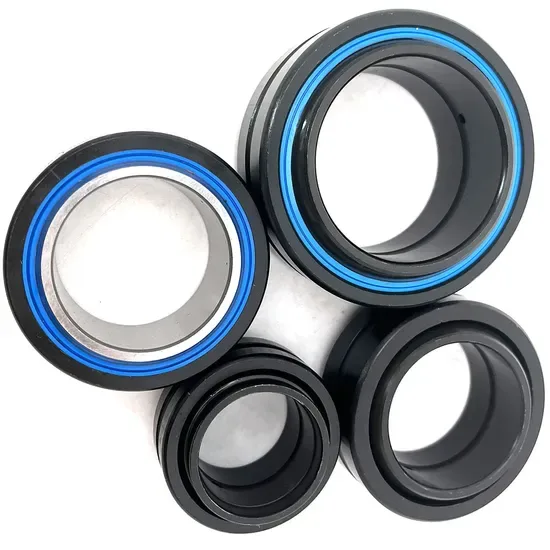
X&S SI22T/K SI40T/K Rod End Bearing for Construction Equipment
X&S SI22T/K SI25T/K SI28T/K SI30T/K SI35T/K SI40T/K Rod End Bearings — engineered for radial loads in construction machinery.
- Single-slit outer ring ensures structural stability under heavy oscillating movements.
- Self-lubricating sliding contact surfaces minimize maintenance in open seal configurations.
- Every delivery includes material test reports and dimensional inspection certificates to guarantee CE compliance and traceability.
7
Day Prototype
vs. 8-12 wks standard
50+
Countries Served
Global logistics network
12h
Quote Response
Expert engineers on call
Typical Applications
Wind Power
Mining
Steel & Metallurgy
Automotive / EV
Rail Transit
Precision Machinery
Genuine SKF Bearings
NDA Protected
Free Sample for Orders > $50K
Global Shipping
Product Details
Cross-Reference Alignment — verifying internal thread specifications, sliding surface materials, and outer ring slit designs prevents unexpected field failures in heavy hydraulic cylinders.
Technical Specifications
| Parameter | Value |
|---|---|
| Designation | SI22T/K SI25T/K SI28T/K SI30T/K SI35T/K SI40T/K |
| Bearing Type | Rod End Bearing |
| Load Direction | Radial |
| Lubrication | Self-lubricating / Grease or Oil |
| Outer Structure | Outer Ring of Single-Slit |
| Seals Type | Open |
| Material | Standard or Customized options available |
| Certification | CE |
| Origin | Shandong, China |
T and K suffixes are unverified and require manufacturer catalog confirmation for exact internal geometry definitions.
Application Suitability
| Industry | Typical Applications |
|---|---|
| Construction Machinery | Excavator boom linkages, loader articulation joints, crane slewing mechanisms |
| Mining and Crushing | Hydraulic cylinder pivot points, vibrating screen suspension links |
| Agricultural Machinery | Tractor steering linkages, harvester header adjustment cylinders |
Why Hydraulic Linkages Fail Before the Steel Yields
Mismatched sliding surface materials cause rapid wear under shock loads.
In heavy construction equipment, a basic dimension match is never enough. I have seen field crews replace pivot bearings only to face catastrophic loosening weeks later because the cross-reference ignored the outer ring slit design or the specific sliding contact material. When hydraulic cylinders operate under extreme radial shock loads, ignoring these internal structural details leads to premature spherical wear and unplanned downtime [NEED_CITE: rolling bearing failure mode classification per ISO 15243]. Procurement teams often focus solely on the bore and thread size, missing the critical friction学 interface that actually dictates service life.
Matching the X&S SI22T/K SI25T/K SI28T/K SI30T/K SI35T/K SI40T/K rod end bearing to Heavy Cycles
Selecting the correct X&S SI22T/K SI25T/K SI28T/K SI30T/K SI35T/K SI40T/K rod end bearing requires looking beyond the catalog number to the actual operating environment. Our technical team reviews the specific radial loads, oscillation frequencies, and exposure conditions to ensure the selected variant handles the application. This rigorous cross-referencing process guarantees that the internal geometry and material options align perfectly with your equipment’s operational demands.
Navigating Shock Loads and Contamination in the Field
Heavy construction sites expose pivot points to intense radial shock loads and constant oscillation. Open designs allow for external lubrication flushing to clear abrasive dust, while self-lubricating variants reduce maintenance intervals in hard-to-reach boom linkages. The single-slit outer ring structure provides essential elasticity, absorbing mounting stresses and maintaining structural stability when the housing tolerances are less than perfect under heavy dynamic loading [NEED_CITE: dynamic load impact on spherical plain bearings].
Decoding the Single-Slit and Self-Lubricating Architecture
The single-slit outer ring is a critical design feature that facilitates easier inst*here. This elasticity compensates for minor housing misalignments common in welded construction machinery frames. Furthermore, the self-lubricating sliding contact surfaces drastically reduce the friction coefficient during slow oscillating movements, preventing the stick-slip phenomenon that typically degrades standard steel-on-steel interfaces. Available material options allow buyers to select the exact matrix required for their specific moisture and load conditions.
The Hidden Costs of Ignoring Suffix Details
Substituting a standard rod end without verifying the internal clearance and material suffix often results in rapid spherical seizure. According to ISO 281 framework principles, inadequate material pairing under heavy oscillating loads drastically reduces the calculated service life. This oversight leads to catastrophic damage to the connecting rod threads, warranty voidance, and extended equipment downtime while waiting for emergency replacement parts [NEED_CITE: impact of oscillating motion on bearing fatigue life].
Why Sourcing Through Authorized Channels Matters
Our authorized distribution network ensures every batch is fully traceable to the manufacturer’s production facilities. We specialize in cross-brand interchange matched on sliding surface materials and outer ring elasticity, not just base dimensions. Our application-based selection review covers load, speed, and temperature to prevent the common error of installing standard clearance where thermal expansion requires specific internal geometries. We provide complete documentation packages to satisfy the strict compliance requirements of large-scale mining and construction projects.
Documentation & Authenticity
- Certificate of Conformity confirming CE compliance for international construction projects.
- Batch and lot traceability linking each unit to the manufacturer’s original production run.
- QR verification via brand official apps to instantly confirm authenticity on the job site.
- Material test reports validating the sliding surface composition against soft inner ring counterfeits.
- Dimensional and running accuracy inspection reports verifying thread and bore tolerances.
- Country-of-origin documentation supporting customs clearance and local content regulations.
Storage, Handling & Mounting Protocols
- Store in original packaging to protect the self-lubricating sliding surfaces from ambient moisture degradation.
- Inspect the single-slit outer ring for transit damage before pressing into the housing.
- Use clean gloves during installation to prevent abrasive dust from embedding in the open spherical interface.
- Apply specified grease to the open design if supplemental external lubrication is required by the OEM.
- Align the internal thread carefully to avoid cross-threading and damaging the rod end shank.
- Verify housing tolerances to ensure the outer ring elasticity is not exceeded during press-fitting.
Requesting Technical Verification and Sizing
To ensure optimal performance, please provide your specific radial load data, oscillation frequency, and operating temperature ranges. Sharing the exact OEM equipment numbers allows our engineering team to perform a precise cross-reference check. We will review your application parameters to recommend the most suitable material variant and confirm the dimensional compatibility for your hydraulic or linkage assembly.
Frequently Asked Questions
Q: How do I determine the exact internal thread specification for my hydraulic cylinder?
A: You must measure the existing thread pitch and diameter or provide the OEM equipment number. Our technical team will cross-reference these parameters against the manufacturer’s catalog to ensure the replacement matches the original equipment’s exact mechanical interface and load-bearing requirements.
Q: What causes premature spherical wear in rod end bearings under heavy shock loads?
A: Premature wear often results from selecting a standard steel-on-steel interface instead of a self-lubricating variant, or ignoring the required internal clearance. When shock loads exceed the material’s fatigue limit without proper sliding surface protection, the sphere degrades rapidly, leading to linkage looseness and failure.
Q: Why must cross-referencing align the outer ring structure and not just the base size?
A: Matching only the base bore and thread size ignores critical structural features like the single-slit outer ring. If the replacement lacks the necessary elasticity or has a different slit design, it may fail to absorb housing misalignments, causing the outer ring to crack or the inner sphere to seize under dynamic radial loads.
Q: How do open and self-lubricating designs differ in dusty construction environments?
A: Open designs require regular external grease purging to flush out abrasive contaminants, making them suitable for accessible linkages. Self-lubricating variants minimize maintenance needs and resist dry friction, but they must be protected from excessive external grit that could physically score the specialized sliding contact surfaces over time.
Product Summary
- Product Name
- X&S SI22T/K SI40T/K Rod End Bearing for Construction Equipment
- Category
- Rod End Bearing
- Brand
- SKF
- Certification
- ISO 9001 · TS 16949
- Lead Time
- 7 Working Days
Get a Custom Quote
Our engineers will respond within 12 hours with a tailored solution.
Request QuoteGeneral Specifications
| Bearing Type | Rod End Bearing |
| Brand | SKF |
| Quality Standard | ISO 9001 / TS 16949 |
| Precision Grade | P0 / P5 / P6 (custom) |
| Material | Chrome Steel / Stainless |
| Cage Material | Steel / Brass / Polyamide |
| Lubrication | Grease / Oil (specify) |
| Operating Temp. | -40°C to +200°C |
| Min. Order Qty | 1 pc (samples available) |
| Prototype Lead Time | 7 Working Days |
Performance Parameters
| Load Capacity | Contact for C0/Cr values |
| Speed Rating | Contact for ndm limit |
| Vibration Level | Z1 / Z2 / Z3 (custom) |
| Noise Level | V1 / V2 / V3 (custom) |
| Fatigue Life | L10h per ISO 281 |
| Sealing Options | Open / Z / 2Z / RS / 2RS |
Custom Specifications Available
Our engineering team can modify bearing dimensions, materials, seals, and clearances to meet your specific operating requirements. Submit your drawing or spec sheet for a tailored proposal.
Wind Power
Main shaft bearings, gearbox bearings, and generator bearings for onshore and offshore wind turbines.
Mining & Quarrying
Heavy-duty bearings for crushers, conveyors, and rotary equipment in extreme dust and shock-load environments.
Steel & Metallurgy
High-temperature bearings for rolling mills, continuous casting, and furnace applications.
Automotive / EV
Wheel hub bearings, transmission bearings, and e-motor bearings for passenger and commercial vehicles.
Rail Transit
Axle box bearings, traction motor bearings, and gearbox bearings meeting EN/UIC railway standards.
Precision Machinery
High-precision spindle bearings, angular contact bearings, and super-precision bearings for CNC and robotics.
Application Design
EngineeringOur engineers analyze your operating conditions -- load, speed, temperature, environment -- and select or design the optimal bearing solution to maximize service life and reduce total cost of ownership.
Custom Modification
7-Day TurnaroundNeed non-standard dimensions, special materials, or modified clearances? We can modify standard SKF bearings or manufacture fully custom solutions with a 7-day prototype turnaround.
Failure Analysis
DiagnosticsWhen bearings fail prematurely, our team conducts root-cause analysis using advanced diagnostic tools to identify the failure mode and recommend corrective action.
Predictive Maintenance
Up to 40% Less DowntimeWe deploy vibration monitoring, thermal imaging, and oil analysis programs that detect bearing deterioration early -- reducing unplanned downtime by up to 40%.
On-site Installation
Global CoverageProper installation is critical to bearing performance. Our certified technicians provide on-site installation support, alignment verification, and operator training worldwide.
Lifecycle Support
Enterprise SLAFrom initial selection through end-of-life, our dedicated account managers provide scheduled maintenance plans, re-lubrication programs, and replacement forecasting for enterprise clients.
Why SKF China
The engineering partner advantage
7 Days
Prototype Lead Time
vs. 8-12 weeks via standard channels
15+
Certified Engineers
SKF-certified, on-call for your project
50+
Countries Delivered
Reliable global logistics network
Request a Quote
Get a custom quote for
X&S SI22T/K SI40T/K Rod End Bearing for Construction Equipment
NDA protected · Free samples for orders > $50K · Reply within 12 hours
Related Products
More Rod End Bearing Products

