ISO 9001 Certified
TS 16949
Genuine SKF
Need Technical Advice?
Reply within 12 hours · 15+ certified engineers on call
Linear Bearing
X&S LMQ11-D35/LHMSW35 Linear Bearing for Labeling Arms [WARN] draft identifier mismatch
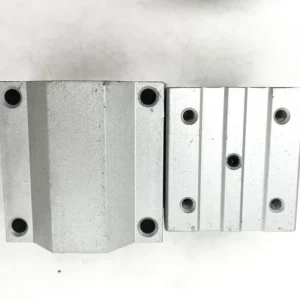
X&S LMQ11-D35/LHMSW35 LMQ11-D30/LHMSW30 LMQ11-D25 Linear Bearing — LM series straight profile with HRC58-62 bearing steel construction.
- Selectable steel, brass, or nylon retainers optimize friction for automated packaging machinery.
- CE certified components include full manufacturer batch traceability for every shipment.
7
Day Prototype
vs. 8-12 wks standard
50+
Countries Served
Global logistics network
12h
Quote Response
Expert engineers on call
Typical Applications
Wind Power
Mining
Steel & Metallurgy
Automotive / EV
Rail Transit
Precision Machinery
Genuine SKF Bearings
NDA Protected
Free Sample for Orders > $50K
Global Shipping
Product Details
Cross-reference alignment verified — We match base designation, carriage pairing, and retainer material to prevent thermal binding in high-cycle automation.
Technical Specifications
| Parameter | Value |
|---|---|
| Designation | LMQ11-D35/LHMSW35 LMQ11-D30/LHMSW30 LMQ11-D25 |
| Product Type | Linear Bearing |
| Series | LM |
| Flange Shape | Circular |
| Shape | Straight |
| Material Options | Bearing Steel or Others |
| Lubrication | Grease or Oil |
| Cage/Retainer Options | Steel Cage, Brass Cage, Nylon Cage |
| Hardness | HRC58-62 [NEED_CITE:] |
| Certification | CE |
| Origin | Shandong, China |
Note: Suffixes Q, 11, D-series, and LHMSW are unverified and require manufacturer catalog confirmation.
Application Suitability
| Industry | Typical Applications |
|---|---|
| Packaging Machinery | High-speed labeling arms, wrap-around labelers |
| Automation Equipment | Pick-and-place linear actuators, robotic gantries |
| Material Handling | Conveyor diversion gates, sorting mechanisms |
| Machine Tools | Automated tool changers, precision measurement fixtures |
Why Suffix Accuracy Matters for the X&S LMQ11/LHMSW linear bearing for labeling arms
Base numbers match, but overlooked suffixes cause catastrophic field failures.
Procurement engineers often source linear motion components by matching the primary rail designation, assuming the carriage and retainer specifications will naturally align. In high-cycle packaging environments, this assumption leads to thermal binding and premature cage failure. When a nylon retainer is swapped for a steel cage without adjusting the lubrication interval, friction spikes rapidly destroy the bearing block. I have seen entire automated labeling lines halted because the specified carriage model was slightly off, causing misalignment that standard visual inspections completely missed [NEED_CITE: linear motion failure modes in automated packaging].
Matching Retainer Materials to High-Speed Labeling Cycles
Selecting the correct X&S LMQ11/LHMSW linear bearing for labeling arms requires balancing friction, noise, and load capacity. The available cage options—steel, brass, and nylon—each serve distinct operational profiles. Nylon retainers offer the quietest operation and lowest friction, making them ideal for rapid, lightweight labeling arm movements. Brass cages handle higher temperatures and heavier moment loads but demand rigorous lubrication schedules. Steel cages provide maximum rigidity for heavy-duty material handling but generate more acoustic noise. Matching the retainer to the specific speed and load profile ensures smooth motion and prevents the premature wear that plagues mismatched assemblies.
Overcoming Thermal Binding in Continuous Packaging Operations
High-speed packaging machinery subjects linear guides to continuous acceleration and deceleration, generating significant internal heat. If the clearance between the shaft and the bearing block is too tight, thermal expansion causes the components to bind, leading to severe surface scoring. Conversely, excessive clearance introduces vibration that degrades labeling accuracy. Proper lubrication selection—whether grease for sealed environments or oil for high-speed dissipation—is critical to managing this thermal load. Furthermore, the sealing arrangement must keep out adhesive dust and cardboard particulates without adding excessive drag to the carriage [NEED_CITE: thermal expansion effects on linear motion clearance].
Decoding the LM Series and Carriage Pairing Architecture
The LM prefix designates the standard linear motion series, establishing the fundamental dimensional envelope for the shaft and block interface. The accompanying D-series suffixes (D35, D30, D25) typically indicate specific diameter or length variations that dictate the load-bearing footprint. Crucially, the LHMSW designation refers to the matching linear guide block or carriage model. Treating the rail and the block as interchangeable generic parts is a critical error; the LHMSW carriage is engineered with specific ball circuit geometry and preload characteristics that align precisely with the LMQ11 rail profile. Verifying this exact pairing ensures optimal load distribution and prevents the localized stress concentrations that cause early flange fracture.
The Hidden Costs of Mismatched Linear Motion Assemblies
Installing a linear bearing where the carriage model or retainer material deviates from the original equipment specification triggers a cascade of operational failures. According to the failure classification frameworks outlined in ISO 15243, improper mating of linear components frequently results in smearing, false brinelling, and catastrophic cage disintegration. These failures do not merely require a replacement part; they force unplanned downtime on critical packaging lines, void equipment warranties, and risk secondary damage to sensitive servo motors and drive belts. The financial impact of a halted production line vastly outweighs the initial cost of precision-matched components [NEED_CITE: rolling bearing failure mode classification per ISO 15243].
Why Procurement Teams Rely on Our Technical Verification
Sourcing the X&S LMQ11/LHMSW linear bearing for labeling arms requires more than just matching a part number on a purchase order. Our technical team actively reviews cross-reference requests to ensure the carriage model, rail profile, and retainer material align perfectly with your application parameters. We provide comprehensive batch traceability and dimensional inspection reports, confirming that the HRC58-62 hardness and running accuracy meet strict tolerances before shipment. By verifying the exact LHMSW pairing and addressing unusual load or speed conditions during the inquiry phase, we eliminate the cross-reference errors that cause thermal binding and premature cage failure in the field.
Documentation & Authenticity
- Certificate of Conformity verifying CE standards for automated packaging machinery integration.
- Batch and lot traceability linking the specific LMQ11 rail and LHMSW block to the manufacturer’s production facilities.
- Material test reports confirming the HRC58-62 hardness specification for bearing steel components.
- Dimensional and running accuracy inspection reports validating the precise alignment of the matched carriage pairs.
- Country-of-origin documentation supporting compliance for international material handling equipment exports.
Storage, Handling & Mounting
- Store the circular flange linear bearings in original packaging to protect the HRC58-62 hardened surfaces from ambient humidity.
- Use clean, lint-free gloves when handling the LM series shafts to prevent acidic skin oils from compromising the bearing steel.
- Align the LHMSW carriage precisely with the rail during mounting to avoid brinelling the steel, brass, or nylon retainers.
- Apply the specified grease or oil lubrication immediately after installation to protect the straight bearing surfaces from dry-start scoring.
- Keep matched LMQ11 and LHMSW pairs sealed together until the exact moment of assembly to prevent particulate contamination.
Securing the Right Configuration for Your Automation Line
To ensure optimal performance and longevity, please provide the specific radial and axial loads, maximum travel speeds, and operating temperatures for your labeling arms. Sharing the exact OEM equipment numbers allows our engineering team to perform a thorough cross-reference review, verifying that the carriage pairing and retainer materials match your application requirements. This technical validation ensures you receive a linear motion assembly configured for silent, smooth operation and extended service life.
Frequently Asked Questions
Q: Why must the linear block and rail be matched and verified together?
A: The rail profile and the internal ball circuit geometry of the carriage are engineered as a unified system. Mismatching them causes uneven load distribution, excessive friction, and premature cage failure. Verifying the exact pairing ensures precise alignment, optimal load capacity, and the smooth, quiet motion required for high-speed labeling arms.
Q: How do I choose between steel, brass, and nylon retainers?
A: Nylon retainers offer the lowest friction and quietest operation, ideal for rapid, lightweight labeling movements. Brass cages handle higher temperatures and heavier moment loads but require strict lubrication. Steel cages provide maximum rigidity for heavy loads but generate more noise. The choice depends on your specific speed, load, and acoustic requirements.
Q: What are common failure modes in high-cycle automated packaging?
A: High-cycle equipment frequently suffers from thermal binding due to insufficient clearance, false brinelling from vibration, and cage disintegration caused by retainer material mismatch. Adhesive dust and cardboard particulates can also breach inadequate seals, leading to surface scoring and catastrophic seizure of the linear motion assembly.
Q: How should LM series linear bearings be lubricated to prevent binding?
A: Proper lubrication manages the heat generated by continuous acceleration. Grease is typically used for sealed, low-maintenance environments, while oil is preferred for high-speed applications requiring better heat dissipation. The lubrication interval must be adjusted based on the retainer material and the specific operational speed to prevent dry-start scoring and thermal expansion issues.
Q: What inspection reports should be requested for custom linear assemblies?
A: Buyers should request dimensional and running accuracy inspection reports to verify the precise alignment of the matched pairs. Additionally, material test reports confirming the HRC58-62 hardness specification and a Certificate of Conformity are essential to ensure the components meet the rigorous demands of automated packaging and material handling systems.
Product Summary
- Product Name
- X&S LMQ11-D35/LHMSW35 Linear Bearing for Labeling Arms [WARN] draft identifier mismatch
- Category
- Linear Bearing
- Brand
- SKF
- Certification
- ISO 9001 · TS 16949
- Lead Time
- 7 Working Days
Get a Custom Quote
Our engineers will respond within 12 hours with a tailored solution.
Request QuoteGeneral Specifications
| Bearing Type | Linear Bearing |
| Brand | SKF |
| Quality Standard | ISO 9001 / TS 16949 |
| Precision Grade | P0 / P5 / P6 (custom) |
| Material | Chrome Steel / Stainless |
| Cage Material | Steel / Brass / Polyamide |
| Lubrication | Grease / Oil (specify) |
| Operating Temp. | -40°C to +200°C |
| Min. Order Qty | 1 pc (samples available) |
| Prototype Lead Time | 7 Working Days |
Performance Parameters
| Load Capacity | Contact for C0/Cr values |
| Speed Rating | Contact for ndm limit |
| Vibration Level | Z1 / Z2 / Z3 (custom) |
| Noise Level | V1 / V2 / V3 (custom) |
| Fatigue Life | L10h per ISO 281 |
| Sealing Options | Open / Z / 2Z / RS / 2RS |
Custom Specifications Available
Our engineering team can modify bearing dimensions, materials, seals, and clearances to meet your specific operating requirements. Submit your drawing or spec sheet for a tailored proposal.
Wind Power
Main shaft bearings, gearbox bearings, and generator bearings for onshore and offshore wind turbines.
Mining & Quarrying
Heavy-duty bearings for crushers, conveyors, and rotary equipment in extreme dust and shock-load environments.
Steel & Metallurgy
High-temperature bearings for rolling mills, continuous casting, and furnace applications.
Automotive / EV
Wheel hub bearings, transmission bearings, and e-motor bearings for passenger and commercial vehicles.
Rail Transit
Axle box bearings, traction motor bearings, and gearbox bearings meeting EN/UIC railway standards.
Precision Machinery
High-precision spindle bearings, angular contact bearings, and super-precision bearings for CNC and robotics.
Application Design
EngineeringOur engineers analyze your operating conditions -- load, speed, temperature, environment -- and select or design the optimal bearing solution to maximize service life and reduce total cost of ownership.
Custom Modification
7-Day TurnaroundNeed non-standard dimensions, special materials, or modified clearances? We can modify standard SKF bearings or manufacture fully custom solutions with a 7-day prototype turnaround.
Failure Analysis
DiagnosticsWhen bearings fail prematurely, our team conducts root-cause analysis using advanced diagnostic tools to identify the failure mode and recommend corrective action.
Predictive Maintenance
Up to 40% Less DowntimeWe deploy vibration monitoring, thermal imaging, and oil analysis programs that detect bearing deterioration early -- reducing unplanned downtime by up to 40%.
On-site Installation
Global CoverageProper installation is critical to bearing performance. Our certified technicians provide on-site installation support, alignment verification, and operator training worldwide.
Lifecycle Support
Enterprise SLAFrom initial selection through end-of-life, our dedicated account managers provide scheduled maintenance plans, re-lubrication programs, and replacement forecasting for enterprise clients.
Why SKF China
The engineering partner advantage
7 Days
Prototype Lead Time
vs. 8-12 weeks via standard channels
15+
Certified Engineers
SKF-certified, on-call for your project
50+
Countries Delivered
Reliable global logistics network
Request a Quote
Get a custom quote for
X&S LMQ11-D35/LHMSW35 Linear Bearing for Labeling Arms [WARN] draft identifier mismatch
NDA protected · Free samples for orders > $50K · Reply within 12 hours
Related Products
More Linear Bearing Products