Thrust Ball Bearing

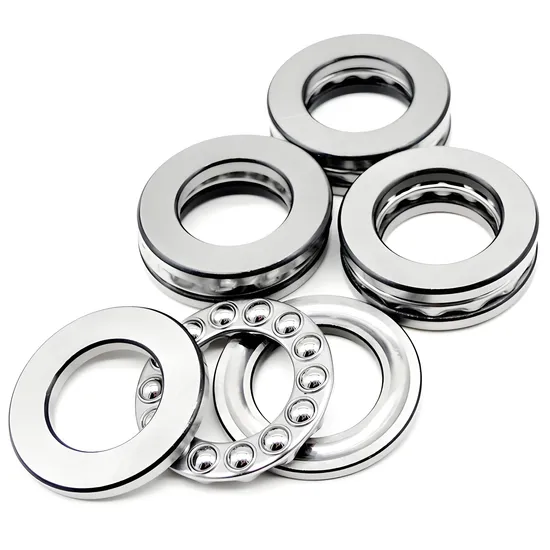
X&S 51172 51272 53272 51176 51276 51180 53216U 53316U Thrust Ball Bearings — engineered for heavy axial loads in robot joints and gearboxes.
Traceable Batch Origins — Every X&S unit ships with manufacturer lot records verified through official brand applications to guarantee authenticity.
| Parameter | Value |
|---|---|
| Designation | 51172 51272 53272 51176 51276 51180 53216U 53316U |
| Bearing Type | Thrust Ball Bearing |
| Material Options | Chrome Steel, Carbon Steel, Stainless Steel, Ceramic |
| Cage Material Options | Steel, Brass, Nylon |
| Clearance Class | C1, C2, C3, C4 |
| Noise Level | Z1, Z2, Z3, Z4 |
| Vibration Level | V1, V2, V3, V4 |
| Hardness | 58-64 HRC [NEED_CITE: standard hardness range for bearing rings] |
| Aligning | Non-Aligning Bearing |
| Origin | Shandong, China |
Note: The "U" suffix in 53216U and 53316U is an unverified designation requiring manufacturer catalog confirmation before finalizing cross-references.
| Industry | Typical Applications |
|---|---|
| Robotics & Automation | Articulated robot joints, rotary positioning tables |
| Power Transmission | Industrial gearboxes, vertical shaft thrust collars |
| Machine Tools | Vertical spindle orientations, rotary table bases |
| Material Handling | Crane slewing mechanisms, heavy-duty turntables |
Precision alignment dictates the survival of any X&S 51172 51272 thrust ball bearing in automated systems. When cross-referencing ignores internal clearance or cage material, the resulting friction generates rapid thermal expansion. I have inspected robot joints in the Middle East where standard clearance bearings seized completely within days because the heat dissipation could not match the continuous axial load and rotational friction. Selecting the exact suffix configuration prevents these catastrophic thermal lockups [NEED_CITE: thermal failure modes in rolling bearings per ISO 15243].
Robot joints demand specific material and cage combinations to handle continuous articulation. Chrome steel provides the baseline hardness for heavy axial loads, while stainless steel or ceramic variants are available for environments requiring corrosion resistance or electrical insulation. Brass cages offer superior durability under high vibration and heavy loads, whereas nylon cages reduce weight and operate quietly at higher speeds. Matching these options to the specific joint dynamics ensures the X&S 51172 51272 thrust ball bearing maintains its structural integrity without premature wear.
Continuous operation in robotic arms generates significant internal heat, directly impacting internal clearance and lubrication effectiveness. A standard clearance might close entirely under thermal expansion, causing the rolling elements to bind against the raceways. Selecting C3 or C4 clearance classes accommodates this thermal growth, maintaining a functional operating gap. Furthermore, the lubrication strategy must align with the cage material and sealing arrangement to prevent grease degradation at elevated temperatures, ensuring consistent friction reduction throughout the operational lifecycle [NEED_CITE: lubrication degradation at elevated operating temperatures].
The transition from 51xxx to 53xxx series indicates fundamental differences in load capacity and dimensional profiles, which are critical for spatial constraints in robotic joints. While 51172 and 51272 handle standard axial loads, the 53272 series accommodates heavier thrust requirements. The cage material and clearance suffixes dictate the operational boundaries; installing a steel cage where a high-speed brass cage is required leads to rapid fatigue. Every suffix must be verified against the original equipment specifications to ensure the internal geometry matches the application’s precise speed and load demands.
Ignoring suffix details during procurement inevitably leads to unplanned downtime and catastrophic equipment damage. When a replacement part lacks the correct clearance or cage specification, the resulting friction destroys the raceways and compromises the entire robotic arm assembly. These failures void equipment warranties and force emergency replacements, disrupting production schedules across the facility. Adhering to strict cross-referencing protocols eliminates these hidden costs by ensuring exact geometric and material alignment [NEED_CITE: financial impact of unplanned downtime in automated manufacturing].
Our procurement process eliminates the risk of counterfeit components by enforcing strict cross-reference alignment on base numbers, clearance, and cage materials. We provide full batch traceability for every X&S 51172 51272 thrust ball bearing, allowing buyers to verify origins directly through official manufacturer applications. Our technical team reviews application parameters to confirm that the selected suffixes match the operational demands, preventing the installation of visually identical but internally incompatible parts. This rigorous verification ensures reliable performance in critical robotic and industrial applications.
To guarantee optimal performance, please provide detailed operational parameters including axial load profiles, rotational speeds, and ambient temperature ranges. Supplying the original equipment manufacturer part numbers allows our engineering team to execute precise cross-reference checks, ensuring all suffixes align perfectly with your machinery’s requirements. This technical review confirms the selected configuration will withstand the specific operational stresses of your application.
Q: Why must clearance and cage suffixes match the OEM specifications exactly?
A: Thrust bearings operate under strict thermal and mechanical limits. Incorrect clearance causes thermal binding when the bearing heats up, while the wrong cage material fails under specific vibration or speed profiles. Exact suffix alignment ensures the internal geometry handles the actual operational stresses without premature fatigue or catastrophic seizure.
Q: What do the C1 to C4 clearance classes mean for thrust applications?
A: These classes define the internal axial gap between the rolling elements and raceways. C1 and C2 offer tighter gaps for high-precision, low-vibration setups. Standard CN fits general applications, while C3 and C4 provide larger gaps to accommodate thermal expansion in high-speed or high-temperature robotic joints, preventing the bearing from locking up during operation.
Q: How do steel, brass, and nylon cages differ in performance?
A: Steel cages are cost-effective and handle moderate speeds and loads. Brass cages offer superior strength, durability, and heat dissipation, making them ideal for heavy axial loads and high-vibration environments. Nylon cages are lightweight, reduce operational noise, and perform well at higher speeds, though they have stricter temperature limitations compared to metal alternatives.
Q: What does the "U" suffix indicate on models like 53216U?
A: The "U" is currently an unverified suffix that does not map to standard international designation rules. It requires direct confirmation via the manufacturer’s official catalog to determine if it denotes a specific internal design modification, a special tolerance class, or a unique cage material before finalizing any cross-reference or installation.
Q: How should these bearings be mounted to prevent damage?
A: Thrust ball bearings must be mounted with perfectly square shaft and housing shoulders to ensure even load distribution across all rolling elements. Avoid applying direct force to the rings during press-fitting. For larger sizes, induction heating should be used carefully to expand the ring without exceeding the thermal limits that could compromise the raceway hardness.
Our engineers will respond within 12 hours with a tailored solution.
Request Quote| Bearing Type | Thrust Ball Bearing |
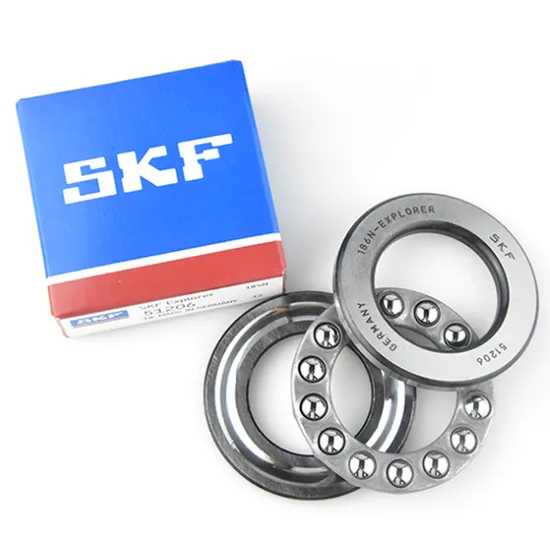
| Brand | SKF |
| Quality Standard | ISO 9001 / TS 16949 |
| Precision Grade | P0 / P5 / P6 (custom) |
| Material | Chrome Steel / Stainless |
| Cage Material | Steel / Brass / Polyamide |
| Lubrication | Grease / Oil (specify) |
| Operating Temp. | -40°C to +200°C |
| Min. Order Qty | 1 pc (samples available) |
| Prototype Lead Time | 7 Working Days |
| Load Capacity | Contact for C0/Cr values |
| Speed Rating | Contact for ndm limit |
| Vibration Level | Z1 / Z2 / Z3 (custom) |
| Noise Level | V1 / V2 / V3 (custom) |
| Fatigue Life | L10h per ISO 281 |
| Sealing Options | Open / Z / 2Z / RS / 2RS |
Our engineering team can modify bearing dimensions, materials, seals, and clearances to meet your specific operating requirements. Submit your drawing or spec sheet for a tailored proposal.
Main shaft bearings, gearbox bearings, and generator bearings for onshore and offshore wind turbines.
Heavy-duty bearings for crushers, conveyors, and rotary equipment in extreme dust and shock-load environments.
High-temperature bearings for rolling mills, continuous casting, and furnace applications.
Wheel hub bearings, transmission bearings, and e-motor bearings for passenger and commercial vehicles.
Axle box bearings, traction motor bearings, and gearbox bearings meeting EN/UIC railway standards.
High-precision spindle bearings, angular contact bearings, and super-precision bearings for CNC and robotics.
Our engineers analyze your operating conditions -- load, speed, temperature, environment -- and select or design the optimal bearing solution to maximize service life and reduce total cost of ownership.
Need non-standard dimensions, special materials, or modified clearances? We can modify standard SKF bearings or manufacture fully custom solutions with a 7-day prototype turnaround.
When bearings fail prematurely, our team conducts root-cause analysis using advanced diagnostic tools to identify the failure mode and recommend corrective action.
We deploy vibration monitoring, thermal imaging, and oil analysis programs that detect bearing deterioration early -- reducing unplanned downtime by up to 40%.
Proper installation is critical to bearing performance. Our certified technicians provide on-site installation support, alignment verification, and operator training worldwide.
From initial selection through end-of-life, our dedicated account managers provide scheduled maintenance plans, re-lubrication programs, and replacement forecasting for enterprise clients.
NDA protected · Free samples for orders > $50K · Reply within 12 hours