![X&S 11206 1207 Self-Aligning Ball Bearing for Auto Engine [WARN] draft identifier mismatch](https://skfip.com/wp-content/uploads/2026/09/xs-11206-1207-self-aligning-ball-bearing-for-auto-engine-warn-draft-identifier-mismatch-4eed45.avif)
Self-Aligning Ball Bearing
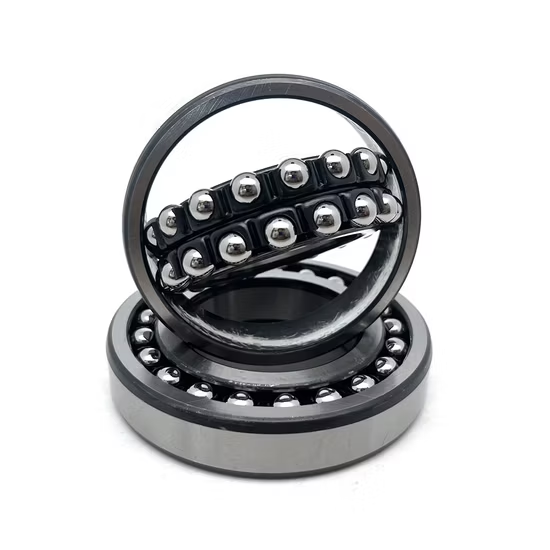
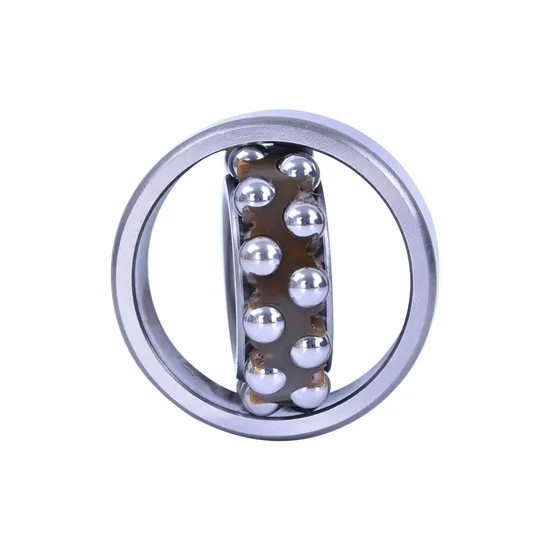
X&S 2210 Self-Aligning Ball Bearing 50×90×23 mm features a double-row design accommodating shaft misalignment in cutting machinery. Heat-treated to HRC58-62 hardness, it maintains structural integrity under dynamic operational loads.
Unified Multi-Brand Sourcing — Consolidate your X&S 2210 self-aligning ball bearing orders with other major manufacturer equivalents under a single authorized distribution channel, eliminating multi-vendor coordination.
| Parameter | Value |
|---|---|
| Designation | 2210 |
| Bearing Type | Self-Aligning Ball Bearing |
| Bore Diameter (d) | 50 mm |
| Outside Diameter (D) | 90 mm |
| Width (B) | 23 mm |
| Material Hardness | HRC58-62 [NEED_CITE:] |
| Cage Material Options | Steel / Brass / Nylon |
| Clearance Class Options | C2 / C0 / C3 / C4 / C5 |
| Vibration Level Options | V1 / V2 / V3 / V4 |
| Lubrication | Grease or Oil |
| Origin | Shandong, China |
| Industry | Typical Applications |
|---|---|
| Woodworking & Material Processing | Cutting machine spindle supports, saw blade arbor housings |
| Automotive & Heavy Transport | Steering column joints, driveline intermediate supports |
| Agricultural & Construction | Tractor PTO shaft bearings, loader articulation linkages |
Matching the exact internal clearance and cage material to the thermal profile of the cutting machine is the only way to prevent catastrophic spindle lock-ups.
During my years running quality inspections in Linyi, I witnessed countless cutting machine spindles seize completely under high-speed operation. The root cause was rarely the base 2210 designation itself, but rather procurement teams ignoring critical suffix variations. When a standard internal clearance is installed in an application demanding thermal expansion allowance, the rolling elements bind as temperatures rise [NEED_CITE: thermal binding failure modes in rolling bearings]. Sourcing teams often focus solely on the base number, inadvertently accepting units with incorrect cage materials that shatter under the specific vibration frequencies of cutting equipment.
Cutting machine spindles endure a complex mix of radial cutting forces and axial feed pressures, requiring a bearing that accommodates slight shaft deflections without compromising rotational accuracy. The X&S 2210 self-aligning ball bearing addresses this by allowing the inner ring to pivot slightly relative to the outer ring, compensating for minor housing misalignments common in fabricated machine frames. By selecting the appropriate cage material and clearance from the available options, procurement engineers can ensure the bearing maintains stability across the specific speed and load profiles of their cutting stations.
The environment inside a cutting machine arbor housing is unforgiving, characterized by rapid heat generation from friction and the cutting process itself. If the internal clearance is not appropriately selected to account for this thermal expansion, the bearing will preload itself destructively as the shaft elongates. Furthermore, the vibration generated by interrupted cuts demands a cage design that resists fatigue and maintains rolling element spacing. Lubrication breakdown is another critical threat; elevated temperatures can rapidly degrade standard greases, leading to metal-to-metal contact and accelerated raceway wear [NEED_CITE: lubrication degradation under elevated thermal loads].
The base designation 2210 identifies a self-aligning ball bearing with a 50 mm bore, 90 mm outside diameter, and 23 mm width, belonging to the width series 2 and diameter series 2. Because this specific identifier lacks additional suffixes, it represents the foundational platform from which application-specific variants are configured. For high-speed cutting spindles, selecting a lightweight polyamide cage option reduces centrifugal forces and operates quietly, whereas a machined brass cage option offers superior durability under heavy shock loads and elevated temperatures. Similarly, specifying a C3 or C4 clearance option is critical when the inner ring operates significantly hotter than the outer housing, preventing the internal geometry from collapsing under thermal growth.
Procuring a bearing based solely on the basic 2210 number without verifying the internal geometry leads to severe operational penalties. A unit with insufficient clearance will experience thermal binding, resulting in unplanned downtime and catastrophic damage to the spindle housing and cutting tooling. Conversely, excessive clearance in a precision cutting application introduces unacceptable radial runout, ruining the surface finish of the machined parts and voiding equipment warranties. These failure modes are well-documented in industry standards, highlighting that improper specification matching is a primary driver of premature bearing replacement [NEED_CITE: rolling bearing failure mode classification per ISO 15243].
We maintain authorized distribution channels that allow us to source the exact cage and clearance configuration your cutting machine requires, rather than forcing you to accept whatever is on the shelf. Our cross-reference methodology goes beyond matching the base 2210 number; we verify that the internal geometry, clearance class, and cage material align perfectly with your OEM specifications. Every shipment includes batch traceability, ensuring that if a field issue arises, we can trace the component back to the exact production run at the manufacturer’s production facilities. This rigorous attention to suffix details and material verification prevents the soft inner rings and premature cage failures that plague the secondary market.
To ensure the selected configuration meets your exact operational demands, please provide the radial and axial load profiles, operating speeds, and steady-state temperatures of your cutting machine spindles. Supplying the OEM equipment number or the original manufacturer’s part number allows our technical team to perform a precise cross-reference verification. This data enables us to recommend the optimal cage material and internal clearance, ensuring reliable performance and extended service intervals for your specific application.
Q: How do we verify the authenticity of the 2210 bearing upon delivery?
A: Every unit we supply features a unique QR code linked to the manufacturer’s official verification system. By scanning this code with the brand’s official mobile application, your receiving team can instantly confirm the production batch, original factory, and specification details, effectively eliminating the risk of installing counterfeit components with soft inner rings into your critical cutting machinery.
Q: Why is it necessary to specify clearance when ordering the base 2210 designation?
A: The base number only defines the physical dimensions, not the internal operating gap. If a cutting machine spindle generates significant heat, a standard clearance will close up and cause thermal binding. Specifying a C3 or C4 clearance option ensures sufficient internal space remains at operating temperature, preventing the rolling elements from seizing and destroying the arbor housing.
Q: What factors dictate the choice between steel, brass, and nylon cage options?
A: The selection depends on your spindle’s speed and load characteristics. Nylon cages are ideal for high-speed, low-vibration applications due to their light weight and damping properties. Brass cages are preferred for heavy shock loads and higher temperatures where polymer degradation is a risk. Steel cages offer a balanced, cost-effective solution for standard cutting operations with moderate speeds and loads.
Q: How do vibration grades (V1 to V4) impact cutting machine performance?
A: Vibration grades measure the dynamic smoothness of the bearing during rotation. For precision cutting machines where surface finish is critical, specifying a higher grade like V3 or V4 minimizes spindle chatter and runout. Lower grades may be acceptable for roughing operations or non-precision structural supports, allowing procurement teams to balance performance requirements with budget constraints.
Our engineers will respond within 12 hours with a tailored solution.
Request Quote| Bearing Type | Self-Aligning Ball Bearing |
| Brand | SKF |
| Quality Standard | ISO 9001 / TS 16949 |
| Precision Grade | P0 / P5 / P6 (custom) |
| Material | Chrome Steel / Stainless |
| Cage Material | Steel / Brass / Polyamide |
| Lubrication | Grease / Oil (specify) |
| Operating Temp. | -40°C to +200°C |
| Min. Order Qty | 1 pc (samples available) |
| Prototype Lead Time | 7 Working Days |
| Load Capacity | Contact for C0/Cr values |
| Speed Rating | Contact for ndm limit |
| Vibration Level | Z1 / Z2 / Z3 (custom) |
| Noise Level | V1 / V2 / V3 (custom) |
| Fatigue Life | L10h per ISO 281 |
| Sealing Options | Open / Z / 2Z / RS / 2RS |
Our engineering team can modify bearing dimensions, materials, seals, and clearances to meet your specific operating requirements. Submit your drawing or spec sheet for a tailored proposal.
Main shaft bearings, gearbox bearings, and generator bearings for onshore and offshore wind turbines.
Heavy-duty bearings for crushers, conveyors, and rotary equipment in extreme dust and shock-load environments.
High-temperature bearings for rolling mills, continuous casting, and furnace applications.
Wheel hub bearings, transmission bearings, and e-motor bearings for passenger and commercial vehicles.
Axle box bearings, traction motor bearings, and gearbox bearings meeting EN/UIC railway standards.
High-precision spindle bearings, angular contact bearings, and super-precision bearings for CNC and robotics.
Our engineers analyze your operating conditions -- load, speed, temperature, environment -- and select or design the optimal bearing solution to maximize service life and reduce total cost of ownership.
Need non-standard dimensions, special materials, or modified clearances? We can modify standard SKF bearings or manufacture fully custom solutions with a 7-day prototype turnaround.
When bearings fail prematurely, our team conducts root-cause analysis using advanced diagnostic tools to identify the failure mode and recommend corrective action.
We deploy vibration monitoring, thermal imaging, and oil analysis programs that detect bearing deterioration early -- reducing unplanned downtime by up to 40%.
Proper installation is critical to bearing performance. Our certified technicians provide on-site installation support, alignment verification, and operator training worldwide.
From initial selection through end-of-life, our dedicated account managers provide scheduled maintenance plans, re-lubrication programs, and replacement forecasting for enterprise clients.
NDA protected · Free samples for orders > $50K · Reply within 12 hours