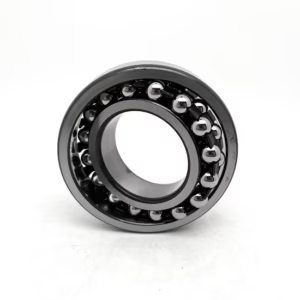

Self-Aligning Ball Bearing
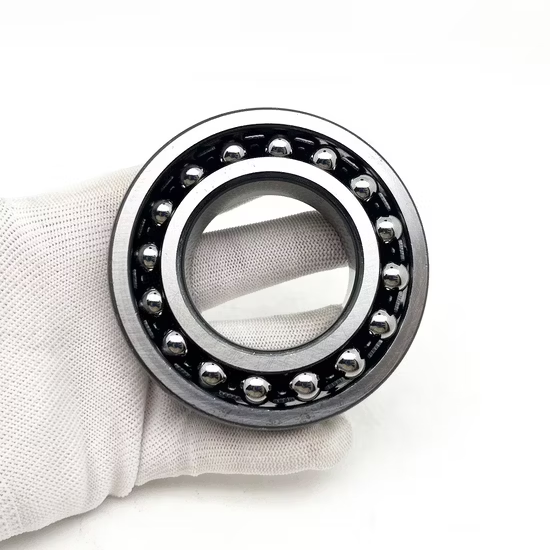
X&S 1215K 1215KTN 1216 1216TN 1216K 1216KTN Self-Aligning Ball Bearings — featuring 1:12 tapered bore (K suffix) for exact shaft mounting compatibility.
Scan To Verify — Every X&S 1215K 1216 self-aligning ball bearing ships with a traceable QR code readable via the official manufacturer app to confirm batch authenticity before installation.
| Parameter | Value |
|---|---|
| Designation | 1215K 1215KTN 1216 1216TN 1216K 1216KTN |
| Bearing Type | Self-Aligning Ball Bearing |
| Hardness | HRC58-62 [NEED_CITE: standard bearing steel hardness range] |
| Lubrication | Grease or Oil |
| Cage Material | Steel Cage, Brass Cage, Nylon Cage |
| Limiting Speed | 5600-18000 r/Min |
| Vibration | V1, V2, V3, V4 |
| Clearance Class | C2, C0, C3, C4, C5 |
| Bore Type | Cylindrical or 1:12 Tapered (K suffix) |
| Origin | Shandong, China |
Note: The TN suffix indicates a specific polyamide cage variant; exact material composition requires manufacturer catalog confirmation prior to final procurement.
| Industry | Typical Applications |
|---|---|
| Fans & Blowers | Industrial exhaust fan shafts, cooling tower motor drives |
| Automotive & Tractors | Steering column joints, transmission shaft intermediate supports |
| Construction Machinery | Vibratory roller articulation points, concrete mixer drum pivots |
Misaligned shafts and thermal expansion destroy standard cages long before the rolling elements fatigue.
Across the Pearl River Delta manufacturing hubs, I have repeatedly seen industrial exhaust fans grind to a halt because a standard steel cage fractured under continuous shaft deflection. When procurement teams focus solely on the base number and ignore critical internal design suffixes, the equipment suffers. A standard clearance bearing installed in a high-temperature fan housing will thermally bind, while a mismatched cage material will shatter under vibratory stress, causing catastrophic rotor lockup [NEED_CITE: rolling bearing failure mode classification per ISO 15243].
Selecting the correct variant from the 1215 and 1216 series requires matching the exact cage material and clearance to the operational environment. We review your specific load, speed, and temperature parameters to ensure the chosen X&S 1215K 1216 self-aligning ball bearing handles the expected shaft deflection without premature wear. This application-based selection prevents the common mistake of installing a rigid cage in a heavily misaligned housing.
Fan and automotive applications subject bearings to combined radial loads, continuous vibration, and significant thermal gradients. As the shaft heats up, standard internal clearances close, leading to excessive friction and lubricant degradation. Proper lubrication intervals and selecting the correct seal or open design are vital to prevent contaminant ingress from dusty industrial environments. Furthermore, mounting bearings on tapered adapter sleeves requires precise drive-up measurements to maintain the necessary residual clearance [NEED_CITE: mounting practices for tapered bore bearings per ISO 15243].
The availability of both cylindrical and 1:12 tapered bore designs dictates the mounting method, with the K suffix requiring precise locknut tightening to achieve the correct internal clearance reduction. Cage selection is equally critical: steel cages offer high rigidity for heavy loads, brass cages provide superior durability under high vibration, and nylon cages deliver low-noise operation and impact resistance for high-speed fan applications. Matching the C3 or C4 expanded clearance classes accommodates the thermal expansion inherent in continuous-duty motor drives, preventing the inner ring from expanding tighter against the rolling elements.
Ignoring the clearance class or cage material suffix during procurement leads to unplanned downtime and severe secondary damage to the fan housing and motor windings. When a bearing thermally binds due to incorrect internal clearance, the resulting friction generates extreme heat that destroys the lubricant and warps the shaft. According to failure analysis frameworks, a significant share of premature failures stems directly from these cross-reference errors, ultimately voiding equipment warranties and escalating maintenance expenses [NEED_CITE: economic impact of premature bearing failure per ISO 281].
Our authorized distribution network allows you to consolidate mixed-brand requirements into a single order, eliminating the friction of coordinating multiple suppliers for different machine lines. We perform rigorous cross-reference alignment that verifies the base number, clearance class, cage material, and bore type simultaneously, ensuring the replacement part perfectly matches the OEM specification. Every shipment includes batch traceability, and our technical team provides post-delivery mounting guidance to ensure the tapered bore variants are installed with the correct residual clearance.
To ensure the selected bearing matches your exact operational demands, please provide the radial and axial load profiles, operating speeds, and expected temperature ranges for your specific application. If you are replacing an existing component, sharing the OEM equipment number or the exact designation printed on the old bearing allows our engineering team to perform a comprehensive cross-reference check. This technical review guarantees that the clearance, cage material, and bore type are perfectly aligned with your machinery’s requirements.
Q: How do I verify the authenticity of the received bearings?
A: Every bearing features a unique QR code that links directly to the manufacturer’s official verification system. By scanning this code with the official brand app, you can instantly confirm the batch number, production date, and origin. This digital traceability ensures you receive genuine products and protects your equipment from the severe damage caused by counterfeit components with substandard metallurgy.
Q: Why is it necessary to check suffixes during cross-referencing?
A: Matching only the base designation ignores critical internal design features like clearance class and cage material. Installing a standard clearance bearing in a high-temperature fan will cause thermal binding, while using a steel cage instead of a specified nylon variant can lead to high-noise operation and cage fracture under vibration. Complete suffix alignment ensures the replacement part handles the exact operational stresses of your machinery.
Q: What is the difference between standard and expanded clearances in fan applications?
A: Standard clearance is suitable for normal operating temperatures, but fan motors generate significant heat during continuous operation. Expanded clearances provide the necessary internal space to accommodate the thermal expansion of the shaft and inner ring. Without this extra clearance, the bearing will tighten excessively as it heats up, leading to increased friction, lubricant failure, and eventual seizure.
Q: How do I choose the right cage material for my application?
A: The choice depends on your specific speed, load, and vibration conditions. Steel cages offer high rigidity for heavy loads, while brass cages provide exceptional durability in high-vibration environments like construction machinery. Nylon cages are ideal for high-speed fan applications where low noise, low friction, and impact resistance are required to maintain smooth rotor operation.
Q: What are the best practices for mounting bearings with a tapered bore?
A: Bearings with a 1:12 tapered bore must be mounted on adapter sleeves or tapered shafts using precise drive-up measurements. Over-tightening the locknut will eliminate the internal clearance, causing the bearing to bind and overheat during operation. Proper mounting ensures the correct residual clearance is maintained, allowing the bearing to accommodate shaft deflection and thermal expansion effectively.
Our engineers will respond within 12 hours with a tailored solution.
Request Quote| Bearing Type | Self-Aligning Ball Bearing |
| Brand | SKF |
| Quality Standard | ISO 9001 / TS 16949 |
| Precision Grade | P0 / P5 / P6 (custom) |
| Material | Chrome Steel / Stainless |
| Cage Material | Steel / Brass / Polyamide |
| Lubrication | Grease / Oil (specify) |
| Operating Temp. | -40°C to +200°C |
| Min. Order Qty | 1 pc (samples available) |
| Prototype Lead Time | 7 Working Days |
| Load Capacity | Contact for C0/Cr values |
| Speed Rating | Contact for ndm limit |
| Vibration Level | Z1 / Z2 / Z3 (custom) |
| Noise Level | V1 / V2 / V3 (custom) |
| Fatigue Life | L10h per ISO 281 |
| Sealing Options | Open / Z / 2Z / RS / 2RS |
Our engineering team can modify bearing dimensions, materials, seals, and clearances to meet your specific operating requirements. Submit your drawing or spec sheet for a tailored proposal.
Main shaft bearings, gearbox bearings, and generator bearings for onshore and offshore wind turbines.
Heavy-duty bearings for crushers, conveyors, and rotary equipment in extreme dust and shock-load environments.
High-temperature bearings for rolling mills, continuous casting, and furnace applications.
Wheel hub bearings, transmission bearings, and e-motor bearings for passenger and commercial vehicles.
Axle box bearings, traction motor bearings, and gearbox bearings meeting EN/UIC railway standards.
High-precision spindle bearings, angular contact bearings, and super-precision bearings for CNC and robotics.
Our engineers analyze your operating conditions -- load, speed, temperature, environment -- and select or design the optimal bearing solution to maximize service life and reduce total cost of ownership.
Need non-standard dimensions, special materials, or modified clearances? We can modify standard SKF bearings or manufacture fully custom solutions with a 7-day prototype turnaround.
When bearings fail prematurely, our team conducts root-cause analysis using advanced diagnostic tools to identify the failure mode and recommend corrective action.
We deploy vibration monitoring, thermal imaging, and oil analysis programs that detect bearing deterioration early -- reducing unplanned downtime by up to 40%.
Proper installation is critical to bearing performance. Our certified technicians provide on-site installation support, alignment verification, and operator training worldwide.
From initial selection through end-of-life, our dedicated account managers provide scheduled maintenance plans, re-lubrication programs, and replacement forecasting for enterprise clients.
NDA protected · Free samples for orders > $50K · Reply within 12 hours