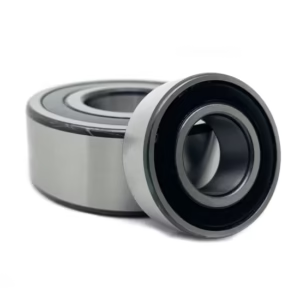
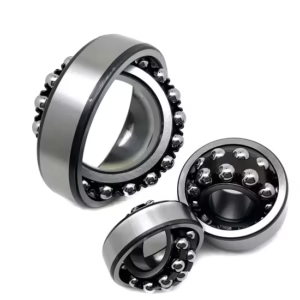
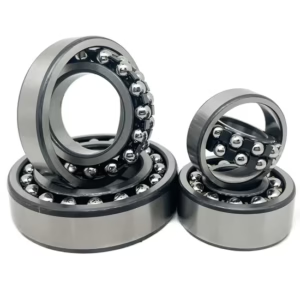
Self-Aligning Ball Bearing

X&S 1213 2214 1314 Self-Aligning Ball Bearing — Chrome steel construction accommodates shaft misalignment in yacht deck winches and gearboxes. Available with C2 to C5 clearance classes to match specific thermal expansion requirements.
Full Brand Authorization — A single consolidated order covers the 1213, 2214, and 1314 designations alongside other major international brands, eliminating the need to coordinate with multiple suppliers.
| Parameter | Value |
|---|---|
| Designation | 1213 2214 1314 |
| Product Type | Self-Aligning Ball Bearing |
| Limiting Speed | 5600-18000 r/min |
| Vibration Level | V1, V2, V3, V4 |
| Clearance Class | C2, C0 (CN), C3, C4, C5 |
| Lubrication | Grease or Oil |
| Material | Available in chrome steel variants |
| Origin | China |
| Industry | Typical Applications |
|---|---|
| Marine Engineering | Yacht deck winches, anchor windlass drives, davit crane slewing mechanisms |
| Material Handling | Conveyor belt return idlers, bucket elevator tail pulleys, transfer chutes |
| Power Transmission | Industrial gearboxes, electric motor shafts, agricultural pump drives |
Matching the base designation without verifying the exact clearance class is a primary cause of thermal binding in marine deck equipment.
Procurement teams frequently source replacements based solely on the basic number, overlooking the fact that standard CN clearance cannot accommodate the thermal expansion generated by continuous winch operation under heavy deck loads. When the inner ring expands and eliminates the internal clearance, the rolling elements skid rather than roll, leading to rapid temperature spikes and catastrophic cage failure [NEED_CITE: bearing failure modes related to inadequate internal clearance per ISO 15243]. Sourcing the correct X&S 1213 2214 1314 self-aligning ball bearing requires strict alignment of the base number with the specific clearance suffix demanded by the marine operating environment.
Shaft deflection is unavoidable in yacht deck winches due to the dynamic tension of mooring lines and the flexible mounting bases on fiberglass or composite decks. The X&S 1213 2214 1314 self-aligning ball bearing features a spherical outer ring raceway that inherently accommodates this angular misalignment, preventing edge loading on the rolling elements. Our technical team reviews the specific misalignment angles of your deck machinery to ensure the selected bearing variant provides adequate self-aligning capacity without compromising the dynamic load rating.
Marine environments subject deck machinery to heavy radial loads from line tension, combined with shock loads when the winch brake engages abruptly. The continuous exposure to salt spray and high humidity demands reliable lubrication retention and effective sealing solutions to prevent corrosion pitting on the raceways. Furthermore, the friction generated during rapid line retrieval elevates operating temperatures, making the selection of an expanded clearance class essential to prevent the internal components from binding as the shaft heats up [NEED_CITE: thermal expansion effects on bearing internal clearance in marine applications].
While the base designations 1213, 2214, and 1314 define the physical dimensions and the self-aligning raceway geometry, the operational reliability depends entirely on the unlisted suffixes and internal specifications. The availability of clearance classes from C2 to C5 allows engineers to compensate for the interference fits required on winch shafts and the thermal expansion encountered during operation. Selecting a C3 or C4 clearance ensures that a positive internal clearance remains at operating temperature. Additionally, choosing the appropriate vibration level, ranging from V1 to V4, ensures smooth operation and minimizes structural resonance in the yacht’s deck fittings, while the chrome steel material option provides the necessary structural integrity for heavy lifting cycles.
Installing a standard clearance bearing in a high-load deck winch inevitably leads to unplanned downtime when the machinery seizes during a critical mooring operation. Premature failure caused by internal thermal binding not only destroys the bearing but can also score the shaft and damage the winch housing, resulting in catastrophic damage that extends far beyond the component cost. Relying on unverified cross-references that ignore internal design differences voids equipment warranties and forces vessel operators into expensive emergency dry-dock repairs [NEED_CITE: economic impact of unplanned downtime in marine deck machinery maintenance].
We prevent cross-reference errors by verifying that the replacement matches the original equipment not just in base designation, but in clearance class, cage design, and vibration level. Our inventory provides authorized coverage across all major brands, allowing you to consolidate mixed-brand requirements for entire vessel refits into a single, traceable shipment. Every batch we supply includes full traceability to the manufacturer, ensuring that the chrome steel variants meet exact metallurgical standards. We conduct application-based selection reviews covering the specific load, speed, and temperature conditions of your yacht winches to guarantee the internal geometry matches the field requirements.
To ensure the selected designations perfectly match your deck machinery, provide the operational parameters including maximum radial and axial loads, operating speeds, and expected thermal gradients. Supplying the specific OEM equipment numbers allows our engineering team to perform a comprehensive cross-reference check, verifying that the internal clearance and vibration levels align with the original design intent. This technical review guarantees that the replacement components will deliver reliable performance in demanding marine conditions.
Q: How can we verify the authenticity of these bearings before installing them on the yacht?
A: Every batch we supply features unique traceability codes that can be scanned using the manufacturer’s official mobile application. This QR verification confirms the exact production date, material specifications, and original factory destination, ensuring that the components installed on your deck winches are genuine and fully protected against the soft inner rings commonly found in counterfeit marine spares.
Q: Why is selecting the correct clearance class critical when replacing winch bearings?
A: Standard CN clearance often fails in deck winches because the heavy interference fits and operational heat eliminate the internal gap, causing thermal binding. Selecting a C3 or C4 clearance ensures that a positive operational gap remains when the shaft expands, preventing the rolling elements from skidding and avoiding the catastrophic cage failures frequently seen in marine environments.
Q: How do we determine the appropriate vibration level for deck machinery applications?
A: The V1 to V4 vibration classifications dictate the smoothness of the bearing operation. For precision yacht deck winches where structural resonance and noise must be minimized, higher precision vibration levels are recommended. Our technical team reviews the specific mounting stiffness and load characteristics of your equipment to recommend the optimal vibration class for smooth, quiet operation.
Q: What lubrication practices are recommended for these bearings in saltwater environments?
A: Open variants require the application of high-quality, water-resistant marine grease immediately before installation to protect the chrome steel internals from salt spray. If the winch design utilizes sealed variants, they are pre-lubricated for life and should not be relubricated, as forcing additional grease can damage the seals and introduce contaminants into the spherical raceway.
Q: How does shaft misalignment affect the lifespan of the self-aligning ball bearing?
A: The spherical outer raceway inherently accommodates angular misalignment caused by shaft deflection under heavy mooring loads. However, if the misalignment exceeds the bearing’s self-aligning capacity, it induces uneven load distribution across the rolling elements. Providing the exact housing and shaft tolerances allows us to verify that the selected designations can safely absorb the expected deflection without premature fatigue.
Our engineers will respond within 12 hours with a tailored solution.
Request Quote| Bearing Type | Self-Aligning Ball Bearing |
| Brand | SKF |
| Quality Standard | ISO 9001 / TS 16949 |
| Precision Grade | P0 / P5 / P6 (custom) |
| Material | Chrome Steel / Stainless |
| Cage Material | Steel / Brass / Polyamide |
| Lubrication | Grease / Oil (specify) |
| Operating Temp. | -40°C to +200°C |
| Min. Order Qty | 1 pc (samples available) |
| Prototype Lead Time | 7 Working Days |
| Load Capacity | Contact for C0/Cr values |
| Speed Rating | Contact for ndm limit |
| Vibration Level | Z1 / Z2 / Z3 (custom) |
| Noise Level | V1 / V2 / V3 (custom) |
| Fatigue Life | L10h per ISO 281 |
| Sealing Options | Open / Z / 2Z / RS / 2RS |
Our engineering team can modify bearing dimensions, materials, seals, and clearances to meet your specific operating requirements. Submit your drawing or spec sheet for a tailored proposal.
Main shaft bearings, gearbox bearings, and generator bearings for onshore and offshore wind turbines.
Heavy-duty bearings for crushers, conveyors, and rotary equipment in extreme dust and shock-load environments.
High-temperature bearings for rolling mills, continuous casting, and furnace applications.
Wheel hub bearings, transmission bearings, and e-motor bearings for passenger and commercial vehicles.
Axle box bearings, traction motor bearings, and gearbox bearings meeting EN/UIC railway standards.
High-precision spindle bearings, angular contact bearings, and super-precision bearings for CNC and robotics.
Our engineers analyze your operating conditions -- load, speed, temperature, environment -- and select or design the optimal bearing solution to maximize service life and reduce total cost of ownership.
Need non-standard dimensions, special materials, or modified clearances? We can modify standard SKF bearings or manufacture fully custom solutions with a 7-day prototype turnaround.
When bearings fail prematurely, our team conducts root-cause analysis using advanced diagnostic tools to identify the failure mode and recommend corrective action.
We deploy vibration monitoring, thermal imaging, and oil analysis programs that detect bearing deterioration early -- reducing unplanned downtime by up to 40%.
Proper installation is critical to bearing performance. Our certified technicians provide on-site installation support, alignment verification, and operator training worldwide.
From initial selection through end-of-life, our dedicated account managers provide scheduled maintenance plans, re-lubrication programs, and replacement forecasting for enterprise clients.
NDA protected · Free samples for orders > $50K · Reply within 12 hours