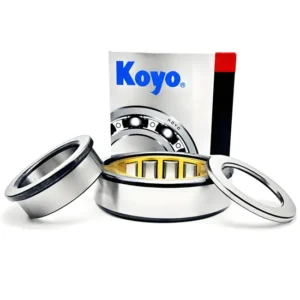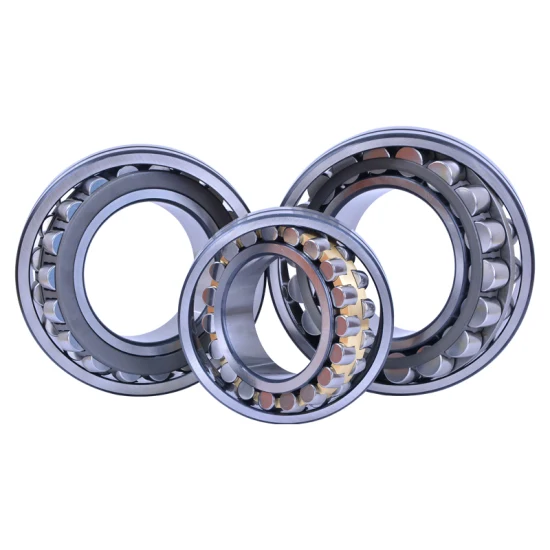
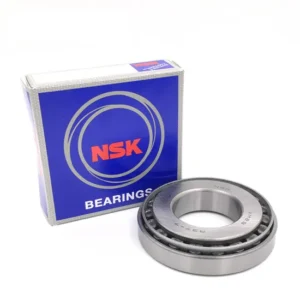
Cylindrical Roller Bearing

NJ 305 ECP NU 1005 NU 205 ECML NU 205 ECP NU 205 E Cylindrical Roller Bearings — separable design with brass or steel cages and multiple radial internal clearance options for heavy-duty gearboxes.
Full Brand Authorization — One consolidated shipment covers mixed SKF, FAG, and X&S NJ 305 ECP cylindrical roller bearing requirements without juggling multiple suppliers.
| Parameter | Value |
|---|---|
| Designation | NJ 305 ECP |
| Product Type | Cylindrical Roller Bearing |
| Bore Diameter (d) | 25 mm |
| Outside Diameter (D) | 62 mm |
| Width (B) | 17 mm |
| Bearing Part | Complete Bearing |
| Separated | Separable |
| Design | NJ (Inner ring with single rib, outer ring with two ribs) |
| Number of Rows | 1 |
| Cage Material | Brass, Steel, or Polyamide (Suffix dependent) |
| Radial Internal Clearance | CN, C3, C4 (Customizable) |
| Hardness | 60-64 HRC [NEED_CITE: standard bearing steel hardness range] |
| Origin | Shandong, China |
| HS Code | 8482500090 |
Note: The ECP suffix denotes an optimized internal design with a glass-fibre reinforced polyamide cage. ECML indicates a machined brass cage, and ECJ indicates a pressed steel cage. Verify exact cage material via manufacturer documentation for specific batch suffixes.
| Industry | Typical Applications |
|---|---|
| Steel & Metallurgy | Rolling mill guide rolls, conveyor drive gearboxes |
| Heavy Machinery | Tractor final drives, excavator swing gearboxes |
| Material Handling | Vibrating screen exciter mechanisms, bucket elevator tail pulleys |
| Industrial Gearboxes | High-speed input shafts, heavy-duty reduction stages |
Base number matching is the most expensive mistake in heavy industry procurement.
I have walked through steel plants in Shandong where a perfectly valid NJ series bearing seized solid within weeks. The base dimensions matched the OEM manual, but the internal clearance was standard CN instead of the required C3 for thermal expansion, or the cage material couldn’t handle the vibration [NEED_CITE: rolling bearing failure mode classification per ISO 15243]. When you source an X&S NJ 305 ECP cylindrical roller bearing, or its SKF and FAG equivalents, ignoring the suffix turns a precision component into a catastrophic downtime event. We stop these failures before the purchase order is even signed.
Selecting the right X&S NJ 305 ECP cylindrical roller bearing requires looking past the basic dimensions. In a rolling mill gearbox, thermal gradients are extreme. If the application involves high vibration and moderate speeds, an ECML (machined brass cage) variant handles the structural stress far better than a polyamide alternative. We review your specific load, speed, and temperature parameters to ensure the cross-referenced suffix aligns perfectly with the physical reality of your equipment.
Vibrating screens and exciter mechanisms subject bearings to relentless radial loads and severe shock. The separable design of the NJ configuration allows the inner ring to be mounted tightly on the shaft while the outer ring and roller assembly slide into the housing. However, high ambient temperatures combined with friction heat demand precise radial internal clearance. A C3 or C4 clearance prevents the rollers from binding when the shaft expands, while the correct cage material ensures lubricant flow isn’t starved during high-frequency oscillation [NEED_CITE: impact of thermal expansion on bearing internal clearance].
The suffix dictates the bearing’s survival. The ECP designation features an optimized roller geometry and a glass-fibre reinforced polyamide cage, offering quiet operation and lower friction at high speeds. The ECML swaps this for a machined brass cage, which is indispensable in high-vibration or high-temperature environments where polymer cages might degrade. The ECJ utilizes a pressed steel cage, balancing cost and performance for standard industrial gearboxes. Choosing between them isn’t about price; it’s about matching the cage’s structural limits to your specific operational stresses.
Installing a standard clearance bearing in a high-heat rolling mill application guarantees thermal binding. As the shaft expands, the internal clearance vanishes, leading to extreme friction, cage disintegration, and eventual shaft scoring. According to ISO 281 and ISO 15243 frameworks, this is classified as a fatigue and wear failure driven by improper mounting and selection, not a manufacturing defect [NEED_CITE: ISO 15243 damage classification]. The result is unplanned downtime, destroyed housings, and voided equipment warranties.
We don’t just ship boxes; we engineer the procurement process. Our authorized multi-brand coverage means your mixed SKF, FAG, and X&S requirements ship in one traceable batch. We cross-reference based on clearance, cage, and precision—not just the base number—preventing the exact field failures that plague casual suppliers. Every X&S NJ 305 ECP cylindrical roller bearing we supply is backed by application-based selection reviews and official app QR verification, ensuring you get genuine, batch-traceable components ready for the harshest environments.
To ensure the selected bearing survives your specific operational envelope, provide our engineering team with your radial and axial load profiles, operating speeds, and ambient temperature ranges. If you are replacing an existing component, share the OEM equipment number or the exact designation printed on the current bearing, including all clearance and cage suffixes. This data allows us to perform a precise L10 life calculation and verify the cross-reference accuracy before shipment.
Q: What is the exact difference between ECP and ECML suffixes in this series?
A: The ECP suffix indicates an optimized internal design with a glass-fibre reinforced polyamide cage, ideal for high-speed, low-vibration applications. The ECML suffix designates a machined brass cage, which provides superior structural integrity and temperature resistance for high-vibration environments like vibrating screens or rolling mill gearboxes.
Q: How do I choose the correct radial internal clearance for a rolling mill?
A: Rolling mills generate significant shaft heat. Standard CN clearance will vanish as the shaft expands, causing thermal binding. A C3 or C4 clearance is typically required to accommodate this thermal expansion. We review your specific operating temperatures and shaft fits to recommend the exact clearance class needed to prevent seizure.
Q: Can I cross-reference an X&S NJ 305 ECP to SKF or FAG equivalents?
A: Yes, we provide precise cross-referencing across all major authorized brands. However, we don’t just match the base NJ 305 number; we ensure the internal design optimization, cage material (polyamide vs. brass), and radial clearance suffixes align perfectly with your application requirements to prevent field failures.
Q: Why did my previous cylindrical roller bearing fail from axial窜动 (axial displacement)?
A: The NJ design features a single rib on the inner ring and two ribs on the outer ring, allowing it to locate the shaft axially in one direction. If a NU type (no inner ribs) was mistakenly installed where an NJ was required, the shaft will lack axial location, leading to destructive axial displacement and equipment damage.
Our engineers will respond within 12 hours with a tailored solution.
Request Quote| Bearing Type | Cylindrical Roller Bearing |
| Brand | SKF |
| Quality Standard | ISO 9001 / TS 16949 |
| Precision Grade | P0 / P5 / P6 (custom) |
| Material | Chrome Steel / Stainless |
| Cage Material | Steel / Brass / Polyamide |
| Lubrication | Grease / Oil (specify) |
| Operating Temp. | -40°C to +200°C |
| Min. Order Qty | 1 pc (samples available) |
| Prototype Lead Time | 7 Working Days |
| Load Capacity | Contact for C0/Cr values |
| Speed Rating | Contact for ndm limit |
| Vibration Level | Z1 / Z2 / Z3 (custom) |
| Noise Level | V1 / V2 / V3 (custom) |
| Fatigue Life | L10h per ISO 281 |
| Sealing Options | Open / Z / 2Z / RS / 2RS |
Our engineering team can modify bearing dimensions, materials, seals, and clearances to meet your specific operating requirements. Submit your drawing or spec sheet for a tailored proposal.
Main shaft bearings, gearbox bearings, and generator bearings for onshore and offshore wind turbines.
Heavy-duty bearings for crushers, conveyors, and rotary equipment in extreme dust and shock-load environments.
High-temperature bearings for rolling mills, continuous casting, and furnace applications.
Wheel hub bearings, transmission bearings, and e-motor bearings for passenger and commercial vehicles.
Axle box bearings, traction motor bearings, and gearbox bearings meeting EN/UIC railway standards.
High-precision spindle bearings, angular contact bearings, and super-precision bearings for CNC and robotics.
Our engineers analyze your operating conditions -- load, speed, temperature, environment -- and select or design the optimal bearing solution to maximize service life and reduce total cost of ownership.
Need non-standard dimensions, special materials, or modified clearances? We can modify standard SKF bearings or manufacture fully custom solutions with a 7-day prototype turnaround.
When bearings fail prematurely, our team conducts root-cause analysis using advanced diagnostic tools to identify the failure mode and recommend corrective action.
We deploy vibration monitoring, thermal imaging, and oil analysis programs that detect bearing deterioration early -- reducing unplanned downtime by up to 40%.
Proper installation is critical to bearing performance. Our certified technicians provide on-site installation support, alignment verification, and operator training worldwide.
From initial selection through end-of-life, our dedicated account managers provide scheduled maintenance plans, re-lubrication programs, and replacement forecasting for enterprise clients.
NDA protected · Free samples for orders > $50K · Reply within 12 hours