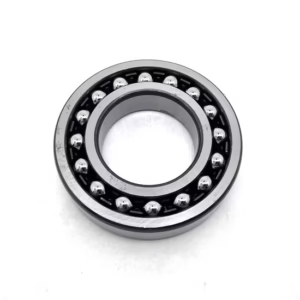
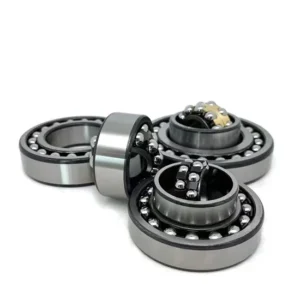
Self-Aligning Ball Bearing

X&S 1301 EM 2202 ETN9 1302 ETN9 2301 1202 ETN9 2202 ET Self-Aligning Ball Bearing — engineered to accommodate shaft misalignment under heavy radial loads.
Unified Multi-Brand Sourcing — Consolidate mixed-brand requirements into a single shipment with full documentation alignment across all major international manufacturers.
| Parameter | Value |
|---|---|
| Designation | 1301 EM 2202 ETN9 1302 ETN9 2301 1202 ETN9 2202 ET |
| Product Type | Self-Aligning Ball Bearing |
| Load Direction | Radial Bearing |
| Lubrication | Grease or Oil |
| Feature | High Speed |
| Cage Material | Machined brass (M) or Glass fiber reinforced polyamide (TN9) |
| Internal Design | Enhanced / optimized (E) |
| Origin | Shandong, China |
| HS Code | 8482109000 |
Note: The ‘T’ suffix appearing in the designation requires manufacturer catalog confirmation for exact specification.
| Industry | Typical Applications |
|---|---|
| Industrial Gearboxes | Input and output shaft supports subject to housing deflection |
| Material Handling | Conveyor pulley bearings experiencing axial misalignment |
| Agricultural Machinery | Harvester rotor shafts exposed to heavy dust and shock loads |
Base number matching destroys machinery when internal design variables are ignored.
Procurement teams often source replacements by matching the basic designation, overlooking critical suffixes that dictate cage material and internal clearance. I once investigated a crusher failure in Dubai where a standard stamped steel cage was installed in a high-impact zone because the cross-reference only checked the base number. The cage fractured prematurely, causing catastrophic downtime. When sourcing an X&S self-aligning ball bearing 2209 2210 2211 2212, ignoring the optimized internal design or selecting the wrong cage material for shock loads leads to rapid fatigue [NEED_CITE: rolling bearing failure mode classification per ISO 15243].
Selecting the correct cage is non-negotiable for heavy-load applications. The X&S self-aligning ball bearing 2209 2210 2211 2212 series offers distinct cage options to match specific operational stresses. Machined brass cages provide superior durability under severe vibration and shock loads, while polyamide cages offer lower friction for high-speed, stable operations. We strictly verify these internal design codes during cross-referencing to ensure the replacement matches the exact mechanical demands of your equipment.
Radial loads combined with shaft misalignment generate localized heat, making clearance selection critical. If standard clearance is installed where expanded clearance is required for thermal growth, the bearing will bind and fail. Lubrication choice further complicates this; grease provides excellent sealing against agricultural dust, while oil circulation is necessary for high-speed gearbox applications to dissipate heat. Proper seal selection balances contamination exclusion with friction management [NEED_CITE: bearing lubrication and thermal management guidelines].
The suffix string dictates the actual performance envelope of the bearing. The ‘E’ suffix indicates an optimized internal geometry with larger rolling elements, significantly increasing radial load capacity. The ‘M’ suffix designates a machined brass cage, which is essential for absorbing shock loads in material handling conveyors without fracturing. Conversely, the ‘TN9’ suffix specifies a glass fiber reinforced polyamide cage, ideal for high-speed electric motors where minimizing weight and friction is paramount. Understanding these distinctions prevents the installation of underspecified components in demanding environments.
Installing a bearing with incorrect internal clearance or an incompatible cage material results in severe operational penalties. Thermal binding from inadequate clearance causes rapid temperature spikes, degrading the lubricant and welding the rolling elements to the raceway. A cage failure under shock loading leads to immediate seizure and extensive damage to the shaft and housing. These failures trigger unplanned downtime and void equipment warranties, far exceeding the initial savings of an incorrectly specified part [NEED_CITE: economic impact of unplanned machinery downtime].
We do not simply ship the base designation; we validate the complete suffix string against your application parameters. Our cross-reference process aligns the internal design, cage material, and clearance class, preventing the exact mismatches that cause field failures. Every X&S self-aligning ball bearing 2209 2210 2211 2212 order is supported by application-based selection reviews covering load, speed, and temperature. We provide full batch traceability and authenticity verification, ensuring you receive genuine components engineered for your specific heavy-load machinery.
To ensure optimal performance and longevity, provide our engineering team with your specific operational data. Share the exact radial and axial loads, operating speeds, and ambient temperatures for a comprehensive L10 life calculation and clearance recommendation. If replacing an existing unit, supply the OEM equipment number so we can perform a rigorous cross-reference verification, ensuring the internal design and cage material perfectly match your heavy-load impact requirements.
Q: How do I verify the authenticity of these bearings using official apps?
A: Scan the QR code on the packaging using the manufacturer’s official mobile application. This confirms the batch traceability and verifies that the internal components, including the specific cage material and optimized design, are genuine and not counterfeit clones with soft inner rings.
Q: Why must clearance and cage material be matched during cross-referencing?
A: Matching only the base number ignores thermal expansion needs and shock load capacity. Incorrect clearance causes thermal binding, while the wrong cage material leads to fracture under impact. Full suffix alignment ensures the bearing survives the specific operational stresses of your machinery.
Q: What is the difference between CN, C3, and C4 clearance in self-aligning applications?
A: CN is standard clearance for normal temperatures. C3 provides greater internal clearance to accommodate thermal expansion and shaft deflection in warmer or heavily loaded environments. C4 offers even larger clearance for extreme temperature differentials, preventing the bearing from seizing as components expand during operation.
Q: How do I choose between machined brass (M) and polyamide (TN9) cages?
A: Select the machined brass M cage for applications with heavy shock loads, severe vibration, or high temperatures, such as crushers and conveyors. Choose the glass fiber reinforced polyamide TN9 cage for high-speed, stable operations like electric motors, where lower friction and reduced weight are critical for efficiency.
Our engineers will respond within 12 hours with a tailored solution.
Request Quote| Bearing Type | Self-Aligning Ball Bearing |
| Brand | SKF |
| Quality Standard | ISO 9001 / TS 16949 |
| Precision Grade | P0 / P5 / P6 (custom) |
| Material | Chrome Steel / Stainless |
| Cage Material | Steel / Brass / Polyamide |
| Lubrication | Grease / Oil (specify) |
| Operating Temp. | -40°C to +200°C |
| Min. Order Qty | 1 pc (samples available) |
| Prototype Lead Time | 7 Working Days |
| Load Capacity | Contact for C0/Cr values |
| Speed Rating | Contact for ndm limit |
| Vibration Level | Z1 / Z2 / Z3 (custom) |
| Noise Level | V1 / V2 / V3 (custom) |
| Fatigue Life | L10h per ISO 281 |
| Sealing Options | Open / Z / 2Z / RS / 2RS |
Our engineering team can modify bearing dimensions, materials, seals, and clearances to meet your specific operating requirements. Submit your drawing or spec sheet for a tailored proposal.
Main shaft bearings, gearbox bearings, and generator bearings for onshore and offshore wind turbines.
Heavy-duty bearings for crushers, conveyors, and rotary equipment in extreme dust and shock-load environments.
High-temperature bearings for rolling mills, continuous casting, and furnace applications.
Wheel hub bearings, transmission bearings, and e-motor bearings for passenger and commercial vehicles.
Axle box bearings, traction motor bearings, and gearbox bearings meeting EN/UIC railway standards.
High-precision spindle bearings, angular contact bearings, and super-precision bearings for CNC and robotics.
Our engineers analyze your operating conditions -- load, speed, temperature, environment -- and select or design the optimal bearing solution to maximize service life and reduce total cost of ownership.
Need non-standard dimensions, special materials, or modified clearances? We can modify standard SKF bearings or manufacture fully custom solutions with a 7-day prototype turnaround.
When bearings fail prematurely, our team conducts root-cause analysis using advanced diagnostic tools to identify the failure mode and recommend corrective action.
We deploy vibration monitoring, thermal imaging, and oil analysis programs that detect bearing deterioration early -- reducing unplanned downtime by up to 40%.
Proper installation is critical to bearing performance. Our certified technicians provide on-site installation support, alignment verification, and operator training worldwide.
From initial selection through end-of-life, our dedicated account managers provide scheduled maintenance plans, re-lubrication programs, and replacement forecasting for enterprise clients.
NDA protected · Free samples for orders > $50K · Reply within 12 hours