ISO 9001 Certified
TS 16949
Genuine SKF
Need Technical Advice?
Reply within 12 hours · 15+ certified engineers on call
Linear Bearing
X&S LM8UU LM10UU LM13UU LM16UU LM20UU Linear Guide Bearing for Microscope [WARN] draft identifier mismatch
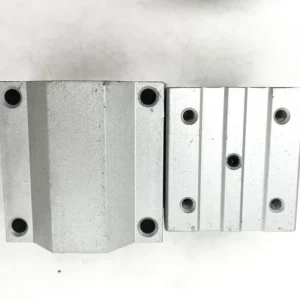
X&S LM50UU LM60UU LM80UU LM100UU LM20UU LM16UU LM13UU Linear Bearings — open shape design in bearing steel requires external lubrication, supporting P0 through P6 precision classes for microscope applications.
- Verify authenticity via official app QR scanning for every batch.
7
Day Prototype
vs. 8-12 wks standard
50+
Countries Served
Global logistics network
12h
Quote Response
Expert engineers on call
Typical Applications
Wind Power
Mining
Steel & Metallurgy
Automotive / EV
Rail Transit
Precision Machinery
Genuine SKF Bearings
NDA Protected
Free Sample for Orders > $50K
Global Shipping
Product Details
Unified Multi-Brand Sourcing — Procure X&S linear guides alongside international equivalents in a single consolidated shipment without coordinating multiple vendors.
Technical Specifications
| Parameter | Value |
|---|---|
| Designation | LM50UU LM60UU LM80UU LM100UU LM20UU LM16UU LM13UU |
| Product Type | Linear Guide Bearing |
| Series | LM |
| Shape | Open |
| Flange Shape | Circular |
| Material | Bearing Steel |
| Rows Number | Single |
| Lubrication | Grease or Oil |
| Precision Rating | P0, P4, P5, P6 |
| Vibration Acceleration | Z, Z1, Z2, Z3, Z4 |
| Origin | Shandong, China |
Note: The "UU" and "AJ" suffixes appearing in related catalog variations remain unverified and require manufacturer catalog confirmation for exact seal or clearance definitions.
Application Suitability
| Industry | Typical Applications |
|---|---|
| Precision Instrumentation | Microscope focusing mechanisms, optical inspection stages |
| Industrial Automation | CNC machine tool slides, 3D printer linear axes |
| Metrology | Coordinate measuring machine probing carriages |
Suffix Oversight Ruins the X&S LM series linear guide bearing
Matching the base number while ignoring the suffix is the fastest route to a seized precision slide.
Purchasing teams often approve replacements based solely on the core LM designation, assuming dimensional equivalence guarantees functional interchangeability. I have personally inspected scrapped precision slides where a standard clearance bearing was forced into a high-speed microscope stage, leading to rapid thermal expansion and catastrophic cage fragmentation. When cross-reference protocols neglect internal geometry and seal friction, the resulting thermal binding destroys the entire linear guide assembly [NEED_CITE: linear motion system failure modes related to thermal binding].
Aligning Precision Grades with Optical Demands
Selecting the correct X&S LM series linear guide bearing for microscope stages requires matching the precision rating to the optical magnification level. Higher magnification setups amplify microscopic carriage deviations, making P4 or P5 classes essential for eliminating image drift during focusing. We review your specific vibration tolerance and travel smoothness requirements to ensure the selected precision grade prevents optical distortion during high-resolution inspection tasks.
Managing Friction and Contamination in Open Carriages
Open-shape linear bearings rely on external lubrication and the host carriage’s sealing design to manage contamination. In dusty CNC environments, inadequate wiper seals allow abrasive particles to score the bearing steel shaft, rapidly degrading the rolling elements. Selecting the appropriate grease viscosity and establishing strict relubrication intervals are critical to preventing surface pitting and maintaining the declared vibration acceleration limits under continuous cyclic loading [NEED_CITE: contamination impact on linear bearing fatigue life].
Decoding Clearance and Vibration Specifications
The circular open design allows for adjustable clearance when paired with slotted housings, enabling fine-tuning of the preload for zero-backlash operation. Choosing between P0 and P6 precision directly dictates the running accuracy and the permissible vibration acceleration grade, from standard Z up to the ultra-smooth Z4. These internal tolerances ensure the single-row ball retainer maintains consistent contact with the shaft, preventing the micro-stutters that ruin surface finishes in automated machining.
The Hidden Toll of Improper Linear Guide Selection
Installing an incorrect precision class or ignoring vibration limits leads to unplanned downtime and severe shaft scoring. According to failure analysis frameworks, surface fatigue and abrasive wear in linear systems frequently stem from mismatched internal clearances that generate excessive localized heat. This premature failure not only voids equipment warranties but also necessitates complete carriage replacement, driving significant hidden costs far beyond the initial component price [NEED_CITE: rolling bearing failure mode classification per ISO 15243].
Why Our Technical Verification Protects Your Equipment
We prevent cross-reference errors by verifying the exact suffix and internal geometry, rather than just matching the base LM number. Our batch traceability ensures every bearing steel component is linked to its original production run, eliminating the risk of counterfeit parts with soft inner rings. We provide application-based selection reviews that check your load, speed, and mounting configuration against the declared precision class. Furthermore, our mixed-brand consolidation allows you to source these linear guides alongside other drivetrain components in a single, fully documented shipment.
Documentation & Authenticity
- Certificate of Conformity validating the declared P4 or P5 precision class for optical stages.
- Batch and lot traceability linking each open-type bearing to its specific manufacturing run.
- QR verification via official apps to confirm genuine bearing steel material origins.
- Dimensional and running accuracy inspection reports proving Z-series vibration limits.
- Country-of-origin documentation supporting international customs and compliance requirements.
Storage, Handling & Mounting
- Retain original packaging to prevent humidity from corroding the bearing steel shafts before assembly.
- Wear lint-free gloves to avoid transferring skin oils onto the open rolling elements.
- Apply specified grease immediately after mounting since the open shape lacks factory pre-lubrication seals.
- Align the circular flange carefully to avoid inducing parasitic moments that distort the single-row ball cage.
- Store away from direct sunlight to protect the integrity of any temporary anti-corrosion coatings.
Engineering Review and Selection Guidance
To ensure optimal performance, provide our engineering team with your specific radial loads, travel speeds, and operating temperatures for a comprehensive L10 life calculation. Sharing your OEM equipment numbers allows us to perform a rigorous cross-reference check, verifying that the internal clearance and vibration grades perfectly match your original carriage design.
Frequently Asked Questions
Q: What is the difference between standard and adjustable clearance suffixes in linear bearings?
A: Standard suffixes denote fixed internal clearances suited for general automation, while adjustable types allow the housing to compress the bearing slightly, eliminating play for high-precision optical stages. Always verify the exact suffix definition with the manufacturer catalog to avoid binding in tight-tolerance microscope carriages.
Q: How to select the correct precision rating for microscope applications?
A: High-magnification microscopes require P4 or P5 ratings to prevent image drift caused by microscopic carriage deviations during focusing. Standard P0 grades are generally reserved for heavy-duty industrial automation where sub-micron running accuracy is not critical to the final output.
Q: What are the lubrication recommendations for open-type linear bearings?
A: Open designs lack integrated seals, requiring manual application of grease or oil directly to the shaft and rolling elements. Relubrication intervals depend heavily on the travel speed and environmental contamination levels, necessitating regular maintenance to prevent abrasive wear on the bearing steel.
Q: How to verify the authenticity of these linear bearings upon delivery?
A: Authentic units include batch traceability documentation and QR codes scannable via official brand applications. We also supply dimensional and running accuracy inspection reports that confirm the declared precision class and vibration acceleration limits before the components leave our facility.
Q: Why do cross-reference errors cause premature failure in linear guides?
A: Matching only the base designation while ignoring internal geometry or seal friction can lead to thermal binding in high-speed applications. This excessive heat degrades the lubricant and fragments the cage, resulting in catastrophic slide failure and extensive unplanned equipment downtime.
Product Summary
- Product Name
- X&S LM8UU LM10UU LM13UU LM16UU LM20UU Linear Guide Bearing for Microscope [WARN] draft identifier mismatch
- Category
- Linear Bearing
- Brand
- SKF
- Certification
- ISO 9001 · TS 16949
- Lead Time
- 7 Working Days
Get a Custom Quote
Our engineers will respond within 12 hours with a tailored solution.
Request QuoteGeneral Specifications
| Bearing Type | Linear Bearing |
| Brand | SKF |
| Quality Standard | ISO 9001 / TS 16949 |
| Precision Grade | P0 / P5 / P6 (custom) |
| Material | Chrome Steel / Stainless |
| Cage Material | Steel / Brass / Polyamide |
| Lubrication | Grease / Oil (specify) |
| Operating Temp. | -40°C to +200°C |
| Min. Order Qty | 1 pc (samples available) |
| Prototype Lead Time | 7 Working Days |
Performance Parameters
| Load Capacity | Contact for C0/Cr values |
| Speed Rating | Contact for ndm limit |
| Vibration Level | Z1 / Z2 / Z3 (custom) |
| Noise Level | V1 / V2 / V3 (custom) |
| Fatigue Life | L10h per ISO 281 |
| Sealing Options | Open / Z / 2Z / RS / 2RS |
Custom Specifications Available
Our engineering team can modify bearing dimensions, materials, seals, and clearances to meet your specific operating requirements. Submit your drawing or spec sheet for a tailored proposal.
Wind Power
Main shaft bearings, gearbox bearings, and generator bearings for onshore and offshore wind turbines.
Mining & Quarrying
Heavy-duty bearings for crushers, conveyors, and rotary equipment in extreme dust and shock-load environments.
Steel & Metallurgy
High-temperature bearings for rolling mills, continuous casting, and furnace applications.
Automotive / EV
Wheel hub bearings, transmission bearings, and e-motor bearings for passenger and commercial vehicles.
Rail Transit
Axle box bearings, traction motor bearings, and gearbox bearings meeting EN/UIC railway standards.
Precision Machinery
High-precision spindle bearings, angular contact bearings, and super-precision bearings for CNC and robotics.
Application Design
EngineeringOur engineers analyze your operating conditions -- load, speed, temperature, environment -- and select or design the optimal bearing solution to maximize service life and reduce total cost of ownership.
Custom Modification
7-Day TurnaroundNeed non-standard dimensions, special materials, or modified clearances? We can modify standard SKF bearings or manufacture fully custom solutions with a 7-day prototype turnaround.
Failure Analysis
DiagnosticsWhen bearings fail prematurely, our team conducts root-cause analysis using advanced diagnostic tools to identify the failure mode and recommend corrective action.
Predictive Maintenance
Up to 40% Less DowntimeWe deploy vibration monitoring, thermal imaging, and oil analysis programs that detect bearing deterioration early -- reducing unplanned downtime by up to 40%.
On-site Installation
Global CoverageProper installation is critical to bearing performance. Our certified technicians provide on-site installation support, alignment verification, and operator training worldwide.
Lifecycle Support
Enterprise SLAFrom initial selection through end-of-life, our dedicated account managers provide scheduled maintenance plans, re-lubrication programs, and replacement forecasting for enterprise clients.
Why SKF China
The engineering partner advantage
7 Days
Prototype Lead Time
vs. 8-12 weeks via standard channels
15+
Certified Engineers
SKF-certified, on-call for your project
50+
Countries Delivered
Reliable global logistics network
Request a Quote
Get a custom quote for
X&S LM8UU LM10UU LM13UU LM16UU LM20UU Linear Guide Bearing for Microscope [WARN] draft identifier mismatch
NDA protected · Free samples for orders > $50K · Reply within 12 hours
Related Products