

ISO 9001 Certified
TS 16949
Genuine SKF
Need Technical Advice?
Reply within 12 hours · 15+ certified engineers on call
Needle Roller Bearing
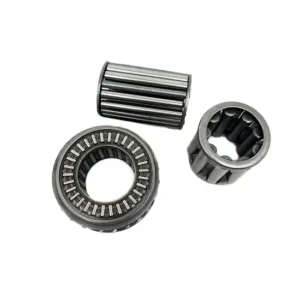
X&S HK1012 BK1012 HK1210 BK1210 Needle Roller Bearing for Drone Gimbal
X&S SCE98 SCE910 SCE910 BCE910 SCE912 BCE912 SCE108 BC Needle Roller Bearing — inch series drawn cup design in bearing steel for compact radial load applications.
- Open type configuration requires external sealing and scheduled lubrication
- Available in P0, P5, P6 precision with C0 through C5 clearance options
- TS16949 and ISO9001 certified production for consistent dimensional accuracy
Supplied with full documentation package including material test reports and dimensional inspection records for incoming quality verification.
7
Day Prototype
vs. 8-12 wks standard
50+
Countries Served
Global logistics network
12h
Quote Response
Expert engineers on call
Typical Applications
Wind Power
Mining
Steel & Metallurgy
Automotive / EV
Rail Transit
Precision Machinery
Genuine SKF Bearings
NDA Protected
Free Sample for Orders > $50K
Global Shipping
Product Details
Cross-Reference Triad Alignment — verifying base number, clearance class, and cage material simultaneously prevents field failures in compact gimbal assemblies.
Technical Specifications
| Parameter | Value |
|---|---|
| Designation | SCE98 SCE910 SCE910 BCE910 SCE912 BCE912 SCE108 BC |
| Product Type | Needle Roller Bearing |
| Bore Type | Without Inner Ring / With Inner Ring |
| Material | Bearing Steel |
| Seal or Shield Type | Open |
| Lubrication | Oil or Grease |
| Precision Class | P0, P5, P6 |
| Clearance Class | C0, C2, C3, C4, C5 |
| Certification | TS16949, ISO9001 |
| Origin | Shandong, China |
Note: HK, Bk/BK, SCE, and BCE suffixes denote standard industry drawn cup configurations; exact envelope dimensions require manufacturer catalog confirmation for specific cross-references.
Application Suitability
| Industry | Typical Applications |
|---|---|
| Aerospace & Robotics | Drone Gimbal Supports, Camera Stabilization Joints |
| Automotive & Heavy Vehicle | Transmission Shafts, Steering Column Joints |
| Industrial Power Transmission | Compact Gearboxes, Planetary Gear Sets |
| General MRO | Material Handling Conveyor Rollers, Pivot Points |
Why Base Numbers Fail in Drone Gimbal Assemblies
Matching the base designation without verifying internal geometry leads to catastrophic cage failure under high-frequency vibration.
In the drone and robotics sector, gimbal mechanisms demand extreme responsiveness and minimal friction. A common pitfall occurs when procurement teams source a standard drawn cup needle roller bearing based solely on the outer dimensions, ignoring the specific clearance and cage requirements. I have seen projects where a standard stamped steel cage was installed in a high-vibration gimbal motor, leading to metal fatigue and structural断裂 within hours of flight testing. The X&S SCE98 SCE910 needle roller bearing series addresses this by ensuring that every cross-reference aligns with the original equipment manufacturer’s exact internal specifications, preventing thermal binding and premature wear in compact, high-speed applications [NEED_CITE: rolling bearing failure mode classification per ISO 15243].
Matching Precision to High-Sensitivity Gimbal Operations
Selecting the correct X&S SCE98 SCE910 needle roller bearing involves looking beyond the outer shell to the internal rolling elements and clearance class. For drone gimbals, where micro-vibrations directly impact camera stability, the precision class (P0, P5, or P6) and clearance (C0 through C5) must be perfectly matched to the operating temperature and load. Our technical review process ensures that the selected bearing provides the exact radial play required, eliminating the micro-stutters caused by overly tight clearances or the wobble induced by excessive play.
Navigating Compact Space and Vibration Challenges
Drawn cup needle roller bearings operate in extremely confined spaces, often relying on the shaft and housing as raceways. This design maximizes load capacity within a minimal radial cross-section but leaves no room for error in shaft hardness or surface finish. In gimbal applications, the bearings are subjected to complex, multi-directional vibrations and rapid accelerations. Proper lubrication is critical; while open designs allow for custom oil or grease application tailored to the specific speed and temperature profile, they also require meticulous sealing at the housing level to prevent dust ingress, which can rapidly degrade the thin-walled outer cup and needle elements [NEED_CITE: lubrication and contamination effects on bearing life per ISO 281].
Decoding the Drawn Cup Series Variants
The identifier encompasses both open-end (SCE) and closed-end (BCE) inch-series designs, alongside metric equivalents like HK and BK. Open-end variants are ideal for through-shaft configurations where debris can pass through or where external sealing is managed by the housing. Closed-end designs feature a solid base, making them suitable for blind holes or shaft ends where contamination must be blocked directly at the bearing. The thin, deep-drawn outer ring requires careful handling during installation; excessive press-fit forces can deform the cup, restricting needle movement and causing immediate operational failure. Understanding these structural nuances ensures the right variant is selected for the specific housing geometry.
The Hidden Costs of Incorrect Cross-Referencing
Substituting a drawn cup bearing based solely on basic dimensions often results in unplanned downtime and catastrophic damage to the surrounding assembly. If the replacement bearing lacks the necessary clearance for thermal expansion, the needles will skid rather than roll, generating excessive heat and destroying the shaft surface. Conversely, using a lower precision grade in a high-speed gimbal introduces unacceptable runout, ruining the stabilization performance and voiding equipment warranties. These failures highlight why strict adherence to ISO 15243 failure analysis principles is essential when validating alternative part numbers [NEED_CITE: bearing damage and failure analysis per ISO 15243].
Why Procurement Engineers Trust Our Technical Validation
We eliminate the risk of soft inner rings and cloned QR codes by sourcing exclusively through authorized channels with full batch traceability. For drawn cup needle bearings, where the outer ring is extremely thin, we verify that the cross-referenced part matches not just the base number, but the exact cage material and clearance class required by the OEM. Our engineering team reviews the application parameters—load, speed, and temperature—to confirm the selection before shipment. Every order is backed by manufacturer batch traceability, ensuring that the bearings you receive are genuine and fully documented, avoiding the costly delays associated with counterfeit or incorrectly specified parts.
Documentation & Authenticity
- Certificate of Conformity verifying TS16949 and ISO9001 manufacturing standards.
- Original manufacturer batch and lot traceability for every drawn cup unit.
- QR verification support via official brand apps to confirm authenticity.
- Material test reports confirming bearing steel hardness and composition.
- Dimensional and running accuracy inspection reports for critical P5/P6 grades.
- Country-of-origin documentation for seamless customs clearance.
Storage, Handling & Mounting
- Keep bearings in original moisture-barrier packaging until mounting to prevent corrosion on the thin drawn cup outer ring.
- Use clean, lint-free gloves when handling open-end SCE variants to avoid contaminating the needle elements.
- Apply uniform pressure during press-fitting to prevent deformation of the thin-walled outer cup.
- Ensure shaft and housing raceways meet required hardness and surface finish specifications before installing bearings without inner rings.
- Apply the specified oil or grease immediately after unpacking if the application requires pre-lubrication before housing assembly.
Engineering Support for Exact Application Matching
To ensure optimal performance and longevity, please provide detailed operating parameters, including radial and axial loads, rotational speeds, and operating temperature ranges. Sharing the specific OEM equipment numbers or housing drawings allows our technical team to perform a precise cross-reference check and L10 life calculation. This collaborative approach guarantees that the selected bearing configuration perfectly aligns with your mechanical design and environmental conditions.
Frequently Asked Questions
Q: Why is matching the base designation not enough for drawn cup needle bearings?
A: Base numbers only define the outer envelope dimensions. Internal variations in clearance class, cage material, and precision grade dictate how the bearing handles thermal expansion and vibration. Installing a standard clearance bearing in a high-speed gimbal can cause thermal binding, while the wrong cage material may fracture under high-frequency oscillation, leading to premature failure.
Q: When should I specify open-end (SCE/HK) versus closed-end (BCE/BK) designs?
A: Open-end bearings are used when the shaft extends through the housing or when external seals manage contamination. Closed-end variants feature a solid base, making them ideal for blind holes or shaft extremities where the bearing itself must block dust and moisture ingress, protecting the internal needle elements from abrasive damage.
Q: How do precision and clearance classes affect compact needle roller applications?
A: In tight spaces like drone gimbals, precision classes (P0, P5, P6) ensure minimal runout and smooth rotation, which is critical for stabilization. Clearance classes (C0 to C5) accommodate thermal expansion and mounting tolerances; selecting the wrong clearance can lead to either excessive play, causing vibration, or preloading, resulting in rapid wear and overheating.
Q: How can I verify the authenticity of thin-walled needle bearings?
A: Counterfeit drawn cup bearings often feature soft outer rings that deform during installation. We provide full batch traceability and support QR verification through official manufacturer apps. Additionally, our dimensional and running accuracy inspection reports confirm that the bearings meet the specified tolerances before they are shipped to your facility.
Product Summary
- Product Name
- X&S HK1012 BK1012 HK1210 BK1210 Needle Roller Bearing for Drone Gimbal
- Category
- Needle Roller Bearing
- Brand
- SKF
- Certification
- ISO 9001 · TS 16949
- Lead Time
- 7 Working Days
Get a Custom Quote
Our engineers will respond within 12 hours with a tailored solution.
Request QuoteGeneral Specifications
| Bearing Type | Needle Roller Bearing |
| Brand | SKF |
| Quality Standard | ISO 9001 / TS 16949 |
| Precision Grade | P0 / P5 / P6 (custom) |
| Material | Chrome Steel / Stainless |
| Cage Material | Steel / Brass / Polyamide |
| Lubrication | Grease / Oil (specify) |
| Operating Temp. | -40°C to +200°C |
| Min. Order Qty | 1 pc (samples available) |
| Prototype Lead Time | 7 Working Days |
Performance Parameters
| Load Capacity | Contact for C0/Cr values |
| Speed Rating | Contact for ndm limit |
| Vibration Level | Z1 / Z2 / Z3 (custom) |
| Noise Level | V1 / V2 / V3 (custom) |
| Fatigue Life | L10h per ISO 281 |
| Sealing Options | Open / Z / 2Z / RS / 2RS |
Custom Specifications Available
Our engineering team can modify bearing dimensions, materials, seals, and clearances to meet your specific operating requirements. Submit your drawing or spec sheet for a tailored proposal.
Wind Power
Main shaft bearings, gearbox bearings, and generator bearings for onshore and offshore wind turbines.
Mining & Quarrying
Heavy-duty bearings for crushers, conveyors, and rotary equipment in extreme dust and shock-load environments.
Steel & Metallurgy
High-temperature bearings for rolling mills, continuous casting, and furnace applications.
Automotive / EV
Wheel hub bearings, transmission bearings, and e-motor bearings for passenger and commercial vehicles.
Rail Transit
Axle box bearings, traction motor bearings, and gearbox bearings meeting EN/UIC railway standards.
Precision Machinery
High-precision spindle bearings, angular contact bearings, and super-precision bearings for CNC and robotics.
Application Design
EngineeringOur engineers analyze your operating conditions -- load, speed, temperature, environment -- and select or design the optimal bearing solution to maximize service life and reduce total cost of ownership.
Custom Modification
7-Day TurnaroundNeed non-standard dimensions, special materials, or modified clearances? We can modify standard SKF bearings or manufacture fully custom solutions with a 7-day prototype turnaround.
Failure Analysis
DiagnosticsWhen bearings fail prematurely, our team conducts root-cause analysis using advanced diagnostic tools to identify the failure mode and recommend corrective action.
Predictive Maintenance
Up to 40% Less DowntimeWe deploy vibration monitoring, thermal imaging, and oil analysis programs that detect bearing deterioration early -- reducing unplanned downtime by up to 40%.
On-site Installation
Global CoverageProper installation is critical to bearing performance. Our certified technicians provide on-site installation support, alignment verification, and operator training worldwide.
Lifecycle Support
Enterprise SLAFrom initial selection through end-of-life, our dedicated account managers provide scheduled maintenance plans, re-lubrication programs, and replacement forecasting for enterprise clients.
Why SKF China
The engineering partner advantage
7 Days
Prototype Lead Time
vs. 8-12 weeks via standard channels
15+
Certified Engineers
SKF-certified, on-call for your project
50+
Countries Delivered
Reliable global logistics network
Request a Quote
Get a custom quote for
X&S HK1012 BK1012 HK1210 BK1210 Needle Roller Bearing for Drone Gimbal
NDA protected · Free samples for orders > $50K · Reply within 12 hours
Related Products


