Spherical Plain Bearing

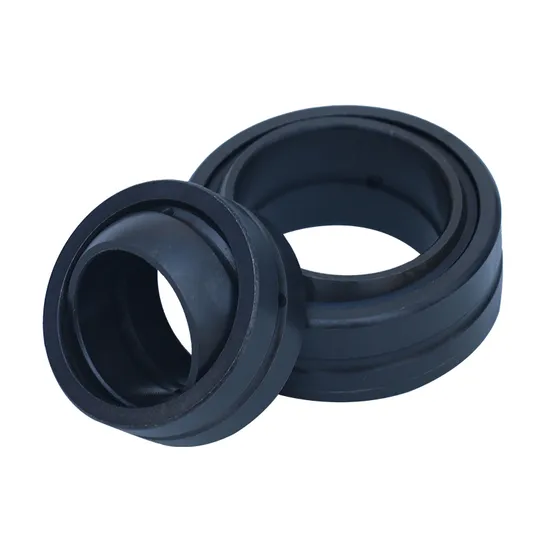
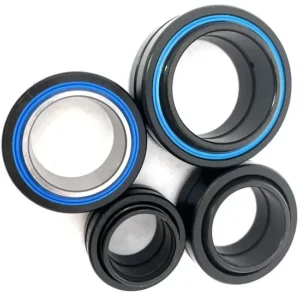
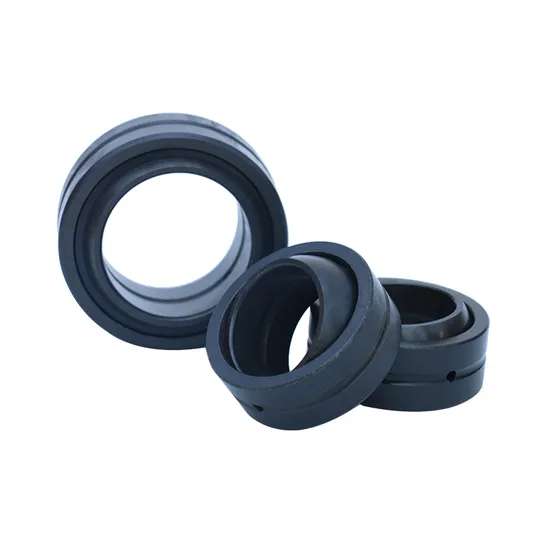
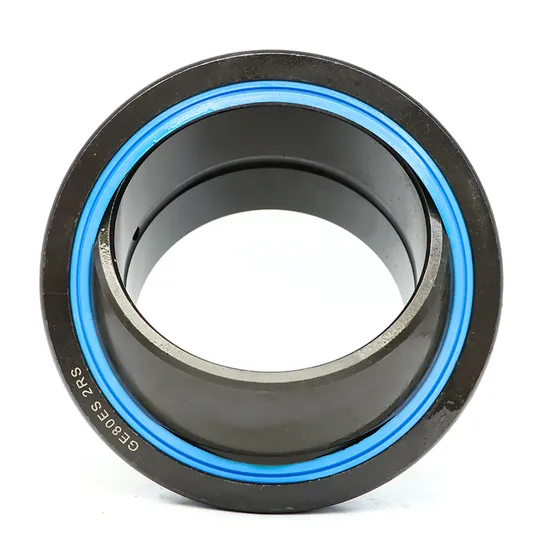
X&S GEC400HC GEC420HC GEC440HC GEC460HC Spherical Plain Bearings feature a single-slit outer ring for flexible mounting and self-lubricating capability to minimize maintenance in hydraulic cylinders and forging machines.
Unified Multi-Brand Sourcing — Consolidate mixed-brand heavy-duty joint bearing requirements into a single coordinated shipment, eliminating the friction of managing multiple vendor timelines.
| Parameter | Value |
|---|---|
| Designation | GEC400HC GEC420HC GEC440HC GEC460HC |
| Bearing Type | Spherical Plain Bearing |
| Outer Structure | Outer Ring of Single-Slit |
| Lubrication | Self-lubricating / Grease or Oil |
| Material | Standard or Customized |
| Certification | CE |
| Origin | Shandong, China |
Note: The HC suffix designation requires manufacturer catalog confirmation for specific internal geometry variations.
| Industry | Typical Applications |
|---|---|
| Construction Machinery | Articulation joints and pivot points in heavy earthmoving equipment |
| Engineering Hydraulic Cylinder | Clevis mounts and trunnion supports subjected to high dynamic thrust |
| Forging Machine | Press frame linkages enduring extreme shock loads and vibration |
| Automobile Shock Absorber | Suspension mounting points requiring misalignment accommodation |
Matching the base number is never enough when spherical curvature radii dictate field survival.
I spent years running the Latin American routes, transitioning from on-site installation troubleshooting to technical sales. During that time, I witnessed a massive hydraulic press go down because a replacement joint bearing matched the basic model number but had a slightly different internal spherical curvature radius. Under heavy dynamic loads, this minor discrepancy caused severe edge loading, leading to rapid eccentric wear and abnormal noise. When sourcing an X&S GEC400HC spherical plain bearing for critical auto parts or industrial machinery, relying solely on the base designation invites catastrophic misalignment. Procurement engineers must verify the exact internal profiling and single-slit outer ring flexibility to prevent these silent killers [NEED_CITE: spherical plain bearing failure modes under heavy misalignment].
Selecting the correct X&S GEC400HC spherical plain bearing requires looking past the catalog number to verify the exact sliding contact surface geometry. Our technical team cross-references the inner and outer ring curvature radii to ensure the bearing can accommodate the specific angular misalignment of your suspension or hydraulic clevis without inducing edge stresses. This application-based selection review guarantees that the physical interchangeability matches the dynamic reality of your equipment.
Forging machines and construction equipment subject joint bearings to intense shock loading and severe particulate contamination. The single-slit outer ring design is critical here, as it allows for structural flexing and easier mounting in tight housings while maintaining grip under vibration. Furthermore, choosing between self-lubricating PTFE liners and traditional grease-lubricated steel-on-steel surfaces dictates maintenance intervals. In environments where regular relubrication is impossible, self-lubricating variants prevent dry-running seizures, while greased versions require robust sealing to keep abrasive dust out of the sliding zone [NEED_CITE: impact of particulate contamination on sliding contact bearings].
The outer ring of single-slit configuration is not merely a manufacturing shortcut; it is an engineered feature that facilitates installation into solid housings and accommodates slight housing deformations under peak loads. For the GEC420HC and GEC440HC variants, the lubrication specification is equally vital. Self-lubricating options utilize maintenance-free composite liners ideal for oscillating movements, whereas grease or oil lubricated variants rely on hardened steel sliding surfaces that demand periodic replenishment to maintain the hydrodynamic or boundary film. Understanding these internal design distinctions prevents the installation of a maintenance-free bearing in a high-speed continuous rotation application where it would rapidly overheat.
Installing a joint bearing with an incorrect internal clearance or mismatched curvature radius leads to unplanned downtime and premature failure. According to failure analysis frameworks like ISO 15243, improper load distribution across the sliding surface accelerates adhesive wear and surface fatigue. When a bearing seizes in a critical hydraulic cylinder or shock absorber mount, it often causes catastrophic damage to the surrounding housing and linkage pins. This cascading failure results in warranty voidance and extensive repair costs that far exceed the initial component savings [NEED_CITE: rolling and plain bearing failure classification per ISO 15243].
Sourcing genuine components requires more than just finding a matching part number on a website. We provide authorized coverage that ensures every GEC460HC and related variant is sourced directly from verified manufacturing channels. Our cross-reference process specifically checks the single-slit outer ring dimensions and lubrication type, rather than just the base designation, preventing the field failures caused by superficial substitutions. Furthermore, we supply complete batch traceability and QR verification, allowing your receiving department to confirm the exact origin and material certification of every large-size joint bearing before it reaches the assembly floor.
To ensure the selected joint bearing withstands your specific operational demands, please provide detailed application parameters. Sharing the exact radial and axial loads, oscillating frequency, operating temperature range, and available mounting space allows our engineering team to perform a thorough technical selection review. If you are replacing an existing component, providing the OEM equipment number enables us to execute a precise cross-reference check, confirming that the internal geometry and lubrication type perfectly match your machinery’s original design intent.
Q: How can we verify the authenticity and batch traceability of these large-size spherical plain bearings?
A: We provide comprehensive documentation for every shipment, including a Certificate of Conformity and material test reports. Each bearing features batch and lot traceability back to the original manufacturer. You can verify product authenticity directly by scanning the provided QR codes through the brand’s official application, ensuring the single-slit outer ring and internal liner meet exact original equipment specifications.
Q: What cross-reference checks are critical beyond just matching the base designation?
A: Matching the base number is insufficient for heavy-duty applications. We verify the outer ring slit design, the exact spherical curvature radii, and the specific lubrication type. A mismatch in internal geometry causes severe edge loading under dynamic thrust, while incorrect lubrication leads to rapid wear. Our technical review ensures complete physical and functional interchangeability for your specific equipment.
Q: How do we choose between self-lubricating and grease-lubricated variants for hydraulic cylinders?
A: The choice depends on maintenance access and movement type. Self-lubricating variants with composite liners are ideal for slow oscillating movements in sealed or hard-to-reach hydraulic clevis mounts. Grease-lubricated steel-on-steel variants are better for applications where regular relubrication is possible and higher sliding speeds or extreme shock loads are present, provided adequate sealing prevents contamination ingress.
Q: What causes premature failure of spherical plain bearings in forging machines and auto parts?
A: Premature failure typically stems from unaccommodated misalignment, inadequate lubrication, or particulate contamination. If the spherical curvature radius does not match the application’s angular deflection, edge loading occurs, causing rapid adhesive wear. In forging environments, shock loads can fracture improperly specified outer rings, while in auto parts, dry-running due to ignored relubrication intervals destroys the sliding surface.
Our engineers will respond within 12 hours with a tailored solution.
Request Quote| Bearing Type | Spherical Plain Bearing |
| Brand | SKF |
| Quality Standard | ISO 9001 / TS 16949 |
| Precision Grade | P0 / P5 / P6 (custom) |
| Material | Chrome Steel / Stainless |
| Cage Material | Steel / Brass / Polyamide |
| Lubrication | Grease / Oil (specify) |
| Operating Temp. | -40°C to +200°C |
| Min. Order Qty | 1 pc (samples available) |
| Prototype Lead Time | 7 Working Days |
| Load Capacity | Contact for C0/Cr values |
| Speed Rating | Contact for ndm limit |
| Vibration Level | Z1 / Z2 / Z3 (custom) |
| Noise Level | V1 / V2 / V3 (custom) |
| Fatigue Life | L10h per ISO 281 |
| Sealing Options | Open / Z / 2Z / RS / 2RS |
Our engineering team can modify bearing dimensions, materials, seals, and clearances to meet your specific operating requirements. Submit your drawing or spec sheet for a tailored proposal.
Main shaft bearings, gearbox bearings, and generator bearings for onshore and offshore wind turbines.
Heavy-duty bearings for crushers, conveyors, and rotary equipment in extreme dust and shock-load environments.
High-temperature bearings for rolling mills, continuous casting, and furnace applications.
Wheel hub bearings, transmission bearings, and e-motor bearings for passenger and commercial vehicles.
Axle box bearings, traction motor bearings, and gearbox bearings meeting EN/UIC railway standards.
High-precision spindle bearings, angular contact bearings, and super-precision bearings for CNC and robotics.
Our engineers analyze your operating conditions -- load, speed, temperature, environment -- and select or design the optimal bearing solution to maximize service life and reduce total cost of ownership.
Need non-standard dimensions, special materials, or modified clearances? We can modify standard SKF bearings or manufacture fully custom solutions with a 7-day prototype turnaround.
When bearings fail prematurely, our team conducts root-cause analysis using advanced diagnostic tools to identify the failure mode and recommend corrective action.
We deploy vibration monitoring, thermal imaging, and oil analysis programs that detect bearing deterioration early -- reducing unplanned downtime by up to 40%.
Proper installation is critical to bearing performance. Our certified technicians provide on-site installation support, alignment verification, and operator training worldwide.
From initial selection through end-of-life, our dedicated account managers provide scheduled maintenance plans, re-lubrication programs, and replacement forecasting for enterprise clients.
NDA protected · Free samples for orders > $50K · Reply within 12 hours