![X&S B7022E.T.P4S B7024C.T.P4S Angular Contact Ball Bearing [WARN] draft identifier mismatch](https://skfip.com/wp-content/uploads/2026/09/xs-b7022e-t-p4s-b7024c-t-p4s-angular-contact-ball-bearing-warn-draft-identifier-mismatch-25b007.avif)
Angular Contact Ball Bearing
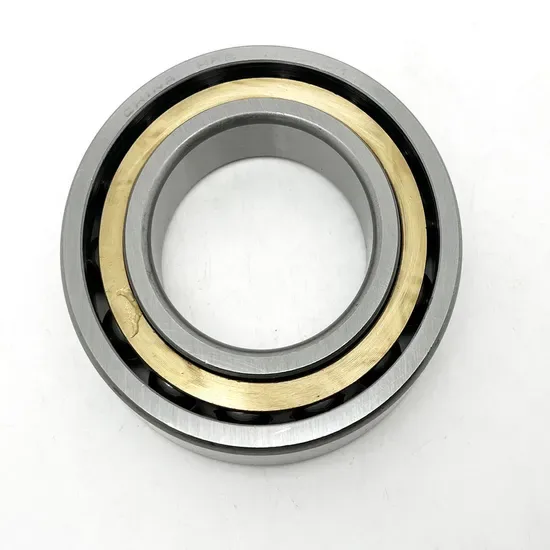
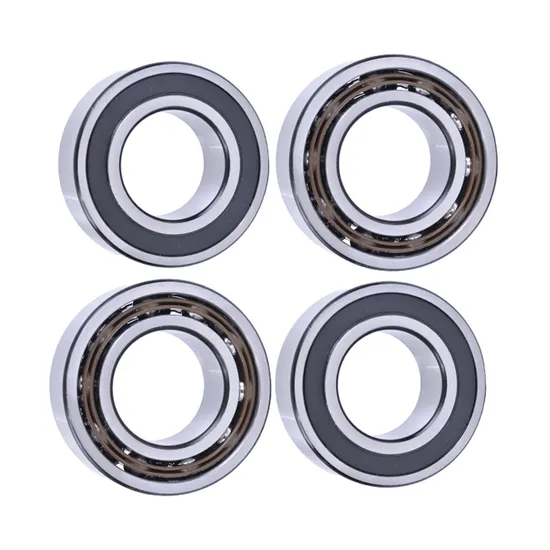
X&S B7022E. T. P4S Angular Contact Ball Bearing — stainless steel single-row angular contact design for power station machinery, rated for continuous operation below +120 °C with grease or oil lubrication.
Every shipment carries a complete documentation package including material test reports, dimensional and running accuracy inspection records, and full country-of-origin certification for power station procurement compliance.
Batch-Level Traceability — Every X&S B7022E. T. P4S angular contact ball bearing ships with manufacturer lot documentation, eliminating the guesswork in critical power station spares procurement.
| Parameter | Value |
|---|---|
| Designation | B7022E. T. P4S |
| Bearing Type | Angular Contact Ball Bearing |
| Dimension Series | Standard 70 Series |
| Contact Angle | 25° |
| Cage Material | Phenolic Resin (Fabric-reinforced) |
| Precision Class | P4S (Dimensional P4, Running Accuracy P2) |
| Material Options | Stainless Steel or High-Carbon Chromium Bearing Steel |
| Seal or Shield Type | Open, Z, ZZ, RS, or 2RS configurations |
| Lubrication | Grease or Oil compatible |
| Operating Temperature | Up to +120 ºC |
| Origin | Shandong, China |
Note: Suffixes E, T, and P4S denote specific contact angle, cage material, and precision hybrid standards respectively. Exact dimensional tolerances are verified against the manufacturer’s current catalog prior to dispatch.
| Industry | Typical Applications |
|---|---|
| Power Generation | Main circulation pump spindles, boiler feed pump drive shafts |
| Precision Machinery | High-speed motorized spindles, indexing head rotary tables |
| Heavy Fluid Handling | High-pressure centrifugal compressors, turbine governor valves |
Matching the base designation while ignoring the T and P4S suffixes guarantees thermal binding under continuous high-speed operation.
In power station environments, procurement teams often accept alternative bearings that share the 70-series base number but lack the specific phenolic cage and ultra-precision running accuracy. I have witnessed firsthand how a standard P0-grade angular contact bearing installed in a critical boiler feed pump spindle will overheat and seize within hours. The metallic cage generates excessive friction at high RPMs, while standard running tolerances induce micro-vibrations that rapidly degrade the lubricant film [NEED_CITE: rolling bearing failure mode classification per ISO 15243]. When sourcing an X&S B7022E. T. P4S angular contact ball bearing, the suffix string is not optional; it is the exact engineering blueprint required to survive the thermal and dynamic loads of power generation machinery.
Power station rotating equipment demands extreme concentricity. The X&S B7022E. T. P4S angular contact ball bearing achieves this through its P4S precision classification, which mandates standard P4 dimensional accuracy combined with the ultra-strict P2 running accuracy. This specific hybrid tolerance prevents the shaft runout that typically destroys mechanical seals in high-pressure pump applications. Our technical team verifies these exact tolerance bands during the cross-reference review, ensuring the replacement part behaves identically to the original OEM specification under maximum operational speeds.
Operating near the +120 ºC threshold requires careful consideration of thermal expansion and lubrication stability. The 25° contact angle (denoted by the E suffix) optimizes the balance between radial loads from the rotor weight and axial thrust from fluid pressure. At these elevated temperatures, standard greases will oxidize and carbonize, necessitating precise oil-air or oil-mist lubrication systems. Selecting the correct seal configuration—whether open for external oil flushing or shielded for contained grease—is critical to preventing contamination ingress from the humid, particulate-heavy air typical of turbine halls [NEED_CITE: thermal degradation of lubricants in high-speed spindles].
The true value of this designation lies in its highly specific suffix combination. The B70 establishes the standard dimension series for medium-load, high-speed spindles. The E dictates a 25° contact angle, providing the necessary axial rigidity for pump impellers. The T specifies a phenolic resin, fabric-reinforced cage, which is essential for high-RPM stability as it runs cooler and lighter than brass alternatives. Finally, P4S locks in the strict running accuracy required to prevent harmonic vibrations. Missing even one of these elements during cross-referencing alters the internal load distribution and guarantees premature failure.
Accepting a bearing that matches the base number but substitutes a brass cage for the required phenolic T cage drastically increases rotational mass and friction heat. According to ISO 281 life calculation frameworks, this unapproved substitution accelerates fatigue and leads to catastrophic cage fragmentation [NEED_CITE: impact of cage material on bearing fatigue life per ISO 281]. In a power plant, such an event triggers unplanned downtime, voids equipment warranties, and forces emergency logistical expenditures that dwarf the initial component savings.
Sourcing precision spindles components requires more than just finding a matching part number. We provide authorized coverage across major international brands, allowing mixed-brand requirements to be fulfilled in a single, fully documented shipment. Our cross-referencing process strictly aligns the clearance, cage material, and precision suffixes, preventing the dangerous habit of accepting base-number equivalents. Furthermore, every batch is fully traceable to the manufacturer, with QR verification available through official brand applications to eliminate the risk of counterfeit inner rings and cloned markings entering your critical spares inventory.
To ensure the selected bearing survives your specific power station environment, please provide the exact radial and axial load profiles, maximum continuous RPM, and operating temperature ranges. Sharing the OEM equipment serial number or original manufacturer part number allows our engineering team to perform a comprehensive cross-reference check, confirming that the cage material and precision class perfectly match your spindle’s design requirements.
Q: How do I verify the P4S precision grade before installation?
A: The P4S designation requires standard P4 dimensional tolerances but ultra-precise P2 running accuracy. We supply a dedicated dimensional and running accuracy inspection report with every shipment. Additionally, you can scan the QR code on the packaging using the manufacturer’s official app to verify the batch traceability and confirm the exact precision grade recorded at the factory.
Q: Why is the phenolic resin cage (T suffix) critical for this application?
A: In high-speed power station spindles, metallic cages generate excessive friction and heat. The fabric-reinforced phenolic resin cage specified by the T suffix is significantly lighter and runs much cooler, maintaining lubricant film integrity at high RPMs. Substituting it with a brass or steel cage will cause thermal binding and rapid spindle failure.
Q: Can I use a standard P4 bearing instead of the P4S variant?
A: No. While a standard P4 bearing meets dimensional tolerances, it lacks the ultra-strict P2 running accuracy mandated by the P4S suffix. In precision pump spindles, standard P4 running tolerances will induce micro-vibrations that destroy mechanical seals and degrade the lubricant, leading to unplanned downtime and catastrophic equipment damage.
Q: How does the 25° contact angle (E suffix) affect load capacity?
A: The E suffix denotes a 25° contact angle, which provides an optimal balance between supporting the radial weight of the rotor and resisting the axial thrust generated by fluid pressure. Using a 15° alternative will result in insufficient axial rigidity, causing shaft displacement and severe wear on the surrounding housing components under operational loads.
Our engineers will respond within 12 hours with a tailored solution.
Request Quote| Bearing Type | Angular Contact Ball Bearing |
| Brand | SKF |
| Quality Standard | ISO 9001 / TS 16949 |
| Precision Grade | P0 / P5 / P6 (custom) |
| Material | Chrome Steel / Stainless |
| Cage Material | Steel / Brass / Polyamide |
| Lubrication | Grease / Oil (specify) |
| Operating Temp. | -40°C to +200°C |
| Min. Order Qty | 1 pc (samples available) |
| Prototype Lead Time | 7 Working Days |
| Load Capacity | Contact for C0/Cr values |
| Speed Rating | Contact for ndm limit |
| Vibration Level | Z1 / Z2 / Z3 (custom) |
| Noise Level | V1 / V2 / V3 (custom) |
| Fatigue Life | L10h per ISO 281 |
| Sealing Options | Open / Z / 2Z / RS / 2RS |
Our engineering team can modify bearing dimensions, materials, seals, and clearances to meet your specific operating requirements. Submit your drawing or spec sheet for a tailored proposal.
Main shaft bearings, gearbox bearings, and generator bearings for onshore and offshore wind turbines.
Heavy-duty bearings for crushers, conveyors, and rotary equipment in extreme dust and shock-load environments.
High-temperature bearings for rolling mills, continuous casting, and furnace applications.
Wheel hub bearings, transmission bearings, and e-motor bearings for passenger and commercial vehicles.
Axle box bearings, traction motor bearings, and gearbox bearings meeting EN/UIC railway standards.
High-precision spindle bearings, angular contact bearings, and super-precision bearings for CNC and robotics.
Our engineers analyze your operating conditions -- load, speed, temperature, environment -- and select or design the optimal bearing solution to maximize service life and reduce total cost of ownership.
Need non-standard dimensions, special materials, or modified clearances? We can modify standard SKF bearings or manufacture fully custom solutions with a 7-day prototype turnaround.
When bearings fail prematurely, our team conducts root-cause analysis using advanced diagnostic tools to identify the failure mode and recommend corrective action.
We deploy vibration monitoring, thermal imaging, and oil analysis programs that detect bearing deterioration early -- reducing unplanned downtime by up to 40%.
Proper installation is critical to bearing performance. Our certified technicians provide on-site installation support, alignment verification, and operator training worldwide.
From initial selection through end-of-life, our dedicated account managers provide scheduled maintenance plans, re-lubrication programs, and replacement forecasting for enterprise clients.
NDA protected · Free samples for orders > $50K · Reply within 12 hours