

Thrust Roller Bearing
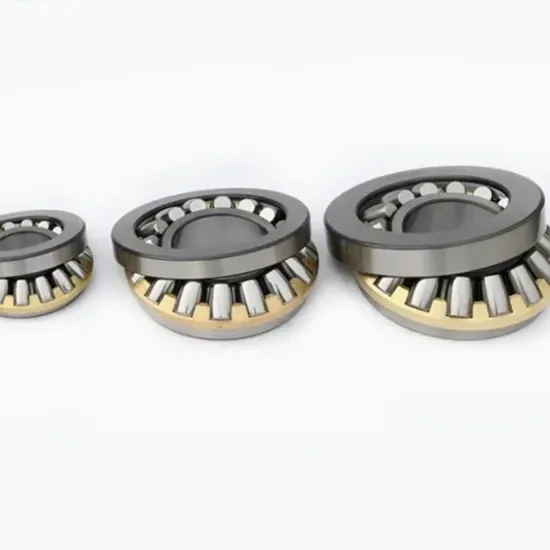
X&S 81232 81234 81236 Thrust Roller Bearing — Single-row design optimized for heavy unidirectional axial loads in harsh conditions.
Traceable Batch Origin — Every X&S 81232, 81234, and 81236 shipment includes manufacturer lot documentation for complete supply chain visibility.
| Parameter | Value |
|---|---|
| Designation | 81232 81234 81236 |
| Bearing Type | Thrust Roller Bearing |
| Number of Rows | Single Row |
| Seal or Shield Type | ZZ, RS, Open |
| Vibration Level | Z1V1, Z2V2, Z3V3, Z4V4 |
| Precision Class | P0, P6, P5, P4, P2 |
| Lubrication | Grease or Oil |
| Origin | Shandong, China |
| HS Code | 8482500090 |
| Industry | Typical Applications |
|---|---|
| Mining and Crushing | Gyratory crusher main shaft thrust support, heavy-duty vibrating screen exciter mechanisms |
| Industrial Gearboxes | Extruder gearbox thrust collars, heavy-duty hoist winch drum axial positioning |
| Steel and Metallurgy | Continuous caster segment roll axial guidance, rolling mill screw-down mechanism thrust support |
| Machine Tool Spindles | Vertical boring mill rotary table thrust support, heavy-duty lathe faceplate axial positioning |
Matching the base designation is only the first step; ignoring precision and internal geometry leads to rapid axial failure.
In harsh environments like desert mining operations or high-temperature steel mills, installing a standard precision thrust roller bearing where a high-precision or specific clearance variant is required causes immediate thermal binding. I have investigated numerous catastrophic gearbox failures where the base number matched perfectly, but the internal clearance was incorrect for the operating temperature, causing the rollers to skew and the cage to disintegrate under extreme axial loads [NEED_CITE: rolling bearing failure mode classification per ISO 15243]. Sourcing the correct X&S 81232 81234 81236 thrust roller bearing requires verifying every technical attribute, not just the basic size code.
Handling unidirectional axial loads in heavy machinery requires exact geometric alignment. The X&S 81232 81234 81236 thrust roller bearing series is engine*the single-row roller profile. Our technical team reviews your specific load vectors and housing tolerances to ensure the selected precision class and internal design will maintain optimal load distribution, preventing edge-loading that typically destroys standard thrust washers in heavy-duty platforms.
Heavy axial load platforms operate under brutal conditions, combining immense static thrust with severe shock loads and abrasive contamination. In mining crushers, dust ingress rapidly degrades lubrication, while in metallurgy applications, ambient heat alters the internal clearance of the bearing. Selecting the appropriate seal or shield type is critical; contact seals retain grease but generate friction heat, whereas open designs require continuous, clean oil circulation. Vibration levels must also be matched to the equipment’s acoustic and dynamic requirements to prevent resonance-induced cage fatigue [NEED_CITE: bearing life calculation methods per ISO 281].
The available precision spectrum from P0 to P2 dictates the axial runout and rotational accuracy of the assembly. While P0 suffices for basic hoist winches, machine tool spindles and precision gearboxes demand P4 or P2 grades to maintain strict axial positioning under load. Similarly, the vibration grades ranging from Z1V1 to Z4V4 indicate the dynamic smoothness of the roller and raceway interaction. Higher vibration classes are essential for noise-sensitive industrial gearboxes, ensuring the single-row thrust roller design operates quietly without inducing micro-vibrations into the surrounding housing structure.
Selecting a thrust bearing based solely on dimensional interchangeability without verifying the precision class or vibration grade results in unplanned downtime and catastrophic damage to adjacent shaft components. When a standard P0 bearing is forced into a high-speed spindle application, the excessive axial runout generates localized heat, leading to premature failure and warranty voidance. Adhering to strict selection protocols prevents these costly operational interruptions and protects the broader mechanical assembly from secondary damage [NEED_CITE: financial impact of unplanned downtime in heavy industry].
Procuring heavy-duty thrust components requires more than just matching a part number; it demands rigorous technical validation. We provide comprehensive cross-reference alignment that verifies not just the base designation, but the exact precision class and internal geometry required for your specific application. Our batch traceability ensures every X&S unit can be tracked back to its original production run, eliminating the risk of counterfeit or substandard assemblies. Furthermore, our application-based selection review analyzes your load, speed, and temperature parameters to confirm the chosen configuration will survive the harsh conditions of your facility.
To ensure the selected thrust configuration meets your exact operational demands, please provide the specific axial load magnitude, rotational speed, and operating temperature range. Sharing the OEM equipment designation or housing dimensions allows our engineering team to perform a precise cross-reference and L10 life calculation. Additionally, detailing the environmental contamination level helps us recommend the most effective sealing or shielding arrangement for your machinery.
Q: Why must precision suffixes be matched exactly when cross-referencing thrust roller bearings?
A: Base dimensions might align, but installing a standard P0 bearing in an application requiring P4 precision causes excessive axial runout. This misalignment leads to uneven load distribution, generating localized heat and premature roller failure. Exact precision matching ensures the thrust bearing maintains the strict axial positioning required by heavy-duty gearboxes and machine tool spindles.
Q: How to choose between open, RS, and ZZ configurations based on equipment contamination?
A: Open designs are ideal for gearboxes with continuous, clean oil circulation systems. RS contact seals provide excellent protection against heavy dust in mining environments but generate higher friction heat. ZZ non-contact shields offer a balance, retaining grease and blocking large debris while minimizing friction, making them suitable for moderately contaminated industrial applications where temperature rise must be controlled.
Q: What are the differences between P0, P6, P5, P4, and P2 precision classes in heavy axial loads?
A: P0 and P6 are standard grades suitable for general heavy machinery where slight axial play is acceptable. P5 and P4 offer tighter dimensional tolerances and reduced axial runout, essential for industrial gearboxes and extruder screws. P2 is an ultra-precision class reserved for machine tool spindles and high-speed rotary tables, ensuring absolute axial stability and minimal vibration under extreme thrust loads.
Q: How to select the appropriate vibration grade for noise-sensitive industrial gearboxes?
A: Vibration grades from Z1V1 to Z4V4 indicate the dynamic smoothness and acoustic emission of the bearing. Standard Z1V1 is adequate for heavy mining crushers where ambient noise is high. For noise-sensitive environments like precision gearboxes or testing equipment, specifying Z3V3 or Z4V4 ensures the rollers and raceways are manufactured to tighter surface finish tolerances, significantly reducing operational hum and micro-vibrations.
Q: What are the recommended lubrication practices for extending thrust roller bearing service life?
A: For open bearings in heavy-duty platforms, continuous oil circulation is preferred to dissipate the immense heat generated by heavy axial loads and flush out wear particles. For sealed or shielded variants operating at lower speeds, high-quality lithium-complex or polyurea grease provides long-term lubrication. Always follow the manufacturer’s re-lubrication intervals based on the specific operating temperature and load conditions to prevent cage starvation.
Our engineers will respond within 12 hours with a tailored solution.
Request Quote| Bearing Type | Thrust Roller Bearing |
| Brand | SKF |
| Quality Standard | ISO 9001 / TS 16949 |
| Precision Grade | P0 / P5 / P6 (custom) |
| Material | Chrome Steel / Stainless |
| Cage Material | Steel / Brass / Polyamide |
| Lubrication | Grease / Oil (specify) |
| Operating Temp. | -40°C to +200°C |
| Min. Order Qty | 1 pc (samples available) |
| Prototype Lead Time | 7 Working Days |
| Load Capacity | Contact for C0/Cr values |
| Speed Rating | Contact for ndm limit |
| Vibration Level | Z1 / Z2 / Z3 (custom) |
| Noise Level | V1 / V2 / V3 (custom) |
| Fatigue Life | L10h per ISO 281 |
| Sealing Options | Open / Z / 2Z / RS / 2RS |
Our engineering team can modify bearing dimensions, materials, seals, and clearances to meet your specific operating requirements. Submit your drawing or spec sheet for a tailored proposal.
Main shaft bearings, gearbox bearings, and generator bearings for onshore and offshore wind turbines.
Heavy-duty bearings for crushers, conveyors, and rotary equipment in extreme dust and shock-load environments.
High-temperature bearings for rolling mills, continuous casting, and furnace applications.
Wheel hub bearings, transmission bearings, and e-motor bearings for passenger and commercial vehicles.
Axle box bearings, traction motor bearings, and gearbox bearings meeting EN/UIC railway standards.
High-precision spindle bearings, angular contact bearings, and super-precision bearings for CNC and robotics.
Our engineers analyze your operating conditions -- load, speed, temperature, environment -- and select or design the optimal bearing solution to maximize service life and reduce total cost of ownership.
Need non-standard dimensions, special materials, or modified clearances? We can modify standard SKF bearings or manufacture fully custom solutions with a 7-day prototype turnaround.
When bearings fail prematurely, our team conducts root-cause analysis using advanced diagnostic tools to identify the failure mode and recommend corrective action.
We deploy vibration monitoring, thermal imaging, and oil analysis programs that detect bearing deterioration early -- reducing unplanned downtime by up to 40%.
Proper installation is critical to bearing performance. Our certified technicians provide on-site installation support, alignment verification, and operator training worldwide.
From initial selection through end-of-life, our dedicated account managers provide scheduled maintenance plans, re-lubrication programs, and replacement forecasting for enterprise clients.
NDA protected · Free samples for orders > $50K · Reply within 12 hours

![Xinsheng Thrust Roller Bearing 81209 89408 81114 for Oil Field Wind Power [WARN] draft identifier mismatch](https://skfip.com/wp-content/uploads/2026/09/xinsheng-thrust-roller-bearing-81209-89408-81114-for-oil-field-wind-power-warn-draft-identifier-mismatch-2ba88c.avif)
