

Deep Groove Ball Bearing
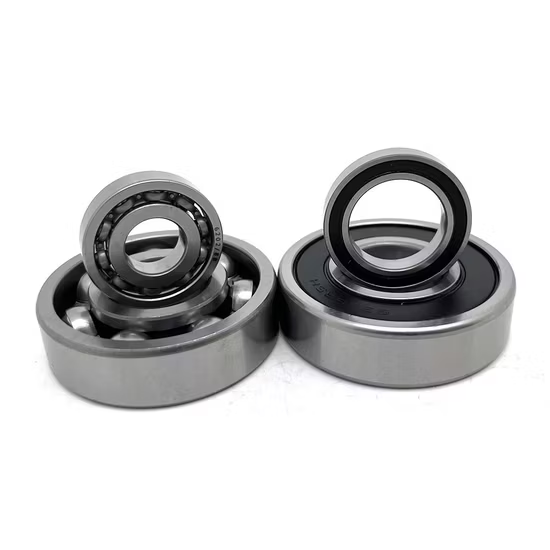
X&S 6921 6920 6919 6918 Deep Groove Ball Bearings — optimized for cold chain equipment with specialized low-temperature grease.
Cross-Reference Triple Alignment — We verify base numbers, low-temperature grease types, and exact clearance classes to prevent cold chain thermal binding.
| Parameter | Value |
|---|---|
| Designation | 6921 6920 6919 6918 |
| Bearing Type | Deep Groove Ball Bearing |
| Seal or Shield Type | Zz, 2RS, Open |
| Precision Class | P0, P6, P5, P4 |
| Material | Bearing Steel |
| Lubrication | Grease or Oil |
| Vibration Level | Z1V1, Z2V2, Z3V3, Z4V4 |
| Load Direction | Axial/Radial |
| Origin | Shandong, China |
| Industry | Typical Applications |
|---|---|
| Cold Chain Logistics | Automated storage retrieval systems, low-temperature conveyor drives |
| Food Processing | Blast freezer circulation fans, chilled water pump motors |
| Material Handling | Cold storage sorting equipment, automated guided vehicle wheels |
Conventional lubricants solidify at sub-zero temperatures, causing immediate cage starvation and seizure.
During my early days managing cold storage projects in Africa, I watched a batch of standard thin-section bearings lock up on startup simply because the factory grease thickened beyond its flow point. Procurement teams often match the base designation perfectly but overlook the critical low-temperature lubrication suffix, leading to catastrophic downtime [NEED_CITE: lubrication failure modes in low-temperature rolling bearings]. When cross-referencing these units, ignoring the specific grease type and clearance combination turns a routine replacement into an unplanned maintenance event.
Selecting the correct X&S 6921 6920 6919 6918 deep groove ball bearing requires looking past the basic dimensional envelope. Our technical team reviews your specific operating profile to ensure the internal geometry and lubrication match the extreme cold. We prevent the common cross-reference error where a base number matches, but the internal seal design causes excessive friction in freezing environments.
Cold chain environments subject thin-section bearings to severe thermal contraction, which can eliminate internal clearance if the wrong class is installed. Lubrication must remain fluid to prevent cage skidding, while seals need to retain flexibility without generating excessive drag torque. High-speed conveyor drives further demand strict vibration control to avoid structural resonance in sensitive insulated panels [NEED_CITE: vibration transmission in cold storage conveyor structures]. Moisture ingress from defrost cycles also threatens raceway integrity if shield gaps are not properly specified.
The base designations represent thin-section deep groove ball bearings optimized for compact machinery layouts. Choosing between Zz double shields and 2RS double contact seals dictates the balance between contamination exclusion and friction heat generation. Precision classes ranging from P0 up to P4 directly influence the running accuracy and acoustic emission of high-speed sorting equipment. Furthermore, vibration grading up to Z4V4 ensures smooth operation, minimizing noise pollution in enclosed automated warehouses.
Installing a standard clearance bearing in a sub-zero application inevitably leads to thermal binding and premature failure. According to failure analysis frameworks, lubrication starvation caused by hardened grease is a primary driver of catastrophic damage in cold chain motors [NEED_CITE: rolling bearing failure mode classification per ISO 15243]. These misalignments result in unplanned downtime, voided equipment warranties, and secondary damage to adjacent drive components.
We eliminate the risk of receiving counterfeit units with soft inner rings by providing authorized distribution with full batch traceability. Our cross-brand interchange process verifies not just the base 69xx number, but specifically aligns the low-temperature grease type and exact clearance class. We support mixed-brand requirements in a single order, ensuring your cold storage facility receives consistent quality across all maintenance spares. Every shipment includes verified documentation to prevent the installation of incorrect precision grades in sensitive spindle applications.
To ensure accurate selection and L10 life calculation, please share your specific radial and axial loads, operating speeds, and minimum ambient temperatures. Providing the exact OEM equipment number allows our engineering team to perform a comprehensive cross-reference check. This technical review guarantees that the seal type and lubrication suffix perfectly match your cold chain environment, preventing costly specification errors.
Q: Why do standard CN clearance bearings fail in sub-zero cold chain applications?
A: Standard CN clearance leaves insufficient room for thermal contraction when temperatures drop drastically. The inner and outer rings contract at different rates, eliminating the internal gap and causing the rolling elements to bind. Specifying the correct expanded clearance class is mandatory to maintain a functional oil film and prevent immediate seizure upon startup in blast freezers.
Q: How do I cross-reference 69xx series bearings without missing critical suffixes?
A: A successful cross-reference must align three parameters: the base dimensional designation, the exact precision class, and the specific low-temperature grease type. Matching only the base number often results in receiving standard grease that solidifies in the cold. Always verify the seal type and vibration grade to ensure the replacement matches the original equipment’s acoustic and friction requirements.
Q: What is the difference between ISO P4 and ABEC 7 for cold storage conveyors?
A: ISO P4 and ABEC 7 represent equivalent high-precision tolerances that dictate the dimensional and running accuracy of the bearing. In high-speed cold storage conveyors, this tight tolerance minimizes radial runout and vibration, which is critical for reducing acoustic emission. Using a lower precision class in these applications leads to excessive noise and accelerated wear on the conveyor drive components.
Q: Should I choose Zz shields or 2RS seals for extreme cold environments?
A: Zz metal shields provide excellent protection against large debris with minimal friction, making them ideal for dry, clean cold storage environments. However, 2RS rubber contact seals offer superior exclusion of moisture and fine particulates, which is crucial near defrost cycles or washdown zones. The choice depends on balancing the need for moisture exclusion against the acceptable level of seal drag torque.
Our engineers will respond within 12 hours with a tailored solution.
Request Quote| Bearing Type | Deep Groove Ball Bearing |
| Brand | SKF |
| Quality Standard | ISO 9001 / TS 16949 |
| Precision Grade | P0 / P5 / P6 (custom) |
| Material | Chrome Steel / Stainless |
| Cage Material | Steel / Brass / Polyamide |
| Lubrication | Grease / Oil (specify) |
| Operating Temp. | -40°C to +200°C |
| Min. Order Qty | 1 pc (samples available) |
| Prototype Lead Time | 7 Working Days |
| Load Capacity | Contact for C0/Cr values |
| Speed Rating | Contact for ndm limit |
| Vibration Level | Z1 / Z2 / Z3 (custom) |
| Noise Level | V1 / V2 / V3 (custom) |
| Fatigue Life | L10h per ISO 281 |
| Sealing Options | Open / Z / 2Z / RS / 2RS |
Our engineering team can modify bearing dimensions, materials, seals, and clearances to meet your specific operating requirements. Submit your drawing or spec sheet for a tailored proposal.
Main shaft bearings, gearbox bearings, and generator bearings for onshore and offshore wind turbines.
Heavy-duty bearings for crushers, conveyors, and rotary equipment in extreme dust and shock-load environments.
High-temperature bearings for rolling mills, continuous casting, and furnace applications.
Wheel hub bearings, transmission bearings, and e-motor bearings for passenger and commercial vehicles.
Axle box bearings, traction motor bearings, and gearbox bearings meeting EN/UIC railway standards.
High-precision spindle bearings, angular contact bearings, and super-precision bearings for CNC and robotics.
Our engineers analyze your operating conditions -- load, speed, temperature, environment -- and select or design the optimal bearing solution to maximize service life and reduce total cost of ownership.
Need non-standard dimensions, special materials, or modified clearances? We can modify standard SKF bearings or manufacture fully custom solutions with a 7-day prototype turnaround.
When bearings fail prematurely, our team conducts root-cause analysis using advanced diagnostic tools to identify the failure mode and recommend corrective action.
We deploy vibration monitoring, thermal imaging, and oil analysis programs that detect bearing deterioration early -- reducing unplanned downtime by up to 40%.
Proper installation is critical to bearing performance. Our certified technicians provide on-site installation support, alignment verification, and operator training worldwide.
From initial selection through end-of-life, our dedicated account managers provide scheduled maintenance plans, re-lubrication programs, and replacement forecasting for enterprise clients.
NDA protected · Free samples for orders > $50K · Reply within 12 hours


