ISO 9001 Certified
TS 16949
Genuine SKF
Need Technical Advice?
Reply within 12 hours · 15+ certified engineers on call
Thrust Ball Bearing
X&S 53415 53216 53316 53416 Thrust Ball Bearing for CNC Machine Tool Spindles
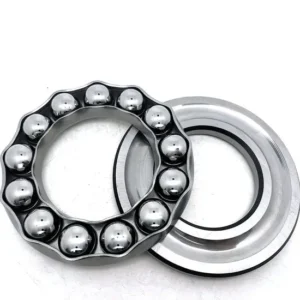
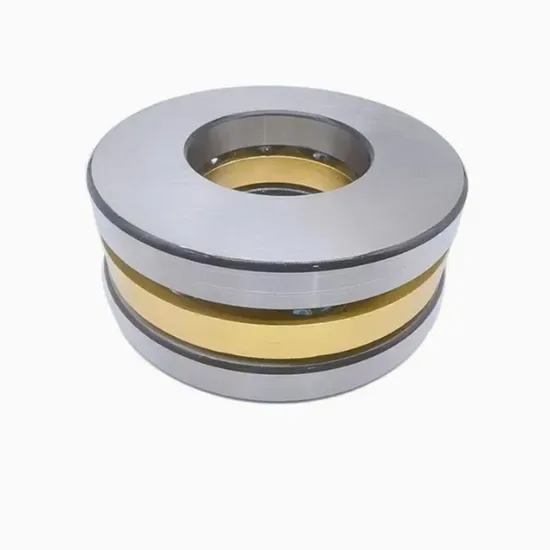
X&S 53415 53216 53316 53416 Thrust Ball Bearings — engineered for CNC machine tool spindles to manage axial loads with 58-64 HRC hardness.
- Available in chrome steel, stainless steel, or ceramic with steel, brass, or nylon cage options.
- Each shipment includes a complete documentation package with material test reports and dimensional inspection records.
7
Day Prototype
vs. 8-12 wks standard
50+
Countries Served
Global logistics network
12h
Quote Response
Expert engineers on call
Typical Applications
Wind Power
Mining
Steel & Metallurgy
Automotive / EV
Rail Transit
Precision Machinery
Genuine SKF Bearings
NDA Protected
Free Sample for Orders > $50K
Global Shipping
Product Details
Three-parameter cross-reference alignment — matching clearance, cage material, and precision suffixes prevents thermal binding when replacing spindle thrust supports.
Technical Specifications
| Parameter | Value |
|---|---|
| Designation | 53415 53216 53316 53416 |
| Bearing Type | Thrust Ball Bearing |
| Material Options | Chrome Steel, Carbon Steel, Stainless Steel, Ceramic |
| Cage Material Options | Steel, Brass, Nylon |
| Clearance Class | C2, C3, C4, C5 |
| Hardness | 58-64 HRC for steel variants [NEED_CITE: rolling bearing steel hardness standards] |
| Noise Level | Z1, Z2, Z3, Z4 |
| Vibration Level | V1, V2, V3, V4 |
| Aligning | Non-Aligning Bearing |
| Origin | Shandong, China |
Application Suitability
| Industry | Typical Applications |
|---|---|
| Machine Tool Manufacturing | CNC machine tool spindles, precision grinding headstocks |
| Metalworking Equipment | Vertical boring mill thrust supports, indexing table bases |
Why Spindle Thrust Supports Fail Before the Cutting Tool Does
Selecting the correct X&S 53415 53216 53316 53416 thrust ball bearing requires more than matching the base number.
Thermal binding from mismatched internal clearance destroys spindle accuracy long before the cutting edge dulls.
Early in my technical sales career, I investigated a CNC spindle seizure where a standard clearance thrust component was forced into a high-speed application requiring expanded clearance. The heat generated at elevated RPMs caused the rings to expand and lock, resulting in catastrophic damage to the entire spindle assembly and a scrapped batch of precision parts. [NEED_CITE: rolling bearing failure mode classification per ISO 15243] Procurement teams often focus solely on the base designation, overlooking how internal geometry and cage design dictate survival under continuous axial loads.
Matching Internal Geometry to Spindle Dynamics
Every X&S 53415 53216 53316 53416 thrust ball bearing we supply is reviewed against the specific axial load and RPM profile of your equipment. We do not just ship a base number; we verify that the selected cage material and clearance class align with the thermal expansion characteristics of your spindle housing, ensuring stable preload and rotational accuracy during heavy cutting cycles.
Navigating Thermal Expansion and Lubrication Boundaries
High-speed vertical spindles generate significant friction heat, demanding careful consideration of clearance classes to accommodate thermal growth without losing axial stiffness. Lubrication method heavily influences this choice, as oil-air systems require different cage designs compared to traditional grease packing to prevent churning losses. Furthermore, non-aligning thrust designs demand perfectly square mounting surfaces; any misalignment introduces uneven stress concentrations that accelerate raceway fatigue. [NEED_CITE: thrust bearing mounting alignment tolerances per ISO 281]
Decoding the 53-Series Thrust Configuration
The 53-series designation indicates a thrust ball bearing with a sphered housing washer, designed to accommodate minor static misalignments in the seating surface. For these specific models, selecting the right cage material is critical: brass cages offer superior durability under heavy axial loads and vibration, while nylon variants reduce weight and friction for higher speed capabilities. Clearance selection ranging from C2 to C5 dictates how the bearing behaves as the spindle heats up, with C3 or C4 typically required to prevent internal preloading from thermal expansion. Precision and vibration grades directly correlate to the surface finish achievable on the machined parts.
The Hidden Cost of Ignoring Suffix Details
Installing a component with incorrect internal clearance or an unsuitable cage material leads to premature failure and unplanned downtime. When a standard precision part is used in a high-speed spindle, the resulting thermal binding causes severe raceway scoring and eventual cage disintegration. This catastrophic damage often extends beyond the bearing itself, requiring complete spindle rebuilds and voiding equipment warranties. [NEED_CITE: financial impact of unplanned machine tool downtime]
Why Our Technical Verification Matters
We catch cross-reference errors that match the base number but ignore critical internal differences. If your OEM specification demands a brass cage for vibration resistance, we ensure the replacement is not swapped for a stamped steel alternative that will fail under load. Our batch traceability guarantees that the exact metallurgical properties and dimensional tolerances meet the original design intent. We review your application parameters to confirm the clearance class handles the operational temperature gradient. This rigorous validation prevents the costly thermal binding scenarios that plague hastily sourced replacement parts.
Documentation & Authenticity
- Certificate of Conformity verifying the exact 53-series designation and clearance class.
- Batch traceability linking each spindle thrust component to its original manufacturing lot.
- Official app QR verification confirming authenticity before spindle assembly begins.
- Material test reports validating the 58-64 HRC hardness for steel ring variants.
- Running accuracy inspection confirming vibration and noise grades prior to dispatch.
Storage, Handling & Mounting
- Store non-aligning thrust units in original packaging to protect sphered washers from humidity.
- Use clean gloves when handling open variants to prevent moisture-induced corrosion on steel rings.
- Ensure mounting surfaces are perfectly square to prevent edge loading on the 53-series raceways.
- Apply specified spindle oil or grease immediately before assembly to prevent dry startup scoring.
- Verify clearance class markings match the spindle thermal expansion requirements before pressing.
Preparing Your Spindle Data for Technical Review
To ensure the selected thrust components match your exact operational demands, please provide the spindle model, maximum RPM, and continuous axial load figures. Sharing the operating temperature range and preferred lubrication method allows our engineering team to validate the clearance class and cage material selection. If you are replacing an existing part, providing the OEM equipment number enables a precise cross-reference check to guarantee dimensional and performance compatibility.
Frequently Asked Questions
Q: Why must clearance, cage, and precision suffixes be verified together during cross-referencing?
A: Matching only the base designation ignores critical internal differences. A standard clearance part with a steel cage will thermally bind and fail in a high-speed spindle requiring C3 clearance and a brass cage. Verifying all three parameters ensures the replacement handles the specific thermal expansion, load, and vibration profile of your machine tool.
Q: How do C2, C3, and C4 clearances differ in CNC spindle applications?
A: C2 provides reduced internal clearance for high rigidity in low-speed, high-precision setups. C3 offers expanded clearance to accommodate moderate thermal growth in standard machining centers. C4 provides even greater expansion room for high-speed spindles generating significant friction heat, preventing the rings from locking up as temperatures rise during continuous operation.
Q: What are the performance differences between brass and nylon cages in these thrust bearings?
A: Brass cages offer superior structural integrity, vibration damping, and durability under heavy continuous axial loads, making them ideal for heavy-cutting vertical spindles. Nylon cages are noticeably lighter, reducing centrifugal forces and friction, which benefits high-speed applications where minimizing heat generation and churning losses is the primary objective.
Q: How is batch traceability and authenticity verified for these specific models?
A: Every component is supplied with a Certificate of Conformity detailing the exact lot number. You can scan the manufacturer’s QR code using their official mobile application to instantly verify the production batch, material origin, and authenticity, ensuring no counterfeit parts with soft inner rings enter your critical spindle assemblies.
Product Summary
- Product Name
- X&S 53415 53216 53316 53416 Thrust Ball Bearing for CNC Machine Tool Spindles
- Category
- Thrust Ball Bearing
- Brand
- SKF
- Certification
- ISO 9001 · TS 16949
- Lead Time
- 7 Working Days
Get a Custom Quote
Our engineers will respond within 12 hours with a tailored solution.
Request QuoteGeneral Specifications
| Bearing Type | Thrust Ball Bearing |
| Brand | SKF |
| Quality Standard | ISO 9001 / TS 16949 |
| Precision Grade | P0 / P5 / P6 (custom) |
| Material | Chrome Steel / Stainless |
| Cage Material | Steel / Brass / Polyamide |
| Lubrication | Grease / Oil (specify) |
| Operating Temp. | -40°C to +200°C |
| Min. Order Qty | 1 pc (samples available) |
| Prototype Lead Time | 7 Working Days |
Performance Parameters
| Load Capacity | Contact for C0/Cr values |
| Speed Rating | Contact for ndm limit |
| Vibration Level | Z1 / Z2 / Z3 (custom) |
| Noise Level | V1 / V2 / V3 (custom) |
| Fatigue Life | L10h per ISO 281 |
| Sealing Options | Open / Z / 2Z / RS / 2RS |
Custom Specifications Available
Our engineering team can modify bearing dimensions, materials, seals, and clearances to meet your specific operating requirements. Submit your drawing or spec sheet for a tailored proposal.
Wind Power
Main shaft bearings, gearbox bearings, and generator bearings for onshore and offshore wind turbines.
Mining & Quarrying
Heavy-duty bearings for crushers, conveyors, and rotary equipment in extreme dust and shock-load environments.
Steel & Metallurgy
High-temperature bearings for rolling mills, continuous casting, and furnace applications.
Automotive / EV
Wheel hub bearings, transmission bearings, and e-motor bearings for passenger and commercial vehicles.
Rail Transit
Axle box bearings, traction motor bearings, and gearbox bearings meeting EN/UIC railway standards.
Precision Machinery
High-precision spindle bearings, angular contact bearings, and super-precision bearings for CNC and robotics.
Application Design
EngineeringOur engineers analyze your operating conditions -- load, speed, temperature, environment -- and select or design the optimal bearing solution to maximize service life and reduce total cost of ownership.
Custom Modification
7-Day TurnaroundNeed non-standard dimensions, special materials, or modified clearances? We can modify standard SKF bearings or manufacture fully custom solutions with a 7-day prototype turnaround.
Failure Analysis
DiagnosticsWhen bearings fail prematurely, our team conducts root-cause analysis using advanced diagnostic tools to identify the failure mode and recommend corrective action.
Predictive Maintenance
Up to 40% Less DowntimeWe deploy vibration monitoring, thermal imaging, and oil analysis programs that detect bearing deterioration early -- reducing unplanned downtime by up to 40%.
On-site Installation
Global CoverageProper installation is critical to bearing performance. Our certified technicians provide on-site installation support, alignment verification, and operator training worldwide.
Lifecycle Support
Enterprise SLAFrom initial selection through end-of-life, our dedicated account managers provide scheduled maintenance plans, re-lubrication programs, and replacement forecasting for enterprise clients.
Why SKF China
The engineering partner advantage
7 Days
Prototype Lead Time
vs. 8-12 weeks via standard channels
15+
Certified Engineers
SKF-certified, on-call for your project
50+
Countries Delivered
Reliable global logistics network
Request a Quote
Get a custom quote for
X&S 53415 53216 53316 53416 Thrust Ball Bearing for CNC Machine Tool Spindles
NDA protected · Free samples for orders > $50K · Reply within 12 hours
Related Products
More Thrust Ball Bearing Products

Thrust Ball Bearing
53310u 53410u 53211u Thrust Ball Bearing for General Machinery Parts

Thrust Ball Bearing
X&S Thrust Ball Bearing 51117 51118 51120 51122 51124 51240 51244