ISO 9001 Certified
TS 16949
Genuine SKF
Need Technical Advice?
Reply within 12 hours · 15+ certified engineers on call
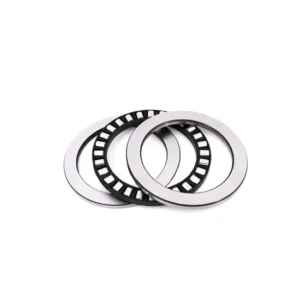
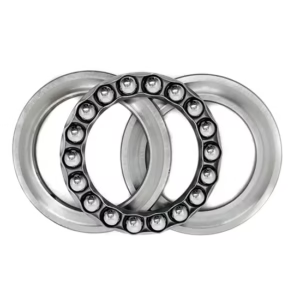
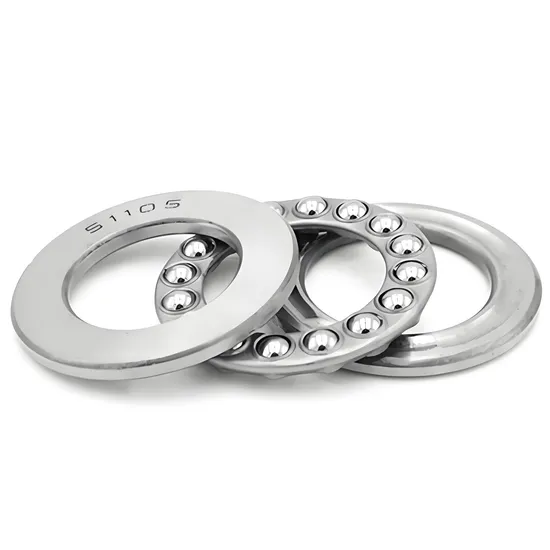
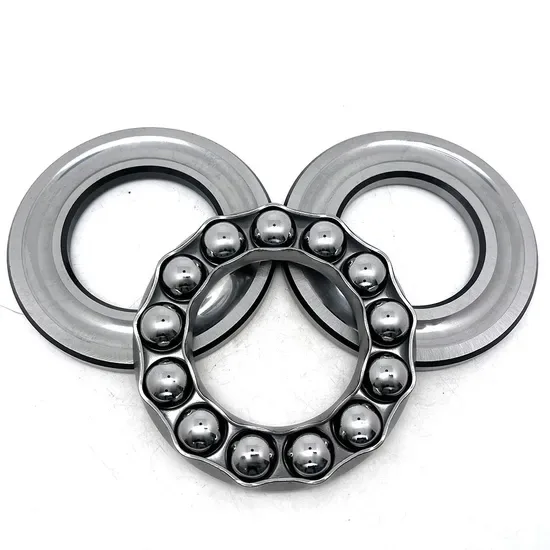
Thrust Ball Bearing
X&S 51118 51117 51414 Thrust Ball Bearing for Auto Motorcycle Parts [WARN] draft identifier mismatch
X&S 51136 51138 51140 51144 51148 51152 51156 51160 5 Thrust Ball Bearing — Unseparated configuration handles heavy axial loads in automotive and mining assemblies.
- Precision classes P0, P6, P5, and P4 available for diverse speed requirements
- Compatible with grease or oil lubrication for low noise operation
- Each shipment includes material test reports and dimensional inspection documents
7
Day Prototype
vs. 8-12 wks standard
50+
Countries Served
Global logistics network
12h
Quote Response
Expert engineers on call
Typical Applications
Wind Power
Mining
Steel & Metallurgy
Automotive / EV
Rail Transit
Precision Machinery
Genuine SKF Bearings
NDA Protected
Free Sample for Orders > $50K
Global Shipping
Product Details
Three-way cross-reference alignment — verifying base number, precision class, and internal design simultaneously to eliminate field failures caused by mismatched thrust washers.
Technical Specifications
| Parameter | Value |
|---|---|
| Designation | 51136 51138 51140 51144 51148 51152 51156 51160 5 |
| Product Type | Thrust Ball Bearing |
| Precision Class | P0, P6, P5, P4 |
| Lubrication | Grease or Oil |
| Separated | Unseparated |
| Noise Level | Low Noise |
| Origin | Shandong, China |
Application Suitability
| Industry | Typical Applications |
|---|---|
| Automotive | Heavy-duty truck steering knuckle pivots, motorcycle steering stem assemblies, and transmission clutch release mechanisms. |
| Mining | Vertical crusher main shaft thrust support, vibrating screen eccentric shaft positioning, and conveyor drive pulley axles. |
| Aviation | Landing gear actuator screwjacks, flight control surface hinge pivots, and cargo loading system vertical lifts. |
Why Precision Grades Dictate Thrust Washer Survival in Auto and Mining Rigging
Matching the precision class to the specific axial load cycle prevents premature washer spalling.
When a base number matches but the internal precision grade differs from what the equipment requires, the thrust washers experience uneven load distribution. In my years troubleshooting field breakdowns across the Middle East, I have seen countless heavy-duty steering mechanisms fail simply because a standard P0 component was forced into an application demanding P5 running accuracy. This mismatch causes localized stress concentrations that rapidly degrade the raceway [NEED_CITE: rolling bearing failure mode classification per ISO 15243]. Sourcing the correct X&S 51136 51138 51140 thrust ball bearing requires looking beyond the basic dimensions to ensure the manufacturing tolerances align with the operational demands of the assembly.
Aligning Tolerance Classes with Axial Load Demands
Selecting the appropriate tolerance band ensures the thrust washers distribute axial forces evenly across the entire raceway contact area. For general automotive clutch releases or basic motorcycle steering stems, P0 or P6 grades provide sufficient operational stability. However, when the X&S 51136 51138 51140 thrust ball bearing is deployed in high-speed mining crushers or precise aviation actuators, upgrading to P5 or P4 becomes mandatory. This tighter geometric control minimizes axial runout, preventing the localized edge loading that typically destroys standard washers under continuous heavy thrust.
Managing Thermal Expansion and Lubrication Boundaries
Thrust ball bearings operate under intense axial compression, generating significant internal friction heat that directly impacts the chosen lubrication strategy. Grease lubrication works well for enclosed, moderate-speed automotive applications where sealing out contaminants is the priority. Conversely, high-speed mining equipment or continuous-duty aviation actuators often require oil circulation to dissipate heat and flush out wear debris. Selecting the wrong lubrication method for the operating temperature leads to rapid lubricant breakdown and subsequent metal-to-metal contact between the balls and the shaft washings [NEED_CITE: thermal degradation of bearing lubricants under heavy axial loads].
Decoding the Unseparated Architecture and Precision Options
The unseparated design characteristic means the shaft washer, housing washer, and ball-cage assembly are handled as a unified structural entity during specific installation phases, demanding careful alignment to prevent ball skewing. The availability of P0 through P4 precision classes allows engineers to dial in the exact axial runout limits required by the host machinery. Furthermore, the low noise operational profile indicates highly polished raceway surfaces and precise ball grading, which is essential for reducing vibration transmission in sensitive automotive steering columns and aviation control linkages.
The Hidden Costs of Ignoring Suffix and Precision Details
Installing a component where the base designation matches but the precision class is incorrect leads to catastrophic unplanned downtime. A standard tolerance washer placed in a high-precision aviation actuator will introduce axial play, causing severe vibration and eventual structural fatigue in the surrounding housing. According to failure analysis frameworks outlined in ISO 281, improper internal geometry matching drastically reduces the calculated fatigue life. This oversight not only voids equipment warranties but also triggers costly secondary damage to adjacent shafts and seals [NEED_CITE: secondary mechanical damage from bearing failure per ISO 281].
Why Our Technical Vetting Protects Your Assembly Line
We do not just ship boxes; we validate the exact precision class and internal geometry against your specific application parameters before dispatch. While other suppliers might substitute a P0 part when a P5 is backordered, our cross-reference protocol strictly blocks such deviations to protect your machinery. Every X&S 51136 51138 51140 thrust ball bearing we supply is backed by manufacturer batch traceability, ensuring you receive the exact metallurgical quality tested at the factory. This rigorous vetting eliminates the risk of receiving counterfeit parts with soft inner rings that pass casual visual inspections but collapse under actual operational thrust loads.
Documentation & Authenticity
- Certificate of Conformity confirming the exact P0, P6, P5, or P4 precision grade for each thrust washer set.
- Manufacturer batch and lot traceability linking every unseparated assembly to its original production run.
- Official brand app QR verification to instantly expose cloned codes on counterfeit automotive steering parts.
- Dimensional and running accuracy inspection reports verifying axial runout limits prior to dispatch.
- Country-of-origin documentation ensuring full compliance with international mining and aviation import regulations.
Storage, Handling & Mounting
- Store the unseparated ball-cage and washer assemblies in original packaging to prevent dust ingress that causes low noise degradation.
- Maintain strict climate control in the storage area to prevent condensation from compromising the P4 precision raceway finishes.
- Use induction heaters for shaft washers, avoiding open flames that alter the metallurgical hardness of the thrust components.
- Apply clean lint-free gloves when handling P5 and P4 grade washers to prevent acidic skin oils from etching the polished surfaces.
- Ensure precise axial alignment during mounting to prevent ball skewing within the unseparated cage structure.
Engineering Support for Exact Application Matching
To guarantee optimal performance, please provide the specific axial load profiles, operating speeds, and thermal environments of your automotive or mining equipment. Supplying the exact OEM equipment numbers allows our engineering team to perform a rigorous cross-reference check, verifying that the precision class and internal geometry perfectly match the original design intent. This technical review ensures the selected thrust components will handle the specific operational stresses without premature degradation.
Frequently Asked Questions
Q: How do I verify the authenticity of these thrust components using official traceability tools?
A: Every shipment includes batch traceability data that can be scanned using the manufacturer’s official QR verification app. This digital check confirms the metallurgical origin and production date, instantly exposing counterfeit parts with cloned codes or soft inner rings that frequently plague the automotive and mining aftermarket supply chains.
Q: Why must the precision class be aligned alongside the base designation during cross-referencing?
A: Matching only the base number ignores critical internal geometry tolerances. Installing a standard P0 washer in an application requiring P4 precision introduces excessive axial runout, causing severe vibration and premature raceway spalling. Our cross-reference protocol validates the exact precision grade to ensure the component matches the equipment’s operational demands.
Q: What are the selection boundaries between P0, P6, P5, and P4 precision classes for thrust applications?
A: P0 and P6 grades are generally suitable for standard automotive steering stems and low-speed conveyors where minor axial play is acceptable. P5 and P4 classes are strictly required for high-speed mining crushers and aviation actuators, where tight geometric control is mandatory to prevent localized edge loading and catastrophic structural fatigue under continuous heavy thrust.
Q: How do I choose between grease and oil lubrication based on equipment speed and temperature?
A: Grease is ideal for enclosed, moderate-speed automotive applications where sealing out contaminants is the primary concern. Oil lubrication is necessary for high-speed mining or aviation equipment, as it provides superior heat dissipation and flushes out wear debris. Selecting the wrong method leads to rapid lubricant breakdown and severe metal-to-metal contact.
Q: What mounting practices are recommended to prevent damage to the thrust washers?
A: Always use induction heating for installing shaft washers to ensure uniform thermal expansion without altering the metallurgical hardness. Maintain strict axial alignment during assembly to prevent ball skewing within the cage. Avoid using steel hammers directly on the washers, as impact forces can cause microscopic brinelling that destroys the low noise operational profile.
Product Summary
- Product Name
- X&S 51118 51117 51414 Thrust Ball Bearing for Auto Motorcycle Parts [WARN] draft identifier mismatch
- Category
- Thrust Ball Bearing
- Brand
- SKF
- Certification
- ISO 9001 · TS 16949
- Lead Time
- 7 Working Days
Get a Custom Quote
Our engineers will respond within 12 hours with a tailored solution.
Request QuoteGeneral Specifications
| Bearing Type | Thrust Ball Bearing |
| Brand | SKF |
| Quality Standard | ISO 9001 / TS 16949 |
| Precision Grade | P0 / P5 / P6 (custom) |
| Material | Chrome Steel / Stainless |
| Cage Material | Steel / Brass / Polyamide |
| Lubrication | Grease / Oil (specify) |
| Operating Temp. | -40°C to +200°C |
| Min. Order Qty | 1 pc (samples available) |
| Prototype Lead Time | 7 Working Days |
Performance Parameters
| Load Capacity | Contact for C0/Cr values |
| Speed Rating | Contact for ndm limit |
| Vibration Level | Z1 / Z2 / Z3 (custom) |
| Noise Level | V1 / V2 / V3 (custom) |
| Fatigue Life | L10h per ISO 281 |
| Sealing Options | Open / Z / 2Z / RS / 2RS |
Custom Specifications Available
Our engineering team can modify bearing dimensions, materials, seals, and clearances to meet your specific operating requirements. Submit your drawing or spec sheet for a tailored proposal.
Wind Power
Main shaft bearings, gearbox bearings, and generator bearings for onshore and offshore wind turbines.
Mining & Quarrying
Heavy-duty bearings for crushers, conveyors, and rotary equipment in extreme dust and shock-load environments.
Steel & Metallurgy
High-temperature bearings for rolling mills, continuous casting, and furnace applications.
Automotive / EV
Wheel hub bearings, transmission bearings, and e-motor bearings for passenger and commercial vehicles.
Rail Transit
Axle box bearings, traction motor bearings, and gearbox bearings meeting EN/UIC railway standards.
Precision Machinery
High-precision spindle bearings, angular contact bearings, and super-precision bearings for CNC and robotics.
Application Design
EngineeringOur engineers analyze your operating conditions -- load, speed, temperature, environment -- and select or design the optimal bearing solution to maximize service life and reduce total cost of ownership.
Custom Modification
7-Day TurnaroundNeed non-standard dimensions, special materials, or modified clearances? We can modify standard SKF bearings or manufacture fully custom solutions with a 7-day prototype turnaround.
Failure Analysis
DiagnosticsWhen bearings fail prematurely, our team conducts root-cause analysis using advanced diagnostic tools to identify the failure mode and recommend corrective action.
Predictive Maintenance
Up to 40% Less DowntimeWe deploy vibration monitoring, thermal imaging, and oil analysis programs that detect bearing deterioration early -- reducing unplanned downtime by up to 40%.
On-site Installation
Global CoverageProper installation is critical to bearing performance. Our certified technicians provide on-site installation support, alignment verification, and operator training worldwide.
Lifecycle Support
Enterprise SLAFrom initial selection through end-of-life, our dedicated account managers provide scheduled maintenance plans, re-lubrication programs, and replacement forecasting for enterprise clients.
Why SKF China
The engineering partner advantage
7 Days
Prototype Lead Time
vs. 8-12 weeks via standard channels
15+
Certified Engineers
SKF-certified, on-call for your project
50+
Countries Delivered
Reliable global logistics network
Request a Quote
Get a custom quote for
X&S 51118 51117 51414 Thrust Ball Bearing for Auto Motorcycle Parts [WARN] draft identifier mismatch
NDA protected · Free samples for orders > $50K · Reply within 12 hours
Related Products