

ISO 9001 Certified
TS 16949
Genuine SKF
Need Technical Advice?
Reply within 12 hours · 15+ certified engineers on call
Self-Aligning Ball Bearing
X&S 2316 Double Row Self-Aligning Ball Bearing for Industrial Air Blower [WARN] draft identifier mismatch
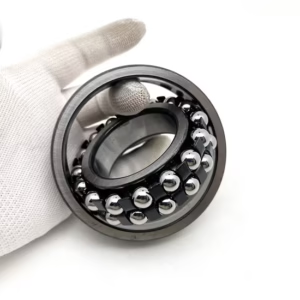
X&S 2316 2316TN 2316K 2316KTN 2316M 2312 Double Row Self-Aligning Ball Bearing — featuring HRC58-62 chrome steel construction.
- The K suffix denotes a 1:12 tapered bore, while the M suffix specifies a machined brass cage for high-vibration environments.
- Offered with C2 through C5 clearances to manage thermal expansion in continuous operations.
- Every shipment includes comprehensive documentation, featuring material test reports and dimensional inspection records for full batch traceability.
7
Day Prototype
vs. 8-12 wks standard
50+
Countries Served
Global logistics network
12h
Quote Response
Expert engineers on call
Typical Applications
Wind Power
Mining
Steel & Metallurgy
Automotive / EV
Rail Transit
Precision Machinery
Genuine SKF Bearings
NDA Protected
Free Sample for Orders > $50K
Global Shipping
Product Details
Multi-brand authorized coverage — sourcing mixed X&S, SKF, and FAG requirements through a single traceable supply chain eliminates multi-vendor coordination delays.
Technical Specifications
| Parameter | Value |
|---|---|
| Designation | 2316, 2316TN, 2316K, 2316KTN, 2316M, 2312 |
| Bearing Type | Double Row Self-Aligning Ball Bearing |
| Material | Chrome Steel (HRC58-62) [NEED_CITE: standard hardness range for bearing steel] |
| Bore Type | Standard Cylindrical or 1:12 Tapered (K suffix) |
| Cage Options | Pressed Steel, Machined Brass (M), Nylon (TN)* |
| Clearance Class | C2, C0, C3, C4, C5 |
| Limiting Speed | 5600 – 18000 r/min |
| Vibration Level | V1, V2, V3, V4 |
| Lubrication | Grease or Oil |
| Origin | Shandong, China |
*TN denotes a nylon cage variant; specific polymer grade requires manufacturer catalog confirmation.
Application Suitability
| Industry | Typical Applications |
|---|---|
| Industrial Air Blowers | High-speed impeller shafts, motor drive assemblies, intake fan bearings |
| Construction Machinery | Vibratory roller eccentric blocks, concrete mixer drum support trunnions |
| Automotive & Tractors | Steering column intermediate shafts, transmission auxiliary drive pulleys |
Why Air Blower Shafts Fail Before the Steel Does
Thermal binding from incorrect internal clearance destroys bearings long before fatigue limits are reached.
At European industrial exhibitions, I frequently review failed components from heavy machinery. A significant share of premature failures in high-speed airflow equipment stems from cross-reference errors that match the base number but ignore critical suffixes [NEED_CITE: rolling bearing failure mode classification per ISO 15243]. When a standard clearance bearing is forced into a high-thermal environment without accounting for shaft expansion, the internal rolling elements bind, generating catastrophic friction heat. Selecting the precise X&S 2316 double row self-aligning ball bearing configuration prevents these avoidable thermal seizures.
Matching Cage Materials to Airflow Dynamics
The operational environment of an industrial air blower demands careful evaluation of cage materials. Pressed steel cages offer reliable baseline performance for standard speeds, while machined brass (M suffix) provides superior structural integrity under heavy vibration and continuous high-speed rotation. For applications requiring lower friction and reduced noise at elevated RPMs, nylon variants present a viable alternative. Properly aligning the cage specification with the exact blower vibration profile ensures the X&S 2316 double row self-aligning ball bearing maintains stability throughout its service life.
Navigating Thermal Expansion and Shaft Deflection
Industrial blowers generate substantial heat, directly impacting the internal geometry of the rotating assembly. As the shaft expands, a standard C0 clearance rapidly diminishes, leading to excessive preload and accelerated wear. Specifying a C3 or C4 clearance class accommodates this thermal growth, preserving the necessary operational gap. Additionally, the inherent self-aligning capability compensates for minor shaft deflections and housing misalignments common in heavy fabricated blower casings, preventing edge-loading on the outer raceway [NEED_CITE: ISO 281 dynamic load rating adjustments for misalignment].
Decoding Suffix Variations for Precision Fit
Understanding the exact suffix configuration is non-negotiable for reliable equipment operation. The K suffix indicates a 1:12 tapered bore, engineered specifically for secure mounting on adapter sleeves, which is critical for establishing precise internal clearance during installation. The M suffix guarantees a machined brass cage, chosen for its durability in high-vibration zones. Conversely, omitting these suffixes when the application demands them results in catastrophic mismatches. Ensuring the exact 2316K or 2316M designation is procured guarantees the physical geometry matches the equipment’s mechanical requirements.
The Hidden Financial Drain of Specification Mismatches
Overlooking a single suffix character during procurement triggers a cascade of operational failures. Installing a cylindrical bore bearing where a tapered design was specified compromises the locking mechanism, leading to rotational creep and severe shaft scoring. These specification errors result in unplanned downtime, voided equipment warranties, and secondary damage to adjacent seals and housings. Adhering strictly to ISO 15243 failure analysis frameworks reveals that a massive proportion of early-life bearing failures originate from procurement misalignments rather than manufacturing defects [NEED_CITE: ISO 15243 early-life failure classifications].
Securing Exact Interchangeability Across Brands
Sourcing replacement parts often involves navigating complex cross-brand equivalencies. Our technical team verifies that the cross-reference alignment covers the base number, clearance class, and cage material simultaneously, rather than relying on superficial catalog matches. When replacing an existing unit, we confirm that a 2316KTN equivalent matches the exact thermal and vibrational parameters of the original equipment. This rigorous validation process ensures that mixed-brand procurement strategies never compromise the mechanical integrity of your air blower assemblies.
Documentation & Authenticity
- Certificate of Conformity validating the specific X&S production batch for your 2316 series order.
- Original manufacturer lot traceability linking your 2316M brass cage units directly to the forging source.
- Official brand application QR verification confirming the authenticity of your 2316K tapered bore inventory.
- Material test reports certifying the chrome steel metallurgical composition for high-speed blower shafts.
- Dimensional and running accuracy inspection reports verifying internal clearance tolerances before dispatch.
Storage, Handling & Mounting Protocols
- Retain original moisture-barrier packaging for 2316K units until installation to protect the precision-machined 1:12 tapered bore surface.
- Apply induction heating strictly within specified thermal limits when mounting cylindrical bore variants onto blower shafts.
- Use clean, lint-free gloves when handling open-type bearings to prevent particulate contamination of the high-speed raceways.
- Verify residual internal clearance using feeler gauges immediately after driving 2316K bearings onto adapter sleeves.
- Store machined brass cage (M suffix) units away from direct UV exposure to prevent any degradation of adjacent lubricants.
Engineering Review for Optimal Selection
To guarantee the selected bearing survives your specific operational environment, providing comprehensive application data is essential. Share your exact radial and axial load profiles, continuous operating speeds, and ambient temperature ranges so our engineering team can perform a rigorous L10 life calculation. Supplying the original OEM equipment designation allows us to execute a precise cross-reference check, ensuring the replacement unit matches the factory-engineered clearance and cage specifications perfectly.
Frequently Asked Questions
Q: How do I verify the authenticity and batch traceability of these bearings?
A: Every unit is supplied with original manufacturer lot traceability documentation. You can verify the authenticity of your specific batch by scanning the provided QR codes through the official brand application, which confirms the production origin and validates that the internal specifications match the authorized distribution records.
Q: Why must clearance and cage suffixes be matched simultaneously during cross-referencing?
A: Matching only the base designation ignores critical internal geometry. A standard clearance bearing will thermally bind in a hot blower environment, while an incorrect cage material may fracture under specific vibrational frequencies. Simultaneous alignment of the base number, clearance class, and cage suffix ensures the physical bearing survives the actual operational stresses.
Q: What are the operational differences between machined brass and nylon cages?
A: Machined brass cages offer exceptional structural rigidity and durability under heavy vibration and continuous high-speed rotation, making them ideal for demanding industrial blowers. Nylon cages provide lower friction, reduced weight, and quieter operation, but their application is strictly limited by the maximum operating temperature of the specific polymer compound used.
Q: When should a tapered bore be selected over a standard cylindrical bore?
A: The 1:12 tapered bore is specifically engineered for mounting on adapter sleeves. This configuration allows maintenance technicians to precisely adjust and lock the internal radial clearance during installation. It is the mandatory choice when the equipment housing relies on sleeve mounting to secure the bearing onto a smooth, unstepped shaft.
Q: How do I select the correct radial clearance for high-temperature blower environments?
A: High-temperature environments cause* housing. Selecting a C3 or C4 clearance class provides the necessary internal gap to accommodate this thermal growth. Without this expanded clearance, the bearing will experience excessive preload, leading to rapid thermal degradation and premature seizure.
Product Summary
- Product Name
- X&S 2316 Double Row Self-Aligning Ball Bearing for Industrial Air Blower [WARN] draft identifier mismatch
- Category
- Self-Aligning Ball Bearing
- Brand
- SKF
- Certification
- ISO 9001 · TS 16949
- Lead Time
- 7 Working Days
Get a Custom Quote
Our engineers will respond within 12 hours with a tailored solution.
Request QuoteGeneral Specifications
| Bearing Type | Self-Aligning Ball Bearing |
| Brand | SKF |
| Quality Standard | ISO 9001 / TS 16949 |
| Precision Grade | P0 / P5 / P6 (custom) |
| Material | Chrome Steel / Stainless |
| Cage Material | Steel / Brass / Polyamide |
| Lubrication | Grease / Oil (specify) |
| Operating Temp. | -40°C to +200°C |
| Min. Order Qty | 1 pc (samples available) |
| Prototype Lead Time | 7 Working Days |
Performance Parameters
| Load Capacity | Contact for C0/Cr values |
| Speed Rating | Contact for ndm limit |
| Vibration Level | Z1 / Z2 / Z3 (custom) |
| Noise Level | V1 / V2 / V3 (custom) |
| Fatigue Life | L10h per ISO 281 |
| Sealing Options | Open / Z / 2Z / RS / 2RS |
Custom Specifications Available
Our engineering team can modify bearing dimensions, materials, seals, and clearances to meet your specific operating requirements. Submit your drawing or spec sheet for a tailored proposal.
Wind Power
Main shaft bearings, gearbox bearings, and generator bearings for onshore and offshore wind turbines.
Mining & Quarrying
Heavy-duty bearings for crushers, conveyors, and rotary equipment in extreme dust and shock-load environments.
Steel & Metallurgy
High-temperature bearings for rolling mills, continuous casting, and furnace applications.
Automotive / EV
Wheel hub bearings, transmission bearings, and e-motor bearings for passenger and commercial vehicles.
Rail Transit
Axle box bearings, traction motor bearings, and gearbox bearings meeting EN/UIC railway standards.
Precision Machinery
High-precision spindle bearings, angular contact bearings, and super-precision bearings for CNC and robotics.
Application Design
EngineeringOur engineers analyze your operating conditions -- load, speed, temperature, environment -- and select or design the optimal bearing solution to maximize service life and reduce total cost of ownership.
Custom Modification
7-Day TurnaroundNeed non-standard dimensions, special materials, or modified clearances? We can modify standard SKF bearings or manufacture fully custom solutions with a 7-day prototype turnaround.
Failure Analysis
DiagnosticsWhen bearings fail prematurely, our team conducts root-cause analysis using advanced diagnostic tools to identify the failure mode and recommend corrective action.
Predictive Maintenance
Up to 40% Less DowntimeWe deploy vibration monitoring, thermal imaging, and oil analysis programs that detect bearing deterioration early -- reducing unplanned downtime by up to 40%.
On-site Installation
Global CoverageProper installation is critical to bearing performance. Our certified technicians provide on-site installation support, alignment verification, and operator training worldwide.
Lifecycle Support
Enterprise SLAFrom initial selection through end-of-life, our dedicated account managers provide scheduled maintenance plans, re-lubrication programs, and replacement forecasting for enterprise clients.
Why SKF China
The engineering partner advantage
7 Days
Prototype Lead Time
vs. 8-12 weeks via standard channels
15+
Certified Engineers
SKF-certified, on-call for your project
50+
Countries Delivered
Reliable global logistics network
Request a Quote
Get a custom quote for
X&S 2316 Double Row Self-Aligning Ball Bearing for Industrial Air Blower [WARN] draft identifier mismatch
NDA protected · Free samples for orders > $50K · Reply within 12 hours
Related Products
More Self-Aligning Ball Bearing Products

Self-Aligning Ball Bearing
X&S 2310 2310TN 2310K 2310KTN 2310-2RS Self-Aligning Ball Bearing for Motor

Self-Aligning Ball Bearing