
ISO 9001 Certified
TS 16949
Genuine SKF
Need Technical Advice?
Reply within 12 hours · 15+ certified engineers on call
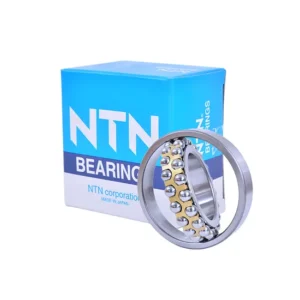
Self-Aligning Ball Bearing
X&S 2307-2313 Self-Aligning Ball Bearing for Auto Spare Part [WARN] draft identifier mismatch
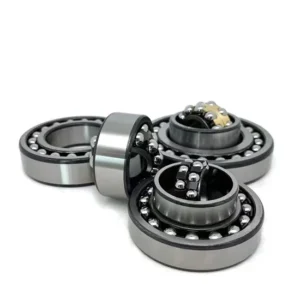
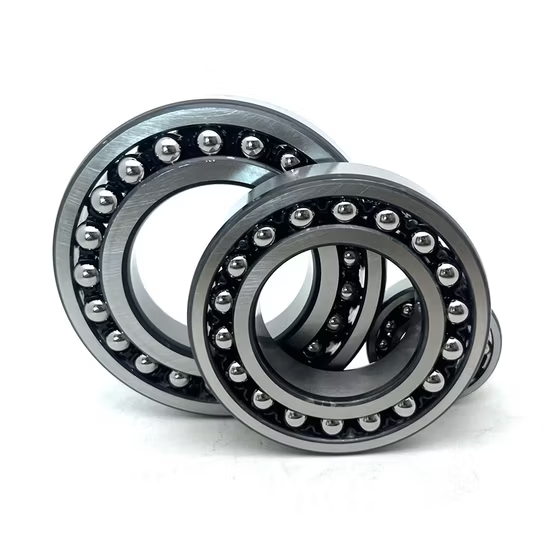
X&S 2307 2308 2309 2310 2311 2312 2313 Self-Aligning Ball Bearing — spherical outer ring raceway compensates for shaft misalignment in automotive and tractor applications.
- HRC58-62 hardness with steel, brass, or nylon cages and C2 to C5 clearance options.
- Cross-reference verification strictly aligns base number, clearance class, and cage material to prevent thermal binding.
7
Day Prototype
vs. 8-12 wks standard
50+
Countries Served
Global logistics network
12h
Quote Response
Expert engineers on call
Typical Applications
Wind Power
Mining
Steel & Metallurgy
Automotive / EV
Rail Transit
Precision Machinery
Genuine SKF Bearings
NDA Protected
Free Sample for Orders > $50K
Global Shipping
Product Details
Batch Traceability Secured — Every X&S 2307 2308 2309 2310 2311 2312 2313 self-aligning ball bearing carries a unique lot code verifiable through the manufacturer’s official application to eliminate counterfeit risks.
Technical Specifications
| Parameter | Value |
|---|---|
| Designation | 2307 2308 2309 2310 2311 2312 2313 |
| Bearing Type | Self-Aligning Ball Bearing |
| Cage Material | Steel, Brass, Nylon |
| Clearance Class | C2, C0, C3, C4, C5 |
| Vibration Level | V1, V2, V3, V4 |
| Limiting Speed | 5600-18000 r/min |
| Hardness | HRC58-62 [NEED_CITE: standard bearing steel hardness range] |
| Lubrication | Grease or Oil |
| Origin | Shandong, China |
Application Suitability
| Industry | Typical Applications |
|---|---|
| Automotive Repair | Alternator pulleys, steering column joints, and transmission shaft supports |
| Agricultural Tractors | PTO shaft bearings, front axle pivot points, and harvester drive mechanisms |
| Construction Machinery | Articulation joints, conveyor idler rolls, and light vibratory screen shafts |
Thermal Binding Risks in the X&S 2307 2308 2309 2310 2311 2312 2313 self-aligning ball bearing
Clearance selection dictates operational survival under thermal expansion.
Working across Latin American repair shops, I have repeatedly seen tractors and heavy vehicles brought to a complete halt because a standard clearance bearing was forced into a high-heat environment. When internal gaps are insufficient to absorb the thermal growth of the shaft and housing, the rolling elements bind against the raceways. This friction generates a destructive feedback loop of escalating heat, ultimately welding the components together. Procurement errors often stem from matching the base number while entirely ignoring the clearance suffix, turning a routine replacement into a catastrophic field failure [NEED_CITE: rolling bearing failure mode classification per ISO 15243].
Matching Internal Geometry to Automotive and Tractor Loads
Selecting the correct X&S 2307 2308 2309 2310 2311 2312 2313 self-aligning ball bearing requires looking past the basic dimensions to evaluate the internal architecture. The self-aligning capability accommodates minor shaft deflections and housing misalignments common in rugged vehicle chassis and agricultural frames. However, the specific cage material and internal clearance must be synchronized with the actual operating temperature and rotational speed. We evaluate the exact thermal and mechanical demands of your equipment to ensure the selected variant prevents premature cage wear and maintains stable operation under dynamic loads.
Operational Extremes in Heavy Vehicle Drivetrains
Automotive and construction environments subject bearings to a punishing mix of radial loads, sudden shock impacts, and severe contamination. High rotational speeds in transmission components demand low-friction cages and precise vibration grading to prevent structural fatigue. Conversely, slow-moving pivot joints in tractor implements face heavy static loads and exposure to abrasive dust and moisture. The lubrication strategy must also adapt; oil-lubricated setups dissipate heat effectively in high-speed gearboxes, while grease-filled variants provide essential sealing against agricultural debris [NEED_CITE: lubrication and sealing guidelines per ISO 281].
Decoding Cage Materials and Clearance Tolerances
The internal components define the operational limits of these bearings. Steel stamped cages offer reliable performance for standard automotive applications, while machined brass cages provide superior durability and heat dissipation for heavy-duty tractor shafts experiencing high vibration. Nylon cages reduce weight and friction, making them ideal for high-speed, low-load alternator drives. Equally critical is the clearance class; while C0 serves standard ambient conditions, C3 or C4 clearances are mandatory for engine-adjacent components where significant thermal expansion occurs. Selecting the appropriate vibration level, from V1 to V4, further ensures noise and resonance are controlled in sensitive automotive assemblies.
The Hidden Toll of Specification Mismatches
Installing a bearing with inadequate internal clearance or the wrong cage material rarely results in a graceful degradation. Instead, it triggers sudden, unplanned downtime that halts entire production lines or strands heavy machinery in remote locations. The resulting thermal seizure can score the shaft and destroy the housing, transforming a simple component swap into a major structural rebuild. Beyond the immediate repair costs, these premature failures void equipment warranties and severely damage the operational reliability metrics of the maintenance team [NEED_CITE: economic impact of unplanned machinery downtime].
Engineering Precision into Your Supply Chain
Sourcing the X&S 2307 2308 2309 2310 2311 2312 2313 self-aligning ball bearing through our network guarantees strict adherence to your exact technical requirements. Mixed-brand orders are consolidated seamlessly, ensuring all components arrive with uniform documentation. We actively intercept cross-reference errors by verifying that the clearance class and cage material of the substitute perfectly match the original equipment specifications, preventing the subtle mismatches that cause field binding. Furthermore, our application engineers review your specific load and speed parameters to validate the selection before the order is finalized, and every batch is fully traceable to the manufacturer to eliminate the risk of counterfeit parts with compromised metallurgy.
Documentation & Authenticity
- Certificate of Conformity confirming the exact clearance class and cage material for each batch.
- Unique lot traceability codes linking the physical bearing to the manufacturer’s production records.
- Official app QR verification enabling instant on-site authenticity checks upon delivery.
- Material test reports validating the HRC58-62 hardness specification of the bearing steel.
- Dimensional and running accuracy inspection reports verifying tolerances prior to dispatch.
Storage, Handling & Mounting
- Retain the original VCI packaging until mounting to prevent moisture ingress and corrosion on the steel cages.
- Store C3 and C4 clearance variants in climate-controlled areas to prevent thermal shock before installation.
- Use induction heaters for cylindrical bore installations, avoiding localized torch heating that alters raceway hardness.
- Apply clean, lint-free gloves when handling nylon cage variants to prevent skin oils from degrading the polymer.
- Ensure shaft and housing seats are meticulously cleaned to prevent debris from compromising the self-aligning function.
Technical Validation for Your Application
To ensure the selected variant perfectly matches your operational reality, please provide the specific radial and axial loads, operating speeds, and ambient temperature ranges of your equipment. Sharing the original OEM equipment numbers allows our engineering team to perform a precise cross-reference check, verifying that the internal clearance and cage material align with the factory design. This technical review ensures you receive a component engineered for your exact mechanical and thermal environment.
Frequently Asked Questions
Q: Why is matching the clearance suffix critical for these bearings in high-temperature environments?
A: Installing a standard clearance bearing where a C3 or C4 is required prevents the internal gaps from accommodating thermal shaft expansion. This lack of compensation causes the rolling elements to bind against the raceways under heat, generating extreme friction that rapidly leads to thermal seizure and catastrophic equipment failure.
Q: How do I choose between steel, brass, and nylon cages for my application?
A: Steel cages suit general automotive loads, while machined brass cages offer superior strength and heat dissipation for heavy-duty tractor shafts with high vibration. Nylon cages minimize friction and weight, making them the optimal choice for high-speed, low-load applications like alternator pulleys where noise reduction is also prioritized.
Q: What are the cross-reference pitfalls when replacing OEM bearings in construction machinery?
A: The most common error is matching the base designation while ignoring the internal clearance and cage material. A substitute might fit the housing physically, but if it lacks the required C3 clearance for thermal expansion or the brass cage for shock resistance, it will fail prematurely under the harsh operational conditions of construction sites.
Q: How can I verify the authenticity and batch traceability of the received bearings?
A: Every bearing features a unique lot code that can be scanned using the manufacturer’s official mobile application. This provides instant verification of the product’s authenticity and links the physical component directly to its original production batch, effectively eliminating the risk of installing counterfeit parts with substandard metallurgy.
Q: What vibration levels are recommended for automotive spare part applications?
A: Vibration grading from V1 to V4 dictates the acceptable noise and resonance limits. Standard V1 or V2 levels are typically sufficient for general undercarriage or drivetrain components, while V3 or V4 specifications are necessary for noise-sensitive cabin applications or high-speed electric motor assemblies where smooth, quiet operation is strictly required.
Product Summary
- Product Name
- X&S 2307-2313 Self-Aligning Ball Bearing for Auto Spare Part [WARN] draft identifier mismatch
- Category
- Self-Aligning Ball Bearing
- Brand
- SKF
- Certification
- ISO 9001 · TS 16949
- Lead Time
- 7 Working Days
Get a Custom Quote
Our engineers will respond within 12 hours with a tailored solution.
Request QuoteGeneral Specifications
| Bearing Type | Self-Aligning Ball Bearing |
| Brand | SKF |
| Quality Standard | ISO 9001 / TS 16949 |
| Precision Grade | P0 / P5 / P6 (custom) |
| Material | Chrome Steel / Stainless |
| Cage Material | Steel / Brass / Polyamide |
| Lubrication | Grease / Oil (specify) |
| Operating Temp. | -40°C to +200°C |
| Min. Order Qty | 1 pc (samples available) |
| Prototype Lead Time | 7 Working Days |
Performance Parameters
| Load Capacity | Contact for C0/Cr values |
| Speed Rating | Contact for ndm limit |
| Vibration Level | Z1 / Z2 / Z3 (custom) |
| Noise Level | V1 / V2 / V3 (custom) |
| Fatigue Life | L10h per ISO 281 |
| Sealing Options | Open / Z / 2Z / RS / 2RS |
Custom Specifications Available
Our engineering team can modify bearing dimensions, materials, seals, and clearances to meet your specific operating requirements. Submit your drawing or spec sheet for a tailored proposal.
Wind Power
Main shaft bearings, gearbox bearings, and generator bearings for onshore and offshore wind turbines.
Mining & Quarrying
Heavy-duty bearings for crushers, conveyors, and rotary equipment in extreme dust and shock-load environments.
Steel & Metallurgy
High-temperature bearings for rolling mills, continuous casting, and furnace applications.
Automotive / EV
Wheel hub bearings, transmission bearings, and e-motor bearings for passenger and commercial vehicles.
Rail Transit
Axle box bearings, traction motor bearings, and gearbox bearings meeting EN/UIC railway standards.
Precision Machinery
High-precision spindle bearings, angular contact bearings, and super-precision bearings for CNC and robotics.
Application Design
EngineeringOur engineers analyze your operating conditions -- load, speed, temperature, environment -- and select or design the optimal bearing solution to maximize service life and reduce total cost of ownership.
Custom Modification
7-Day TurnaroundNeed non-standard dimensions, special materials, or modified clearances? We can modify standard SKF bearings or manufacture fully custom solutions with a 7-day prototype turnaround.
Failure Analysis
DiagnosticsWhen bearings fail prematurely, our team conducts root-cause analysis using advanced diagnostic tools to identify the failure mode and recommend corrective action.
Predictive Maintenance
Up to 40% Less DowntimeWe deploy vibration monitoring, thermal imaging, and oil analysis programs that detect bearing deterioration early -- reducing unplanned downtime by up to 40%.
On-site Installation
Global CoverageProper installation is critical to bearing performance. Our certified technicians provide on-site installation support, alignment verification, and operator training worldwide.
Lifecycle Support
Enterprise SLAFrom initial selection through end-of-life, our dedicated account managers provide scheduled maintenance plans, re-lubrication programs, and replacement forecasting for enterprise clients.
Why SKF China
The engineering partner advantage
7 Days
Prototype Lead Time
vs. 8-12 weeks via standard channels
15+
Certified Engineers
SKF-certified, on-call for your project
50+
Countries Delivered
Reliable global logistics network
Request a Quote
Get a custom quote for
X&S 2307-2313 Self-Aligning Ball Bearing for Auto Spare Part [WARN] draft identifier mismatch
NDA protected · Free samples for orders > $50K · Reply within 12 hours
Related Products
More Self-Aligning Ball Bearing Products
Self-Aligning Ball Bearing
X&S 1306K 1307 Self-Aligning Ball Bearing for Tractor PTO Shaft
Self-Aligning Ball Bearing
Wholesale Self-Aligning Ball Bearing 1205K 1308 2308 for Heavy Duty Machinery
Self-Aligning Ball Bearing