

ISO 9001 Certified
TS 16949
Genuine SKF
Need Technical Advice?
Reply within 12 hours · 15+ certified engineers on call
Spherical Roller Bearing
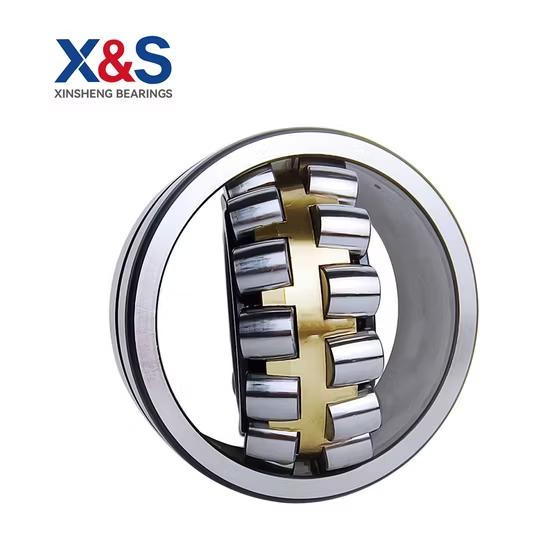
Xinsheng 21316 MB W33 Spherical Roller Bearing for Auto Machinery Parts
Xinsheng 21316 MB W33 Spherical Roller Bearing 80×170×39 mm — engineered with a machined brass cage for high-vibration heavy loads and W33 outer ring grooves for optimal grease distribution.
- Bainite quenching ensures superior impact resistance for mining and metallurgy equipment.
- Verify batch authenticity instantly via the official brand app QR scanning channel.
7
Day Prototype
vs. 8-12 wks standard
50+
Countries Served
Global logistics network
12h
Quote Response
Expert engineers on call
Typical Applications
Wind Power
Mining
Steel & Metallurgy
Automotive / EV
Rail Transit
Precision Machinery
Genuine SKF Bearings
NDA Protected
Free Sample for Orders > $50K
Global Shipping
Product Details
Full batch traceability — Every Xinsheng 21316 spherical roller bearing ships with verifiable lot documentation linking directly to the manufacturer’s production records.
Technical Specifications
| Parameter | Value |
|---|---|
| Designation | 21316 |
| Bearing Type | Spherical Roller Bearing |
| Bore Diameter (d) | 80 mm |
| Outside Diameter (D) | 170 mm |
| Width (B) | 39 mm |
| Cage Material | Machined brass cage, inner ring guided (MB) |
| Lubrication Feature | Annular groove and three lubrication holes in outer ring (W33) |
| Bore Type | Cylindrical (K suffix available for 1:12 tapered bore) |
| Clearance Class | C2, C0, C3, C4, C5 |
| Precision Class | P0, P4, P5, P6 |
| Material | Bearing Steel (Bainite Quenching design) |
| Origin | Shandong |
Note: Suffix variants such as Mbk, Ca, Cak, Cc, and Cck are unverified for this specific series and require manufacturer catalog confirmation before procurement.
Application Suitability
| Industry | Typical Applications |
|---|---|
| Automotive Manufacturing | Heavy-duty stamping press eccentric shafts, transfer line conveyor drive rollers |
| Metallurgy & Rolling Mills | Continuous caster withdrawal rolls, rolling mill guide roll bearings |
| Mining Equipment | Vibrating screen exciter mechanisms, jaw crusher pitman shafts |
Why Heavy-Duty Auto Machinery Fails Before the Steel Yields
Misaligned internal clearances and incorrect cage materials cause catastrophic thermal binding long before the steel reaches its fatigue limit.
In heavy-duty automotive stamping and transfer lines, equipment operates under severe shock loads. When procurement teams rely on basic designation matching without verifying the MB brass cage or the exact C3/C4 clearance, the bearing overheats. I have seen similar spherical roller bearings seize on vibrating screens simply because a standard stamped steel cage was substituted for a machined brass one, leading to cage fragmentation under high vibration [NEED_CITE: rolling bearing failure mode classification per ISO 15243]. The Xinsheng 21316 spherical roller bearing prevents these hidden failures by strictly aligning internal geometry with the actual operating environment.
Matching the 80x170x39mm Profile to High-Shock Environments
The physical footprint of this component is engineered to absorb the severe radial loads typical in auto machinery parts and rolling mills. By specifying the Xinsheng 21316 spherical roller bearing with the MB suffix, engineers secure an inner-ring-guided machined brass cage that maintains structural integrity during sudden load spikes. This specific configuration ensures the rolling elements remain correctly aligned even when the shaft deflects under the immense pressure of a stamping press.
Navigating Thermal Expansion and Contamination Challenges
Heavy machinery generates substantial heat, making the selection of the correct internal clearance critical. A standard C0 clearance will quickly disappear as the 80 mm shaft expands thermally, causing the rollers to skid and the bearing to overheat. Furthermore, the dusty environment of mining and metallurgy demands reliable lubrication. The W33 annular groove ensures that fresh grease reaches the raceway consistently, flushing out abrasive particles that would otherwise act as lapping compound and destroy the raceway finish [NEED_CITE: contamination impact on bearing life per ISO 281].
Decoding the Bainite Quenching and W33 Architecture
The bainite quenching treatment applied to the bearing steel provides a crucial advantage in shock-load applications. Unlike standard martensitic hardening, this microstructure offers superior toughness, preventing the inner ring from cracking under the repeated impacts of a jaw crusher. Coupled with the W33 outer ring lubrication slots, the bearing maintains a stable hydrodynamic film. The MB machined brass cage further enhances this by resisting the high-frequency vibrations that typically fatigue and fracture lighter, stamped steel cages.
The Hidden Costs of Incorrect Suffix Selection
Substituting a standard clearance or a lighter cage material to save on initial procurement costs inevitably leads to unplanned downtime. When a C3 clearance is mistakenly replaced with a C0, the thermal expansion of the shaft eliminates the internal play, resulting in extreme friction and premature failure. According to ISO 15243, such overload and thermal damage often voids equipment warranties and causes secondary damage to the housing and shaft, turning a simple component replacement into a massive operational disruption [NEED_CITE: secondary damage from bearing seizure].
Why Our Technical Review Prevents Field Failures
Our cross-brand interchange process goes far beyond matching the base 21316 number. We verify that the MB cage and W33 lubrication features exactly match your OEM equipment requirements, preventing the disastrous substitution of CA or CC cages in high-vibration applications. Every batch is traced back to the manufacturer, ensuring the bainite quenching specifications are met. We also review your specific load and speed parameters to confirm whether a C3 or C4 clearance is necessary for your thermal expansion profile, ensuring the bearing survives the actual operating conditions.
Documentation & Authenticity
- Certificate of Conformity confirming the specific MB cage and W33 outer ring design.
- Batch and lot traceability linking the 21316 bearing directly to the heat treatment records.
- QR verification via brand official apps to eliminate cloned counterfeit components.
- Material test report validating the bainite quenching process and steel composition.
- Dimensional and running accuracy inspection report confirming P6 or P5 tolerances.
Storage, Handling & Mounting
- Store the W33 equipped bearings in original packaging to prevent dust from blocking the outer ring lubrication holes.
- Use induction heating for the 80 mm cylindrical bore to ensure proper interference fit without damaging the MB brass cage.
- Apply clean gloves during handling to prevent moisture-induced corrosion on the exposed bainite quenched steel surfaces.
- Flush the W33 annular groove with clean oil before initial operation to remove any long-term storage preservatives.
Engineering Support for Your Next Procurement
To ensure optimal performance, please provide your specific radial and axial load calculations, operating speeds, and expected thermal gradients. Sharing the exact OEM equipment number allows our engineering team to perform a precise cross-reference check, verifying that the C3 or C4 clearance and MB cage configuration perfectly match your machinery’s demands.
Frequently Asked Questions
Q: Why must we verify both the clearance and cage suffix when cross-referencing the 21316?
A: Matching only the base designation often results in installing a standard clearance or stamped cage in a high-heat, high-vibration environment. This mismatch causes thermal binding or cage fracture. We verify the exact MB and C3/C4 suffixes to ensure the internal geometry handles your specific thermal expansion and shock loads.
Q: How does the W33 lubrication groove benefit auto machinery operating in dusty conditions?
A: The W33 annular groove and three lubrication holes allow fresh grease to be injected directly into the load zone. This continuous flow flushes out abrasive dust and metal particles that enter the sealing gaps, significantly extending the service life of the bearing in dirty metallurgy or mining environments.
Q: What is the advantage of bainite quenching over standard hardening for this spherical roller bearing?
A: Bainite quenching creates a tougher steel microstructure that resists crack propagation under heavy shock loads. In applications like stamping presses or crushers where sudden impact forces are common, this treatment prevents the inner ring from fracturing, providing noticeably greater durability than standard martensitic hardening.
Q: When should we choose the K suffix tapered bore over the standard cylindrical bore?
A: The K suffix indicates a 1:12 tapered bore, which is ideal when the bearing must be mounted on a tapered shaft or using an adapter sleeve. This setup allows for precise adjustment of the internal radial clearance during installation, which is critical for optimizing performance in high-speed or high-temperature rolling mill applications.
Product Summary
- Product Name
- Xinsheng 21316 MB W33 Spherical Roller Bearing for Auto Machinery Parts
- Category
- Spherical Roller Bearing
- Brand
- SKF
- Certification
- ISO 9001 · TS 16949
- Lead Time
- 7 Working Days
Get a Custom Quote
Our engineers will respond within 12 hours with a tailored solution.
Request QuoteGeneral Specifications
| Bearing Type | Spherical Roller Bearing |
| Brand | SKF |
| Quality Standard | ISO 9001 / TS 16949 |
| Precision Grade | P0 / P5 / P6 (custom) |
| Material | Chrome Steel / Stainless |
| Cage Material | Steel / Brass / Polyamide |
| Lubrication | Grease / Oil (specify) |
| Operating Temp. | -40°C to +200°C |
| Min. Order Qty | 1 pc (samples available) |
| Prototype Lead Time | 7 Working Days |
Performance Parameters
| Load Capacity | Contact for C0/Cr values |
| Speed Rating | Contact for ndm limit |
| Vibration Level | Z1 / Z2 / Z3 (custom) |
| Noise Level | V1 / V2 / V3 (custom) |
| Fatigue Life | L10h per ISO 281 |
| Sealing Options | Open / Z / 2Z / RS / 2RS |
Custom Specifications Available
Our engineering team can modify bearing dimensions, materials, seals, and clearances to meet your specific operating requirements. Submit your drawing or spec sheet for a tailored proposal.
Wind Power
Main shaft bearings, gearbox bearings, and generator bearings for onshore and offshore wind turbines.
Mining & Quarrying
Heavy-duty bearings for crushers, conveyors, and rotary equipment in extreme dust and shock-load environments.
Steel & Metallurgy
High-temperature bearings for rolling mills, continuous casting, and furnace applications.
Automotive / EV
Wheel hub bearings, transmission bearings, and e-motor bearings for passenger and commercial vehicles.
Rail Transit
Axle box bearings, traction motor bearings, and gearbox bearings meeting EN/UIC railway standards.
Precision Machinery
High-precision spindle bearings, angular contact bearings, and super-precision bearings for CNC and robotics.
Application Design
EngineeringOur engineers analyze your operating conditions -- load, speed, temperature, environment -- and select or design the optimal bearing solution to maximize service life and reduce total cost of ownership.
Custom Modification
7-Day TurnaroundNeed non-standard dimensions, special materials, or modified clearances? We can modify standard SKF bearings or manufacture fully custom solutions with a 7-day prototype turnaround.
Failure Analysis
DiagnosticsWhen bearings fail prematurely, our team conducts root-cause analysis using advanced diagnostic tools to identify the failure mode and recommend corrective action.
Predictive Maintenance
Up to 40% Less DowntimeWe deploy vibration monitoring, thermal imaging, and oil analysis programs that detect bearing deterioration early -- reducing unplanned downtime by up to 40%.
On-site Installation
Global CoverageProper installation is critical to bearing performance. Our certified technicians provide on-site installation support, alignment verification, and operator training worldwide.
Lifecycle Support
Enterprise SLAFrom initial selection through end-of-life, our dedicated account managers provide scheduled maintenance plans, re-lubrication programs, and replacement forecasting for enterprise clients.
Why SKF China
The engineering partner advantage
7 Days
Prototype Lead Time
vs. 8-12 weeks via standard channels
15+
Certified Engineers
SKF-certified, on-call for your project
50+
Countries Delivered
Reliable global logistics network
Request a Quote
Get a custom quote for
Xinsheng 21316 MB W33 Spherical Roller Bearing for Auto Machinery Parts
NDA protected · Free samples for orders > $50K · Reply within 12 hours
Related Products
More Spherical Roller Bearing Products

Spherical Roller Bearing
X&S 22230 W33 Spherical Roller Bearing for Mining Machinery

Spherical Roller Bearing
X&S 23122 W33 Spherical Roller Bearing for Metallurgical Machinery
