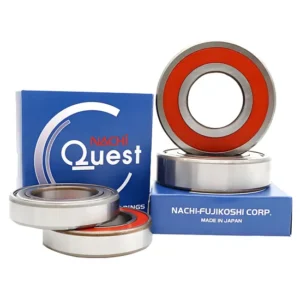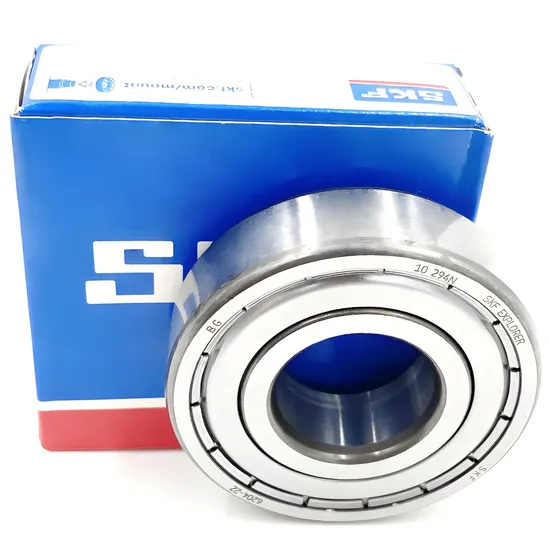
Deep Groove Ball Bearing
![X&S P5 6305 63/28 Deep Groove Ball Bearing for Automotive Alternators [WARN] draft identifier mismatch](https://skfip.com/wp-content/uploads/2026/09/xs-p5-6305-63-28-deep-groove-ball-bearing-for-automotive-alternators-warn-draft-identifier-mismatch-d6e3ad.avif)
X&S 6305 63/28 6306 63/32 6307 6308 6309 6310 Deep Groove Ball Bearing P5 — engineered for automotive alternators and electric motors.
Full Batch Traceability — every X&S 6305 63/28 6306 deep groove ball bearing shipment includes verifiable lot documentation back to the Shandong production facility, eliminating the guesswork in automotive supply chains.
| Parameter | Value |
|---|---|
| Designation | 6305 63/28 6306 63/32 6307 6308 6309 6310 |
| Bearing Type | Deep Groove Ball Bearing |
| Material | Bearing Steel |
| Seal or Shield Type | ZZ, 2RS, Open |
| Precision Class | P0, P6, P5, P4 |
| Vibration and Noise Level | Z1V1, Z2V2, Z3V3, Z4V4 |
| Lubrication | Grease or Oil |
| Load Direction | Radial and Axial |
| Origin | Shandong, China |
| Industry | Typical Applications |
|---|---|
| Automotive & Heavy Vehicle | Alternator rotor shafts, starter motor armatures |
| Electric Motors | Cooling fan drives, servo motor shafts |
| Industrial Gearboxes | High-speed input shafts, auxiliary drive pulleys |
| Pumps & Conveyors | Impeller shafts, idler roller journals |
Standard precision grades cannot survive the thermal and rotational demands of modern charging systems.
Sourcing standard P0 grade components for high-speed automotive charging systems is a common procurement error that leads to severe field consequences. When basic designations are matched without verifying the precision class, the resulting internal clearances and dimensional tolerances generate excessive vibration under operational loads. This vibration accelerates grease degradation and causes premature cage wear, ultimately leading to catastrophic rotor seizure [NEED_CITE: rolling bearing failure mode classification per ISO 15243]. Relying solely on the base number without specifying P5 or P4 precision classes guarantees elevated noise levels and reduced service intervals in demanding electrical applications.
Selecting the correct X&S 6305 63/28 6306 deep groove ball bearing requires matching the precision class to the specific rotational speed and thermal profile of the alternator. While standard grades suffice for slow-turning conveyor idlers, automotive electrical systems demand tighter dimensional control to maintain optimal air gaps and minimize shaft deflection. Our technical review process ensures the selected precision grade aligns perfectly with the equipment manufacturer’s original vibration and noise specifications.
Automotive alternators operate in high-ambient-temperature environments where thermal expansion significantly alters internal operating clearance. Selecting the appropriate initial clearance class prevents the bearing from running too tight when the housing and shaft reach operational temperatures, which would otherwise cause excessive friction and rapid lubricant breakdown. Furthermore, the choice between sealed variants and open designs dictates the lubrication strategy; sealed units require high-temperature stable grease filled for life, while open designs depend on the housing’s oil bath or external grease supply to manage heat dissipation and prevent contaminant ingress [NEED_CITE: thermal expansion effects on bearing internal clearance per ISO 281].
The vibration and noise levels, ranging from Z1V1 to Z4V4, directly indicate the geometric accuracy of the raceways and the dynamic balance of the rotating assembly. For automotive electrical systems, specifying Z3V3 or Z4V4 is critical to suppress high-frequency acoustic emissions that degrade perceived vehicle quality. Equally important is the seal configuration; non-contact metal shields offer low friction for high-speed operation but limited moisture protection, whereas contact rubber seals provide superior contamination exclusion at the cost of slightly higher operating torque and temperature generation.
Overlooking critical suffixes during cross-referencing transforms a minor procurement saving into massive warranty liabilities. Installing a standard clearance unit where a C3 thermal expansion clearance was mandated causes the rolling elements to bind as the alternator heats up, resulting in immediate cage failure and snapped shafts. Similarly, substituting a stamped steel cage for a machined brass variant in high-vibration environments leads to rapid fatigue cracking. These specification mismatches systematically void equipment warranties and trigger unplanned downtime across the entire fleet [NEED_CITE: premature failure causes related to incorrect clearance selection per ISO 15243].
Procuring authentic components requires more than just matching the basic designation on a purchase order. We verify every X&S 6305 63/28 6306 deep groove ball bearing through authorized channels, ensuring the internal geometry and metallurgy meet exact engineering standards. Our cross-reference protocol specifically checks for hidden variations in seal materials and cage designs that generic suppliers routinely overlook. By mandating full batch traceability and official verification, we protect your assembly lines from the devastating impact of soft inner rings and cloned packaging that plague the open market.
To guarantee optimal performance and longevity in your specific application, please provide the detailed operational parameters for our technical review. Supplying the exact radial and axial loads, maximum rotational speeds, and anticipated operating temperatures allows our engineering team to validate the L10 life and confirm the correct internal clearance class. Additionally, sharing the original equipment manufacturer part numbers enables precise cross-reference verification to ensure the seal type and cage material perfectly match the initial design intent.
Q: How do I verify the authenticity of the received bearings?
A: Authenticity is verified by scanning the QR codes on the packaging using the official brand application, which cross-references the unique batch and lot numbers against the manufacturer’s database. We also provide comprehensive traceability documentation, including material test reports and Certificates of Conformity, ensuring every component is fully accounted for and genuine from the factory to your assembly line.
Q: What are the common cross-reference pitfalls with these designations?
A: The most frequent error involves matching the base number while ignoring critical suffixes for internal clearance and seal types. For instance, substituting a standard clearance for a C3 variant in high-temperature alternator applications causes thermal binding and rapid failure. We meticulously verify these exact specifications during the cross-reference process to prevent field failures caused by overlooked design variations.
Q: How do I choose the right precision class for automotive alternators?
A: Automotive alternators require tight dimensional control to maintain optimal air gaps and minimize shaft deflection at high speeds. While P0 is sufficient for general industrial use, P5 or P4 precision classes are typically mandated for charging systems to suppress vibration and noise. We review your specific speed and load parameters to recommend the exact precision grade required for reliable operation.
Q: What is the difference between Z1V1 and Z4V4 vibration levels?
A: These designations indicate the geometric accuracy of the raceways and the dynamic balance of the rotating assembly. Z1V1 represents standard commercial grades suitable for low-speed, non-critical applications, whereas Z4V4 denotes ultra-precision finishing that drastically reduces high-frequency acoustic emissions, making it essential for the quiet, smooth operation demanded in modern automotive electrical systems.
Q: How should I select the lubrication for high-speed electric motors?
A: High-speed electric motors generate significant friction heat, requiring lubricants with excellent thermal stability and oxidation resistance. Sealed variants come pre-filled with specialized greases designed for the expected operational temperature range and speed limits, while open designs require careful selection of external oil or grease systems. We evaluate your specific speed and thermal profile to confirm the optimal lubrication strategy for maximum service life.
Our engineers will respond within 12 hours with a tailored solution.
Request Quote| Bearing Type | Deep Groove Ball Bearing |
| Brand | SKF |
| Quality Standard | ISO 9001 / TS 16949 |
| Precision Grade | P0 / P5 / P6 (custom) |
| Material | Chrome Steel / Stainless |
| Cage Material | Steel / Brass / Polyamide |
| Lubrication | Grease / Oil (specify) |
| Operating Temp. | -40°C to +200°C |
| Min. Order Qty | 1 pc (samples available) |
| Prototype Lead Time | 7 Working Days |
| Load Capacity | Contact for C0/Cr values |
| Speed Rating | Contact for ndm limit |
| Vibration Level | Z1 / Z2 / Z3 (custom) |
| Noise Level | V1 / V2 / V3 (custom) |
| Fatigue Life | L10h per ISO 281 |
| Sealing Options | Open / Z / 2Z / RS / 2RS |
Our engineering team can modify bearing dimensions, materials, seals, and clearances to meet your specific operating requirements. Submit your drawing or spec sheet for a tailored proposal.
Main shaft bearings, gearbox bearings, and generator bearings for onshore and offshore wind turbines.
Heavy-duty bearings for crushers, conveyors, and rotary equipment in extreme dust and shock-load environments.
High-temperature bearings for rolling mills, continuous casting, and furnace applications.
Wheel hub bearings, transmission bearings, and e-motor bearings for passenger and commercial vehicles.
Axle box bearings, traction motor bearings, and gearbox bearings meeting EN/UIC railway standards.
High-precision spindle bearings, angular contact bearings, and super-precision bearings for CNC and robotics.
Our engineers analyze your operating conditions -- load, speed, temperature, environment -- and select or design the optimal bearing solution to maximize service life and reduce total cost of ownership.
Need non-standard dimensions, special materials, or modified clearances? We can modify standard SKF bearings or manufacture fully custom solutions with a 7-day prototype turnaround.
When bearings fail prematurely, our team conducts root-cause analysis using advanced diagnostic tools to identify the failure mode and recommend corrective action.
We deploy vibration monitoring, thermal imaging, and oil analysis programs that detect bearing deterioration early -- reducing unplanned downtime by up to 40%.
Proper installation is critical to bearing performance. Our certified technicians provide on-site installation support, alignment verification, and operator training worldwide.
From initial selection through end-of-life, our dedicated account managers provide scheduled maintenance plans, re-lubrication programs, and replacement forecasting for enterprise clients.
NDA protected · Free samples for orders > $50K · Reply within 12 hours