

ISO 9001 Certified
TS 16949
Genuine SKF
Need Technical Advice?
Reply within 12 hours · 15+ certified engineers on call
Linear Bearing
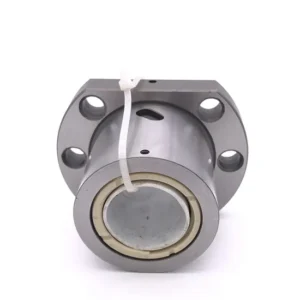
X&S LM14UU LME40UU LMF10UU KH2040 Linear Bearing for Automatic Assembly Machinery
X&S LM14UU LME40UU LMF10UU KH2040 Linear Bearing P0/P5/P6 — Manufactured from bearing steel for reliable wear resistance in automated assembly machinery.
- Delivers P0, P5, and P6 precision options to match diverse linear motion requirements.
- Our cross-reference review strictly aligns clearance, cage, and precision specifications.
7
Day Prototype
vs. 8-12 wks standard
50+
Countries Served
Global logistics network
12h
Quote Response
Expert engineers on call
Typical Applications
Wind Power
Mining
Steel & Metallurgy
Automotive / EV
Rail Transit
Precision Machinery
Genuine SKF Bearings
NDA Protected
Free Sample for Orders > $50K
Global Shipping
Product Details
Three-way cross-reference alignment — verifying dynamic load ratings, precision classes, and flange geometries ensures exact interchangeability for automated assembly lines.
Technical Specifications
| Parameter | Value |
|---|---|
| Designation | LM14UU LME40UU LMF10UU KH2040 |
| Product Type | Linear Bearing |
| Series | LM |
| Shape | Straight |
| Material | Bearing Steel |
| Precision Class | P0, P5, P6 |
| Certification | ISO9001, TS16949, CE |
| Origin | China |
Note: Certain catalog suffixes within this series remain unverified and require direct manufacturer catalog confirmation prior to finalizing precision or sealing specifications.
Application Suitability
| Industry | Typical Applications |
|---|---|
| Automatic Assembly Machinery | High-frequency reciprocating sliding modules, pick-and-place actuators |
| Automotive Manufacturing | Robotic welding arm guide rails, automated part feeding systems |
| General Industrial Equipment | Precision linear motion stages, CNC machine tool auxiliary axes |
Why Assembly Lines Fail When Linear Bearings Look Identical
When sourcing an X&S LM14UU LME40UU LMF10UU KH2040 linear bearing, visual similarity often masks critical internal differences that cause catastrophic rail binding under continuous reciprocation.
Operating in the Shenzhen trading sector, I have witnessed numerous instances where standard linear sliders were mistakenly supplied for high-frequency automated assembly machinery. A minor cross-reference error that matches only the base designation while overlooking internal structural details frequently leads to abnormal noise and sudden line stoppages. Procurement engineers often assume that matching the outer dimensions is sufficient, but ignoring the retainer material or precision suffix causes the carriage to seize when thermal expansion alters the clearance. Automated production environments simply cannot afford the downtime caused by these subtle specification mismatches [NEED_CITE: linear motion system failure modes under high-cycle reciprocation].
Matching the Bearing to High-Cycle Automation
Selecting the correct X&S LM14UU LME40UU LMF10UU KH2040 linear bearing requires looking beyond basic dimensional interchangeability. Our technical review process evaluates the specific load profiles and travel speeds of your automated assembly machinery to ensure the selected retainer design and precision grade can withstand continuous operation. By aligning the exact internal geometry with your equipment’s dynamic requirements, we prevent the premature wear that typically plagues high-cycle linear motion modules.
Reciprocation Challenges and Lubrication Demands
Linear motion systems in automated assembly face relentless reciprocating loads that rapidly degrade inadequate lubrication films. The continuous back-and-forth travel prevents the formation of a full hydrodynamic wedge, making the bearing highly susceptible to boundary friction and retainer wear. Temperature fluctuations within the machine enclosure can also alter the internal clearance, causing standard tolerances to bind under thermal expansion. Proper sealing is equally critical; while contact seals keep out metallic dust from adjacent machining processes, they introduce friction that must be factored into the overall drive torque calculations [NEED_CITE: lubrication starvation in short-stroke linear bearings].
Decoding the Internal Engineering and Precision Grades
The transition from a standard P0 grade to a P5 or P6 precision class fundamentally changes the running accuracy and noise profile of the linear carriage. In high-speed pick-and-place actuators, the retainer material dictates the maximum operational velocity and vibration resistance; a mismatched cage will quickly fracture under rapid acceleration. The straight cylindrical design relies on precise ball-to-shaft contact, meaning any deviation in the bearing steel hardness or dimensional tolerance leads to localized stress concentrations. Understanding these internal variables ensures that the selected configuration provides the necessary rigidity for precision automated assembly tasks without suffering from premature fatigue.
The Hidden Costs of Specification Mismatches
Installing a linear bearing with an incorrect precision class or incompatible flange geometry inevitably results in unplanned downtime and catastrophic damage to the guide shaft. According to the failure classification frameworks outlined in ISO 15243, improper mounting and clearance loss are primary drivers of premature surface distress and eventual seizing. When automated machinery halts unexpectedly, the resulting production delays and scrap generation far exceed the initial savings of sourcing an unverified alternative. Ensuring exact specification alignment protects both the linear guide infrastructure and the overall equipment effectiveness [NEED_CITE: rolling bearing failure mode classification per ISO 15243].
Why Our Technical Verification Matters
Sourcing these specific linear models requires more than just matching the alphanumeric designation on a purchase order. We enforce a strict three-way cross-reference alignment, verifying that the dynamic load ratings, precision tolerances, and flange geometries perfectly match your original equipment requirements. Our batch traceability protocols ensure that every shipment of bearing steel components can be tracked back to the manufacturer’s production facilities, eliminating the risk of receiving counterfeit units with soft inner rings. Furthermore, our application-based selection review catches the subtle suffix discrepancies that typically cause thermal binding in high-speed automated environments.
Documentation & Authenticity
- Certificate of Conformity validating the specific P5 or P6 precision grade for automated assembly modules.
- Original batch and lot traceability linking the bearing steel carriages directly to the manufacturing run.
- Official app QR verification enabling immediate authenticity checks on the shop floor before installation.
- Material test report confirming the metallurgical composition and hardness of the straight cylindrical outer shell.
- Dimensional and running accuracy inspection report verifying the internal clearance prior to dispatch.
Storage, Handling & Mounting
- Retain the original factory packaging to protect the P5 precision bearing steel surfaces from ambient humidity and corrosion.
- Handle the straight cylindrical carriages with clean lint-free gloves to prevent acidic skin oils from etching the raceways.
- Verify the specific flange geometry and mounting hole patterns before applying press forces during automated module assembly.
- Apply the recommended lithium-based grease to the open recirculating ball circuits if the selected variant lacks integrated sealing.
- Store the high-precision linear units horizontally in a temperature-controlled environment to prevent gravitational distortion of the retainer.
Engineering Support and Selection Guidance
To ensure optimal performance in your automated assembly machinery, please provide the specific radial and axial load profiles, maximum travel speeds, and operating temperature ranges. Sharing the original OEM equipment numbers allows our engineering team to perform a rigorous cross-reference check, verifying that the internal structural details and precision suffixes perfectly align with your application. This technical复核 guarantees that the selected linear motion components will deliver reliable, high-cycle operation without unexpected binding or noise.
Frequently Asked Questions
Q: How do I determine the correct precision class for my automated assembly equipment?
A: The choice between P0, P5, and P6 depends on the required positional accuracy and speed of your linear modules. High-speed pick-and-place actuators typically demand P5 or P6 to minimize vibration and running noise, whereas general material handling transfer systems can reliably operate with standard P0 tolerances. Providing your specific travel speed and positioning tolerance allows us to recommend the exact grade.
Q: What is the difference between the LM, LME, and LMF series in this designation group?
A: The primary distinction lies in the dimensional standards and flange configurations. The standard LM series follows metric dimensional guidelines, while the LME series typically adheres to alternative inch-based or specific regional dimensional standards. The LMF variants incorporate integrated flanges for direct surface mounting. Always verify the exact shaft diameter and housing bore requirements to ensure the correct series is selected for your guide rail assembly.
Q: How does the retainer material affect the performance of these linear bearings in high-cycle applications?
A: The retainer material governs the maximum operating speed, noise level, and temperature threshold of the linear carriage. Metallic retainers offer superior rigidity and thermal stability for heavy-load, continuous reciprocation, while polymer variants provide quieter operation and lower friction for high-speed, light-load automated assembly tasks. Selecting the wrong retainer for your specific cycle rate is a leading cause of premature cage failure and abnormal noise.
Q: How can I ensure batch consistency when ordering large volumes for my production line?
A: We maintain strict batch traceability for every shipment, ensuring that all linear bearings originate from the same manufacturing lot. This guarantees uniform dimensional tolerances, consistent internal clearance, and identical material properties across your entire automated assembly line. Requesting our pre-shipment dimensional and running accuracy inspection reports provides documented proof of this consistency before the components reach your facility.
Product Summary
- Product Name
- X&S LM14UU LME40UU LMF10UU KH2040 Linear Bearing for Automatic Assembly Machinery
- Category
- Linear Bearing
- Brand
- SKF
- Certification
- ISO 9001 · TS 16949
- Lead Time
- 7 Working Days
Get a Custom Quote
Our engineers will respond within 12 hours with a tailored solution.
Request QuoteGeneral Specifications
| Bearing Type | Linear Bearing |
| Brand | SKF |
| Quality Standard | ISO 9001 / TS 16949 |
| Precision Grade | P0 / P5 / P6 (custom) |
| Material | Chrome Steel / Stainless |
| Cage Material | Steel / Brass / Polyamide |
| Lubrication | Grease / Oil (specify) |
| Operating Temp. | -40°C to +200°C |
| Min. Order Qty | 1 pc (samples available) |
| Prototype Lead Time | 7 Working Days |
Performance Parameters
| Load Capacity | Contact for C0/Cr values |
| Speed Rating | Contact for ndm limit |
| Vibration Level | Z1 / Z2 / Z3 (custom) |
| Noise Level | V1 / V2 / V3 (custom) |
| Fatigue Life | L10h per ISO 281 |
| Sealing Options | Open / Z / 2Z / RS / 2RS |
Custom Specifications Available
Our engineering team can modify bearing dimensions, materials, seals, and clearances to meet your specific operating requirements. Submit your drawing or spec sheet for a tailored proposal.
Wind Power
Main shaft bearings, gearbox bearings, and generator bearings for onshore and offshore wind turbines.
Mining & Quarrying
Heavy-duty bearings for crushers, conveyors, and rotary equipment in extreme dust and shock-load environments.
Steel & Metallurgy
High-temperature bearings for rolling mills, continuous casting, and furnace applications.
Automotive / EV
Wheel hub bearings, transmission bearings, and e-motor bearings for passenger and commercial vehicles.
Rail Transit
Axle box bearings, traction motor bearings, and gearbox bearings meeting EN/UIC railway standards.
Precision Machinery
High-precision spindle bearings, angular contact bearings, and super-precision bearings for CNC and robotics.
Application Design
EngineeringOur engineers analyze your operating conditions -- load, speed, temperature, environment -- and select or design the optimal bearing solution to maximize service life and reduce total cost of ownership.
Custom Modification
7-Day TurnaroundNeed non-standard dimensions, special materials, or modified clearances? We can modify standard SKF bearings or manufacture fully custom solutions with a 7-day prototype turnaround.
Failure Analysis
DiagnosticsWhen bearings fail prematurely, our team conducts root-cause analysis using advanced diagnostic tools to identify the failure mode and recommend corrective action.
Predictive Maintenance
Up to 40% Less DowntimeWe deploy vibration monitoring, thermal imaging, and oil analysis programs that detect bearing deterioration early -- reducing unplanned downtime by up to 40%.
On-site Installation
Global CoverageProper installation is critical to bearing performance. Our certified technicians provide on-site installation support, alignment verification, and operator training worldwide.
Lifecycle Support
Enterprise SLAFrom initial selection through end-of-life, our dedicated account managers provide scheduled maintenance plans, re-lubrication programs, and replacement forecasting for enterprise clients.
Why SKF China
The engineering partner advantage
7 Days
Prototype Lead Time
vs. 8-12 weeks via standard channels
15+
Certified Engineers
SKF-certified, on-call for your project
50+
Countries Delivered
Reliable global logistics network
Request a Quote
Get a custom quote for
X&S LM14UU LME40UU LMF10UU KH2040 Linear Bearing for Automatic Assembly Machinery
NDA protected · Free samples for orders > $50K · Reply within 12 hours
Related Products
More Linear Bearing Products

![Xinsheng LM8SUU Linear Bearing for Industrial Robots & Precision Tools [WARN] draft identifier mismatch](https://skfip.com/wp-content/uploads/2026/09/xinsheng-lm8suu-linear-bearing-for-industrial-robots-precision-tools-warn-draft-identifier-mismatch-4f4bf9.avif)