

ISO 9001 Certified
TS 16949
Genuine SKF
Need Technical Advice?
Reply within 12 hours · 15+ certified engineers on call
Spherical Plain Bearing
X&S GE4C GE5C GE6C GE8C GE10C GE12C Spherical Plain Bearing for 3D Printing [WARN] draft identifier mismatch
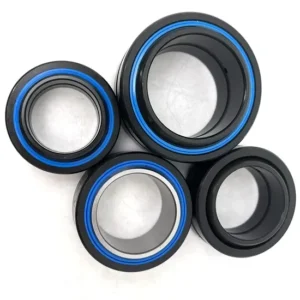
X&S GE4C GE5C GE6C GE8C GE10C GE12C Spherical Plain Bearing — featuring a single-slit outer ring and self-lubricating design for reliable oscillating movements in automation equipment and 3D printing applications.
- Every batch ships with a complete documentation package, including material test reports and dimensional inspection records.
7
Day Prototype
vs. 8-12 wks standard
50+
Countries Served
Global logistics network
12h
Quote Response
Expert engineers on call
Typical Applications
Wind Power
Mining
Steel & Metallurgy
Automotive / EV
Rail Transit
Precision Machinery
Genuine SKF Bearings
NDA Protected
Free Sample for Orders > $50K
Global Shipping
Product Details
Three-parameter cross-reference alignment — verifying inner ring clearance, outer ring slit structure, and self-lubricating material compatibility before confirming any interchange for this series.
Technical Specifications
| Parameter | Value |
|---|---|
| Designation | GE4C GE5C GE6C GE8C GE10C GE12C |
| Product Type | Spherical Plain Bearing |
| Outer Structure | Outer Ring of Single-Slit |
| Lubrication | Self-lubricating (Grease or Oil compatible) |
| Material Options | Standard or Customized |
| Certification | CE |
| Origin | Shandong, China |
Note: The ‘C’ suffix in this designation series remains unverified against standard catalog mappings and requires manufacturer confirmation for exact internal geometry.
Application Suitability
| Industry | Typical Applications |
|---|---|
| Additive Manufacturing | 3D printer articulation joints and heated bed leveling mechanisms |
| Industrial Automation | Robotic arm pivot points and automated assembly line linkages |
| Fluid Power Systems | Engineering hydraulic cylinder clevis mounts and piston rod eyes |
Why Thermal Binding Ruins Precision Before the X&S GE4C GE5C GE6C GE8C GE10C GE12C spherical plain bearing Wears Out
Mismatched clearance tolerances cause seizure long before the sliding surfaces degrade.
In high-precision additive manufacturing, a joint bearing operates under continuous micro-oscillations while exposed to localized heat from extruders or heated beds. When procurement teams cross-reference parts based solely on the basic bore and outside diameter, they frequently overlook the internal clearance class. I have dismantled 3D printers where the articulation joints seized completely because the installed components lacked the thermal expansion allowance required for the operating environment. The resulting friction generates excessive heat, warping the printed layers and halting production [NEED_CITE: thermal seizure mechanisms in oscillating bearings].
Matching the X&S GE4C GE5C GE6C GE8C GE10C GE12C spherical plain bearing to Oscillating Workloads
Selecting the correct X&S GE4C GE5C GE6C GE8C GE10C GE12C spherical plain bearing for automation equipment requires looking beyond static load ratings. In robotic arms or 3D printer gantries, the primary motion is oscillatory rather than continuous rotation. This specific motion profile prevents the formation of a full hydrodynamic lubricant film. By utilizing a self-lubricating design with an outer ring of single-slit construction, these components maintain consistent friction coefficients during micro-movements, preventing the stick-slip phenomenon that degrades positioning accuracy in automated machinery.
Navigating Heat and Contamination in Additive Manufacturing
The operating environment inside a 3D printer or an automated forging machine presents severe challenges for standard joints. Elevated ambient temperatures reduce the viscosity of standard greases, while airborne particulate matter from resin curing or metal powder sintering can infiltrate the sliding contact zone. Self-lubricating materials eliminate the need for periodic relubrication, which is often impossible in enclosed automation cells. Furthermore, the single-slit outer ring design provides the necessary elasticity for press-fitting into housing bores without distorting the inner sphere, ensuring the sliding interface remains perfectly concentric under thermal cycling [NEED_CITE: environmental degradation of plain bearing surfaces].
Decoding the Single-Slit and Self-Lubricating Architecture
The outer ring of single-slit architecture is a critical feature for these compact joints. Unlike solid outer rings that require complex housing designs or axial clamping, the single slit allows the ring to compress slightly during installation. This elasticity ensures a tight interference fit in the housing, preventing the outer ring from spinning under load, which would quickly destroy the aluminum or polymer housings typical in 3D printers. Combined with self-lubricating liners, the bearing eliminates metal-to-metal contact. The material options available—ranging from standard bearing steel to customized alloys—allow engineers to balance cost against the specific corrosion or temperature demands of water conservancy machinery or automotive shock absorbers.
The Hidden Costs of Ignoring the ‘C’ Suffix
Treating all GE-series bearings as identical is a critical procurement error. When a replacement part matches the basic dimensions but lacks the correct internal geometry or clearance designated by the specific suffix, the equipment faces immediate risk. In hydraulic cylinders, an overly tight clearance leads to thermal binding and rod bending. In precision automation, an excessively loose fit introduces backlash, ruining the dimensional accuracy of 3D printed parts. According to failure analysis frameworks, installing a component with incorrect internal geometry is classified as a primary mounting and selection error, leading to catastrophic damage and voiding equipment warranties [NEED_CITE: bearing failure classification per ISO 15243].
Why Procurement Teams Rely on Our Technical Verification
We do not simply pick parts from a shelf based on a base number. When you request these models, our engineering team verifies the outer ring slit orientation and the self-lubricating liner thickness against your specific housing tolerances. We actively prevent the common error of substituting a standard clearance part where a specific thermal expansion allowance is required. Because we maintain authorized distribution channels, every batch is fully traceable to the manufacturer. This means you receive exact material certifications rather than generic mill sheets, ensuring the customized or standard steel used meets the rigorous demands of continuous oscillation in your automation equipment.
Documentation & Authenticity
- Certificate of Conformity confirming CE standards for the specific batch of self-lubricating joints.
- Batch and lot traceability linking the single-slit outer rings directly to the manufacturer’s production run.
- Official app QR verification to instantly authenticate the X&S origin on site.
- Material test report detailing the exact alloy composition of the inner and outer rings.
- Dimensional and running accuracy inspection report verifying the spherical fit before dispatch.
Storage, Handling & Mounting
- Keep the self-lubricating liners protected from UV exposure and solvent vapors to prevent polymer degradation before installation.
- Use clean, lint-free gloves when handling the single-slit outer rings to avoid contaminating the sliding surfaces with skin oils.
- Press the outer ring evenly into the housing; tilting during installation can permanently deform the single-slit elasticity.
- Never apply direct heat to the self-lubricating material during mounting, as excessive temperatures will destroy the liner.
- Store customized material variants in their original anti-corrosion packaging until the exact moment of assembly.
Requesting Technical Selection and Cross-Reference Review
To ensure the selected joints match your exact operational demands, please provide the oscillation angle, frequency, and maximum operating temperature of your 3D printer or hydraulic cylinder. Share the specific housing bore tolerances and the required radial and axial loads so our engineering team can verify the internal clearance and liner suitability. If you are replacing an existing component, provide the original OEM equipment number or the exact dimensions and material requirements for a comprehensive cross-reference review.
Frequently Asked Questions
Q: How do I verify the authenticity of these specific self-lubricating joints?
A: Every batch we supply includes traceable documentation and a unique QR code. You can scan this code using the official brand application to instantly verify the manufacturing origin, production date, and material specifications. This eliminates the risk of installing counterfeit parts with soft inner rings that fail prematurely under the continuous oscillation of automation equipment.
Q: Why must I verify the outer ring structure when cross-referencing these models?
A: Matching the basic bore and outside diameter is insufficient. The single-slit outer ring design requires specific housing tolerances to maintain its elastic grip. If a cross-reference substitutes a solid outer ring or a double-slit variant, the bearing may spin in the housing or crush during press-fitting, leading to immediate mechanical failure and damaged equipment housings.
Q: What causes these joints to seize in 3D printing applications?
A: Seizure typically results from thermal binding when the internal clearance does not account for the heat generated by extruders or heated beds. If the cross-referenced part lacks the correct thermal expansion allowance, the inner and outer rings lock together as temperatures rise. We prevent this by verifying the exact clearance class against your operating temperature profile.
Q: How do self-lubricating variants differ from those requiring external grease?
A: Self-lubricating joints utilize specialized liners that provide continuous friction reduction without maintenance, making them ideal for enclosed 3D printers where relubrication is impossible. Variants requiring external grease or oil are better suited for heavy-duty, slow-moving applications like water conservancy machinery, where regular maintenance intervals are established and high load capacities are prioritized over zero-maintenance operation.
Product Summary
- Product Name
- X&S GE4C GE5C GE6C GE8C GE10C GE12C Spherical Plain Bearing for 3D Printing [WARN] draft identifier mismatch
- Category
- Spherical Plain Bearing
- Brand
- SKF
- Certification
- ISO 9001 · TS 16949
- Lead Time
- 7 Working Days
Get a Custom Quote
Our engineers will respond within 12 hours with a tailored solution.
Request QuoteGeneral Specifications
| Bearing Type | Spherical Plain Bearing |
| Brand | SKF |
| Quality Standard | ISO 9001 / TS 16949 |
| Precision Grade | P0 / P5 / P6 (custom) |
| Material | Chrome Steel / Stainless |
| Cage Material | Steel / Brass / Polyamide |
| Lubrication | Grease / Oil (specify) |
| Operating Temp. | -40°C to +200°C |
| Min. Order Qty | 1 pc (samples available) |
| Prototype Lead Time | 7 Working Days |
Performance Parameters
| Load Capacity | Contact for C0/Cr values |
| Speed Rating | Contact for ndm limit |
| Vibration Level | Z1 / Z2 / Z3 (custom) |
| Noise Level | V1 / V2 / V3 (custom) |
| Fatigue Life | L10h per ISO 281 |
| Sealing Options | Open / Z / 2Z / RS / 2RS |
Custom Specifications Available
Our engineering team can modify bearing dimensions, materials, seals, and clearances to meet your specific operating requirements. Submit your drawing or spec sheet for a tailored proposal.
Wind Power
Main shaft bearings, gearbox bearings, and generator bearings for onshore and offshore wind turbines.
Mining & Quarrying
Heavy-duty bearings for crushers, conveyors, and rotary equipment in extreme dust and shock-load environments.
Steel & Metallurgy
High-temperature bearings for rolling mills, continuous casting, and furnace applications.
Automotive / EV
Wheel hub bearings, transmission bearings, and e-motor bearings for passenger and commercial vehicles.
Rail Transit
Axle box bearings, traction motor bearings, and gearbox bearings meeting EN/UIC railway standards.
Precision Machinery
High-precision spindle bearings, angular contact bearings, and super-precision bearings for CNC and robotics.
Application Design
EngineeringOur engineers analyze your operating conditions -- load, speed, temperature, environment -- and select or design the optimal bearing solution to maximize service life and reduce total cost of ownership.
Custom Modification
7-Day TurnaroundNeed non-standard dimensions, special materials, or modified clearances? We can modify standard SKF bearings or manufacture fully custom solutions with a 7-day prototype turnaround.
Failure Analysis
DiagnosticsWhen bearings fail prematurely, our team conducts root-cause analysis using advanced diagnostic tools to identify the failure mode and recommend corrective action.
Predictive Maintenance
Up to 40% Less DowntimeWe deploy vibration monitoring, thermal imaging, and oil analysis programs that detect bearing deterioration early -- reducing unplanned downtime by up to 40%.
On-site Installation
Global CoverageProper installation is critical to bearing performance. Our certified technicians provide on-site installation support, alignment verification, and operator training worldwide.
Lifecycle Support
Enterprise SLAFrom initial selection through end-of-life, our dedicated account managers provide scheduled maintenance plans, re-lubrication programs, and replacement forecasting for enterprise clients.
Why SKF China
The engineering partner advantage
7 Days
Prototype Lead Time
vs. 8-12 weeks via standard channels
15+
Certified Engineers
SKF-certified, on-call for your project
50+
Countries Delivered
Reliable global logistics network
Request a Quote
Get a custom quote for
X&S GE4C GE5C GE6C GE8C GE10C GE12C Spherical Plain Bearing for 3D Printing [WARN] draft identifier mismatch
NDA protected · Free samples for orders > $50K · Reply within 12 hours
Related Products
More Spherical Plain Bearing Products
Spherical Plain Bearing
X&S GX70T GX80T GX100T GX120T Thrust Spherical Plain Bearing for Radar Systems
Spherical Plain Bearing
Gewz88es–Gewz152es Spherical Plain Bearings – High-Load, Corrosion-Resistant
Spherical Plain Bearing