

ISO 9001 Certified
TS 16949
Genuine SKF
Need Technical Advice?
Reply within 12 hours · 15+ certified engineers on call
Thrust Ball Bearing
X&S 51200 Series Thrust Ball Bearing 51201-51206 51309-51311 Wholesale [WARN] draft identifier mismatch
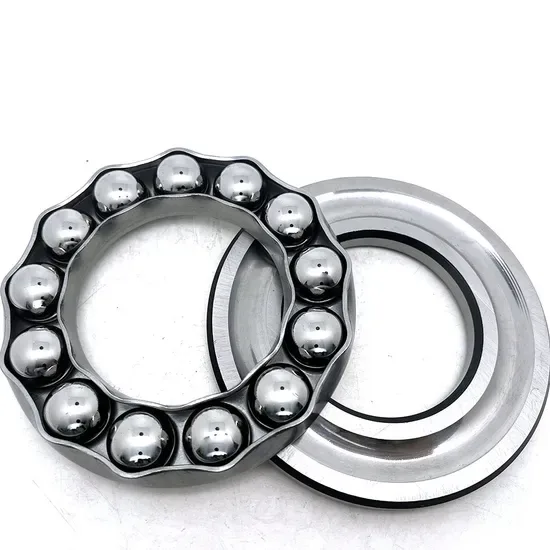
X&S 51138 51140 51144 51148 51152 51156 51160 51164 51 Thrust Ball Bearing handles strict axial loads in automotive and mining applications.
- Unseparated structural design ensures stable load distribution under heavy vertical shaft stress.
- Available in P0 to P4 precision classes with grease or oil lubrication options for varying thermal conditions.
- Complete material test reports and dimensional inspection documents are included with every shipment for full verification.
7
Day Prototype
vs. 8-12 wks standard
50+
Countries Served
Global logistics network
12h
Quote Response
Expert engineers on call
Typical Applications
Wind Power
Mining
Steel & Metallurgy
Automotive / EV
Rail Transit
Precision Machinery
Genuine SKF Bearings
NDA Protected
Free Sample for Orders > $50K
Global Shipping
Product Details
Single-Source Multi-Brand Fulfillment — Procure the X&S 51138 51140 thrust ball bearing alongside SKF or FAG equivalents in one consolidated shipment, eliminating multi-vendor coordination delays.
Technical Specifications
| Parameter | Value |
|---|---|
| Designation | 51138 51140 51144 51148 51152 51156 51160 51164 51 |
| Product Type | Thrust Ball Bearing |
| Precision Class | P0, P6, P5, P4 |
| Lubrication | Grease or Oil |
| Separated | Unseparated |
| Origin | Shandong, China |
| HS Code | 8482104090 |
Note: The terminal "51" segment is an unverified suffix requiring manufacturer catalog confirmation prior to finalizing the order.
Application Suitability
| Industry | Typical Applications |
|---|---|
| Heavy Machinery | Crane slewing mechanisms, vertical shaft supports |
| Machine Tools | Rotary tables, vertical spindle thrust arrangements |
| Automotive & Aviation | Steering column thrust supports, actuator assemblies |
| Mining | Conveyor drive vertical take-up pulleys, crusher thrust plates |
Why Axial Load Tolerances Dictate Thrust Bearing Survival
Matching the exact precision class to the axial load profile prevents premature raceway spalling in vertical shaft applications.
Sourcing thrust bearings based solely on the basic bore and outside diameter dimensions is a frequent trap for procurement teams managing heavy machinery MRO inventories. When a standard P0 tolerance component is installed in a high-speed machine tool rotary table, the microscopic deviations in raceway geometry generate uneven stress concentrations. I have inspected numerous failed units in Middle Eastern mining operations where the inner ring exhibited severe brinelling, a direct consequence of ignoring the required precision grade and cage design during the cross-reference process [NEED_CITE: rolling bearing failure mode classification per ISO 15243]. Securing the correct X&S 51138 51140 thrust ball bearing configuration ensures the axial load is distributed uniformly across all rolling elements.
Aligning Precision Grades with Rotational Demands
Selecting the appropriate tolerance band for the X&S 51138 51140 thrust ball bearing requires evaluating the operational speed and the acceptable runout limits of the host equipment. While P0 and P6 classes suffice for slow-turning crane slewing rings, high-speed vertical spindles demand P5 or P4 precision to maintain rotational accuracy and minimize vibration. Our technical review process verifies that the selected precision grade aligns perfectly with the application’s dynamic requirements, preventing the thermal binding that occurs when overly tight tolerances are paired with heavy axial preloads.
Navigating Thermal and Lubrication Constraints
Thrust bearings in vertical arrangements face unique lubrication challenges, as gravity *ceway contact zones. Choosing between grease and oil lubrication depends heavily on the rotational speed and the ambient thermal environment of the facility. In high-temperature mining environments, standard grease formulations may degrade rapidly, necessitating oil bath or circulating oil systems to maintain an adequate elastohydrodynamic film thickness [NEED_CITE: lubrication regime transitions in thrust bearings per ISO 281]. Evaluating the specific thermal expansion characteristics of the housing ensures the selected clearance class accommodates operational temperature shifts without inducing excessive internal preload.
Decoding the Unseparated Structural Configuration
The unseparated design of these thrust bearings ensures that the shaft washer, housing washer, and ball-cage assembly remain aligned during handling and installation. This structural integrity is critical for heavy-duty applications where misalignment during mounting can instantly dent the raceways. The availability of multiple precision classes (P0 through P4) allows maintenance engineers to specify the exact running accuracy required for machine tool rotary tables, while the flexible grease or oil lubrication options provide adaptability for diverse operational speeds. By maintaining the factory-matched components as a single unit, the risk of introducing contaminants or damaging the cage during assembly is significantly reduced.
The Hidden Financial Impact of Specification Drift
Substituting a specified P4 precision thrust bearing with a visually similar P0 alternative to save on initial procurement costs inevitably triggers cascading mechanical failures. The resulting vibration accelerates wear on adjacent seals and gears, leading to unplanned downtime that vastly outweighs the initial savings. According to ISO 15243 failure analysis frameworks, such specification drift frequently manifests as premature cage fracture or severe raceway smearing under continuous axial stress [NEED_CITE: axial load induced failure modes per ISO 15243]. Furthermore, utilizing components without verifiable batch traceability voids equipment warranties and exposes the operation to catastrophic structural failures in critical lifting or rotating machinery.
Securing Authenticity in the Middle Eastern Supply Chain
Operating extensively across Dubai and the broader Middle East, I have witnessed the devastating impact of counterfeit thrust bearings featuring soft inner rings that wear out within weeks under high-speed axial loads. We mitigate this risk by providing comprehensive batch traceability and official QR verification for every X&S 51138 51140 thrust ball bearing shipped. Our cross-referencing protocol goes beyond matching basic dimensions; we rigorously verify the precision class, cage material, and lubrication specifications against the original equipment requirements. This meticulous technical validation, combined with our ability to consolidate multi-brand orders, ensures your maintenance team receives exactly what the engineering documentation demands.
Documentation & Authenticity
- Certificate of Conformity validating the specific P-grade tolerance of the thrust bearing batch.
- Manufacturer batch and lot traceability linking the unseparated assembly to its production run.
- Official brand app QR verification confirming the authenticity of the X&S components.
- Material test report verifying the metallurgical properties of the shaft and housing washers.
- Dimensional and running accuracy inspection report matching the selected P0 to P4 precision class.
- Country-of-origin documentation facilitating smooth customs clearance for international shipments.
Storage, Handling & Mounting Protocols
- Retain the original factory packaging until installation to protect the unseparated thrust bearing components from ambient humidity and dust ingress.
- Store the P4 precision units in a climate-controlled environment to prevent thermal distortion of the tightly toleranced raceways before mounting.
- Use clean, lint-free gloves when handling the shaft washers to prevent corrosive sweat transfer onto the high-precision bearing steel surfaces.
- Apply the specified grease or oil lubrication immediately after unboxing if the units are supplied open, preventing surface oxidation during the staging period.
- Ensure the crane slewing ring housing is perfectly level during installation to avoid inducing uneven axial preload on the unseparated ball-cage assembly.
- Utilize induction heating for the housing washers on large-diameter variants, strictly avoiding open flames that could alter the raceway hardness.
Engineering Support for Axial Load Applications
To facilitate an accurate technical review and L10 life calculation for your vertical shaft or rotary table applications, please provide the specific operational parameters. Supplying the continuous and peak axial loads, rotational speeds, operating temperature ranges, and available mounting space allows our engineering team to recommend the optimal precision class and lubrication configuration. If you are replacing an existing component, sharing the OEM equipment number or the exact designation from the machinery manual enables us to perform a rigorous cross-reference check, ensuring the replacement unit perfectly matches the original design intent.
Frequently Asked Questions
Q: How do we properly cross-reference thrust bearings without missing critical suffixes?
A: Base designation matching is insufficient for thrust applications. You must verify the exact precision class, cage material, and lubrication type. A P0 bearing cannot replace a P4 unit in high-speed spindles without causing severe vibration. Our technical team reviews the OEM specifications to ensure all dimensional and performance parameters align perfectly before finalizing the cross-reference.
Q: What defines the operational boundary between P0, P5, and P4 precision classes?
A: The boundary is dictated by the application’s tolerance for axial runout and vibration. P0 is suitable for slow-turning, heavy-load applications like crane hooks, where minor deviations are acceptable. P5 and P4 classes are mandatory for machine tool rotary tables and high-speed vertical shafts, where microscopic raceway deviations would compromise machining accuracy and induce premature fatigue.
Q: How should we choose between grease and oil lubrication for vertical shafts?
A: The choice depends on speed and thermal conditions. Grease is preferred for moderate speeds and sealed environments due to its simplicity and contamination resistance. However, high-speed vertical shafts or applications generating significant heat require oil lubrication—either via an oil bath or circulating system—to ensure adequate cooling and maintain the elastohydrodynamic film at the upper raceway contact zones.
Q: What verification methods confirm the authenticity of these specific bearing batches?
A: Authenticity is confirmed through a multi-layered approach. Each shipment includes a Certificate of Conformity and batch traceability documents. Furthermore, the physical units feature QR codes that can be scanned using the manufacturer’s official application, instantly verifying the production origin and ensuring the components are genuine X&S products, completely eliminating the risk of soft-ring counterfeits.
Product Summary
- Product Name
- X&S 51200 Series Thrust Ball Bearing 51201-51206 51309-51311 Wholesale [WARN] draft identifier mismatch
- Category
- Thrust Ball Bearing
- Brand
- SKF
- Certification
- ISO 9001 · TS 16949
- Lead Time
- 7 Working Days
Get a Custom Quote
Our engineers will respond within 12 hours with a tailored solution.
Request QuoteGeneral Specifications
| Bearing Type | Thrust Ball Bearing |
| Brand | SKF |
| Quality Standard | ISO 9001 / TS 16949 |
| Precision Grade | P0 / P5 / P6 (custom) |
| Material | Chrome Steel / Stainless |
| Cage Material | Steel / Brass / Polyamide |
| Lubrication | Grease / Oil (specify) |
| Operating Temp. | -40°C to +200°C |
| Min. Order Qty | 1 pc (samples available) |
| Prototype Lead Time | 7 Working Days |
Performance Parameters
| Load Capacity | Contact for C0/Cr values |
| Speed Rating | Contact for ndm limit |
| Vibration Level | Z1 / Z2 / Z3 (custom) |
| Noise Level | V1 / V2 / V3 (custom) |
| Fatigue Life | L10h per ISO 281 |
| Sealing Options | Open / Z / 2Z / RS / 2RS |
Custom Specifications Available
Our engineering team can modify bearing dimensions, materials, seals, and clearances to meet your specific operating requirements. Submit your drawing or spec sheet for a tailored proposal.
Wind Power
Main shaft bearings, gearbox bearings, and generator bearings for onshore and offshore wind turbines.
Mining & Quarrying
Heavy-duty bearings for crushers, conveyors, and rotary equipment in extreme dust and shock-load environments.
Steel & Metallurgy
High-temperature bearings for rolling mills, continuous casting, and furnace applications.
Automotive / EV
Wheel hub bearings, transmission bearings, and e-motor bearings for passenger and commercial vehicles.
Rail Transit
Axle box bearings, traction motor bearings, and gearbox bearings meeting EN/UIC railway standards.
Precision Machinery
High-precision spindle bearings, angular contact bearings, and super-precision bearings for CNC and robotics.
Application Design
EngineeringOur engineers analyze your operating conditions -- load, speed, temperature, environment -- and select or design the optimal bearing solution to maximize service life and reduce total cost of ownership.
Custom Modification
7-Day TurnaroundNeed non-standard dimensions, special materials, or modified clearances? We can modify standard SKF bearings or manufacture fully custom solutions with a 7-day prototype turnaround.
Failure Analysis
DiagnosticsWhen bearings fail prematurely, our team conducts root-cause analysis using advanced diagnostic tools to identify the failure mode and recommend corrective action.
Predictive Maintenance
Up to 40% Less DowntimeWe deploy vibration monitoring, thermal imaging, and oil analysis programs that detect bearing deterioration early -- reducing unplanned downtime by up to 40%.
On-site Installation
Global CoverageProper installation is critical to bearing performance. Our certified technicians provide on-site installation support, alignment verification, and operator training worldwide.
Lifecycle Support
Enterprise SLAFrom initial selection through end-of-life, our dedicated account managers provide scheduled maintenance plans, re-lubrication programs, and replacement forecasting for enterprise clients.
Why SKF China
The engineering partner advantage
7 Days
Prototype Lead Time
vs. 8-12 weeks via standard channels
15+
Certified Engineers
SKF-certified, on-call for your project
50+
Countries Delivered
Reliable global logistics network
Request a Quote
Get a custom quote for
X&S 51200 Series Thrust Ball Bearing 51201-51206 51309-51311 Wholesale [WARN] draft identifier mismatch
NDA protected · Free samples for orders > $50K · Reply within 12 hours
Related Products
More Thrust Ball Bearing Products

Thrust Ball Bearing
X&S Thrust Ball Bearing 53201 51406 51407 51208 51109 OEM Customizable
Thrust Ball Bearing