

Self-Aligning Ball Bearing
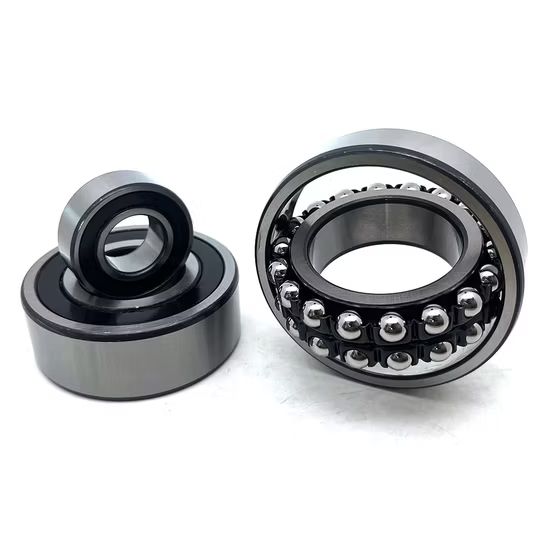
X&S 2203 2207 2304 2315M 2320M 2312 2303 2313 2314M Self-Aligning Ball Bearings — featuring machined brass cages for high-vibration textile environments and C2 to C5 clearances for thermal expansion.
Batch-Level Traceability — every X&S 2203 2207 2304 self-aligning ball bearing shipped includes verifiable lot documentation linking directly to the manufacturer’s production records.
| Parameter | Value |
|---|---|
| Designation | 2203 2207 2304 2315M 2320M 2312 2303 2313 2314M |
| Bearing Type | Self-Aligning Ball Bearing |
| Cage Material | Steel Cage, Brass Cage, Nylon Cage |
| Clearance Class | C2, C0, C3, C4, C5 |
| Limiting Speed | 5600-18000 r/Min |
| Vibration Level | V1, V2, V3, V4 |
| Lubrication | Grease or Oil |
| Hardness | HRC58-62 [NEED_CITE: standard bearing steel hardness range] |
| Feature | Stable Performance, Low Noise, Long Life |
| Design | Standard |
| Service | OEM & ODM Custom |
| Origin | Shandong, China |
| HS Code | 8482101090 |
| Industry | Typical Applications |
|---|---|
| Textile Manufacturing | Spinning machine drafting rollers, high-speed yarn winding spindles |
| Automotive & Heavy Vehicle | Steering column intermediate joints, suspension linkage pivot points |
| Construction & Agriculture | Tractor PTO shaft supports, light excavator articulation joints |
Matching the base number while ignoring the clearance suffix guarantees thermal seizure under continuous high-speed operation.
In the Pearl River Delta textile hubs, it is a familiar and costly sight: an entire spinning line halted because a single bearing locked up. Procurement teams often source replacements focusing solely on the base designation, missing the critical clearance class required for the operating temperature. When a standard C0 clearance X&S 2203 2207 2304 self-aligning ball bearing is installed in a high-speed drafting roller, the inner ring expands rapidly. Without the extra internal clearance of a C3 or C4 variant to absorb that thermal growth, the rolling elements bind against the raceway. This friction generates even more heat, leading to catastrophic cage failure and unplanned downtime [NEED_CITE: thermal expansion effects on bearing internal clearance].
Textile spinning environments demand components that tolerate slight shaft misalignments while sustaining high rotational speeds. The X&S 2203 2207 2304 self-aligning ball bearing accommodates these angular deflections naturally through its spherical outer ring raceway. By cross-referencing the exact OEM equipment requirements against the available clearance and vibration grades, we ensure the selected configuration handles the specific dynamic loads of yarn winding and drafting mechanisms without premature fatigue.
Spinning machine spindles and drafting rollers operate at sustained high speeds, generating significant internal friction and heat. The primary challenge is managing the thermal expansion of the shaft and inner ring, which rapidly reduces internal clearance if not properly specified. Selecting the correct clearance class, such as C3 or C4, provides the necessary thermal buffer. Furthermore, the choice between grease and oil lubrication must align with the machine’s maintenance schedule and operating temperature to prevent lubricant starvation or degradation [NEED_CITE: lubrication failure modes in high-speed textile machinery].
The presence of the M suffix in designations like 2315M, 2320M, and 2314M indicates a machined brass cage. In high-speed or high-vibration textile applications, a machined brass cage offers superior stability and heat dissipation compared to standard pressed steel or nylon alternatives. While nylon cages are quieter and lighter, they have strict thermal limits. Brass cages maintain their structural integrity and guiding precision under the heavy vibrational loads typical of spinning frames, ensuring the rolling elements remain evenly spaced and preventing cage disintegration at elevated temperatures.
Substituting a standard clearance bearing for a C3 variant in a high-temperature zone might seem like a minor procurement shortcut, but it inevitably triggers a cascade of mechanical failures. The resulting thermal binding destroys not only the bearing but can also score the shaft and damage the housing. According to failure analysis frameworks like ISO 15243, this type of smearing and adhesive wear is classified as a surface distress failure caused by inadequate internal clearance. The resulting unplanned downtime and secondary component replacements far exceed any initial savings [NEED_CITE: rolling bearing failure mode classification per ISO 15243].
Sourcing the correct configuration requires more than just matching a part number; it demands rigorous technical verification. We review every cross-reference request to ensure the base number, clearance class, and cage material suffix perfectly align with your application’s thermal and vibrational profile. Our batch traceability protocols mean you receive verifiable documentation for every shipment, eliminating the risk of installing counterfeit units with soft inner rings. Furthermore, our application-based selection review evaluates your specific load and speed parameters to prevent the costly mismatch of installing a P0 grade where a precision spindle demands tighter tolerances.
To ensure the selected configuration perfectly matches your spinning frames or drafting rollers, provide the specific radial and axial loads, operating speeds, and ambient temperatures. Sharing the exact OEM equipment number allows our engineering team to perform a precise cross-reference check, verifying that the clearance class and cage material suffix align with the original design intent. This technical review guarantees you receive a solution engineered for your specific thermal and vibrational environment.
Q: Why is matching the clearance class critical for self-aligning applications in textile mills?
A: High-speed textile machinery generates substantial heat, causing the shaft and inner ring to expand. If a standard C0 clearance is used instead of the required C3 or C4, this thermal growth eliminates the internal play, leading to severe friction, thermal binding, and eventual seizure. Matching the clearance class ensures sufficient internal space to accommodate these operational temperature increases safely.
Q: How do I choose between steel, nylon, and machined brass cages for spinning machines?
A: The choice depends on speed, temperature, and vibration. Nylon cages offer low noise and weight but have strict thermal limits. Pressed steel cages are standard for general use. The machined brass cage, denoted by the M suffix, provides superior stability, heat dissipation, and vibration resistance, making it the preferred option for the demanding, high-speed environments of heavy textile spinning frames.
Q: What does the "M" suffix mean, and why is it often confused during cross-referencing?
A: The M suffix specifically designates a machined brass cage. Procurement errors frequently occur when buyers match the base designation but overlook this suffix, accidentally ordering a pressed steel or nylon cage variant. In high-vibration applications, substituting the brass cage can lead to premature cage fatigue and failure, making exact suffix verification essential for operational reliability.
Q: How can I verify bearing authenticity and batch traceability upon delivery?
A: Every shipment includes a Certificate of Conformity and batch traceability documentation. You can verify authenticity directly on the warehouse floor by scanning the provided QR codes through the official brand applications. This ensures the internal components, such as the hardened rings and specific cage materials, are genuine and match the ordered specifications.
Q: Why is base designation matching not enough when cross-referencing self-aligning ball bearings?
A: The base number only defines the basic dimensions and bearing type. It ignores critical operational parameters like internal clearance, cage material, and vibration grading. Failing to align these suffixes with the specific thermal and mechanical demands of your equipment often results in catastrophic field failures, making comprehensive technical review indispensable for reliable cross-brand interchange.
Our engineers will respond within 12 hours with a tailored solution.
Request Quote| Bearing Type | Self-Aligning Ball Bearing |
| Brand | SKF |
| Quality Standard | ISO 9001 / TS 16949 |
| Precision Grade | P0 / P5 / P6 (custom) |
| Material | Chrome Steel / Stainless |
| Cage Material | Steel / Brass / Polyamide |
| Lubrication | Grease / Oil (specify) |
| Operating Temp. | -40°C to +200°C |
| Min. Order Qty | 1 pc (samples available) |
| Prototype Lead Time | 7 Working Days |
| Load Capacity | Contact for C0/Cr values |
| Speed Rating | Contact for ndm limit |
| Vibration Level | Z1 / Z2 / Z3 (custom) |
| Noise Level | V1 / V2 / V3 (custom) |
| Fatigue Life | L10h per ISO 281 |
| Sealing Options | Open / Z / 2Z / RS / 2RS |
Our engineering team can modify bearing dimensions, materials, seals, and clearances to meet your specific operating requirements. Submit your drawing or spec sheet for a tailored proposal.
Main shaft bearings, gearbox bearings, and generator bearings for onshore and offshore wind turbines.
Heavy-duty bearings for crushers, conveyors, and rotary equipment in extreme dust and shock-load environments.
High-temperature bearings for rolling mills, continuous casting, and furnace applications.
Wheel hub bearings, transmission bearings, and e-motor bearings for passenger and commercial vehicles.
Axle box bearings, traction motor bearings, and gearbox bearings meeting EN/UIC railway standards.
High-precision spindle bearings, angular contact bearings, and super-precision bearings for CNC and robotics.
Our engineers analyze your operating conditions -- load, speed, temperature, environment -- and select or design the optimal bearing solution to maximize service life and reduce total cost of ownership.
Need non-standard dimensions, special materials, or modified clearances? We can modify standard SKF bearings or manufacture fully custom solutions with a 7-day prototype turnaround.
When bearings fail prematurely, our team conducts root-cause analysis using advanced diagnostic tools to identify the failure mode and recommend corrective action.
We deploy vibration monitoring, thermal imaging, and oil analysis programs that detect bearing deterioration early -- reducing unplanned downtime by up to 40%.
Proper installation is critical to bearing performance. Our certified technicians provide on-site installation support, alignment verification, and operator training worldwide.
From initial selection through end-of-life, our dedicated account managers provide scheduled maintenance plans, re-lubrication programs, and replacement forecasting for enterprise clients.
NDA protected · Free samples for orders > $50K · Reply within 12 hours


