ISO 9001 Certified
TS 16949
Genuine SKF
Need Technical Advice?
Reply within 12 hours · 15+ certified engineers on call
Thrust Ball Bearing
Corrosion-Resistant 53000 53200 53201 Thrust Ball Bearing for Harsh Environments
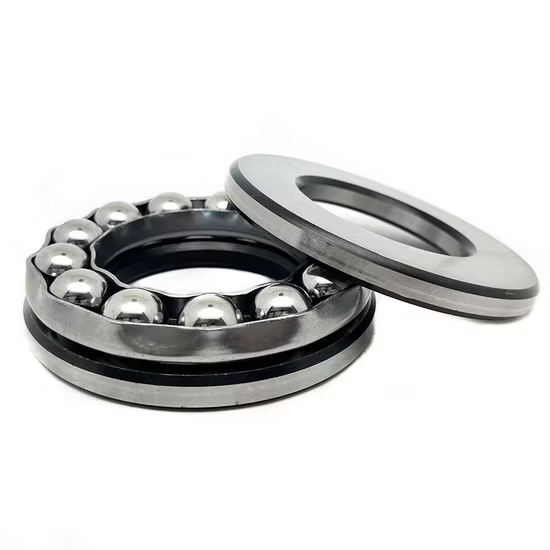
53000 53200 53201 Thrust Ball Bearing — non-aligning single-direction thrust design for axial load applications in machine tool spindles, industrial gearboxes, and mining equipment.
- Hardness 58-64 HRC with chrome steel, stainless steel, or ceramic material options
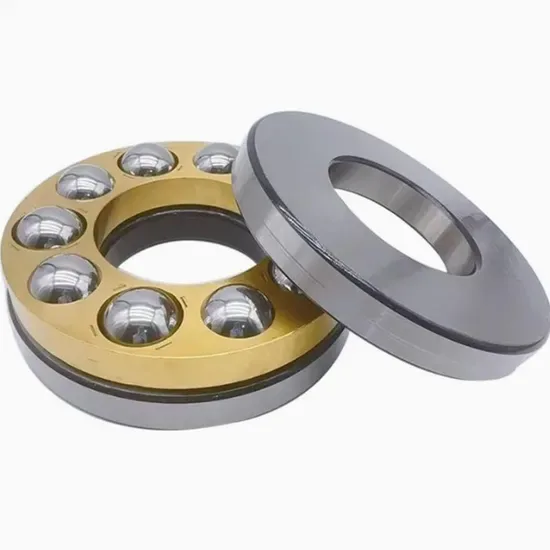
- Steel, brass, or nylon cage configurations available per application requirements
- Noise grades Z1–Z4 and vibration grades V1–V4 for precision or heavy-duty setups
Each shipment includes full batch traceability linked to manufacturer records with verifiable documentation.
7
Day Prototype
vs. 8-12 wks standard
50+
Countries Served
Global logistics network
12h
Quote Response
Expert engineers on call
Typical Applications
Wind Power
Mining
Steel & Metallurgy
Automotive / EV
Rail Transit
Precision Machinery
Genuine SKF Bearings
NDA Protected
Free Sample for Orders > $50K
Global Shipping
Product Details
Full Batch Traceability — Every 53000 53200 53201 thrust ball bearing shipment includes manufacturer lot records linked to official QR verification.
Technical Specifications
| Parameter | Value |
|---|---|
| Designation | 53000 53200 53201 |
| Bearing Type | Thrust Ball Bearing |
| Material Options | Chrome Steel, Carbon Steel, Stainless Steel, Ceramic |
| Cage Material Options | Steel, Brass, Nylon |
| Clearance Class | C2, C3, C4, C5 |
| Noise Level | Z1, Z2, Z3, Z4 |
| Vibration Level | V1, V2, V3, V4 |
| Hardness | 58-64 HRC |
| Aligning Type | Non-Aligning Bearing |
| Origin | Shandong, China |
Application Suitability
| Industry | Typical Applications |
|---|---|
| Machine Tool Manufacturing | Vertical spindle thrust support |
| Mining and Crushing | Heavy vehicle steering systems |
| Material Handling | Crane hook swivel mechanisms |
| Industrial Gearboxes | Vertical shaft axial load positioning |
Why Base Number Matches Still Cause Field Failures in 53000 53200 53201 Thrust Ball Bearing Applications
Matching the base designation without verifying material and clearance leads to rapid degradation in aggressive settings.
Sourcing teams frequently approve 53000 53200 53201 thrust ball bearing orders based solely on the numeric sequence, ignoring the environmental realities of the installation site. When standard carbon or chrome steel variants are deployed in high-salinity or chemically active zones, the rings degrade rapidly, leading to sudden axial play loss and equipment seizure [NEED_CITE: rolling bearing failure mode classification per ISO 15243]. This oversight forces maintenance crews into unplanned shutdowns, turning a simple component replacement into a critical path delay.
Adapting Thrust Solutions to Hostile Operating Zones
Selecting the correct 53000 53200 53201 thrust ball bearing requires looking past the catalog number to evaluate the specific corrosion and load profile of the machinery. We guide procurement engineers through material and clearance customization, ensuring the chosen variant survives the actual operating environment rather than just fitting the dimensional envelope. This application-based review prevents the installation of standard components in areas demanding specialized metallurgical defenses.
Environmental Stress and Axial Load Dynamics
Thrust bearings in vertical shafts and crane hooks endure heavy unidirectional axial loads, often compounded by shock impacts during lifting or steering maneuvers. In coastal or chemical processing facilities, salt spray and acidic vapors penetrate standard lubricants, accelerating surface pitting and raceway spalling [NEED_CITE: corrosion fatigue mechanisms in rolling element bearings]. Elevated operating temperatures simultaneously degrade grease viscosity, meaning the selected clearance class must accommodate thermal expansion without causing the balls to skid or the cage to bind under peak axial stress.
Decoding Material and Clearance Variables
Because the 53000, 53200, and 53201 designations lack mandatory suffixes in their base form, the exact material and internal geometry must be explicitly defined during procurement. Stainless steel variants provide necessary defenses against moisture and mild chemical exposure, while ceramic options eliminate electrical arcing risks and offer superior resistance to abrasive wear. Clearance selection is equally vital; a C3 or C4 internal clearance is often required to compensate for thermal shaft expansion in gearboxes, whereas a standard or C2 clearance suits precision machine tool spindles where axial rigidity is paramount. Nylon cages reduce weight and noise for high-speed spindles, while brass cages deliver the structural durability needed for heavy-duty mining equipment subjected to severe vibration.
The Hidden Cost of Incomplete Cross-Referencing
Approving a replacement based on dimensional equivalence alone often results in catastrophic damage when the internal geometry or metallurgy fails to match the original equipment manufacturer’s intent. Installing a standard steel bearing in a washdown area voids equipment warranties and triggers premature failure cycles that disrupt entire production lines. Aligning the cross-reference with the exact material grade and clearance class prevents these hidden costs and ensures compliance with ISO 281 life calculation parameters [NEED_CITE: ISO 281 bearing life calculation standards].
Securing Genuine Components Through Authorized Channels
Our multi-brand authorization allows buyers to consolidate mixed-requirement orders without coordinating across fragmented suppliers. We specifically verify that the material composition and clearance class of your 53xxx series order match the harsh environment specifications, not just the physical dimensions. Every batch is traceable to the manufacturer’s production facilities, eliminating the risk of receiving counterfeit rings with sub-standard hardness that pass superficial visual checks but fail under axial load.
Documentation & Authenticity
- Certificate of Conformity confirming the exact material grade, whether stainless steel or ceramic.
- Manufacturer batch and lot traceability linked to specific 53000 53200 53201 production runs.
- Official brand app QR verification to instantly validate the authenticity of the thrust bearing packaging.
- Material test reports verifying the metallurgical composition required for harsh environment resistance.
- Dimensional and running accuracy inspection reports confirming axial tolerances before dispatch.
- Country-of-origin documentation to support customs clearance and regional compliance mandates.
Storage, Handling & Mounting
- Retain original factory packaging to protect stainless steel variants from cross-contamination with carbon steel dust in the storeroom.
- Store ceramic ball variants away from heavy impact zones to prevent microscopic cracking in the rolling elements.
- Verify the specific clearance class marking before mounting to ensure thermal expansion allowances match the gearbox operating temperature.
- Use dedicated clean gloves when handling open-type bearings to prevent skin acidity from initiating localized raceway corrosion.
- Apply specified anti-corrosion compounds to carbon steel options immediately upon unsealing if installation is delayed in humid conditions.
Engineering Support for Complex Thrust Applications
Share your specific axial load profiles, rotational speeds, and environmental exposure data to allow our technical team to validate the optimal material and clearance combination. Providing the original equipment manufacturer’s part numbers enables us to perform a comprehensive cross-reference check that accounts for internal geometry and cage variations. This collaborative review ensures the selected thrust bearing delivers reliable service life in your specific harsh environment.
Frequently Asked Questions
Q: Why do cross-reference errors in thrust bearings cause thermal binding in the field?
A: Matching only the base 53xxx number often ignores the required internal clearance. If a standard clearance bearing is installed in a high-temperature gearbox where C3 or C4 is needed, thermal shaft expansion eliminates the internal play. This causes the balls to skid, generating excessive friction heat and leading to rapid cage failure or complete axial seizure during operation.
Q: How to select the right material for harsh environments?
A: Standard chrome or carbon steel suffices for dry, indoor applications, but harsh environments demand upgrades. Stainless steel variants resist moisture, salt spray, and mild chemical washdowns. For highly abrasive settings or applications requiring electrical insulation, ceramic options provide superior wear resistance and prevent electrical pitting on the raceways.
Q: What is the difference between C2, C3, C4, and C5 clearance in thrust applications?
A: C2 offers reduced internal play for high-precision, low-vibration setups like machine tool spindles. Normal clearance suits general industrial uses. C3, C4, and C5 provide progressively larger internal gaps, which are essential for applications involving significant thermal expansion or heavy interference fits, preventing the bearing from binding as the shaft heats up during operation.
Q: How to verify bearing authenticity using official brand apps?
A: Genuine products feature secure QR codes on their packaging that link directly to the manufacturer’s official verification database. Scanning these codes confirms the batch number, production date, and origin. This step is critical for avoiding counterfeits that may display cloned visual markings but utilize soft, sub-standard steel that fails under heavy axial loads.
Q: When should brass cages be preferred over nylon or steel cages?
A: Brass cages are necessary in heavy-duty applications like crane hooks or mining equipment where the bearing faces severe vibration, shock loads, or elevated temperatures that would degrade polymer cages. They offer superior structural integrity and heat dissipation compared to pressed steel cages, ensuring reliable ball guidance under extreme mechanical stress.
Product Summary
- Product Name
- Corrosion-Resistant 53000 53200 53201 Thrust Ball Bearing for Harsh Environments
- Category
- Thrust Ball Bearing
- Brand
- SKF
- Certification
- ISO 9001 · TS 16949
- Lead Time
- 7 Working Days
Get a Custom Quote
Our engineers will respond within 12 hours with a tailored solution.
Request QuoteGeneral Specifications
| Bearing Type | Thrust Ball Bearing |
| Brand | SKF |
| Quality Standard | ISO 9001 / TS 16949 |
| Precision Grade | P0 / P5 / P6 (custom) |
| Material | Chrome Steel / Stainless |
| Cage Material | Steel / Brass / Polyamide |
| Lubrication | Grease / Oil (specify) |
| Operating Temp. | -40°C to +200°C |
| Min. Order Qty | 1 pc (samples available) |
| Prototype Lead Time | 7 Working Days |
Performance Parameters
| Load Capacity | Contact for C0/Cr values |
| Speed Rating | Contact for ndm limit |
| Vibration Level | Z1 / Z2 / Z3 (custom) |
| Noise Level | V1 / V2 / V3 (custom) |
| Fatigue Life | L10h per ISO 281 |
| Sealing Options | Open / Z / 2Z / RS / 2RS |
Custom Specifications Available
Our engineering team can modify bearing dimensions, materials, seals, and clearances to meet your specific operating requirements. Submit your drawing or spec sheet for a tailored proposal.
Wind Power
Main shaft bearings, gearbox bearings, and generator bearings for onshore and offshore wind turbines.
Mining & Quarrying
Heavy-duty bearings for crushers, conveyors, and rotary equipment in extreme dust and shock-load environments.
Steel & Metallurgy
High-temperature bearings for rolling mills, continuous casting, and furnace applications.
Automotive / EV
Wheel hub bearings, transmission bearings, and e-motor bearings for passenger and commercial vehicles.
Rail Transit
Axle box bearings, traction motor bearings, and gearbox bearings meeting EN/UIC railway standards.
Precision Machinery
High-precision spindle bearings, angular contact bearings, and super-precision bearings for CNC and robotics.
Application Design
EngineeringOur engineers analyze your operating conditions -- load, speed, temperature, environment -- and select or design the optimal bearing solution to maximize service life and reduce total cost of ownership.
Custom Modification
7-Day TurnaroundNeed non-standard dimensions, special materials, or modified clearances? We can modify standard SKF bearings or manufacture fully custom solutions with a 7-day prototype turnaround.
Failure Analysis
DiagnosticsWhen bearings fail prematurely, our team conducts root-cause analysis using advanced diagnostic tools to identify the failure mode and recommend corrective action.
Predictive Maintenance
Up to 40% Less DowntimeWe deploy vibration monitoring, thermal imaging, and oil analysis programs that detect bearing deterioration early -- reducing unplanned downtime by up to 40%.
On-site Installation
Global CoverageProper installation is critical to bearing performance. Our certified technicians provide on-site installation support, alignment verification, and operator training worldwide.
Lifecycle Support
Enterprise SLAFrom initial selection through end-of-life, our dedicated account managers provide scheduled maintenance plans, re-lubrication programs, and replacement forecasting for enterprise clients.
Why SKF China
The engineering partner advantage
7 Days
Prototype Lead Time
vs. 8-12 weeks via standard channels
15+
Certified Engineers
SKF-certified, on-call for your project
50+
Countries Delivered
Reliable global logistics network
Request a Quote
Get a custom quote for
Corrosion-Resistant 53000 53200 53201 Thrust Ball Bearing for Harsh Environments
NDA protected · Free samples for orders > $50K · Reply within 12 hours
Related Products
More Thrust Ball Bearing Products