

ISO 9001 Certified
TS 16949
Genuine SKF
Need Technical Advice?
Reply within 12 hours · 15+ certified engineers on call
ASAHI Bearing
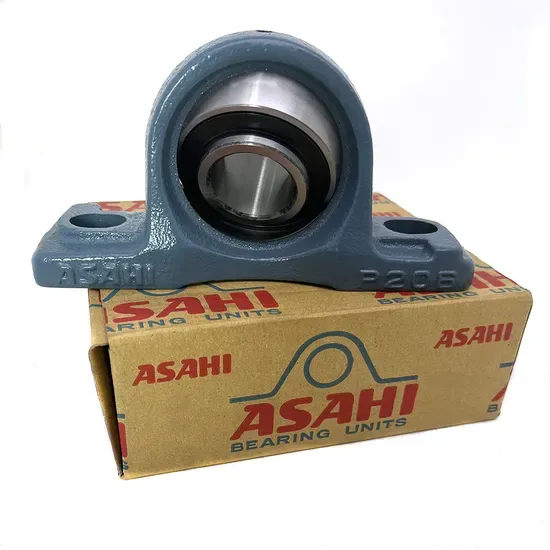
Asahi UCP208 UCT210 UCT211 Pillow Block Bearing for Textile Machinery
UCT 210 UCT 211 UCT 212 UCT 213 UCT 214 UCT 215 UC Pillow Block and Take-up Units — bearing steel construction with deep groove raceways ensures reliable load capacity for textile and conveyor machinery.
- UCT take-up housings provide essential belt tensioning adjustment, while standard UC inserts deliver stable rotational performance.
- Cross-references are strictly verified for housing geometry, seal configuration, and internal clearance alignment.
7
Day Prototype
vs. 8-12 wks standard
50+
Countries Served
Global logistics network
12h
Quote Response
Expert engineers on call
Typical Applications
Wind Power
Mining
Steel & Metallurgy
Automotive / EV
Rail Transit
Precision Machinery
Genuine SKF Bearings
NDA Protected
Free Sample for Orders > $50K
Global Shipping
Product Details
Full Brand Authorization — sourcing mixed housing styles like UCT and UCP in a single shipment eliminates multi-vendor coordination delays.
Technical Specifications
| Parameter | Value |
|---|---|
| Designation | UCT 210 UCT 211 UCT 212 UCT 213 UCT 214 UCT 215 UC |
| Product Type | Insert Bearing / Pillow Block Unit |
| Material | Bearing Steel |
| Rows Number | Single |
| Raceway | Deep Groove Raceway |
| Lubrication | Grease or Oil |
| Seal or Shield Type | ZZ, RS, Open |
| Precision Class | P0, P6, P5, P4, P2 |
| Vibration Level | Z1V1, Z2V2, Z3V3, Z4V4 |
| Origin | Shandong, China |
| HS Code | 8483200000 |
Note: The D1 suffix observed in cross-reference UCP216D1 is an unverified suffix requiring manufacturer catalog confirmation.
Application Suitability
| Industry | Typical Applications |
|---|---|
| Textile Machinery | Yarn tensioning frames, loom let-off mechanisms, drying cylinder drives |
| Conveyor Systems | Take-up units for belt tracking, tail pulley supports, transfer point rollers |
| Agricultural Machinery | Harrow depth adjustment linkages, auger drive shaft supports |
| Material Handling | Bucket elevator take-ups, vibratory screen isolation mounts |
Why Textile Mills Burn Through Standard Pillow Block Bearings
Standard clearance insert bearings fail rapidly when exposed to the thermal cycling of textile drying zones.
In the Pearl River Delta manufacturing hubs, I have investigated countless loom stoppages where the root cause was a thermally bound insert bearing. When yarn drying cylinders heat up, the shaft expands. If the internal clearance was not specified for thermal growth, the rolling elements skid, generating excessive friction and ultimately seizing the housing. Finding a reliable UCT210 UCP208 pillow block bearing supplier is not just about matching the base number; it requires verifying that the internal geometry and seal friction can survive continuous high-temperature operation without degrading the grease [NEED_CITE: thermal expansion effects on bearing internal clearance].
Matching Housing Geometry to Textile Tensioning Loads
Textile machinery relies heavily on precise yarn tensioning, which subjects take-up units to continuous radial loads combined with lateral belt pull forces. The UCT series take-up housings are engineered with robust guideways and heavy-duty cast iron bodies to absorb these multidirectional stresses without frame distortion. Selecting the correct housing style ensures the insert bearing remains perfectly aligned, preventing edge loading on the deep groove raceway. As an experienced UCT210 UCP208 pillow block bearing supplier, we review your specific tensioning arm geometry to confirm the housing footprint and bolt spacing match the OEM frame requirements.
Navigating Lint Ingress and Moisture in Spinning Frames
Spinning and weaving environments generate massive amounts of airborne cotton lint and micro-dust, which readily penetrate standard non-contact shields. Once lint mixes with the internal grease, it forms an abrasive paste that accelerates raceway wear and increases operating temperatures. Furthermore, high-humidity washing zones in dyeing facilities introduce moisture that compromises standard bearing steel. Evaluating the seal interface is critical; rubber contact seals provide superior exclusion of fibrous contaminants but generate slightly more friction, while labyrinth designs offer a balance for high-speed applications [NEED_CITE: seal friction and contamination ingress in textile environments].
Decoding Suffixes and Cross-Reference Traps
The difference between a successful run and a catastrophic line stop often lies in the suffix designations. While the base numbers like UCT210 or UCP208 define the physical dimensions and housing style, the insert bearing suffixes dictate the seal type, locking mechanism, and internal clearance. A common cross-reference error occurs when a buyer matches the base housing number but overlooks the internal clearance class, installing a standard CN clearance where a C3 is required for thermal expansion. We strictly align the seal variants—whether ZZ shields for low friction or RS contact seals for high dust—with the specific machine zone, ensuring the replacement unit mirrors the OEM performance profile.
The Hidden Costs of Ignoring Internal Clearance
Installing an insert bearing with incorrect internal clearance in a high-temperature textile application leads to rapid thermal binding. As the shaft expands, the radial internal clearance decreases to zero, causing the rolling elements to slide rather than roll. This skidding genera* film and leading to premature cage failure or complete seizure. According to failure mode classifications outlined in ISO 15243, this type of smearing and thermal discoloration is a direct result of improper clearance selection rather than material fatigue [NEED_CITE: bearing failure modes related to thermal binding per ISO 15243]. The resulting unplanned downtime and damaged shaft journals far exceed the initial cost of specifying the correct component.
Why Procurement Engineers Trust Our Technical Review
Sourcing mixed housing styles from a single authorized channel eliminates the logistical friction of coordinating multiple vendors for a single maintenance shutdown. We do not just ship boxes; we perform a rigorous cross-brand interchange review that matches clearance, cage material, and precision suffixes, not just the base designation. For textile applications, we specifically verify that the selected seal type can handle the ambient lint load without overheating. Every batch we supply includes full traceability to the manufacturer, allowing your maintenance team to verify authenticity via official brand apps. This application-based selection review prevents the costly field failures caused by generic catalog matching.
Documentation & Authenticity
- Certificate of Conformity validating the specific P-class precision grade for high-speed textile spindles.
- Batch and lot traceability linking the UCT take-up units directly to the foundry casting records.
- Official app QR verification to instantly confirm the insert bearing is free from cloned anti-counterfeit labels.
- Material test report confirming the bearing steel metallurgy meets the required hardness for heavy radial loads.
- Dimensional and running accuracy inspection report verifying the deep groove raceway tolerances before dispatch.
- Country-of-origin documentation required for customs clearance in international textile machinery exports.
Storage, Handling & Mounting
- Retain the original vapor-phase inhibitor packaging until mounting to prevent humidity corrosion on the deep groove raceway.
- Use clean cotton gloves when handling the RS sealed variants to avoid transferring skin oils that degrade the rubber lip.
- Align the UCT take-up unit guideways carefully before tightening to prevent housing distortion and insert binding.
- Verify the locking collar eccentric or set screw torque to ensure the inner ring is securely fixed to the shaft without damaging the journal.
- Store the ZZ shielded units in a climate-controlled environment to prevent condensation from compromising the internal grease.
Preparing Your Inquiry for Technical Validation
To ensure the selected housing and insert combination survives your specific operating environment, please provide the radial and axial load profiles, operating speeds, and ambient temperature ranges. Sharing the OEM equipment number or the exact shaft diameter allows our engineering team to perform a precise cross-reference check and verify the L10 life calculation. If the application involves high moisture or heavy cotton lint, detailing these environmental factors ensures we recommend the optimal seal configuration and clearance class for your machinery.
Frequently Asked Questions
Q: What is the functional difference between UCT and UCP housings in conveyor systems?
A: UCP housings are pillow blocks bolted directly to a fixed support surface, ideal for standard idler rollers. UCT housings are take-up units designed to slide within a guideway frame, allowing for belt tension adjustment and tracking correction. Selecting the correct style depends entirely on whether the shaft position is fixed or adjustable within the machine design.
Q: How do we ensure cross-reference replacements match the original OEM specifications?
A: Base numbers only define physical dimensions. We verify the internal clearance class, seal type, and locking mechanism suffixes to ensure the replacement handles the same thermal expansion and contamination loads. This prevents the common error of installing a standard clearance bearing in an application that requires thermal expansion compensation.
Q: How can we verify the authenticity of the supplied pillow block units?
A: Every unit we supply features batch traceability and a unique QR code. Your maintenance team can scan this code using the manufacturer’s official mobile application to instantly verify the production date, origin, and authenticity, protecting your equipment from the severe damage caused by counterfeit bearings with soft inner rings.
Q: Which seal type is best for high-lint textile spinning environments?
A: In environments with heavy cotton lint and micro-dust, rubber contact seals (RS) are generally preferred over metal shields (ZZ). The rubber lip maintains physical contact with the inner ring, effectively wiping away fibrous contaminants and preventing them from mixing with the internal grease, thereby extending the service life of the bearing.
Product Summary
- Product Name
- Asahi UCP208 UCT210 UCT211 Pillow Block Bearing for Textile Machinery
- Category
- ASAHI Bearing
- Brand
- SKF
- Certification
- ISO 9001 · TS 16949
- Lead Time
- 7 Working Days
Get a Custom Quote
Our engineers will respond within 12 hours with a tailored solution.
Request QuoteGeneral Specifications
| Bearing Type | ASAHI Bearing |
| Brand | SKF |
| Quality Standard | ISO 9001 / TS 16949 |
| Precision Grade | P0 / P5 / P6 (custom) |
| Material | Chrome Steel / Stainless |
| Cage Material | Steel / Brass / Polyamide |
| Lubrication | Grease / Oil (specify) |
| Operating Temp. | -40°C to +200°C |
| Min. Order Qty | 1 pc (samples available) |
| Prototype Lead Time | 7 Working Days |
Performance Parameters
| Load Capacity | Contact for C0/Cr values |
| Speed Rating | Contact for ndm limit |
| Vibration Level | Z1 / Z2 / Z3 (custom) |
| Noise Level | V1 / V2 / V3 (custom) |
| Fatigue Life | L10h per ISO 281 |
| Sealing Options | Open / Z / 2Z / RS / 2RS |
Custom Specifications Available
Our engineering team can modify bearing dimensions, materials, seals, and clearances to meet your specific operating requirements. Submit your drawing or spec sheet for a tailored proposal.
Wind Power
Main shaft bearings, gearbox bearings, and generator bearings for onshore and offshore wind turbines.
Mining & Quarrying
Heavy-duty bearings for crushers, conveyors, and rotary equipment in extreme dust and shock-load environments.
Steel & Metallurgy
High-temperature bearings for rolling mills, continuous casting, and furnace applications.
Automotive / EV
Wheel hub bearings, transmission bearings, and e-motor bearings for passenger and commercial vehicles.
Rail Transit
Axle box bearings, traction motor bearings, and gearbox bearings meeting EN/UIC railway standards.
Precision Machinery
High-precision spindle bearings, angular contact bearings, and super-precision bearings for CNC and robotics.
Application Design
EngineeringOur engineers analyze your operating conditions -- load, speed, temperature, environment -- and select or design the optimal bearing solution to maximize service life and reduce total cost of ownership.
Custom Modification
7-Day TurnaroundNeed non-standard dimensions, special materials, or modified clearances? We can modify standard SKF bearings or manufacture fully custom solutions with a 7-day prototype turnaround.
Failure Analysis
DiagnosticsWhen bearings fail prematurely, our team conducts root-cause analysis using advanced diagnostic tools to identify the failure mode and recommend corrective action.
Predictive Maintenance
Up to 40% Less DowntimeWe deploy vibration monitoring, thermal imaging, and oil analysis programs that detect bearing deterioration early -- reducing unplanned downtime by up to 40%.
On-site Installation
Global CoverageProper installation is critical to bearing performance. Our certified technicians provide on-site installation support, alignment verification, and operator training worldwide.
Lifecycle Support
Enterprise SLAFrom initial selection through end-of-life, our dedicated account managers provide scheduled maintenance plans, re-lubrication programs, and replacement forecasting for enterprise clients.
Why SKF China
The engineering partner advantage
7 Days
Prototype Lead Time
vs. 8-12 weeks via standard channels
15+
Certified Engineers
SKF-certified, on-call for your project
50+
Countries Delivered
Reliable global logistics network
Request a Quote
Get a custom quote for
Asahi UCP208 UCT210 UCT211 Pillow Block Bearing for Textile Machinery
NDA protected · Free samples for orders > $50K · Reply within 12 hours
Related Products
More ASAHI Bearing Products


