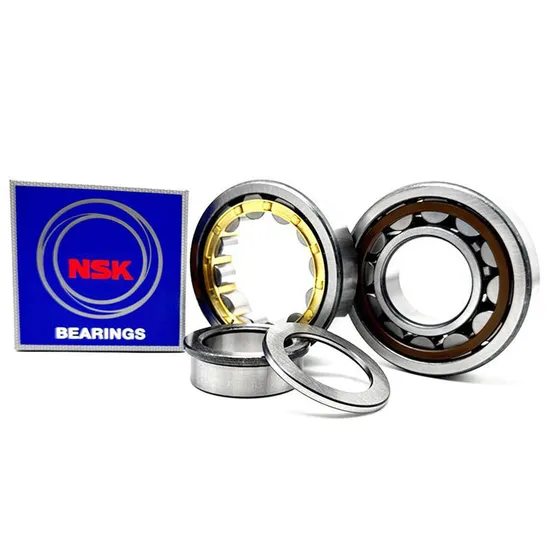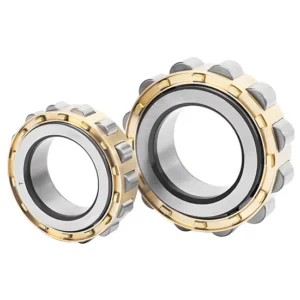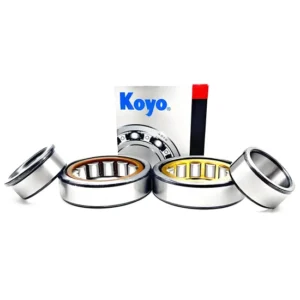

Cylindrical Roller Bearing

X&S NU312 NU313 NU314 NU315 NU316 NU317 NU318 NU319 Cylindrical Roller Bearings feature a separated design for simplified assembly under interference fits.
Batch-Level Traceability — Every X&S NU312 NU313 NU314 NU315 NU316 NU317 NU318 NU319 cylindrical roller bearing ships with verifiable lot documentation linking directly to the manufacturer’s production facilities.
| Parameter | Value |
|---|---|
| Designation | NU312 NU313 NU314 NU315 NU316 NU317 NU318 NU319 |
| Bearing Type | Cylindrical Roller Bearing |
| Number of Rows | Single |
| Load Direction | Radial |
| Separated | Yes |
| Bore Diameter (d) | 60 mm to 95 mm |
| Material | Available in high-carbon chrome bearing steel or stainless steel variants |
| Cage Material | Steel Cage and Nylon Cage |
| Vibration Level | V1, V2, V3 |
| Noise Level | Z1, Z2, Z3 |
| Precision Class | P0, P5, P6 |
| Hardness | 59-62 HRC [NEED_CITE: standard hardness range for through-hardened bearing rings] |
| Certification | ISO, CE |
| Origin | Shandong, China |
Note: The NU prefix, dimension series 3, and bore codes 12 through 19 follow standard ISO conventions for cylindrical roller bearings, though specific internal geometry suffixes require manufacturer catalog confirmation for exact application matching.
| Industry | Typical Applications |
|---|---|
| Automotive & Heavy Vehicle | Transmission shafts, alternator pulleys, and wheel hub assemblies |
| Industrial Gearboxes | High-speed pinion shafts and heavy-duty reduction gear supports |
| Electric Motors | Rotor shaft supports requiring low noise and high radial capacity |
| Machine Tool Spindles | Secondary support shafts where thermal expansion must be accommodated |
Identical outer dimensions do not guarantee identical internal clearances or cage dynamics.
Procurement engineers often source replacements by matching the base designation alone, overlooking critical suffixes. When a standard clearance bearing is forced into a high-temperature gearbox application meant for a C3 clearance variant, thermal expansion eliminates the internal gap. This leads to severe thermal binding and catastrophic cage failure. We frequently see field returns where the physical dimensions were perfect, but the internal design caused unplanned downtime within weeks of installation [NEED_CITE: rolling bearing failure mode classification per ISO 15243].
Selecting the right variant from this series requires looking beyond the catalog number. Our technical team reviews your specific radial loads, operating speeds, and thermal profiles to ensure the selected precision class and cage material align with the actual working environment. This prevents the common pitfall of installing a P0 grade component in an application that demands P5 or P6 running accuracy to maintain acceptable vibration levels.
These components primarily handle heavy radial loads while accommodating minor axial displacements through their separable design. In electric motors and gearboxes, rotational speeds generate significant friction heat, making the choice between steel and nylon cages critical for maintaining stability. Proper lubrication intervals must be established based on the operating temperature, as excessive heat degrades grease and accelerates wear. Furthermore, the absence of integrated seals in open variants demands rigorous external contamination control to prevent abrasive particles from entering the roller pathways [NEED_CITE: impact of particle contamination on bearing fatigue life per ISO 281].
The "NU" designation indicates a bearing with two flanges on the outer ring and none on the inner ring, allowing it to accommodate axial displacement in both directions. The "3" denotes a medium-wide dimension series, balancing radial load capacity with cross-sectional space constraints. The trailing numbers (12 through 19) specify the bore diameter code, scaling from 60 mm up to 95 mm. The separable architecture means the inner ring can be mounted with a tight interference fit on the shaft, while the outer ring and roller assembly slide into the housing, vastly simplifying installation in tight gearbox enclosures.
Ignoring the precise cage material or clearance class during cross-referencing leads to premature failure. A stamped steel cage might fracture under the high-speed vibrations of an electric motor if a machined brass or reinforced polyamide variant was specified by the OEM. Such mismatches result in catastrophic damage to the shaft and housing, voiding equipment warranties and triggering expensive emergency repairs. Aligning the exact internal geometry prevents these compounding financial losses.
Sourcing the X&S NU312 NU313 NU314 NU315 NU316 NU317 NU318 NU319 cylindrical roller bearing through authorized channels ensures you receive components with verified metallurgical properties. Our cross-brand interchange process strictly aligns the base number, internal clearance, and cage material, rather than just matching the outer envelope dimensions. We provide application-based selection reviews that account for thermal expansion and mounting tolerances, ensuring the chosen variant survives the actual operational stresses rather than just looking correct on paper.
To ensure the selected variant meets your operational demands, provide your radial and axial load profiles, continuous and peak rotational speeds, and expected operating temperature ranges. Supplying the OEM equipment number or the exact dimensions of the housing and shaft allows our engineering team to perform a precise cross-reference check and L10 life calculation, guaranteeing the recommended configuration matches your mechanical requirements.
Q: Why must clearance and cage material align with the base designation during cross-referencing?
A: Matching only the base number ignores internal geometry. A standard clearance bearing in a high-heat environment will experience thermal binding, while an incorrect cage material may fracture under specific vibration frequencies. Aligning all three parameters ensures the replacement survives the actual operational stresses without causing secondary damage to the shaft or housing.
Q: What are the operational boundaries for steel versus nylon cages in this series?
A: Stamped steel cages offer high mechanical strength and tolerate elevated temperatures, making them suitable for heavy-load gearboxes. Nylon cages provide lower friction, reduced noise, and better performance at higher speeds, which is ideal for electric motors. The choice depends entirely on the specific thermal and rotational demands of your application.
Q: How do P0, P5, and P6 precision classes affect high-speed motor performance?
A: Higher precision classes like P5 and P6 feature tighter tolerances on dimensional and running accuracy. This reduces radial runout and vibration at high speeds, which is critical for electric motors and machine tool spindles to maintain low noise levels and prevent premature fatigue. P0 is generally sufficient for standard industrial gearboxes.
Q: What do the numerical suffixes like 312 or 319 indicate in the NU series?
A: The first digit indicates the dimension series, defining the cross-sectional width and diameter relative to the bore. The last two digits represent the bore diameter code. For example, multiplying the code by five yields the inner diameter in millimeters, allowing engineers to quickly identify the physical envelope size of the component.
Q: How should the separable inner ring be mounted on a tight interference shaft?
A: The inner ring should be heated using an induction heater to expand it sufficiently for a smooth slide onto the shaft journal. This prevents the need for excessive mechanical force, which could damage the precision-ground raceway or alter the internal geometry before the outer ring and roller assembly are even introduced.
Our engineers will respond within 12 hours with a tailored solution.
Request Quote| Bearing Type | Cylindrical Roller Bearing |
| Brand | SKF |
| Quality Standard | ISO 9001 / TS 16949 |
| Precision Grade | P0 / P5 / P6 (custom) |
| Material | Chrome Steel / Stainless |
| Cage Material | Steel / Brass / Polyamide |
| Lubrication | Grease / Oil (specify) |
| Operating Temp. | -40°C to +200°C |
| Min. Order Qty | 1 pc (samples available) |
| Prototype Lead Time | 7 Working Days |
| Load Capacity | Contact for C0/Cr values |
| Speed Rating | Contact for ndm limit |
| Vibration Level | Z1 / Z2 / Z3 (custom) |
| Noise Level | V1 / V2 / V3 (custom) |
| Fatigue Life | L10h per ISO 281 |
| Sealing Options | Open / Z / 2Z / RS / 2RS |
Our engineering team can modify bearing dimensions, materials, seals, and clearances to meet your specific operating requirements. Submit your drawing or spec sheet for a tailored proposal.
Main shaft bearings, gearbox bearings, and generator bearings for onshore and offshore wind turbines.
Heavy-duty bearings for crushers, conveyors, and rotary equipment in extreme dust and shock-load environments.
High-temperature bearings for rolling mills, continuous casting, and furnace applications.
Wheel hub bearings, transmission bearings, and e-motor bearings for passenger and commercial vehicles.
Axle box bearings, traction motor bearings, and gearbox bearings meeting EN/UIC railway standards.
High-precision spindle bearings, angular contact bearings, and super-precision bearings for CNC and robotics.
Our engineers analyze your operating conditions -- load, speed, temperature, environment -- and select or design the optimal bearing solution to maximize service life and reduce total cost of ownership.
Need non-standard dimensions, special materials, or modified clearances? We can modify standard SKF bearings or manufacture fully custom solutions with a 7-day prototype turnaround.
When bearings fail prematurely, our team conducts root-cause analysis using advanced diagnostic tools to identify the failure mode and recommend corrective action.
We deploy vibration monitoring, thermal imaging, and oil analysis programs that detect bearing deterioration early -- reducing unplanned downtime by up to 40%.
Proper installation is critical to bearing performance. Our certified technicians provide on-site installation support, alignment verification, and operator training worldwide.
From initial selection through end-of-life, our dedicated account managers provide scheduled maintenance plans, re-lubrication programs, and replacement forecasting for enterprise clients.
NDA protected · Free samples for orders > $50K · Reply within 12 hours