ISO 9001 Certified
TS 16949
Genuine SKF
Need Technical Advice?
Reply within 12 hours · 15+ certified engineers on call
Linear Bearing
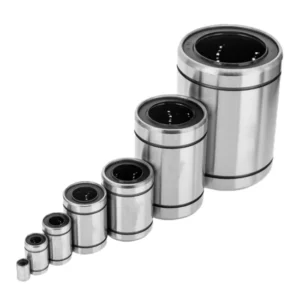
X&S LMP22-D30/D25/D20 Linear Bearing for Auto Parts
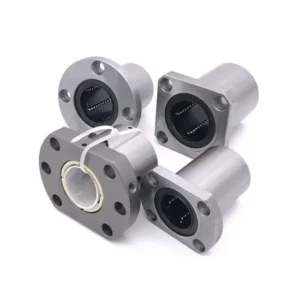
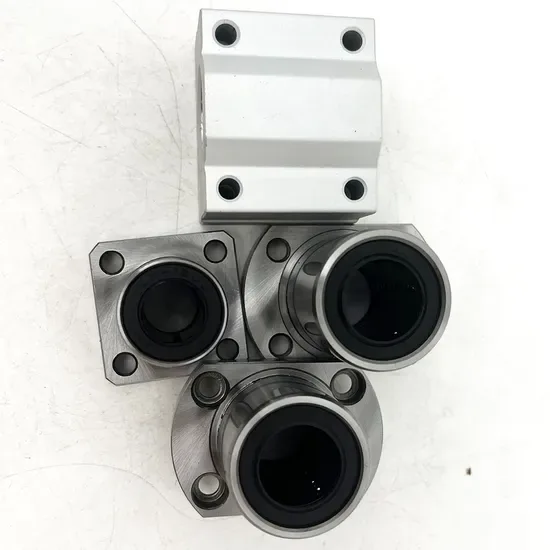
X&S LMP22-D30/LHMCD30 LMP22-D25/LHMCD25 LMP22-D20/LHMC Linear Bearing — engineered for auto parts and automation equipment.
- Constructed from bearing steel with HRC58-62 hardness and a circular flange design to ensure wear resistance and precise axial load distribution.
- Supports both grease and oil lubrication to maintain smooth straight-line motion across varying operational speeds.
Every shipment includes a complete documentation package with material test reports and dimensional inspection records for full traceability.
7
Day Prototype
vs. 8-12 wks standard
50+
Countries Served
Global logistics network
12h
Quote Response
Expert engineers on call
Typical Applications
Wind Power
Mining
Steel & Metallurgy
Automotive / EV
Rail Transit
Precision Machinery
Genuine SKF Bearings
NDA Protected
Free Sample for Orders > $50K
Global Shipping
Product Details
Full Batch Traceability — Every linear motion component ships with verifiable lot documentation linking directly to the manufacturer’s production records.
Technical Specifications
| Parameter | Value |
|---|---|
| Designation | LMP22-D30/LHMCD30 LMP22-D25/LHMCD25 LMP22-D20/LHMC |
| Product Type | Linear Bearing |
| Flange Shape | Circular |
| Shape | Straight |
| Series | LM |
| Material | Bearing Steel or Others |
| Lubrication | Grease or Oil |
| Cage Material | Steel Cage, Brass Cage, Nylon Cage options |
| Hardness | HRC58-62 |
| Origin | Shandong, China |
| Certification | CE |
Note: Suffixes such as LMP, D-series dimensions, and LHMC/D designations require manufacturer catalog confirmation for exact internal geometry and preload specifications.
Application Suitability
| Industry | Typical Applications |
|---|---|
| Automotive and Heavy Vehicle Repair | Steering column telescopic shafts, suspension testing rigs, automated assembly line transfer slides |
| Machine Tool Spindles | Precision grinding machine Z-axis feed mechanisms, CNC lathe tailstock quill guides |
| Material Handling | Automated guided vehicle lifting masts, robotic palletizer linear actuators |
Why Linear Guides Fail Before the Steel Yields
Catastrophic rail locking usually stems from cage fragmentation rather than raceway fatigue.
Sourcing teams often focus exclusively on outer shell dimensions while ignoring the internal retainer design. When a high-speed automation slide operates with an unspecified stamped steel cage under heavy axial shock, the retainer pockets deform. The rolling elements then skew, generating intense localized heat that welds the balls to the shaft. [NEED_CITE: linear motion system failure modes and retainer degradation] Securing the correct X&S LMP22-D30 linear bearing with the appropriate cage material and verified preload prevents these silent operational killers.
Matching Retainer Geometry to Automation Speeds
The operational velocity of your linear guide dictates the necessary cage material. For high-speed CNC feed axes, polymer retainers offer superior vibration damping and lower friction coefficients. Conversely, heavy-duty automotive pressing lines demand metallic retainers to withstand extreme shock loads and elevated ambient temperatures. Selecting the exact X&S LMP22-D30 linear bearing configuration ensures the retainer geometry aligns perfectly with your specific cycle times and load profiles.
Thermal Expansion and Lubrication Boundaries
Continuous high-speed travel generates substantial friction heat within the recirculating ball circuit. If the internal clearance is too tight, thermal expansion causes the rolling elements to bind against the raceway. Proper lubrication selection mitigates this risk; oil lubrication excels at dissipating heat in high-velocity applications, while grease provides reliable contamination resistance for slower, heavily loaded material handling slides. [NEED_CITE: thermal effects on linear bearing internal clearance and lubrication selection]
Decoding the Hardness and Flange Integration
Achieving a reliable HRC58-62 hardness across both the outer sleeve and the load-bearing plates is non-negotiable for wear resistance. This specific hardness threshold ensures the recirculating balls do not plow into the raceway under peak dynamic loads. Furthermore, the circular flange design simplifies perpendicular mounting to the machine housing, ensuring the axial load is distributed evenly across the mounting bolts without inducing housing distortion.
The Downtime Cost of Unverified Suffixes
Installing a linear bearing with an incorrect preload class or mismatched flange thickness leads to immediate geometric misalignment. This misalignment forces the carriage to fight the guide rail, resulting in premature wear, excessive acoustic noise, and eventual system seizure. According to linear motion reliability frameworks, such installation and specification errors account for a massive share of early-stage mechanical failures. [NEED_CITE: linear motion reliability and installation error classification] Relying on unverified replacement parts ultimately voids equipment warranties and triggers unplanned production halts.
Procurement Verification Beyond the Base Number
Our technical team cross-references every order against the original equipment manufacturer’s blueprints, verifying that the flange thickness, ball circuit count, and seal types match exactly. We maintain authorized distribution channels that guarantee complete batch traceability for every LM series component. By validating the specific cage material and internal clearance class before dispatch, we eliminate the risk of receiving visually identical but internally compromised parts. Our pre-shipment inspections confirm that the HRC58-62 hardness and dimensional tolerances strictly adhere to the factory specifications.
Documentation & Authenticity
- Certificate of Conformity verifying CE compliance for automated machinery integration.
- Original manufacturer batch and lot traceability linking to specific heat treatment records.
- Official brand application QR verification for immediate authenticity confirmation on site.
- Material test reports confirming bearing steel composition and retainer material grades.
- Dimensional and running accuracy inspection reports validating straightness and flange perpendicularity.
Storage, Handling & Mounting
- Retain original vacuum packaging until installation to prevent humidity from degrading the HRC58-62 raceway finish.
- Use clean, lint-free gloves when handling the straight shaft to avoid acidic skin oils causing micro-corrosion.
- Align the circular flange mounting holes precisely to avoid inducing radial preload distortion on the outer sleeve.
- Apply the specified grease or oil lubricant immediately if operating in high-dust automotive repair environments.
- Verify the specific LM series carriage length matches the guide rail support span before tightening flange bolts.
Engineering Review and Selection Support
To ensure optimal performance, provide our engineering team with your exact radial and axial load profiles, maximum travel speeds, and operating temperature ranges. This data allows us to perform a comprehensive L10 life calculation and verify the correct internal clearance class for your specific application. Additionally, sharing your original equipment manufacturer part numbers enables us to execute a precise cross-reference check, guaranteeing the selected linear motion component integrates flawlessly into your existing machinery.
Frequently Asked Questions
Q: How do I determine the correct load capacity for my linear motion system?
A: Calculate the maximum dynamic and static loads acting on the carriage, including any moment loads caused by offset weights. Provide these figures along with your travel speed and duty cycle to our engineering team. We will calculate the required dynamic load rating and recommend the appropriate size and ball circuit configuration to ensure a reliable operational lifespan.
Q: What is the difference between grease and oil lubrication for high-speed slides?
A: Grease provides excellent sealing against contaminants and requires less frequent maintenance, making it ideal for standard automation equipment. Oil lubrication, however, offers superior heat dissipation and lower friction, which is critical for high-speed CNC machine tools where thermal expansion must be strictly minimized to maintain machining accuracy.
Q: How does the retainer material affect the maximum operating speed?
A: Polymer retainers are significantly lighter and offer better vibration damping, allowing for higher maximum speeds and quieter operation. Steel or brass retainers are heavier but provide greater structural rigidity, making them necessary for applications involving heavy shock loads, high temperatures, or environments where chemical exposure might degrade polymer materials.
Q: How can I ensure the replacement part matches the original equipment specifications?
A: Base designations often omit critical details regarding internal clearance, seal types, and flange thickness. Provide us with the original equipment manufacturer part number or detailed dimensional drawings. Our technical team will perform a strict cross-reference check to verify all suffixes and internal geometries, ensuring the replacement integrates perfectly without modifying the housing.
Q: What maintenance is required for linear bearings in dusty environments?
A: In high-dust environments like automotive repair shops or material handling facilities, regular inspection of the end seals is crucial. You must establish a strict re-lubrication schedule to flush out abrasive particles that bypass the seals. Using bearing carriages equipped with heavy-duty contact seals and adding external bellows covers will significantly extend the service interval and prevent raceway scoring.
Product Summary
- Product Name
- X&S LMP22-D30/D25/D20 Linear Bearing for Auto Parts
- Category
- Linear Bearing
- Brand
- SKF
- Certification
- ISO 9001 · TS 16949
- Lead Time
- 7 Working Days
Get a Custom Quote
Our engineers will respond within 12 hours with a tailored solution.
Request QuoteGeneral Specifications
| Bearing Type | Linear Bearing |
| Brand | SKF |
| Quality Standard | ISO 9001 / TS 16949 |
| Precision Grade | P0 / P5 / P6 (custom) |
| Material | Chrome Steel / Stainless |
| Cage Material | Steel / Brass / Polyamide |
| Lubrication | Grease / Oil (specify) |
| Operating Temp. | -40°C to +200°C |
| Min. Order Qty | 1 pc (samples available) |
| Prototype Lead Time | 7 Working Days |
Performance Parameters
| Load Capacity | Contact for C0/Cr values |
| Speed Rating | Contact for ndm limit |
| Vibration Level | Z1 / Z2 / Z3 (custom) |
| Noise Level | V1 / V2 / V3 (custom) |
| Fatigue Life | L10h per ISO 281 |
| Sealing Options | Open / Z / 2Z / RS / 2RS |
Custom Specifications Available
Our engineering team can modify bearing dimensions, materials, seals, and clearances to meet your specific operating requirements. Submit your drawing or spec sheet for a tailored proposal.
Wind Power
Main shaft bearings, gearbox bearings, and generator bearings for onshore and offshore wind turbines.
Mining & Quarrying
Heavy-duty bearings for crushers, conveyors, and rotary equipment in extreme dust and shock-load environments.
Steel & Metallurgy
High-temperature bearings for rolling mills, continuous casting, and furnace applications.
Automotive / EV
Wheel hub bearings, transmission bearings, and e-motor bearings for passenger and commercial vehicles.
Rail Transit
Axle box bearings, traction motor bearings, and gearbox bearings meeting EN/UIC railway standards.
Precision Machinery
High-precision spindle bearings, angular contact bearings, and super-precision bearings for CNC and robotics.
Application Design
EngineeringOur engineers analyze your operating conditions -- load, speed, temperature, environment -- and select or design the optimal bearing solution to maximize service life and reduce total cost of ownership.
Custom Modification
7-Day TurnaroundNeed non-standard dimensions, special materials, or modified clearances? We can modify standard SKF bearings or manufacture fully custom solutions with a 7-day prototype turnaround.
Failure Analysis
DiagnosticsWhen bearings fail prematurely, our team conducts root-cause analysis using advanced diagnostic tools to identify the failure mode and recommend corrective action.
Predictive Maintenance
Up to 40% Less DowntimeWe deploy vibration monitoring, thermal imaging, and oil analysis programs that detect bearing deterioration early -- reducing unplanned downtime by up to 40%.
On-site Installation
Global CoverageProper installation is critical to bearing performance. Our certified technicians provide on-site installation support, alignment verification, and operator training worldwide.
Lifecycle Support
Enterprise SLAFrom initial selection through end-of-life, our dedicated account managers provide scheduled maintenance plans, re-lubrication programs, and replacement forecasting for enterprise clients.
Why SKF China
The engineering partner advantage
7 Days
Prototype Lead Time
vs. 8-12 weeks via standard channels
15+
Certified Engineers
SKF-certified, on-call for your project
50+
Countries Delivered
Reliable global logistics network
Request a Quote
Get a custom quote for
X&S LMP22-D30/D25/D20 Linear Bearing for Auto Parts
NDA protected · Free samples for orders > $50K · Reply within 12 hours
Related Products