ISO 9001 Certified
TS 16949
Genuine SKF
Need Technical Advice?
Reply within 12 hours · 15+ certified engineers on call
Linear Bearing
X&S LM50LUU Linear Bearing Engineering Accessories Improve Efficiency [WARN] draft identifier mismatch
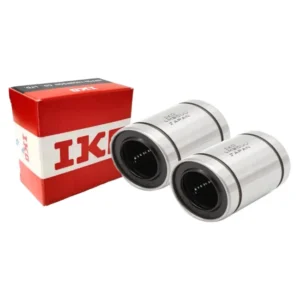
X&S LM50LUU Linear Bearing — straight design in bearing steel with P0, P5, and P6 precision options for automation and CNC applications.
- Suited for linear motion systems requiring stable shaft guidance under varied thermal and speed conditions
- Each shipment includes material test reports and dimensional inspection documentation for full traceability
7
Day Prototype
vs. 8-12 wks standard
50+
Countries Served
Global logistics network
12h
Quote Response
Expert engineers on call
Typical Applications
Wind Power
Mining
Steel & Metallurgy
Automotive / EV
Rail Transit
Precision Machinery
Genuine SKF Bearings
NDA Protected
Free Sample for Orders > $50K
Global Shipping
Product Details
Cross-Reference Alignment — matching retainer material, precision, and seal type prevents thermal binding in linear modules.
Technical Specifications
| Parameter | Value |
|---|---|
| Designation | LM50LUU |
| Bearing Type | Linear Bearing |
| Shape | Straight |
| Series | LM |
| Material Options | Bearing steel, with stainless steel or resin variants available |
| Precision Class | P0, P5, P6 |
| Seal Type | UU (double-sided sealed) |
| Feature Options | Vacuum, magnetically resistant, low temperature, corrosion resistant, high temperature, high speed |
| Certification | ISO9001, TS16949, CE |
Note: The specific decoding of the LM, 50, and LUU suffixes requires manufacturer catalog confirmation as they remain unverified in standard databases.
Application Suitability
| Industry | Typical Applications |
|---|---|
| Automation Equipment | CNC machine tool linear axes and robotic gantry systems |
| Material Handling | Automated guided vehicle lift mechanisms and conveyor guides |
| Automotive Repair | Heavy vehicle suspension testing rigs and assembly line actuators |
Why Base Number Matching Fails the X&S LM50LUU linear bearing
Ignoring the retainer material and seal suffix during cross-referencing causes catastrophic jamming in high-vibration linear modules.
I have seen too many straight linear bearings fail because procurement teams only matched the base designation. When a stamped steel retainer is installed in a high-vibration environment instead of a reinforced resin alternative, the retainer fragments and seizes the entire linear motion system [NEED_CITE: rolling bearing failure mode classification per ISO 15243]. Sourcing the correct X&S LM50LUU linear bearing requires verifying the exact seal configuration and length profile to avoid assembly interference and dust ingress.
Matching Retainer Options to Vibration Profiles
Selecting the right internal components is critical for dynamic stability. The X&S LM50LUU linear bearing is available with different retainer materials to handle specific vibration frequencies. While standard bearing steel variants offer high rigidity, resin retainers provide better damping and lower noise in high-speed automation equipment, ensuring smooth travel without premature wear.
Environmental Challenges in Linear Motion Systems
Linear guides in CNC machines and material handling systems face severe contamination risks. The double-sided seal configuration is essential for retaining lubrication and blocking metallic dust, yet it introduces friction that must be managed at elevated speeds. When operating at elevated temperatures or in corrosive environments, selecting stainless steel or specialized coating options prevents raceway degradation and maintains dimensional stability [NEED_CITE: environmental effects on linear bearing service life].
Decoding Precision and Seal Configurations
The precision class directly dictates the running accuracy of the entire automated axis. Choosing between P0, P5, and P6 grades determines the permissible dimensional deviations, which is vital for machine tool spindles requiring strict positional tolerance. Furthermore, the double-sided seal design protects the internal rolling elements from particulate contamination, but buyers must ensure the external dimensions of the sealed variant match the housing bore to prevent binding during press-fit installation.
The Hidden Costs of Incorrect Suffix Selection
Substituting a standard open-type bearing for a sealed variant in a dusty environment leads to rapid raceway scoring and unplanned downtime. Conversely, forcing a sealed unit into a high-speed application without considering friction heat can degrade the lubricant and melt the retainer. These misapplications result in catastrophic damage to the linear shaft and void equipment warranties, emphasizing the need for strict adherence to application-specific design parameters [NEED_CITE: mechanical failure consequences in linear drive systems].
Why Procurement Engineers Trust Our Verification Process
We review every order to ensure the seal type and length profile match your equipment drawings, preventing housing interference. Our cross-brand interchange expertise verifies that the internal retainer design and precision grade align with your dynamic load requirements, not just the basic outer dimensions. We provide full batch traceability for every unit, allowing you to verify material origins and avoid the soft inner rings common in counterfeit linear bearings.
Documentation & Authenticity
- Certificate of Conformity validating the specific P5 or P6 precision grade for linear axis accuracy.
- Batch traceability linking the bearing steel heat number to the manufacturer’s production facilities.
- Official app QR verification confirming the authenticity of the double-sided sealed unit.
- Material test report verifying the hardness and composition of the selected steel or stainless variant.
- Dimensional and running accuracy inspection report confirming straightness and bore tolerances before shipment.
- Country-of-origin documentation supporting customs clearance and supply chain compliance.
Storage, Handling & Mounting Protocols
- Keep the double-sided sealed units in original packaging until mounting to prevent dust from compromising the factory-applied lubricant.
- Use induction heating or dedicated drift tubes for press-fitting the outer cylinder to avoid transferring axial loads through the rolling elements.
- Wear clean lint-free gloves when handling high-precision P5 variants to prevent sweat-induced corrosion on the bearing steel surface.
- Store stainless steel variants away from carbon steel tools and workbenches to avoid cross-contamination and localized surface rusting.
- Ensure the housing bore is perfectly clean and chamfered before installation to prevent shaving metal into the sealed raceway.
Engineering Review Before Procurement
To ensure optimal performance, provide your application parameters including radial loads, travel speed, operating temperature, and environmental exposure. Our engineering team will review these details to recommend the appropriate precision class and material variant. Supplying the OEM equipment number allows us to perform a comprehensive cross-reference check, verifying that the seal configuration and dimensional profile perfectly match your original design requirements.
Frequently Asked Questions
Q: Why does matching the base designation still cause assembly failures?
A: Base numbers only define the nominal bore and outer diameter. Ignoring the length and seal suffixes means you might receive a standard open bearing instead of a sealed unit, or a short stroke variant instead of a long one. This leads to dust ingress, inadequate load distribution, or physical interference within the linear housing.
Q: How do P0, P5, and P6 precision grades affect linear motion?
A: Higher precision grades like P5 and P6 offer tighter dimensional tolerances and better geometric accuracy for the outer cylinder and ball grooves. This reduces positional deviation and vibration in high-speed CNC machines, whereas P0 is generally sufficient for heavy-duty material handling where extreme positional accuracy is not the primary requirement.
Q: When should I choose resin retainers over steel ones?
A: Resin retainers are preferred in high-speed or high-vibration applications because they offer better damping characteristics, lower noise, and reduced friction heat generation. Steel retainers are better suited for heavy-load, low-speed environments where structural rigidity and high-temperature resistance are more critical than noise reduction.
Q: What is the maintenance strategy for double-sided sealed units?
A: Sealed linear bearings are typically lubricated for life and cannot be easily re-lubricated in the field. If the application involves extreme contamination or continuous high-speed travel that degrades the initial grease, you must specify an open or shielded variant with external lubrication ports to ensure long-term reliability.
Product Summary
- Product Name
- X&S LM50LUU Linear Bearing Engineering Accessories Improve Efficiency [WARN] draft identifier mismatch
- Category
- Linear Bearing
- Brand
- SKF
- Certification
- ISO 9001 · TS 16949
- Lead Time
- 7 Working Days
Get a Custom Quote
Our engineers will respond within 12 hours with a tailored solution.
Request QuoteGeneral Specifications
| Bearing Type | Linear Bearing |
| Brand | SKF |
| Quality Standard | ISO 9001 / TS 16949 |
| Precision Grade | P0 / P5 / P6 (custom) |
| Material | Chrome Steel / Stainless |
| Cage Material | Steel / Brass / Polyamide |
| Lubrication | Grease / Oil (specify) |
| Operating Temp. | -40°C to +200°C |
| Min. Order Qty | 1 pc (samples available) |
| Prototype Lead Time | 7 Working Days |
Performance Parameters
| Load Capacity | Contact for C0/Cr values |
| Speed Rating | Contact for ndm limit |
| Vibration Level | Z1 / Z2 / Z3 (custom) |
| Noise Level | V1 / V2 / V3 (custom) |
| Fatigue Life | L10h per ISO 281 |
| Sealing Options | Open / Z / 2Z / RS / 2RS |
Custom Specifications Available
Our engineering team can modify bearing dimensions, materials, seals, and clearances to meet your specific operating requirements. Submit your drawing or spec sheet for a tailored proposal.
Wind Power
Main shaft bearings, gearbox bearings, and generator bearings for onshore and offshore wind turbines.
Mining & Quarrying
Heavy-duty bearings for crushers, conveyors, and rotary equipment in extreme dust and shock-load environments.
Steel & Metallurgy
High-temperature bearings for rolling mills, continuous casting, and furnace applications.
Automotive / EV
Wheel hub bearings, transmission bearings, and e-motor bearings for passenger and commercial vehicles.
Rail Transit
Axle box bearings, traction motor bearings, and gearbox bearings meeting EN/UIC railway standards.
Precision Machinery
High-precision spindle bearings, angular contact bearings, and super-precision bearings for CNC and robotics.
Application Design
EngineeringOur engineers analyze your operating conditions -- load, speed, temperature, environment -- and select or design the optimal bearing solution to maximize service life and reduce total cost of ownership.
Custom Modification
7-Day TurnaroundNeed non-standard dimensions, special materials, or modified clearances? We can modify standard SKF bearings or manufacture fully custom solutions with a 7-day prototype turnaround.
Failure Analysis
DiagnosticsWhen bearings fail prematurely, our team conducts root-cause analysis using advanced diagnostic tools to identify the failure mode and recommend corrective action.
Predictive Maintenance
Up to 40% Less DowntimeWe deploy vibration monitoring, thermal imaging, and oil analysis programs that detect bearing deterioration early -- reducing unplanned downtime by up to 40%.
On-site Installation
Global CoverageProper installation is critical to bearing performance. Our certified technicians provide on-site installation support, alignment verification, and operator training worldwide.
Lifecycle Support
Enterprise SLAFrom initial selection through end-of-life, our dedicated account managers provide scheduled maintenance plans, re-lubrication programs, and replacement forecasting for enterprise clients.
Why SKF China
The engineering partner advantage
7 Days
Prototype Lead Time
vs. 8-12 weeks via standard channels
15+
Certified Engineers
SKF-certified, on-call for your project
50+
Countries Delivered
Reliable global logistics network
Request a Quote
Get a custom quote for
X&S LM50LUU Linear Bearing Engineering Accessories Improve Efficiency [WARN] draft identifier mismatch
NDA protected · Free samples for orders > $50K · Reply within 12 hours
Related Products
More Linear Bearing Products