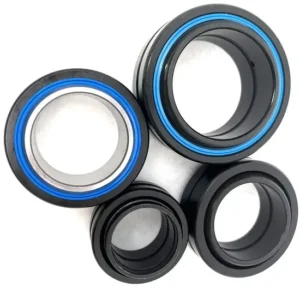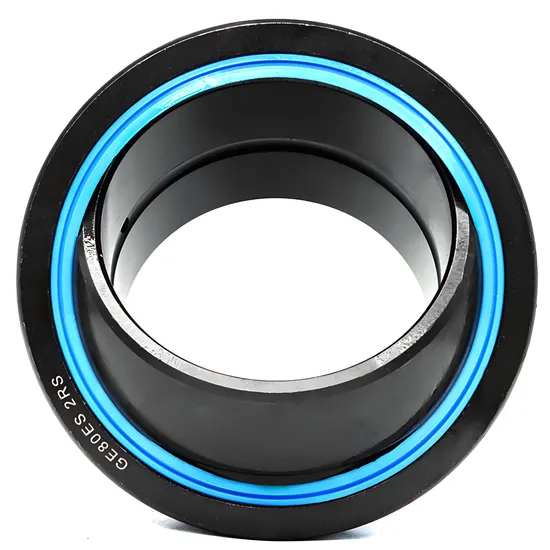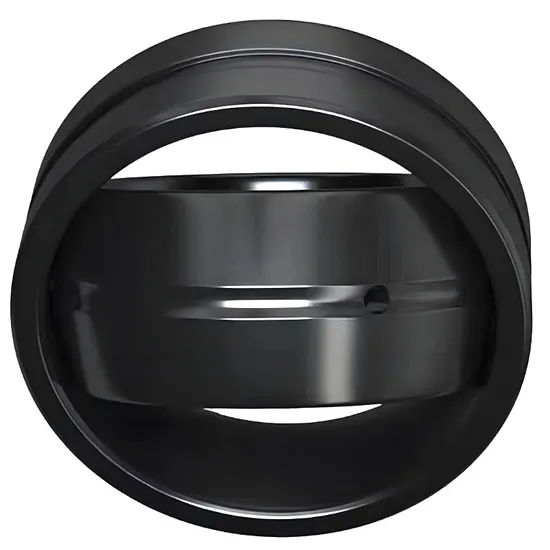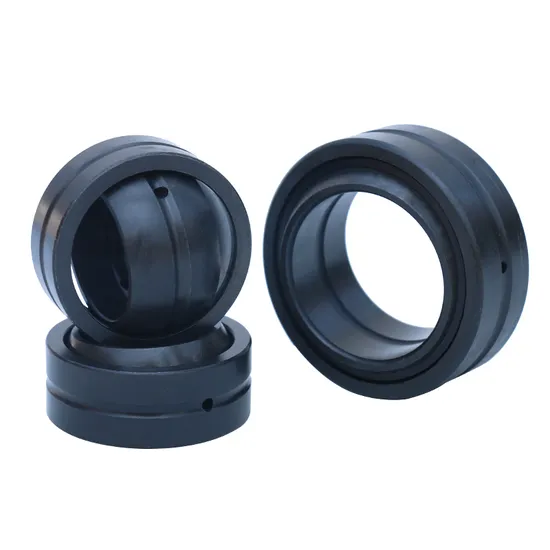
Spherical Plain Bearing

X&S GAC75S GAC80S GAC85S GAC90S GAC95S GA100S Thrust Spherical Plain Bearing — engineered for axial loads with self-lubricating friction surfaces and a single-slit outer ring.
Authorized Multi-Brand Sourcing — Consolidate mixed OEM requirements into a single shipment with full batch traceability for every thrust spherical plain bearing unit.
| Parameter | Value |
|---|---|
| Designation | GAC75S GAC80S GAC85S GAC90S GAC95S GA100S |
| Bearing Type | Thrust Spherical Plain Bearing |
| Rolling Element | Single Row |
| Load Direction | Thrust |
| Outer Structure | Outer Ring of Single-Slit |
| Lubrication | Self-lubricating / Grease or Oil |
| Cage Material | Steel Cage, Brass Cage, Nylon Cage |
| Material | Standard or Customized |
| Certification | CE |
| Origin | Shandong, China |
Note: The GAC and S suffixes are unverified and require manufacturer catalog confirmation for exact internal design specifics.
| Industry | Typical Applications |
|---|---|
| Construction & Earthmoving | Excavator boom pivot joints and articulation cylinders |
| Heavy Forging & Pressing | Hydraulic press rams and forging manipulator arms |
| Automation & Robotics | Heavy-duty linear actuator mounting bases |
| Water Conservancy | Hoist mechanisms and radial gate trunnion supports |
Most field failures stem from mismatched internal friction pairs rather than insufficient load capacity.
When sourcing an X&S GAC series thrust spherical plain bearing for construction or forging equipment, buyers often focus solely on the basic boundary dimensions. However, overlooking the internal sliding contact materials or the outer ring structure frequently leads to rapid wear in high-dust or high-impact environments. I have seen batches of similar bearings suffer catastrophic cage and ring damage simply because the self-lubricating liner was not suited for the specific oscillation frequency of the hydraulic cylinder [NEED_CITE: rolling bearing failure mode classification per ISO 15243]. Selecting the correct variant requires aligning the friction pair material with the actual operating temperature and contamination level.
Selecting the right X&S GAC series thrust spherical plain bearing involves more than checking the bore and outside diameter. The single-slit outer ring design facilitates easier assembly into housings, but the internal sliding surfaces must be matched to your specific oscillation cycles and load profiles. Our technical review process ensures that the friction pair material and lubrication method align perfectly with your equipment’s operational demands, preventing the premature wear commonly seen in mismatched replacements.
Thrust joints in hydraulic cylinders and forging machines endure severe axial shocks combined with slow oscillating movements. These conditions prevent the formation of a full hydrodynamic lubrication film, making the boundary lubrication properties of the sliding surfaces critical. Furthermore, construction environments introduce abrasive particulates that can infiltrate the bearing cavity. While standard grease lubrication requires regular maintenance intervals to purge contaminants, self-lubricating variants offer a maintenance-free alternative, provided the thermal limits of the liner material are not exceeded [NEED_CITE: tribological behavior of spherical plain bearings under oscillating loads].
The performance of these bearings relies heavily on the interaction between the inner and outer rings. The single-slit outer ring allows for controlled elastic deformation during press-fitting, preventing housing stress from transferring to the sliding contact zone. Depending on the specific variant, the sliding surfaces may utilize a PTFE-based self-lubricating liner for dry operation or a hardened steel-on-steel contact requiring external grease or oil. Cage options, including steel, brass, or nylon, are selected based on the need to separate rolling elements or guide the inner ring during high-frequency oscillations. Understanding these internal configurations is essential when cross-referencing OEM part numbers, as identical external dimensions can hide vastly different internal geometries.
Substituting a bearing based purely on external dimensions without verifying the internal friction pair or outer ring structure often results in unplanned downtime. A steel-on-steel bearing installed in an application requiring a self-lubricating liner will experience rapid galling and seizure. According to failure analysis frameworks like ISO 15243, surface distress and adhesive wear are primary indicators of such lubrication mismatches [NEED_CITE: ISO 15243 damage classification]. This not only destroys the bearing but can also score the housing and shaft, leading to extensive machining repairs and voided equipment warranties.
We do not just ship part numbers; we verify the application parameters. For the GAC75S through GA100S range, we specifically check the oscillation angle and axial load to ensure the selected friction pair will not overheat. Our cross-reference process aligns the outer ring structure and internal clearance, avoiding the common trap of matching only the base designation. Every shipment includes full batch traceability, and our engineering team provides post-delivery support for mounting and failure analysis, ensuring the bearing performs as expected in your specific machinery.
To ensure accurate selection and cross-referencing, please provide the specific axial and radial loads, oscillation frequency, and operating temperature range of your application. If you are replacing an existing component, sharing the OEM equipment number or the exact dimensions of the housing and shaft allows our engineering team to verify the internal friction pair and outer ring structure. This technical data enables us to confirm the optimal variant and calculate the expected service life for your machinery.
Q: How do I determine the exact GAC series variant for my hydraulic cylinder?
A: Provide the maximum axial load, oscillation angle, and operating temperature. Our engineering team evaluates these parameters to select the appropriate friction pair material and cage design, ensuring the bearing withstands the specific shock loads and environmental conditions of your hydraulic application without premature wear.
Q: What is the boundary between self-lubricating and greased spherical plain bearings?
A: Self-lubricating variants are ideal for maintenance-free operations, slow oscillations, and environments where relubrication is difficult. Greased steel-on-steel bearings are better suited for heavier loads and higher oscillation frequencies where regular maintenance is possible to flush out contaminants and replenish the lubrication film.
Q: Why must cross-referencing include the outer ring structure and friction material?
A: Matching only the basic dimensions often results in installing a bearing with the wrong internal design. A mismatched outer ring structure can cause housing stress, while an incorrect friction material leads to rapid galling or thermal failure under the specific load and oscillation conditions of your equipment.
Q: What are the common failure modes for thrust spherical plain bearings in construction?
A: Premature failures typically involve adhesive wear, surface distress, or liner degradation due to contamination and inadequate lubrication. Misalignment during installation or exceeding the thermal limits of the self-lubricating material also frequently causes catastrophic breakdowns in heavy machinery joints.
Our engineers will respond within 12 hours with a tailored solution.
Request Quote| Bearing Type | Spherical Plain Bearing |
| Brand | SKF |
| Quality Standard | ISO 9001 / TS 16949 |
| Precision Grade | P0 / P5 / P6 (custom) |
| Material | Chrome Steel / Stainless |
| Cage Material | Steel / Brass / Polyamide |
| Lubrication | Grease / Oil (specify) |
| Operating Temp. | -40°C to +200°C |
| Min. Order Qty | 1 pc (samples available) |
| Prototype Lead Time | 7 Working Days |
| Load Capacity | Contact for C0/Cr values |
| Speed Rating | Contact for ndm limit |
| Vibration Level | Z1 / Z2 / Z3 (custom) |
| Noise Level | V1 / V2 / V3 (custom) |
| Fatigue Life | L10h per ISO 281 |
| Sealing Options | Open / Z / 2Z / RS / 2RS |
Our engineering team can modify bearing dimensions, materials, seals, and clearances to meet your specific operating requirements. Submit your drawing or spec sheet for a tailored proposal.
Main shaft bearings, gearbox bearings, and generator bearings for onshore and offshore wind turbines.
Heavy-duty bearings for crushers, conveyors, and rotary equipment in extreme dust and shock-load environments.
High-temperature bearings for rolling mills, continuous casting, and furnace applications.
Wheel hub bearings, transmission bearings, and e-motor bearings for passenger and commercial vehicles.
Axle box bearings, traction motor bearings, and gearbox bearings meeting EN/UIC railway standards.
High-precision spindle bearings, angular contact bearings, and super-precision bearings for CNC and robotics.
Our engineers analyze your operating conditions -- load, speed, temperature, environment -- and select or design the optimal bearing solution to maximize service life and reduce total cost of ownership.
Need non-standard dimensions, special materials, or modified clearances? We can modify standard SKF bearings or manufacture fully custom solutions with a 7-day prototype turnaround.
When bearings fail prematurely, our team conducts root-cause analysis using advanced diagnostic tools to identify the failure mode and recommend corrective action.
We deploy vibration monitoring, thermal imaging, and oil analysis programs that detect bearing deterioration early -- reducing unplanned downtime by up to 40%.
Proper installation is critical to bearing performance. Our certified technicians provide on-site installation support, alignment verification, and operator training worldwide.
From initial selection through end-of-life, our dedicated account managers provide scheduled maintenance plans, re-lubrication programs, and replacement forecasting for enterprise clients.
NDA protected · Free samples for orders > $50K · Reply within 12 hours