
ISO 9001 Certified
TS 16949
Genuine SKF
Need Technical Advice?
Reply within 12 hours · 15+ certified engineers on call
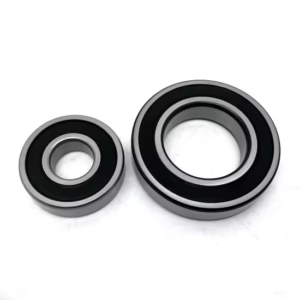
Deep Groove Ball Bearing
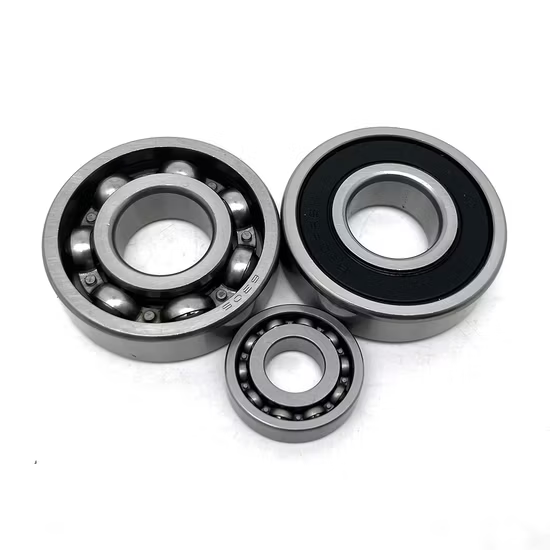
X&S 6015-6022 P4 P5 P6 Deep Groove Ball Bearing for Printing Press
X&S 6022 6021 6020 6019 6018 6017 6016 6015 Deep Groove Ball Bearing — engineered for printing presses, this bearing steel series handles combined radial and axial loads.
- Batch traceability to the manufacturer guarantees authenticity for every unit shipped.
7
Day Prototype
vs. 8-12 wks standard
50+
Countries Served
Global logistics network
12h
Quote Response
Expert engineers on call
Typical Applications
Wind Power
Mining
Steel & Metallurgy
Automotive / EV
Rail Transit
Precision Machinery
Genuine SKF Bearings
NDA Protected
Free Sample for Orders > $50K
Global Shipping
Product Details
Cross-Reference Triple Alignment — verifying the base number, C3 clearance, and P4 precision simultaneously prevents thermal binding in high-speed press cylinders.
Technical Specifications
| Parameter | Value |
|---|---|
| Designation | 6022 6021 6020 6019 6018 6017 6016 6015 |
| Bearing Type | Deep Groove Ball Bearing |
| Seal or Shield Type | ZZ, 2RS, Open |
| Precision Class | P0, P6, P5, P4 |
| Vibration Level | Z1V1, Z2V2, Z3V3, Z4V4 |
| Material | Bearing Steel (Chrome Steel) |
| Lubrication | Grease or Oil |
| Load Direction | Radial and Axial |
| Origin | Shandong, China |
| HS Code | 8482102000 |
Application Suitability
| Industry | Typical Applications |
|---|---|
| Printing Machinery | High-speed impression cylinders, web tension rollers, ink transfer systems |
| Electric Motors | High-speed rotor shafts, precision stator assemblies, cooling fan hubs |
| Industrial Gearboxes | High-speed input shafts, precision timing drives, low-noise reduction stages |
Why Printing Presses Fail When Base Numbers Match
Matching the base designation without verifying the precision and clearance suffixes guarantees premature cylinder seizure.
I have dismantled too many high-speed printing rollers at trade shows and in the field to ignore this pattern. A standard P0 grade bearing installed in a precision spindle will experience early cage fatigue and excessive vibration, ultimately destroying the print registration. When procurement teams source an X&S 6022 6021 6020 6019 6018 6017 6016 6015 deep groove ball bearing based solely on the inner and outer dimensions, they frequently overlook the thermal expansion requirements of the application [NEED_CITE: bearing failure modes related to incorrect internal clearance per ISO 15243]. The resulting thermal binding halts the entire press line, turning a minor maintenance task into a catastrophic downtime event.
Aligning Precision and Clearance for High-Speed Cylinders
Selecting the correct configuration for an X&S 6022 6021 6020 6019 6018 6017 6016 6015 deep groove ball bearing requires balancing rotational accuracy with thermal growth. For high-speed impression cylinders, a P4 or P5 precision class ensures the tight running accuracy needed to eliminate micro-vibrations that blur print quality. However, precision alone is insufficient if the internal clearance is too tight. Specifying a C3 clearance alongside P4 precision accommodates the heat generated at high RPMs, preventing the internal preload from locking up the rolling elements. Our technical review process always checks these two parameters together to ensure the bearing survives the actual operating temperature.
Thermal Growth and Contamination Challenges
Printing environments present a hostile combination of rapid temperature fluctuations and airborne paper dust. As the press accelerates, the inner ring expands faster than the outer ring, demanding adequate internal clearance to prevent the rolling elements from skidding. Simultaneously, fine paper fibers and ink mist infiltrate the housing, accelerating abrasive wear if the sealing is inadequate. While an open bearing allows for custom oil-air lubrication systems to manage extreme heat, a 2RS contact seal provides superior exclusion of paper dust at moderate speeds. Choosing between ZZ shields and 2RS seals depends entirely on the specific contamination level and the maximum operating speed of the cylinder [NEED_CITE: sealing friction and contamination ingress in rotating machinery].
Decoding Suffixes for Press Reliability
The suffix string dictates whether the component survives the first week of production. The P4 and P5 precision classes guarantee strict dimensional and running accuracy, directly influencing the rotational stability required for high-resolution printing. Vibration ratings like Z3V3 or Z4V4 are non-negotiable for sensitive press sections where micro-vibrations transfer directly to the printed substrate. Regarding sealing, ZZ shields offer low-friction protection suitable for high-speed, grease-lubricated applications, whereas 2RS contact seals provide robust defense against liquid ink and heavy dust at the cost of higher frictional heat. Understanding these exact suffix definitions prevents the installation of a high-friction seal in a high-RPM zone, which would rapidly degrade the lubricant.
The Hidden Costs of Suffix Misalignment
Installing a standard clearance bearing in a high-speed press cylinder inevitably leads to thermal binding as the shaft expands under operational heat. This unplanned downtime disrupts tight production schedules and often causes secondary damage to the expensive ceramic-coated impression rollers. According to failure analysis frameworks outlined in ISO 15243, improper clearance selection is a primary driver of smearing and cage fracture in high-speed applications [NEED_CITE: rolling bearing damage classification per ISO 15243]. The resulting warranty voidance and emergency freight costs for replacement parts easily dwarf the initial savings of purchasing an incorrectly specified component.
Why Procurement Teams Rely on Our Verification
Sourcing mixed-brand requirements from a single authorized channel eliminates the coordination delays typical of multi-vendor supply chains. We enforce strict cross-reference alignment that checks the base number, clearance class, and precision suffix simultaneously, preventing the common error of installing a P0 bearing where a P4 is mandated. Every batch is fully traceable to the manufacturer, allowing maintenance teams to verify authenticity via official brand applications and eliminate the risk of counterfeit parts with soft inner rings. Furthermore, our application-based selection review evaluates your specific load, speed, and temperature parameters to confirm the sealing and precision choices before the order is finalized.
Documentation & Authenticity
- Certificate of Conformity validating the exact P4 or P5 precision class ordered.
- Batch and lot traceability linking directly to the manufacturer’s production records.
- QR verification via official brand apps to instantly confirm authenticity on the shop floor.
- Dimensional and running accuracy inspection reports matching the specific P-class tolerances.
- Material test reports confirming the metallurgical integrity of the bearing steel.
- Country-of-origin documentation ensuring compliance with regional import regulations.
Storage, Handling & Mounting
- Keep P4 precision bearings in original packaging until mounting to prevent dust contamination.
- Store 2RS sealed variants away from direct UV light to prevent rubber seal degradation.
- Use induction heating for inner ring mounting to preserve tight P5 precision tolerances.
- Avoid carbon steel tools when handling open bearings to prevent surface micro-corrosion.
- Verify C3 clearance with feeler gauges post-mounting to ensure thermal expansion room remains.
Engineering Support for Exact Fitment
To guarantee the selected configuration matches your equipment, provide the exact radial and axial loads, operating speeds, and steady-state temperatures for the press cylinder. Sharing the OEM equipment number allows our engineering team to perform a rigorous cross-reference check, verifying that the clearance and precision suffixes align perfectly with the original design intent. This technical review ensures the proposed solution delivers the required L10 life without risking thermal binding or excessive vibration.
Frequently Asked Questions
Q: Why must cross-referencing include clearance and precision suffixes?
A: Matching only the base designation often leads to installing standard clearance or P0 precision in applications requiring C3 and P4. This mismatch causes thermal binding and excessive vibration at high speeds. We verify all three parameters simultaneously to ensure the replacement matches the exact OEM operational requirements, preventing premature cylinder failure.
Q: How do I verify the authenticity of the delivered batch?
A: Every shipment includes full batch traceability documentation linked to the manufacturer. You can scan the QR codes on the packaging using official brand applications to instantly confirm authenticity. This process eliminates the risk of installing counterfeit bearings with soft inner rings that pass casual visual inspections but fail rapidly under load.
Q: What is the practical difference between P0, P6, P5, and P4 precision?
A: P0 is standard precision for general machinery, while P6 offers tighter tolerances for electric motors. P5 and P4 provide the strict dimensional and running accuracy required for high-speed printing press spindles. Using P0 in a P4 application causes micro-vibrations that degrade print quality and accelerate cage fatigue due to uneven load distribution.
Q: Should I choose ZZ shields or 2RS seals for my printing press?
A: ZZ shields provide low-friction protection ideal for high-speed, grease-lubricated cylinders where heat generation must be minimized. 2RS contact seals offer superior exclusion of liquid ink and heavy paper dust but generate more frictional heat. The choice depends on your specific contamination levels and the maximum operating RPM of the equipment.
Q: How do vibration ratings like Z3V3 affect printing equipment?
A: Vibration ratings classify the acoustic and mechanical noise generated by the bearing. Sensitive printing presses require Z3V3 or Z4V4 classifications to prevent micro-vibrations from transferring to the impression cylinder. Lower vibration levels ensure smooth web tension and high-resolution print registration, eliminating blurring caused by internal rolling element defects.
Product Summary
- Product Name
- X&S 6015-6022 P4 P5 P6 Deep Groove Ball Bearing for Printing Press
- Category
- Deep Groove Ball Bearing
- Brand
- SKF
- Certification
- ISO 9001 · TS 16949
- Lead Time
- 7 Working Days
Get a Custom Quote
Our engineers will respond within 12 hours with a tailored solution.
Request QuoteGeneral Specifications
| Bearing Type | Deep Groove Ball Bearing |
| Brand | SKF |
| Quality Standard | ISO 9001 / TS 16949 |
| Precision Grade | P0 / P5 / P6 (custom) |
| Material | Chrome Steel / Stainless |
| Cage Material | Steel / Brass / Polyamide |
| Lubrication | Grease / Oil (specify) |
| Operating Temp. | -40°C to +200°C |
| Min. Order Qty | 1 pc (samples available) |
| Prototype Lead Time | 7 Working Days |
Performance Parameters
| Load Capacity | Contact for C0/Cr values |
| Speed Rating | Contact for ndm limit |
| Vibration Level | Z1 / Z2 / Z3 (custom) |
| Noise Level | V1 / V2 / V3 (custom) |
| Fatigue Life | L10h per ISO 281 |
| Sealing Options | Open / Z / 2Z / RS / 2RS |
Custom Specifications Available
Our engineering team can modify bearing dimensions, materials, seals, and clearances to meet your specific operating requirements. Submit your drawing or spec sheet for a tailored proposal.
Wind Power
Main shaft bearings, gearbox bearings, and generator bearings for onshore and offshore wind turbines.
Mining & Quarrying
Heavy-duty bearings for crushers, conveyors, and rotary equipment in extreme dust and shock-load environments.
Steel & Metallurgy
High-temperature bearings for rolling mills, continuous casting, and furnace applications.
Automotive / EV
Wheel hub bearings, transmission bearings, and e-motor bearings for passenger and commercial vehicles.
Rail Transit
Axle box bearings, traction motor bearings, and gearbox bearings meeting EN/UIC railway standards.
Precision Machinery
High-precision spindle bearings, angular contact bearings, and super-precision bearings for CNC and robotics.
Application Design
EngineeringOur engineers analyze your operating conditions -- load, speed, temperature, environment -- and select or design the optimal bearing solution to maximize service life and reduce total cost of ownership.
Custom Modification
7-Day TurnaroundNeed non-standard dimensions, special materials, or modified clearances? We can modify standard SKF bearings or manufacture fully custom solutions with a 7-day prototype turnaround.
Failure Analysis
DiagnosticsWhen bearings fail prematurely, our team conducts root-cause analysis using advanced diagnostic tools to identify the failure mode and recommend corrective action.
Predictive Maintenance
Up to 40% Less DowntimeWe deploy vibration monitoring, thermal imaging, and oil analysis programs that detect bearing deterioration early -- reducing unplanned downtime by up to 40%.
On-site Installation
Global CoverageProper installation is critical to bearing performance. Our certified technicians provide on-site installation support, alignment verification, and operator training worldwide.
Lifecycle Support
Enterprise SLAFrom initial selection through end-of-life, our dedicated account managers provide scheduled maintenance plans, re-lubrication programs, and replacement forecasting for enterprise clients.
Why SKF China
The engineering partner advantage
7 Days
Prototype Lead Time
vs. 8-12 weeks via standard channels
15+
Certified Engineers
SKF-certified, on-call for your project
50+
Countries Delivered
Reliable global logistics network
Request a Quote
Get a custom quote for
X&S 6015-6022 P4 P5 P6 Deep Groove Ball Bearing for Printing Press
NDA protected · Free samples for orders > $50K · Reply within 12 hours
Related Products
More Deep Groove Ball Bearing Products

Deep Groove Ball Bearing
NTN Koyo Timken 6812 6813 6814 Deep Groove Ball Bearing Inch Size


Deep Groove Ball Bearing