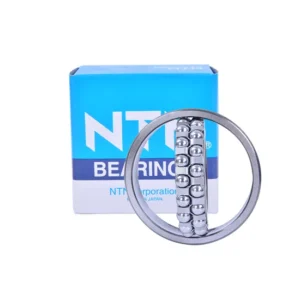
Self-Aligning Ball Bearing
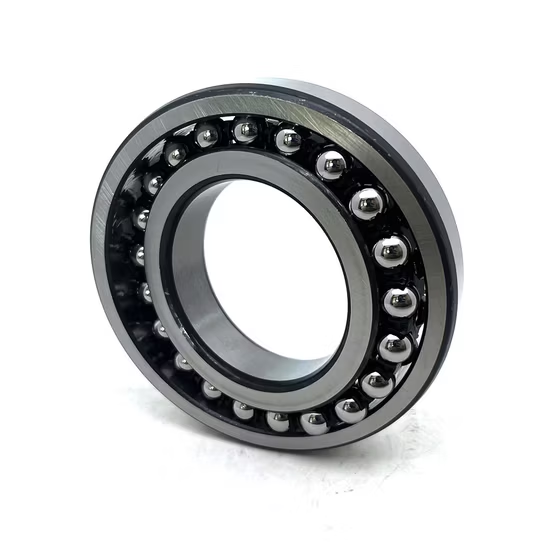
X&S 2319 2319K 2320 2320K 2320M 2321M 2322 2322M 1304 Self-Aligning Ball Bearings C2-C5 — HRC58-62 hardness
Multi-brand authorized coverage — Consolidate your X&S 2319 2320 1304 self-aligning ball bearing spherical roller bearing requirements alongside other major international brands in a single shipment, eliminating the need to coordinate with multiple vendors.
| Parameter | Value |
|---|---|
| Designation | 2319 2319K 2320 2320K 2320M 2321M 2322 2322M 1304 |
| Product Type | Self-Aligning Ball Bearing |
| Hardness | HRC58-62 [NEED_CITE: standard bearing steel hardness range] |
| Lubrication | Grease or Oil |
| Cage Material Options | Steel Cage, Brass Cage, Nylon Cage |
| Limiting Speed | 5600-18000 r/min |
| Vibration Class | V1, V2, V3, V4 |
| Clearance Class | C2, C0, C3, C4, C5 |
| Bore Type | Cylindrical or Tapered 1:12 (K suffix) |
| Origin | Shandong, China |
| Industry | Typical Applications |
|---|---|
| Textile Manufacturing | Dual side print textile machine rollers and tensioning units |
| Agriculture | Tractor steering linkages and PTO shaft supports |
| Construction | Earthmover articulation joints and vibrating screen exciters |
| Automotive | Heavy vehicle suspension pivot points and drivetrain supports |
Thermal expansion miscalculations cause inner ring seizures long before the steel fatigues.
In Shandong textile mills, I have repeatedly investigated dual side print textile machines that suffered catastrophic downtime. Maintenance crews often replace original units with standard clearance equivalents, ignoring the fact that continuous vibration and friction heat demand specific internal geometries. When a standard C0 clearance bearing is forced into a high-temperature roller application, the thermal expansion eliminates the internal gap, leading to severe binding. This X&S 2319 2320 1304 self-aligning ball bearing spherical roller bearing lineup addresses these exact field failures by offering precise clearance and cage configurations [NEED_CITE: thermal expansion effects on bearing internal clearance].
Selecting the correct cage is just as critical as choosing the right load rating. For the high-speed, low-load sections of textile machines, nylon or stamped steel cages minimize friction and keep operating temperatures stable. However, when dealing with the heavy shock loads found in construction machinery or tractor PTO shafts, a machined brass cage (M suffix) provides the necessary structural integrity to prevent cage fragmentation under severe vibration.
Dual side print textile machines generate relentless harmonic vibrations that can fracture weak cage materials. Simultaneously, the friction from continuous operation elevates internal temperatures, making the choice between grease and oil lubrication critical. Grease is generally preferred for sealed or low-maintenance setups, but oil lubrication becomes necessary when high speeds generate excessive heat that grease cannot dissipate. Ensuring the correct vibration class (V1 to V4) directly correlates with smoother operation and reduced noise in precision textile environments [NEED_CITE: vibration classification standards for rolling bearings].
Understanding the suffix prevents disastrous installation errors. The ‘K’ suffix indicates a 1:12 tapered bore, which requires precise locknut tightening to achieve the correct residual clearance during mounting; over-tightening will instantly preload the bearing and cause overheating. The ‘M’ suffix designates a machined brass cage, which offers superior resistance to high temperatures and heavy shock loads compared to stamped steel. Base numbers like 2319, 2320, 2322, and 1304 represent the core dimensional series and should be verified against manufacturer catalogs for specific internal design variations.
Relying solely on a base designation during cross-referencing is a primary driver of unplanned downtime. If a purchasing manager swaps an original C3 clearance bearing for a C0 equivalent simply because the base number matches, the resulting thermal binding will destroy the shaft and housing. According to failure analysis frameworks, a significant share of premature failures stems from these subtle specification mismatches rather than material defects [NEED_CITE: rolling bearing failure mode classification per ISO 15243]. This leads to voided equipment warranties and massive production losses.
We prevent these failures by enforcing a strict three-point alignment check: base designation, clearance class, and cage material must perfectly match the OEM requirements. When sourcing the X&S 2319 2320 1304 self-aligning ball bearing spherical roller bearing series, our engineering team reviews your specific load, speed, and temperature parameters to confirm the selection. We provide full batch traceability to the manufacturer, ensuring every unit meets the required HRC58-62 hardness and dimensional tolerances before it reaches your facility.
To ensure optimal performance, share your specific radial and axial loads, operating speeds, and ambient temperatures with our technical team. We will perform a comprehensive L10 life calculation and verify the clearance requirements for your specific textile or construction application. If you are replacing existing units, provide the exact OEM equipment numbers so we can execute a precise cross-reference check, guaranteeing the correct cage and clearance combination.
Q: Why do base numbers match but the replacement bearing still fails?
A: Base numbers only define outer dimensions. If the original equipment required a C3 clearance for thermal expansion and a brass cage for vibration resistance, installing a C0 steel-cage equivalent will cause thermal binding and cage fracture. We verify all three parameters to prevent this.
Q: How do I choose between C0, C3, and C4 clearances for textile machines?
A: C0 is for standard room-temperature operations. Dual side print textile machines typically generate significant friction heat, requiring C3 or C4 clearances to accommodate thermal expansion of the inner ring. We review your operating temperatures to specify the exact class.
Q: What is the practical difference between steel and M suffix brass cages?
A: Stamped steel cages are lightweight and suitable for high-speed, low-load applications. The M suffix indicates a machined brass cage, which provides substantially higher structural strength to withstand the heavy shock loads and severe vibrations common in construction and agricultural machinery.
Q: How does the K suffix affect the installation process?
A: The K suffix denotes a 1:12 tapered bore. During mounting, the locknut must be tightened to a precise angle to achieve the correct residual internal clearance. Over-tightening eliminates the clearance, causing immediate overheating and premature failure under load.
Our engineers will respond within 12 hours with a tailored solution.
Request Quote| Bearing Type | Self-Aligning Ball Bearing |
| Brand | SKF |
| Quality Standard | ISO 9001 / TS 16949 |
| Precision Grade | P0 / P5 / P6 (custom) |
| Material | Chrome Steel / Stainless |
| Cage Material | Steel / Brass / Polyamide |
| Lubrication | Grease / Oil (specify) |
| Operating Temp. | -40°C to +200°C |
| Min. Order Qty | 1 pc (samples available) |
| Prototype Lead Time | 7 Working Days |
| Load Capacity | Contact for C0/Cr values |
| Speed Rating | Contact for ndm limit |
| Vibration Level | Z1 / Z2 / Z3 (custom) |
| Noise Level | V1 / V2 / V3 (custom) |
| Fatigue Life | L10h per ISO 281 |
| Sealing Options | Open / Z / 2Z / RS / 2RS |
Our engineering team can modify bearing dimensions, materials, seals, and clearances to meet your specific operating requirements. Submit your drawing or spec sheet for a tailored proposal.
Main shaft bearings, gearbox bearings, and generator bearings for onshore and offshore wind turbines.
Heavy-duty bearings for crushers, conveyors, and rotary equipment in extreme dust and shock-load environments.
High-temperature bearings for rolling mills, continuous casting, and furnace applications.
Wheel hub bearings, transmission bearings, and e-motor bearings for passenger and commercial vehicles.
Axle box bearings, traction motor bearings, and gearbox bearings meeting EN/UIC railway standards.
High-precision spindle bearings, angular contact bearings, and super-precision bearings for CNC and robotics.
Our engineers analyze your operating conditions -- load, speed, temperature, environment -- and select or design the optimal bearing solution to maximize service life and reduce total cost of ownership.
Need non-standard dimensions, special materials, or modified clearances? We can modify standard SKF bearings or manufacture fully custom solutions with a 7-day prototype turnaround.
When bearings fail prematurely, our team conducts root-cause analysis using advanced diagnostic tools to identify the failure mode and recommend corrective action.
We deploy vibration monitoring, thermal imaging, and oil analysis programs that detect bearing deterioration early -- reducing unplanned downtime by up to 40%.
Proper installation is critical to bearing performance. Our certified technicians provide on-site installation support, alignment verification, and operator training worldwide.
From initial selection through end-of-life, our dedicated account managers provide scheduled maintenance plans, re-lubrication programs, and replacement forecasting for enterprise clients.
NDA protected · Free samples for orders > $50K · Reply within 12 hours