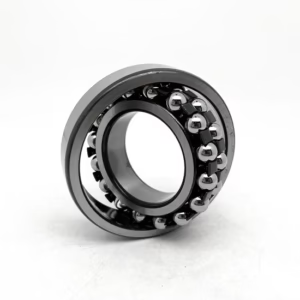
Self-Aligning Ball Bearing
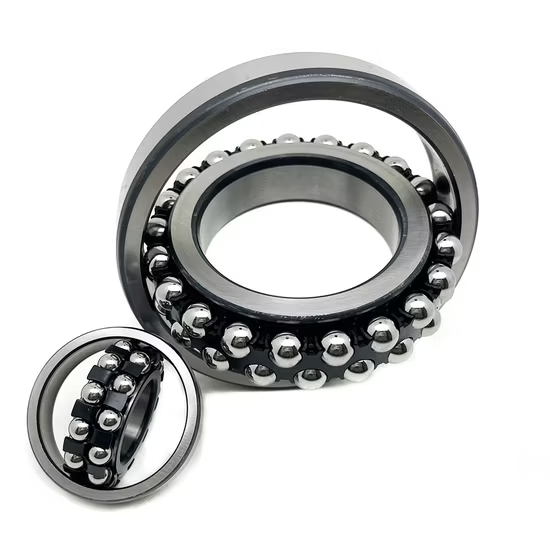
X&S 1218 2219 1319 Self-Aligning Ball Bearing — open type without seals requires external sealing, while standard CN clearance and P0 precision suit general industrial applications. These chrome steel units effectively accommodate shaft misalignment in electric motors and gearboxes.
Authenticity via official app — Every X&S 1218 2219 1319 self-aligning ball bearing ships with a scannable QR code linked directly to the manufacturer’s verification database, eliminating the risk of installing cloned components in critical offshore assets.
| Parameter | Value |
|---|---|
| Designation | 1218 2219 1319 |
| Bearing Type | Self-Aligning Ball Bearing |
| Limiting Speed | 5600-18000 r/min |
| Vibration Level | V1, V2, V3, V4 |
| Clearance Class | C2, C0 (CN), C3, C4, C5 |
| Precision Class | Normal / P0 |
| Seal or Shield Type | Open type without seals or shields |
| Lubrication | Grease or Oil |
| Material | Chrome Steel |
| Origin | China |
| Industry | Typical Applications |
|---|---|
| Offshore Wind Power | Yaw drive auxiliary mechanisms, cooling fan assemblies, nacelle ventilation shafts |
| Industrial Gearboxes | Input shafts subject to housing deflection, auxiliary drive take-offs |
| Material Handling | Conveyor pulley shafts, bucket elevator tail shafts, stacker reclaimer pivots |
Compensating for structural deflection prevents premature edge loading and cage fatigue.
In offshore wind nacelles, auxiliary cooling fans and yaw mechanisms operate under constant vibration and structural flexing. When procurement teams cross-reference replacements based solely on the base number, they frequently overlook internal design differences. Installing a standard clearance open bearing where thermal expansion demands a C3 or C4 clearance leads to internal preload, thermal binding, and catastrophic cage failure [NEED_CITE: rolling bearing failure mode classification per ISO 15243]. I have witnessed 1218 series bearings fail within months in marine environments simply because the cross-reference matched the dimensions but ignored the necessary vibration grade and clearance suffix, turning a minor misalignment into a costly unplanned downtime event.
Selecting the correct X&S 1218 2219 1319 self-aligning ball bearing requires looking past the basic dimensions to evaluate the specific operational stresses of the equipment. Our engineering review process verifies that the chosen vibration level and internal clearance perfectly align with the dynamic loads and thermal gradients of your specific auxiliary drive, ensuring reliable operation long after installation.
Offshore wind auxiliary shafts endure complex combined loads, where high-frequency vibration from the main drivetrain intersects with low-speed structural oscillations. Because these bearings operate in an open configuration, they rely entirely on the housing’s external sealing systems to prevent salt mist ingress and retain lubrication. The ambient temperature fluctuations inside the nacelle dictate strict clearance requirements; a standard CN clearance will quickly vanish as the shaft expands under operational heat, whereas a C3 or C4 clearance accommodates this thermal growth [NEED_CITE: thermal expansion effects on bearing internal clearance per ISO 281]. Furthermore, selecting the appropriate vibration level, such as V3 or V4, ensures the internal geometry and cage stability can withstand the persistent resonant frequencies without accelerating lubricant degradation.
The absence of a suffix on these designations dictates a P0 precision grade, standard CN clearance, and an open type without seals or shields. This open architecture is deliberate for industrial gearboxes and wind power applications where the housing provides superior labyrinth seals and continuous oil bath or circulating grease lubrication. The chrome steel construction offers high fatigue strength for radial loads, while the self-aligning outer ring raceway allows the inner ring and ball assembly to pivot freely. This pivoting action neutralizes the edge stresses caused by shaft deflection or minor machining errors in the bearing seats, protecting the rolling elements from localized spalling and extending the operational lifecycle of the auxiliary equipment.
Relying on incomplete cross-references that ignore clearance and vibration specifications inevitably results in premature failure and unplanned downtime. When an open bearing intended for an oil-lubricated gearbox is mistakenly installed in a grease-lubricated housing without adequate relubrication intervals, the resulting friction generates enough heat to anneal the chrome steel races. Such catastrophic damage not only destroys the bearing but often scores the shaft and housing, leading to extensive secondary repairs and complete warranty voidance under ISO 15243 failure classifications [NEED_CITE: lubrication failure modes and surface distress per ISO 15243].
We enforce a strict three-point alignment during cross-referencing, verifying not just the base designation but the exact clearance class, cage stability, and precision suffix required for your specific nacelle environment. Our inventory provides authorized coverage across mixed-brand requirements, allowing you to consolidate your offshore wind maintenance orders without coordinating multiple vendors. Every shipment includes batch traceability to the manufacturer, ensuring you can verify the metallurgical origin of the chrome steel. We actively prevent the installation of counterfeit components with soft inner rings by mandating QR verification through official brand applications. Additionally, our application-based selection review catches dangerous mismatches, such as specifying a CN clearance where a C3 is mandatory for thermal expansion, before the equipment ever leaves the dock.
To ensure the selected designations perfectly match your operational realities, please provide the specific radial and axial loads, operational speeds, and expected thermal gradients of your auxiliary drives. Sharing the exact OEM equipment numbers allows our technical team to perform a comprehensive cross-reference review, verifying that the required clearance and vibration levels are correctly specified for your offshore wind or material handling applications.
Q: How do we verify the authenticity of these open type bearings upon delivery?
A: Every bearing is supplied with batch traceability documentation and a unique QR code. Procurement teams must scan this code using the manufacturer’s official application to confirm the metallurgical origin and rule out counterfeit components with soft inner rings that frequently pass casual visual inspections in the field.
Q: Why is verifying the clearance suffix critical during cross-referencing?
A: Matching only the base number while ignoring the clearance class often leads to thermal binding. If a standard CN clearance is installed in an application requiring C3 for thermal expansion, the internal preload will generate excessive heat, causing premature cage failure and catastrophic damage to the auxiliary drive shaft.
Q: How should we manage lubrication for these open type bearings in offshore environments?
A: Since they lack integrated seals or shields, these bearings rely entirely on the housing’s external sealing systems. Maintenance teams must establish strict relubrication intervals using marine-grade grease or ensure the oil bath circulation system is free of salt mist contamination to protect the exposed chrome steel rolling elements.
Q: What installation precautions are necessary for the self-aligning outer ring?
A: During mounting, the self-aligning outer ring must be allowed to pivot freely within the housing to compensate for shaft misalignment. Forcing the outer ring into a tight or misaligned housing seat restricts this movement, neutralizing the self-aligning benefit and transferring destructive edge stresses directly to the rolling elements.
Our engineers will respond within 12 hours with a tailored solution.
Request Quote| Bearing Type | Self-Aligning Ball Bearing |
| Brand | SKF |
| Quality Standard | ISO 9001 / TS 16949 |
| Precision Grade | P0 / P5 / P6 (custom) |
| Material | Chrome Steel / Stainless |
| Cage Material | Steel / Brass / Polyamide |
| Lubrication | Grease / Oil (specify) |
| Operating Temp. | -40°C to +200°C |
| Min. Order Qty | 1 pc (samples available) |
| Prototype Lead Time | 7 Working Days |
| Load Capacity | Contact for C0/Cr values |
| Speed Rating | Contact for ndm limit |
| Vibration Level | Z1 / Z2 / Z3 (custom) |
| Noise Level | V1 / V2 / V3 (custom) |
| Fatigue Life | L10h per ISO 281 |
| Sealing Options | Open / Z / 2Z / RS / 2RS |
Our engineering team can modify bearing dimensions, materials, seals, and clearances to meet your specific operating requirements. Submit your drawing or spec sheet for a tailored proposal.
Main shaft bearings, gearbox bearings, and generator bearings for onshore and offshore wind turbines.
Heavy-duty bearings for crushers, conveyors, and rotary equipment in extreme dust and shock-load environments.
High-temperature bearings for rolling mills, continuous casting, and furnace applications.
Wheel hub bearings, transmission bearings, and e-motor bearings for passenger and commercial vehicles.
Axle box bearings, traction motor bearings, and gearbox bearings meeting EN/UIC railway standards.
High-precision spindle bearings, angular contact bearings, and super-precision bearings for CNC and robotics.
Our engineers analyze your operating conditions -- load, speed, temperature, environment -- and select or design the optimal bearing solution to maximize service life and reduce total cost of ownership.
Need non-standard dimensions, special materials, or modified clearances? We can modify standard SKF bearings or manufacture fully custom solutions with a 7-day prototype turnaround.
When bearings fail prematurely, our team conducts root-cause analysis using advanced diagnostic tools to identify the failure mode and recommend corrective action.
We deploy vibration monitoring, thermal imaging, and oil analysis programs that detect bearing deterioration early -- reducing unplanned downtime by up to 40%.
Proper installation is critical to bearing performance. Our certified technicians provide on-site installation support, alignment verification, and operator training worldwide.
From initial selection through end-of-life, our dedicated account managers provide scheduled maintenance plans, re-lubrication programs, and replacement forecasting for enterprise clients.
NDA protected · Free samples for orders > $50K · Reply within 12 hours