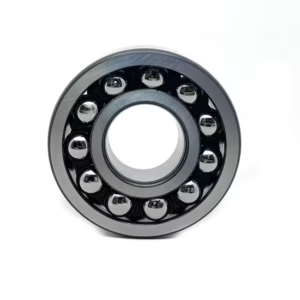
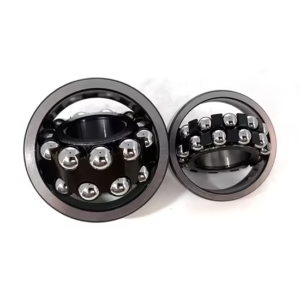
Self-Aligning Ball Bearing
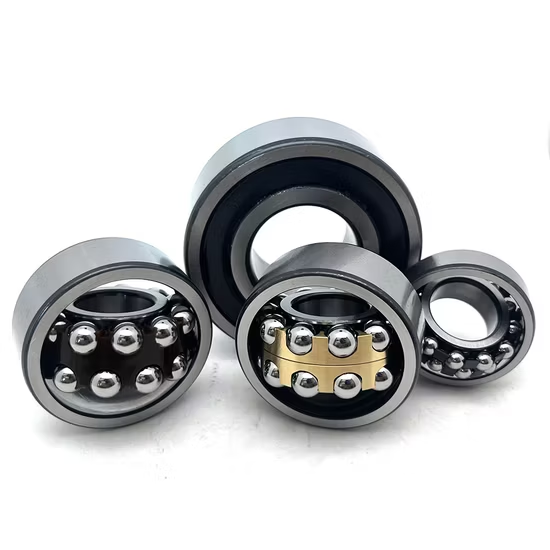
2304 2303 2320 Self-Aligning Ball Bearing — engineered with chrome steel (HRC58-62) to accommodate shaft misalignment in automotive and machinery applications.
Verified via official app — Every 2304 2303 2320 batch includes a scannable QR code linking directly to the manufacturer’s authentication database.
| Parameter | Value |
|---|---|
| Designation | 2304 2303 2320 |
| Bearing Type | Self-Aligning Ball Bearing |
| Material | Chrome Steel |
| Hardness | HRC58-62 [NEED |
| Lubrication | Grease or Oil |
| Cage Material | Steel Cage / Brass Cage / Nylon Cage |
| Limiting Speed | 5600-18000 r/min |
| Vibration Level | V1 / V2 / V3 / V4 |
| Clearance Class | C2 / C0 / C3 / C4 / C5 |
| Origin | Shandong, China |
| Industry | Typical Applications |
|---|---|
| Automotive accessories | Alternator pulley supports, steering column intermediate joints, cooling fan assemblies |
| Agricultural machinery | Harvester driveline intermediate supports, tractor PTO shaft bearings |
| Construction machinery | Vibratory roller eccentric shaft mounts, compact excavator swing gear supports |
Matching the base number without verifying clearance and cage material guarantees rapid field failure under thermal stress.
I have inspected countless returned units where a standard clearance was forced into a high-temperature automotive accessory application, resulting in inner ring expansion and catastrophic cage collapse. Procurement teams often assume the base designation is sufficient, ignoring that thermal growth demands specific internal gaps. When cross-referencing equivalents, overlooking the cage material or vibration grade turns a simple replacement into an unplanned downtime event [NEED
Selecting the correct 2304 2303 2320 self-aligning ball bearing requires matching the internal geometry to the specific misalignment and thermal profile of the equipment. We review the application parameters to ensure the chosen clearance class accommodates thermal expansion without sacrificing load distribution. This technical cross-reference prevents the common error of installing a rigid setup in a housing that experiences significant thermal distortion during operation.
Automotive accessories and construction equipment subject bearings to combined radial loads and continuous vibration, which can degrade standard lubricants and fatigue inadequately hardened components. Elevated operating temperatures reduce the viscosity of grease, demanding precise clearance selection to prevent the rolling elements from binding as the rings expand. Furthermore, exposure to agricultural dust or construction debris requires careful consideration of sealing friction versus contamination ingress, directly impacting the bearing’s operational lifespan [NEED
The choice between steel, brass, and nylon cages dictates the vibration resistance and speed limits of the assembly. Brass cages offer superior durability in high-vibration construction machinery, while nylon variants reduce friction for high-speed automotive alternator applications. Clearance selection is equally critical; a C3 or C4 class provides the necessary internal gap to absorb thermal expansion in hot-running environments, whereas a standard C0 clearance would lead to thermal binding and premature seizure. Limiting speeds ranging up to 18000 r/min are only achievable when the cage material and lubrication method are correctly synchronized with the vibration level.
Substituting a bearing based solely on the base designation often results in catastrophic damage to the surrounding housing and shaft due to unexpected thermal expansion. According to failure mode classifications outlined in ISO 15243, improper clearance selection is a primary driver of smearing and cage fractures. These failures void equipment warranties and trigger severe financial penalties from unplanned production halts. Relying on incomplete cross-references ultimately costs far more in replacement labor than sourcing the exact specification initially [NEED
We enforce strict batch traceability to ensure every unit originates from the manufacturer’s production facilities, eliminating the risk of counterfeit rings with inadequate hardness. Our cross-referencing protocol aligns clearance, cage material, and vibration grades, not just the base number, preventing the thermal binding issues common in automotive applications. We provide comprehensive application-based selection reviews to verify that the chosen configuration withstands your specific load and temperature boundaries. This rigorous validation ensures that mixed-brand orders maintain uniform performance standards across your entire assembly line.
To ensure precise fitment, please provide your specific radial and axial loads, operating speeds, and expected temperature ranges for an L10 life calculation. Supplying the OEM equipment number allows our engineering team to perform a comprehensive cross-reference check against the required clearance and cage suffixes. This data enables us to confirm the optimal vibration level and lubrication setup for your exact automotive or machinery application.
Q: Why must clearance and cage suffixes align during cross-referencing?
A: Matching only the base designation ignores internal geometry differences. A standard clearance might seize under thermal expansion, while an incorrect cage material can shatter under high vibration. Aligning these suffixes ensures the bearing can handle the specific thermal and mechanical stresses of the application without premature failure.
Q: How do cage materials affect performance in automotive applications?
A: Steel cages offer high strength for heavy loads, while brass cages provide excellent durability in high-vibration environments like construction machinery. Nylon cages reduce friction and weight, making them ideal for high-speed automotive accessories like alternators, provided the operating temperature remains within the polymer’s thermal limits.
Q: What is the difference between C0 and C3 clearance in hot environments?
A: C0 is standard clearance suitable for normal temperatures. C3 provides greater internal clearance to accommodate the thermal expansion of the inner ring and shaft in high-temperature applications. Using C0 in a hot environment causes the clearance to vanish, leading to excessive friction, heat generation, and eventual seizure.
Q: How does lubrication choice impact the limiting speed?
A: Oil lubrication generally supports higher limiting speeds by dissipating heat more effectively than grease. However, grease is preferred for sealed or low-maintenance applications. Selecting the correct grease viscosity and fill volume is critical to preventing churning losses and ensuring the bearing reaches its rated speed without overheating.
Our engineers will respond within 12 hours with a tailored solution.
Request Quote| Bearing Type | Self-Aligning Ball Bearing |
| Brand | SKF |
| Quality Standard | ISO 9001 / TS 16949 |
| Precision Grade | P0 / P5 / P6 (custom) |
| Material | Chrome Steel / Stainless |
| Cage Material | Steel / Brass / Polyamide |
| Lubrication | Grease / Oil (specify) |
| Operating Temp. | -40°C to +200°C |
| Min. Order Qty | 1 pc (samples available) |
| Prototype Lead Time | 7 Working Days |
| Load Capacity | Contact for C0/Cr values |
| Speed Rating | Contact for ndm limit |
| Vibration Level | Z1 / Z2 / Z3 (custom) |
| Noise Level | V1 / V2 / V3 (custom) |
| Fatigue Life | L10h per ISO 281 |
| Sealing Options | Open / Z / 2Z / RS / 2RS |
Our engineering team can modify bearing dimensions, materials, seals, and clearances to meet your specific operating requirements. Submit your drawing or spec sheet for a tailored proposal.
Main shaft bearings, gearbox bearings, and generator bearings for onshore and offshore wind turbines.
Heavy-duty bearings for crushers, conveyors, and rotary equipment in extreme dust and shock-load environments.
High-temperature bearings for rolling mills, continuous casting, and furnace applications.
Wheel hub bearings, transmission bearings, and e-motor bearings for passenger and commercial vehicles.
Axle box bearings, traction motor bearings, and gearbox bearings meeting EN/UIC railway standards.
High-precision spindle bearings, angular contact bearings, and super-precision bearings for CNC and robotics.
Our engineers analyze your operating conditions -- load, speed, temperature, environment -- and select or design the optimal bearing solution to maximize service life and reduce total cost of ownership.
Need non-standard dimensions, special materials, or modified clearances? We can modify standard SKF bearings or manufacture fully custom solutions with a 7-day prototype turnaround.
When bearings fail prematurely, our team conducts root-cause analysis using advanced diagnostic tools to identify the failure mode and recommend corrective action.
We deploy vibration monitoring, thermal imaging, and oil analysis programs that detect bearing deterioration early -- reducing unplanned downtime by up to 40%.
Proper installation is critical to bearing performance. Our certified technicians provide on-site installation support, alignment verification, and operator training worldwide.
From initial selection through end-of-life, our dedicated account managers provide scheduled maintenance plans, re-lubrication programs, and replacement forecasting for enterprise clients.
NDA protected · Free samples for orders > $50K · Reply within 12 hours