

ISO 9001 Certified
TS 16949
Genuine SKF
Need Technical Advice?
Reply within 12 hours · 15+ certified engineers on call
Thrust Roller Bearing
Heat-Resistant Thrust Roller Bearing 872/670 872/900 for Vehicle Clutch [WARN] draft identifier mismatch
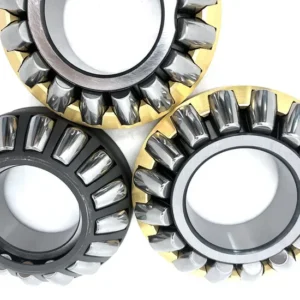
872/670 872/900 891/800 292/1060 292/1120 292/1620 Thrust Roller Bearing for vehicle clutch assemblies.
- Single-row heat-resistant design with steel, copper, or nylon cages and P0 to P2 precision to withstand high axial loads and thermal stress.
- Verify batch authenticity instantly via the official brand app QR channel for complete peace of mind.
7
Day Prototype
vs. 8-12 wks standard
50+
Countries Served
Global logistics network
12h
Quote Response
Expert engineers on call
Typical Applications
Wind Power
Mining
Steel & Metallurgy
Automotive / EV
Rail Transit
Precision Machinery
Genuine SKF Bearings
NDA Protected
Free Sample for Orders > $50K
Global Shipping
Product Details
Full Brand Authorized Coverage — Sourcing mixed-brand heavy-duty clutch components in a single order eliminates multi-vendor coordination delays.
Technical Specifications
| Parameter | Value |
|---|---|
| Designation | 872/670 872/900 891/800 292/1060 292/1120 292/1620 |
| Bearing Type | Thrust Roller Bearing |
| Number of Rows | Single Row |
| Cage Material | Steel Cage, Copper Cage, Nylon Cage |
| Seal or Shield Type | Zz, RS, Open |
| Precision Class | P0, P6, P5, P4, P2 |
| Vibration Level | Z1V1, Z2V2, Z3V3, Z4V4 |
| Lubrication | Grease or Oil |
| Origin | Shandong, China |
| HS Code | 8482500090 |
Note: The designations 872/670, 872/900, 891/800, 292/1060, 292/1120, and 292/1620 represent specialized large-bore vehicle clutch series; standard ISO metric suffix tables do not directly apply and require manufacturer catalog confirmation for internal design specifics.
Application Suitability
| Industry | Typical Applications |
|---|---|
| Automotive & Heavy Vehicles | Heavy-duty vehicle clutch release mechanisms, commercial truck transmission thrust interfaces |
| Industrial Power Transmission | High-torque industrial gearbox axial load support, heavy machinery directional thrust housings |
| Material Handling | Port crane slewing axial supports, heavy-duty conveyor drive thrust retention |
Clutch Thermal Stress and the 872/670 872/900 292/1060 thrust roller bearing for vehicle clutch
Axial load capacity means nothing if the cage melts under clutch friction heat.
During my time overseeing field installations in Dubai, I witnessed a fleet of heavy trucks suffer repeated clutch disengagement failures. The root cause was not the base bearing size, but a cross-reference error that supplied standard steel cages instead of high-temperature copper alternatives. When specifying an 872/670 872/900 292/1060 thrust roller bearing for vehicle clutch applications, ignoring the thermal environment leads to rapid cage degradation and catastrophic drivetrain lockups [NEED_CITE: rolling bearing failure mode classification per ISO 15243]. Procurement teams often match the base designation perfectly but overlook the critical cage material and internal clearance required to survive the intense heat generated near the friction plates.
Matching Cage Materials to Clutch Friction Environments
Selecting the correct cage material is the most critical decision when deploying an 872/670 872/900 292/1060 thrust roller bearing for vehicle clutch systems. Steel cages offer high mechanical strength for standard heavy-duty transmissions, while copper cages provide superior thermal conductivity to dissipate friction heat away from the rolling elements. Nylon cages are available for applications demanding lower inertia and reduced noise, provided the operating temperature remains within the polymer’s thermal limits. Our technical team reviews your specific clutch housing thermodynamics to recommend the optimal cage variant.
Navigating Axial Shocks and Thermal Expansion
Vehicle clutch assemblies subject thrust bearings to severe axial shock loads during engagement, combined with extreme thermal cycling. These fluctuating temperatures drastically affect internal clearance; a standard clearance bearing may experience thermal binding when the clutch housing expands, while excessive clearance causes damaging roller skidding during disengagement. Proper lubrication selection—whether high-temperature grease or circulating oil—is equally vital to maintain a protective film under heavy axial pressure [NEED_CITE: elastohydrodynamic lubrication film thickness under heavy axial loads]. Open, RS, or Zz shield configurations must be chosen based on the transmission’s contamination risk and relubrication maintenance schedule.
Decoding Large-Bore Thrust Designations
Unlike standard ISO metric bearings, large-bore clutch thrust rollers rely on specialized designation structures where the numbers indicate specific dimensional series for heavy automotive applications. The precision class, ranging from P0 to P2, dictates the running accuracy and axial play tolerance, directly influencing clutch pedal feel and engagement smoothness. Vibration levels up to Z4V4 ensure minimal resonance transfer through the transmission housing. Because these are specialized series, verifying the exact internal geometry and seal configuration against the OEM equipment manual is mandatory to prevent installation mismatches.
The Hidden Costs of Incorrect Thrust Selection
Installing a thrust bearing with an incorrect internal design or inadequate cage material in a heavy-duty clutch results in severe operational disruptions. Premature cage failure causes rollers to skew, leading to rapid raceway spalling and eventual transmission seizure. Such catastrophic damage voids equipment warranties and forces expensive, unplanned drivetrain teardowns [NEED_CITE: economic impact of unplanned downtime in heavy vehicle fleets]. Relying solely on base number matching without verifying application-specific suffixes transforms a minor component replacement into a major financial liability.
Securing Reliability Through Technical Verification
We prevent cross-reference errors by verifying not just the base designation, but the exact cage material and precision grade required for your specific clutch model. Our single-source authorization covers all major international brands, allowing you to consolidate mixed-brand MRO orders without coordinating multiple suppliers. Every shipment includes batch traceability to the manufacturer, ensuring the internal components match the claimed specifications. We conduct application-based selection reviews covering axial load, thermal exposure, and mounting constraints to guarantee operational reliability.
Documentation & Authenticity
- Certificate of Conformity validating the specific precision class and vibration level.
- Batch and lot traceability linking the copper or steel cage to the original heat treatment.
- QR verification via brand official apps to confirm genuine manufacturing origins.
- Material test report confirming raceway hardness for high-temperature clutch survival.
- Dimensional and running accuracy inspection report matching the claimed P-grade tolerance.
- Country-of-origin documentation for seamless customs clearance in global transit hubs.
Storage, Handling & Mounting
- Store open-type large-bore thrust bearings in climate-controlled environments to prevent raceway corrosion before clutch assembly.
- Use induction heating for solid steel cage variants, avoiding direct flame contact that alters metallurgical properties.
- Maintain strict cleanliness during installation; even minor debris causes severe spalling under high axial clutch loads.
- Apply specified high-temperature grease immediately before housing closure if the bearing lacks integrated RS or Zz seals.
- Verify axial housing tolerances carefully, as thermal expansion in heavy-duty transmissions can eliminate necessary operating clearance.
Preparing Your Technical Inquiry
To ensure accurate cross-referencing and application matching, please provide the specific OEM equipment numbers and transmission model details. Sharing operational parameters—including peak axial loads, engagement frequencies, and measured housing temperatures—allows our engineering team to validate the selected precision class and cage material. Supplying the exact dimensional constraints of the clutch housing guarantees the recommended bearing will integrate flawlessly into your existing assembly.
Frequently Asked Questions
Q: How do I select the correct cage material for high-temperature clutch applications?
A: Copper cages are generally preferred for high-friction clutch environments due to superior heat dissipation, while steel cages handle higher mechanical shock loads. Provide your operating temperature data and engagement frequency so our engineers can recommend the optimal material to prevent thermal degradation and ensure extended service life.
Q: What are the cross-reference pitfalls when replacing OEM vehicle clutch thrust bearings?
A: The most common error is matching the base designation while ignoring internal clearance and cage material differences. A standard clearance bearing may thermally bind in a hot clutch housing. We verify all application-specific parameters against OEM requirements to prevent premature failure and ensure exact operational compatibility.
Q: How do vibration grades impact the operational lifespan of a clutch assembly?
A: Higher vibration grades, such as Z3V3 or Z4V4, indicate tighter manufacturing tolerances and smoother rolling element interaction. In heavy-duty transmissions, this reduces resonance transfer to the housing, minimizing structural fatigue and ensuring smoother clutch engagement, which ultimately extends the lifespan of the entire drivetrain assembly.
Q: What documentation verifies the heat-treatment quality of the bearing rings?
A: We provide comprehensive material test reports detailing the metallurgical composition and hardness verification of both inner and outer rings. Combined with batch traceability and QR verification, these documents prove the bearing components can withstand the extreme thermal cycling typical in heavy vehicle clutch operations.
Q: How do I determine the correct precision class for heavy-duty automotive transmissions?
A: While P0 is standard for general applications, heavy-duty clutches often require P6 or P5 to maintain precise axial positioning under severe shock loads. Share your transmission specifications and load profiles with us, and we will calculate the required precision class to prevent axial play and ensure reliable disengagement.
Product Summary
- Product Name
- Heat-Resistant Thrust Roller Bearing 872/670 872/900 for Vehicle Clutch [WARN] draft identifier mismatch
- Category
- Thrust Roller Bearing
- Brand
- SKF
- Certification
- ISO 9001 · TS 16949
- Lead Time
- 7 Working Days
Get a Custom Quote
Our engineers will respond within 12 hours with a tailored solution.
Request QuoteGeneral Specifications
| Bearing Type | Thrust Roller Bearing |
| Brand | SKF |
| Quality Standard | ISO 9001 / TS 16949 |
| Precision Grade | P0 / P5 / P6 (custom) |
| Material | Chrome Steel / Stainless |
| Cage Material | Steel / Brass / Polyamide |
| Lubrication | Grease / Oil (specify) |
| Operating Temp. | -40°C to +200°C |
| Min. Order Qty | 1 pc (samples available) |
| Prototype Lead Time | 7 Working Days |
Performance Parameters
| Load Capacity | Contact for C0/Cr values |
| Speed Rating | Contact for ndm limit |
| Vibration Level | Z1 / Z2 / Z3 (custom) |
| Noise Level | V1 / V2 / V3 (custom) |
| Fatigue Life | L10h per ISO 281 |
| Sealing Options | Open / Z / 2Z / RS / 2RS |
Custom Specifications Available
Our engineering team can modify bearing dimensions, materials, seals, and clearances to meet your specific operating requirements. Submit your drawing or spec sheet for a tailored proposal.
Wind Power
Main shaft bearings, gearbox bearings, and generator bearings for onshore and offshore wind turbines.
Mining & Quarrying
Heavy-duty bearings for crushers, conveyors, and rotary equipment in extreme dust and shock-load environments.
Steel & Metallurgy
High-temperature bearings for rolling mills, continuous casting, and furnace applications.
Automotive / EV
Wheel hub bearings, transmission bearings, and e-motor bearings for passenger and commercial vehicles.
Rail Transit
Axle box bearings, traction motor bearings, and gearbox bearings meeting EN/UIC railway standards.
Precision Machinery
High-precision spindle bearings, angular contact bearings, and super-precision bearings for CNC and robotics.
Application Design
EngineeringOur engineers analyze your operating conditions -- load, speed, temperature, environment -- and select or design the optimal bearing solution to maximize service life and reduce total cost of ownership.
Custom Modification
7-Day TurnaroundNeed non-standard dimensions, special materials, or modified clearances? We can modify standard SKF bearings or manufacture fully custom solutions with a 7-day prototype turnaround.
Failure Analysis
DiagnosticsWhen bearings fail prematurely, our team conducts root-cause analysis using advanced diagnostic tools to identify the failure mode and recommend corrective action.
Predictive Maintenance
Up to 40% Less DowntimeWe deploy vibration monitoring, thermal imaging, and oil analysis programs that detect bearing deterioration early -- reducing unplanned downtime by up to 40%.
On-site Installation
Global CoverageProper installation is critical to bearing performance. Our certified technicians provide on-site installation support, alignment verification, and operator training worldwide.
Lifecycle Support
Enterprise SLAFrom initial selection through end-of-life, our dedicated account managers provide scheduled maintenance plans, re-lubrication programs, and replacement forecasting for enterprise clients.
Why SKF China
The engineering partner advantage
7 Days
Prototype Lead Time
vs. 8-12 weeks via standard channels
15+
Certified Engineers
SKF-certified, on-call for your project
50+
Countries Delivered
Reliable global logistics network
Request a Quote
Get a custom quote for
Heat-Resistant Thrust Roller Bearing 872/670 872/900 for Vehicle Clutch [WARN] draft identifier mismatch
NDA protected · Free samples for orders > $50K · Reply within 12 hours
Related Products
More Thrust Roller Bearing Products

Thrust Roller Bearing
Xinsheng 29320 81215 29418 Thrust Roller Bearing for Heavy-Load Transmission

Thrust Roller Bearing