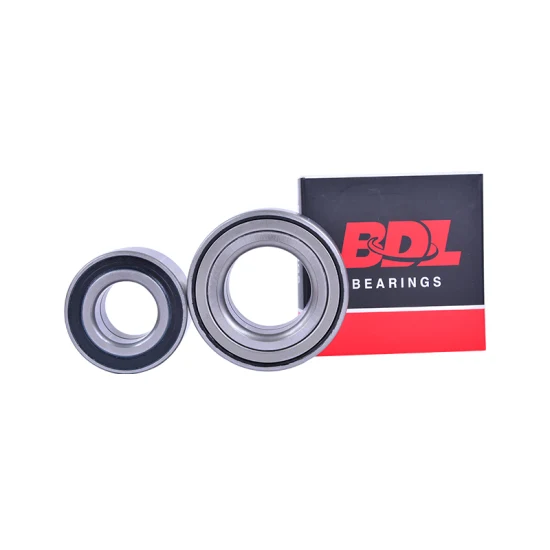
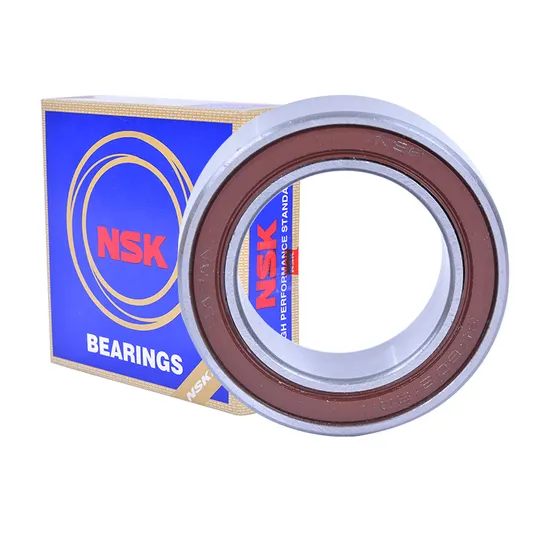
Angular Contact Ball Bearing

7902 7002 7202 7302 Angular Contact Ball Bearings
Cross-Reference Alignment Verified — We match base designations like 7902, 7002, 7202, and 7302 alongside exact clearance and precision suffixes to prevent thermal binding in printing presses.
| Parameter | Value |
|---|---|
| Designation | 7902 7002 7202 7302 |
| Bearing Type | Angular Contact Ball Bearing |
| Contact Angle | 15° to 60° options |
| Aligning | Non-Aligning |
| Separated | Unseparated |
| Number of Rows | Single |
| Load Direction | Radial and Axial |
| Material | GCr15 bearing steel or stainless steel variants |
| Seal or Shield Type | ZZ, 2RS, or Open |
| Precision Class | P0, P6, P5, or P4 |
| Lubrication | Grease or Oil |
| Vibration Level | Z1V1, Z2V2, Z3V3, or Z4V4 |
| Origin | Shandong, China |
| Industry | Typical Applications |
|---|---|
| Printing Machinery | Main drive shafts, impression cylinder supports, high-speed feeder rollers |
| Precision Equipment | Optical inspection positioning stages, automated registration guides |
| Machine Tool Spindles | High-frequency grinding spindles, precision milling head bearings |
| Robotics | Articulated joint actuators, high-speed rotary indexing tables |
Matching the base number without verifying precision and internal geometry leads to rapid thermal failure.
In the printing industry, a slight misalignment or excess friction generates heat that expands the inner ring, eliminating internal clearance and causing the spindle to seize. I once investigated a web press downtime incident where the maintenance team replaced a failed unit with a standard precision bearing that shared the exact same base number. The lack of high-precision raceway geometry and incorrect internal contact angle caused severe vibration at high operational speeds, ultimately destroying the spindle housing. A genuine 7902 7002 7202 7302 angular contact ball bearing must be selected with strict attention to these internal variables to maintain registration accuracy [NEED_CITE: rolling bearing failure mode classification per ISO 15243].
Printing machinery demands extreme rotational stability to prevent color misregistration and banding defects on the final print. When sourcing a 7902 7002 7202 7302 angular contact ball bearing, selecting the appropriate precision class is non-negotiable for these critical spindles. While standard grades suffice for auxiliary feed rollers, the main impression cylinders require tighter dimensional and running accuracy tolerances to maintain strict radial and axial positioning under continuous high-speed operation.
The operational environment inside a printing press exposes components to continuous high-speed rotation, generating significant frictional heat that directly impacts internal clearance. Selecting the correct contact angle dictates how the bearing handles the combined radial and axial loads from the web tension and gear drives. Furthermore, the choice between non-contact metal shields and contact rubber seals involves a direct trade-off between keeping paper dust out and minimizing frictional heat generation. Proper lubrication selection, whether oil-air systems for extreme speeds or specialized greases for sealed units, is critical to prevent premature cage failure [NEED_CITE: thermal limits of bearing lubrication in high-speed applications].
The versatility of these designations lies in their configurable internal geometry and sealing arrangements. The available contact angle options allow engineers to optimize the ratio of axial to radial load capacity based on the specific spindle design. Precision classes dictate the running accuracy, directly influencing the vibration levels and noise output during high-speed printing runs. Additionally, the choice between open designs for external oil-air lubrication or shielded variants for maintenance-free grease lubrication ensures the bearing integrates properly with the machine’s existing cooling and contamination control systems.
Overlooking the exact precision or clearance suffix during replacement procurement inevitably results in unplanned downtime and catastrophic spindle damage. A bearing that runs too tight will overheat and seize, while one with excessive internal clearance will allow the printing cylinders to chatter, ruining thousands of dollars in printed material. According to ISO 281 standards for dynamic load ratings, operating a precision component outside its intended geometric parameters drastically accelerates fatigue and compromises the entire machine’s operational lifespan [NEED_CITE: bearing life calculation principles per ISO 281].
Our procurement process eliminates the risk of receiving counterfeit units with soft inner rings that pass casual visual inspections but fail under load. We verify every cross-reference request to ensure the replacement matches the original equipment manufacturer’s exact requirements for precision and internal geometry, rather than just the base number. Every shipment includes full batch traceability, allowing your maintenance team to verify the material origin and manufacturing lot. We also provide detailed dimensional inspection reports so you can confirm the running accuracy before the bearing ever touches the spindle.
To ensure the selected configuration perfectly matches your printing machinery, please provide the specific spindle operating parameters, including radial and axial loads, maximum rotational speeds, and operating temperatures. If you are replacing an existing component, sharing the original equipment manufacturer’s part number or the exact designation stamped on the old bearing allows our engineering team to perform a comprehensive cross-reference check. This technical review guarantees that the replacement maintains the original precision and clearance requirements of your press.
Q: Why is it critical to verify both the precision class and contact angle when cross-referencing these designations?
A: Base numbers only define the physical envelope dimensions. The precision class dictates the running accuracy required to prevent vibration in printing cylinders, while the contact angle determines how the bearing handles the specific axial and radial load combination. Missing either parameter leads to rapid thermal failure or poor print registration.
Q: How do different precision grades affect the performance of printing machinery spindles?
A: Standard grades are adequate for low-speed auxiliary rollers, but main impression cylinders demand higher precision classes to minimize radial runout. Tighter tolerances ensure the cylinders remain perfectly parallel under high-speed operation, preventing color misregistration, banding defects, and premature wear on the spindle housing.
Q: What is the impact of choosing the wrong contact angle for a high-speed press application?
A: The contact angle determines the bearing’s axial load capacity and its stiffness. Selecting an angle that is too shallow for a high-axial-load application causes excessive internal stress and ball skidding. Conversely, an unnecessarily steep angle increases friction and heat generation, limiting the maximum safe operating speed of the spindle.
Q: How can I verify the authenticity of the bearings received for my critical press spindles?
A: Every unit we supply features batch traceability and a QR code that can be scanned using the manufacturer’s official mobile application. This digital verification confirms the exact production lot, material origin, and factory testing data, protecting your equipment from counterfeit products with substandard metallurgy.
Q: Should I choose metal shields or rubber seals for a printing press operating in a dusty environment?
A: Metal shields provide non-contact protection that minimizes friction and heat generation, making them ideal for very high-speed spindles. Rubber contact seals offer superior exclusion of fine paper dust and ink mist but generate slightly more friction. The choice depends on balancing the maximum operating speed against the severity of the environmental contamination.
Our engineers will respond within 12 hours with a tailored solution.
Request Quote| Bearing Type | Angular Contact Ball Bearing |
| Brand | SKF |
| Quality Standard | ISO 9001 / TS 16949 |
| Precision Grade | P0 / P5 / P6 (custom) |
| Material | Chrome Steel / Stainless |
| Cage Material | Steel / Brass / Polyamide |
| Lubrication | Grease / Oil (specify) |
| Operating Temp. | -40°C to +200°C |
| Min. Order Qty | 1 pc (samples available) |
| Prototype Lead Time | 7 Working Days |
| Load Capacity | Contact for C0/Cr values |
| Speed Rating | Contact for ndm limit |
| Vibration Level | Z1 / Z2 / Z3 (custom) |
| Noise Level | V1 / V2 / V3 (custom) |
| Fatigue Life | L10h per ISO 281 |
| Sealing Options | Open / Z / 2Z / RS / 2RS |
Our engineering team can modify bearing dimensions, materials, seals, and clearances to meet your specific operating requirements. Submit your drawing or spec sheet for a tailored proposal.
Main shaft bearings, gearbox bearings, and generator bearings for onshore and offshore wind turbines.
Heavy-duty bearings for crushers, conveyors, and rotary equipment in extreme dust and shock-load environments.
High-temperature bearings for rolling mills, continuous casting, and furnace applications.
Wheel hub bearings, transmission bearings, and e-motor bearings for passenger and commercial vehicles.
Axle box bearings, traction motor bearings, and gearbox bearings meeting EN/UIC railway standards.
High-precision spindle bearings, angular contact bearings, and super-precision bearings for CNC and robotics.
Our engineers analyze your operating conditions -- load, speed, temperature, environment -- and select or design the optimal bearing solution to maximize service life and reduce total cost of ownership.
Need non-standard dimensions, special materials, or modified clearances? We can modify standard SKF bearings or manufacture fully custom solutions with a 7-day prototype turnaround.
When bearings fail prematurely, our team conducts root-cause analysis using advanced diagnostic tools to identify the failure mode and recommend corrective action.
We deploy vibration monitoring, thermal imaging, and oil analysis programs that detect bearing deterioration early -- reducing unplanned downtime by up to 40%.
Proper installation is critical to bearing performance. Our certified technicians provide on-site installation support, alignment verification, and operator training worldwide.
From initial selection through end-of-life, our dedicated account managers provide scheduled maintenance plans, re-lubrication programs, and replacement forecasting for enterprise clients.
NDA protected · Free samples for orders > $50K · Reply within 12 hours