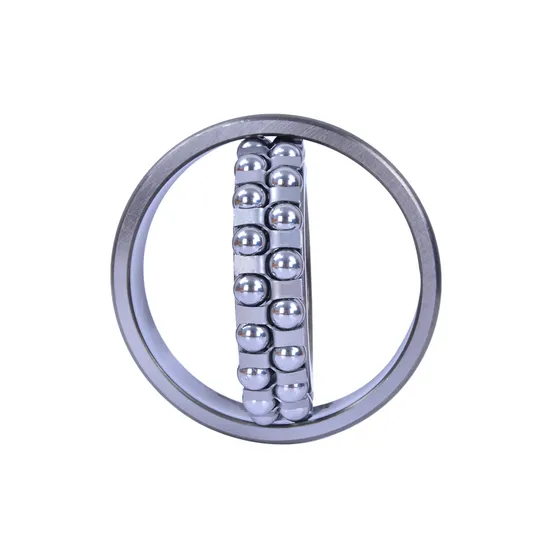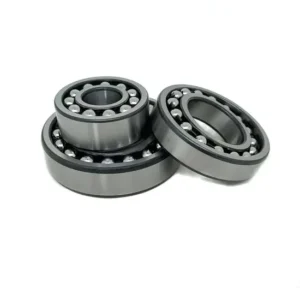
Self-Aligning Ball Bearing

X&S 1214 1215 1215 K 1216 1216 K 1217 1217 K 1218 1203 Self-Aligning Ball Bearing — Available in standard cylindrical and 1:12 tapered bore configurations to compensate for shaft misalignment under high-speed radial loads.
Full Batch Traceability — Every X&S 1214 1215 1215 K self-aligning ball bearing shipped from our facility includes verifiable lot documentation linking directly to the manufacturer’s production records.
| Parameter | Value |
|---|---|
| Designation | 1214 1215 1215 K 1216 1216 K 1217 1217 K 1218 1203 |
| Product Type | Self-Aligning Ball Bearing |
| Bore Type | Cylindrical (no suffix) / 1:12 Tapered (K suffix) |
| Load Direction | Radial |
| Lubrication | Grease or Oil |
| Feature | High Speed |
| Origin | Shandong, China |
| HS Code | 8482109000 |
Note: Ceramic variants or integrated stud configurations mentioned in some original catalog titles remain unverified suffixes and require explicit manufacturer catalog confirmation before ordering.
| Industry | Typical Applications |
|---|---|
| Agricultural Machinery | Combine harvester sieves, tractor steering linkages, rotary tiller gearboxes |
| Material Handling | Belt conveyor idler pulleys, bucket elevator tail shafts, transfer car wheels |
| Textile Machinery | Spinning frame drafting rollers, loom let-off mechanisms, yarn guide carriages |
Matching the cage to the vibration profile prevents catastrophic structural breakdown.
Years ago in a Ningbo workshop, I tore down an electric motor that failed prematurely due to severe vibration. Inside, a standard pressed steel cage had shattered into metallic fragments, scoring the raceways and destroying the unit. That failure occurred because a basic part number match ignored the high-vibration reality of the application. Sourcing an X&S 1214 1215 1215 K self-aligning ball bearing without verifying the internal cage design against the actual operational environment is a common procurement trap [NEED_CITE: rolling bearing failure mode classification per ISO 15243]. When equipment operates under continuous shock loads, relying on generic catalog substitutions rather than application-specific validation leads to repeated downtime.
Misalignment is inevitable in heavy-duty material handling and agricultural equipment. The X&S 1214 1215 1215 K self-aligning ball bearing compensates for these shaft and housing deflections through its spherical outer ring raceway. By accommodating angular errors without inducing edge loading on the rolling elements, this design protects the raceway integrity. Our technical review process ensures that the selected bearing matches the specific deflection angles of your machinery, preventing the premature fatigue that occurs when rigid bearing types are forced into misaligned housings.
Operating at elevated speeds generates significant internal friction and heat, which directly impacts internal clearance. If a standard clearance bearing is installed in a high-speed textile spindle, thermal expansion can eliminate the internal gap, causing the bearing to seize. Selecting the correct clearance class ensures the bearing maintains optimal internal geometry once it reaches operating temperature [NEED_CITE: bearing internal clearance and thermal expansion principles per ISO 5753]. Furthermore, choosing between grease and oil lubrication depends on the speed factor and the need for heat dissipation, a critical distinction we verify during the application-based selection review.
The presence or absence of the K suffix fundamentally changes the mounting procedure and the required ancillary components. Bearings without a suffix feature a cylindrical bore, typically mounted via induction heating for a tight interference fit. In contrast, the K suffix denotes a 1:12 tapered bore, designed to be mounted on an adapter sleeve. This tapered configuration allows for precise adjustment of the internal radial clearance during installation by controlling the drive-up distance. Understanding this distinction prevents the costly error of ordering a cylindrical bore bearing for a shaft designed exclusively for tapered sleeve mounting.
Substituting bearings based solely on the base designation while ignoring internal design variations leads to severe operational penalties. A mismatched cage material or incorrect clearance class will trigger unplanned downtime and accelerated wear. According to failure analysis frameworks like ISO 15243, a significant share of premature bearing failures stems from these subtle specification mismatches rather than inherent material defects [NEED_CITE: ISO 15243 damage and failure classification]. The resulting costs extend far beyond the replacement part, encompassing lost production, emergency freight, and potential damage to adjacent gearbox components.
We eliminate the guesswork that plagues standard distribution channels. Our authorized coverage across all major brands means you can consolidate mixed-brand requirements into a single, fully traceable order. We perform rigorous cross-brand interchange matching that verifies clearance, cage material, and precision suffixes, not just the base number. Every shipment includes batch traceability to the manufacturer, verified via official brand apps. Furthermore, our application-based selection review actively flags potential mismatches in load, speed, and temperature parameters before the order is finalized, ensuring the bearing you receive is exactly what your equipment demands.
To ensure precise technical alignment, please provide your specific radial and axial load profiles, operational speeds, and expected temperature ranges. Supplying the OEM equipment designation or the exact housing dimensions allows our engineering team to perform a comprehensive L10 life calculation and cross-reference validation. This data enables us to recommend the optimal clearance class and cage material, ensuring the selected bearing withstands your unique operational demands.
Q: What is the practical difference between the cylindrical bore and the 1:12 tapered bore (K suffix)?
A: The cylindrical bore requires a strict interference fit, usually achieved via induction heating. The K suffix indicates a 1:12 tapered bore, which mounts onto an adapter sleeve. This tapered design allows the installer to precisely adjust the internal radial clearance during mounting by controlling how far the bearing is driven up the sleeve, making it ideal for applications requiring exact clearance settings.
Q: How can I verify the authenticity and batch traceability of the delivered bearings?
A: Every bearing we supply includes comprehensive batch and lot traceability documentation linking directly to the manufacturer. You can verify authenticity by scanning the provided QR codes using the official brand applications. We also supply a Certificate of Conformity and material test reports, ensuring full transparency and confirming that the product is genuine and correctly specified.
Q: What cross-reference parameters must be checked when replacing an OEM self-aligning ball bearing?
A: Matching the base designation is insufficient. You must verify the internal clearance class to account for thermal expansion, confirm the cage material matches the vibration and speed profile, and ensure the bore type (cylindrical or tapered) aligns with your shaft design. We perform this comprehensive three-point alignment check to prevent premature failures caused by subtle specification mismatches.
Q: How do I choose between grease and oil lubrication for high-speed applications?
A: Grease is typically preferred for its sealing properties and lower maintenance requirements in moderate-speed applications. However, for high-speed operations where heat generation is significant, oil lubrication provides superior cooling and heat dissipation. The final decision depends on the specific speed factor, operating temperature, and the housing design’s ability to retain or circulate the lubricant effectively.
Our engineers will respond within 12 hours with a tailored solution.
Request Quote| Bearing Type | Self-Aligning Ball Bearing |
| Brand | SKF |
| Quality Standard | ISO 9001 / TS 16949 |
| Precision Grade | P0 / P5 / P6 (custom) |
| Material | Chrome Steel / Stainless |
| Cage Material | Steel / Brass / Polyamide |
| Lubrication | Grease / Oil (specify) |
| Operating Temp. | -40°C to +200°C |
| Min. Order Qty | 1 pc (samples available) |
| Prototype Lead Time | 7 Working Days |
| Load Capacity | Contact for C0/Cr values |
| Speed Rating | Contact for ndm limit |
| Vibration Level | Z1 / Z2 / Z3 (custom) |
| Noise Level | V1 / V2 / V3 (custom) |
| Fatigue Life | L10h per ISO 281 |
| Sealing Options | Open / Z / 2Z / RS / 2RS |
Our engineering team can modify bearing dimensions, materials, seals, and clearances to meet your specific operating requirements. Submit your drawing or spec sheet for a tailored proposal.
Main shaft bearings, gearbox bearings, and generator bearings for onshore and offshore wind turbines.
Heavy-duty bearings for crushers, conveyors, and rotary equipment in extreme dust and shock-load environments.
High-temperature bearings for rolling mills, continuous casting, and furnace applications.
Wheel hub bearings, transmission bearings, and e-motor bearings for passenger and commercial vehicles.
Axle box bearings, traction motor bearings, and gearbox bearings meeting EN/UIC railway standards.
High-precision spindle bearings, angular contact bearings, and super-precision bearings for CNC and robotics.
Our engineers analyze your operating conditions -- load, speed, temperature, environment -- and select or design the optimal bearing solution to maximize service life and reduce total cost of ownership.
Need non-standard dimensions, special materials, or modified clearances? We can modify standard SKF bearings or manufacture fully custom solutions with a 7-day prototype turnaround.
When bearings fail prematurely, our team conducts root-cause analysis using advanced diagnostic tools to identify the failure mode and recommend corrective action.
We deploy vibration monitoring, thermal imaging, and oil analysis programs that detect bearing deterioration early -- reducing unplanned downtime by up to 40%.
Proper installation is critical to bearing performance. Our certified technicians provide on-site installation support, alignment verification, and operator training worldwide.
From initial selection through end-of-life, our dedicated account managers provide scheduled maintenance plans, re-lubrication programs, and replacement forecasting for enterprise clients.
NDA protected · Free samples for orders > $50K · Reply within 12 hours