ISO 9001 Certified
TS 16949
Genuine SKF
Need Technical Advice?
Reply within 12 hours · 15+ certified engineers on call
Deep Groove Ball Bearing
X&S OEM Customized Deep Groove Ball Bearing 6203 6202 6200 6204 Series [WARN] draft identifier mismatch
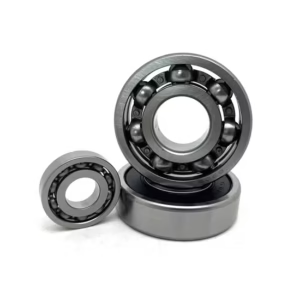
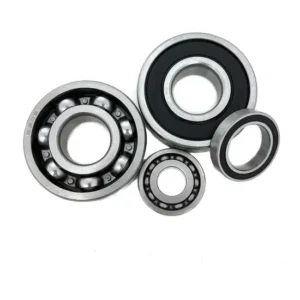
X&S 16009 16010 62900 62800 63800 63801 63802 Deep Groove Ball Bearings deliver reliable radial load capacity and high-speed performance for electric motors and gearboxes.
- Flexible grease or oil lubrication supports diverse maintenance cycles.
- Verify batch authenticity instantly through the official brand app QR channel.
7
Day Prototype
vs. 8-12 wks standard
50+
Countries Served
Global logistics network
12h
Quote Response
Expert engineers on call
Typical Applications
Wind Power
Mining
Steel & Metallurgy
Automotive / EV
Rail Transit
Precision Machinery
Genuine SKF Bearings
NDA Protected
Free Sample for Orders > $50K
Global Shipping
Product Details
Multi-Brand Sourcing — Consolidating mixed OEM requirements into a single verified shipment eliminates cross-vendor coordination delays.
Technical Specifications
| Parameter | Value |
|---|---|
| Designation | 16009 16010 62900 62800 63800 63801 63802 |
| Bearing Type | Deep Groove Ball Bearing |
| Load Direction | Radial |
| Lubrication | Grease or Oil |
| Feature | High Speed |
| Clearance Class | CN (Standard) |
| Precision Class | P0 (Standard) |
| Seal or Shield Type | Open |
| Origin | Shandong, China |
Application Suitability
| Industry | Typical Applications |
|---|---|
| Electric Motors | Rotor shaft support in induction and servo motors |
| Industrial Gearboxes | High-speed input shafts and intermediate gear stages |
| Material Handling | Conveyor drive pulleys and idler roller assemblies |
| Pumps | Centrifugal pump impeller shafts and coupling supports |
| Household Appliances | Washing machine drum spindles and HVAC fan motors |
Why Standard Suffix Assumptions Cause Motor Seizures
Assuming default clearance fits all thermal environments is the fastest route to a locked rotor.
In my years troubleshooting assembly lines across the Yangtze River Delta, I have seen countless electric motors fail during initial run-in because the procurement team ordered standard bearings without verifying the thermal expansion requirements. When an open deep groove ball bearing runs at high speeds inside a tightly toleranced motor housing, the inner ring expands faster than the outer ring. If the application demands extra internal clearance to compensate for this heat, but a standard clearance unit is installed, the rolling elements bind. This thermal binding leads to rapid cage failure and catastrophic motor seizure [NEED_CITE: thermal expansion effects on internal bearing clearance]. Sourcing the correct X&S 16009 16010 deep groove ball bearing requires looking past the base number and confirming the exact internal geometry your equipment demands.
Matching Baseline Geometries to Continuous Duty Cycles
Selecting the right X&S 16009 16010 deep groove ball bearing for continuous duty means aligning the open raceway design with your external sealing and lubrication strategy. Because these models carry no integral seals or shields, they rely entirely on the housing labyrinth or external lip seals to keep contaminants out. This configuration minimizes rotational friction, making it ideal for high-speed electric motors where every watt of efficiency counts. We cross-reference these baseline geometries against your OEM drawings to ensure the external sealing environment is sufficient to protect the unprotected raceways.
Navigating High-Speed Thermal and Lubrication Boundaries
Operating at elevated speeds generates significant frictional heat, especially when radial loads are combined with minor axial displacements. Without integral shields to retain factory grease, these open bearings depend on the system’s oil bath or continuous grease purging to carry heat away from the contact zones. If the operating temperature rises beyond the thermal limit of standard bearing steel, the standard clearance will close up rapidly. Evaluating the lubrication viscosity and re-lubrication intervals is critical to prevent the rolling elements from skidding across the raceway under light load conditions [NEED_CITE: lubrication starvation in high-speed radial bearings].
Decoding the Absence of Suffix Designations
When a bearing carries no suffix, it defaults to standard radial internal clearance and normal precision tolerances. For the 16009 and 16010 series, this means the internal gap is optimized for ambient temperature assembly and moderate operating heat. The absence of a cage material suffix typically indicates a standard pressed steel cage, which offers low inertia and excellent high-speed capability, provided the lubrication film remains intact. Understanding this baseline is crucial; if your gearbox operates in a high-vibration environment, you might actually need a machined brass cage variant, which requires a specific suffix that is missing from this standard configuration.
The Hidden Toll of Incorrect Cross-Referencing
Substituting a standard clearance bearing into an application engineered for C3 clearance rarely causes immediate noise; instead, it silently accelerates fatigue. According to failure mode classifications outlined in ISO 15243, excessive preload from thermal expansion manifests as severe raceway smearing and premature spalling. This unplanned downtime often voids equipment warranties and forces maintenance teams into emergency teardowns. The true cost is not the price of the replacement part, but the halted production line and the secondary damage caused to adjacent shafts and housings when the bearing ultimately disintegrates [NEED_CITE: rolling bearing failure mode classification per ISO 15243].
Why Technical Verification Matters for Your Procurement
Sourcing standard deep groove ball bearings often exposes buyers to soft inner rings and cloned packaging that pass casual visual checks but fail under load. Our technical review process specifically targets these blind spots. First, we verify cross-references not just by base dimension, but by confirming the internal clearance and cage type match your OEM specs. Second, we provide batch traceability directly to the manufacturer, ensuring the metallurgical integrity of the rings. Finally, we review your application parameters to flag situations where a standard P0 precision or CN clearance will cause thermal binding, recommending the exact suffix adjustments needed before you place the bulk order.
Documentation & Authenticity
- Certificate of Conformity verifying the standard P0 tolerance grade for each batch.
- Original manufacturer batch traceability linking the 16009 and 16010 series to specific heat treatment lots.
- QR verification codes scannable via official brand applications to confirm authenticity.
- Material test reports confirming the carbon and chromium content of the bearing steel rings.
- Dimensional and running accuracy inspection reports validating the open raceway geometry.
Storage, Handling & Mounting
- Keep the original anti-corrosion packaging sealed until mounting; opening early risks oxidizing the unprotected open raceways.
- Store in a climate-controlled environment to prevent condensation from compromising the standard CN clearance tolerances.
- Use clean, lint-free gloves during handling to avoid transferring acidic moisture to the high-speed pressed steel cages.
- Apply induction heating for inner ring mounting to preserve the precise radial internal clearance without mechanical force.
- Flush the housing thoroughly before installation, as the open design offers no integral barrier against residual machining swarf.
Engineering Review Before You Order
To ensure these baseline models perfectly match your equipment, provide your specific radial and axial load profiles, operational speeds, and steady-state operating temperatures. Sharing these parameters allows our engineering team to calculate the required internal clearance and confirm whether the standard pressed steel cage is sufficient for your vibration environment. If you are replacing an existing component, supply the OEM equipment number or the exact designation printed on the original nameplate so we can perform a comprehensive cross-reference check, verifying that no critical suffixes were omitted from your initial inquiry.
Frequently Asked Questions
Q: Why must cross-referencing include clearance and cage suffixes, not just the base number?
A: Matching only the base dimension ignores the internal geometry required for your specific thermal and vibrational environment. Installing a standard clearance bearing in a high-heat motor causes thermal binding, while using a stamped cage in high-vibration gearboxes leads to cage fracture. We verify all suffixes to ensure the replacement matches the OEM’s exact operational design parameters.
Q: What are the selection boundaries between grease and oil lubrication for open bearings?
A: Oil lubrication is generally preferred for high-speed applications where the oil flow actively carries frictional heat away from the contact zones. Grease is suitable for moderate speeds and simpler housing designs, provided the re-lubrication intervals are strictly maintained. The choice depends heavily on your housing design and the system’s ability to manage thermal dissipation.
Q: How do we verify the batch authenticity and material reports for these bearings?
A: Every shipment includes original manufacturer batch traceability documentation and QR codes that can be scanned using official brand applications. We also supply material test reports confirming the metallurgical composition of the rings, ensuring the hardness and carbon content meet the strict requirements for continuous radial load applications.
Q: What are the primary dimensional differences between the 16000 and 6200 series?
A: The 16000 series typically features a thinner cross-section and lighter load capacity compared to the standard 6200 series, making it suitable for compact, space-constrained assemblies. The 6200 series offers a more robust cross-section for handling higher radial loads. Selection depends on the available housing space and the specific load demands of your shaft design.
Q: How should we troubleshoot abnormal noise in a motor using standard clearance bearings?
A: Abnormal noise often indicates that the internal clearance has closed due to thermal expansion or tight shaft housing fits. Check the operating temperature and verify if the application actually requires a C3 clearance to accommodate the heat. Additionally, inspect the housing tolerances to ensure the outer ring is not being compressed, which artificially preloads the bearing and generates acoustic emissions.
Product Summary
- Product Name
- X&S OEM Customized Deep Groove Ball Bearing 6203 6202 6200 6204 Series [WARN] draft identifier mismatch
- Category
- Deep Groove Ball Bearing
- Brand
- SKF
- Certification
- ISO 9001 · TS 16949
- Lead Time
- 7 Working Days
Get a Custom Quote
Our engineers will respond within 12 hours with a tailored solution.
Request QuoteGeneral Specifications
| Bearing Type | Deep Groove Ball Bearing |
| Brand | SKF |
| Quality Standard | ISO 9001 / TS 16949 |
| Precision Grade | P0 / P5 / P6 (custom) |
| Material | Chrome Steel / Stainless |
| Cage Material | Steel / Brass / Polyamide |
| Lubrication | Grease / Oil (specify) |
| Operating Temp. | -40°C to +200°C |
| Min. Order Qty | 1 pc (samples available) |
| Prototype Lead Time | 7 Working Days |
Performance Parameters
| Load Capacity | Contact for C0/Cr values |
| Speed Rating | Contact for ndm limit |
| Vibration Level | Z1 / Z2 / Z3 (custom) |
| Noise Level | V1 / V2 / V3 (custom) |
| Fatigue Life | L10h per ISO 281 |
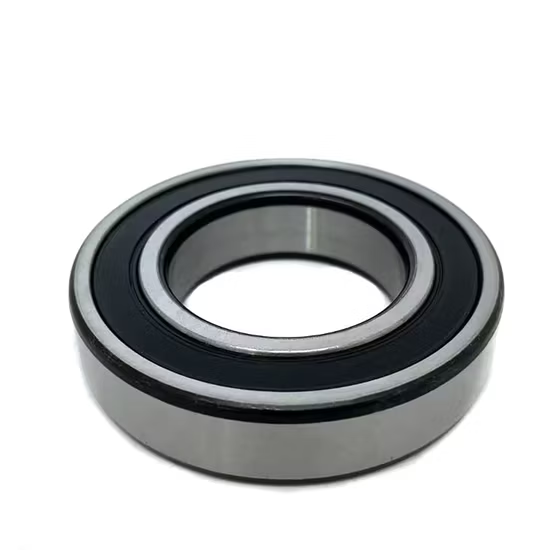
| Sealing Options | Open / Z / 2Z / RS / 2RS |
Custom Specifications Available
Our engineering team can modify bearing dimensions, materials, seals, and clearances to meet your specific operating requirements. Submit your drawing or spec sheet for a tailored proposal.
Wind Power
Main shaft bearings, gearbox bearings, and generator bearings for onshore and offshore wind turbines.
Mining & Quarrying
Heavy-duty bearings for crushers, conveyors, and rotary equipment in extreme dust and shock-load environments.
Steel & Metallurgy
High-temperature bearings for rolling mills, continuous casting, and furnace applications.
Automotive / EV
Wheel hub bearings, transmission bearings, and e-motor bearings for passenger and commercial vehicles.
Rail Transit
Axle box bearings, traction motor bearings, and gearbox bearings meeting EN/UIC railway standards.
Precision Machinery
High-precision spindle bearings, angular contact bearings, and super-precision bearings for CNC and robotics.
Application Design
EngineeringOur engineers analyze your operating conditions -- load, speed, temperature, environment -- and select or design the optimal bearing solution to maximize service life and reduce total cost of ownership.
Custom Modification
7-Day TurnaroundNeed non-standard dimensions, special materials, or modified clearances? We can modify standard SKF bearings or manufacture fully custom solutions with a 7-day prototype turnaround.
Failure Analysis
DiagnosticsWhen bearings fail prematurely, our team conducts root-cause analysis using advanced diagnostic tools to identify the failure mode and recommend corrective action.
Predictive Maintenance
Up to 40% Less DowntimeWe deploy vibration monitoring, thermal imaging, and oil analysis programs that detect bearing deterioration early -- reducing unplanned downtime by up to 40%.
On-site Installation
Global CoverageProper installation is critical to bearing performance. Our certified technicians provide on-site installation support, alignment verification, and operator training worldwide.
Lifecycle Support
Enterprise SLAFrom initial selection through end-of-life, our dedicated account managers provide scheduled maintenance plans, re-lubrication programs, and replacement forecasting for enterprise clients.
Why SKF China
The engineering partner advantage
7 Days
Prototype Lead Time
vs. 8-12 weeks via standard channels
15+
Certified Engineers
SKF-certified, on-call for your project
50+
Countries Delivered
Reliable global logistics network
Request a Quote
Get a custom quote for
X&S OEM Customized Deep Groove Ball Bearing 6203 6202 6200 6204 Series [WARN] draft identifier mismatch
NDA protected · Free samples for orders > $50K · Reply within 12 hours
Related Products
More Deep Groove Ball Bearing Products
Deep Groove Ball Bearing
6304 6303 6302 Deep Groove Ball Bearing for Filling Machinery Authorized

Deep Groove Ball Bearing
Koyo Timken 6010-2z 6210-2z 6310-2z 6710-2z 6810-2z 6910-2z Deep Groove Ball Bearing